Yellow crystals of the phosphorus selena bromide alpha-P4Se3Br2, [monoclinic, C2/c, Z = 8 a = 12.724(3) angstrom, b = 14.732(3) angstrom, c = 12.553(3) angstrom, beta = 116.60(3)degrees] were obtained front the reaction of P4Se3 and bromine at 80 degrees C in sealed glass ampoules. The crystal structure features discrete molecules of the formula alpha-P4Se3Br2 according to the well-known alpha-form of P(4)Ch(3)I(2) molecules (Ch = S, Se).
In a model study the crystal structures of shandite (Pb2Ni3S2), parkerite (Bi2Ni3S2) and their Pd homologues are investigated in terms of ordered half antiperovskites AM3/2S (A=Pb, Bi; M=Ni, Pd). This addresses fundamental questions on the structural relations, ordering and chemical bonding. From crystal structure investigations a new cubic parkerite variant is presented for Bi2Pd3S2 that fits in an ordering model equivalently to shandite and parkerite. Type–antitype relations to ordered oxygen deficit perovskites are presented. With the relation to the superconductor Ni3MgC a model is deduced that provides the complete crystal structure and symmetry in terms of the Ni and Pd ordering in antiperovskite superstructures. Therein a systematic ab initio investigation on the relative stability of shandite and parkerite structures is carried out for the first time. From the DFT modelling results the preferences of the ordering variants and the distinct differences in the atomic coordination spheres are discussed. The bonding in the systems is investigated by site projected density of states and covalent bond energy calculations.
Zeitschrift für anorganische und allgemeine ChemieVolume 632, Issue 12-13 p. 2119-2119 Poster Die inkommensurabel modulierten Strukturen von FeSbS2Cl und FeSbSe2Br Michael F. Bräu, Michael F. Bräu Universität Regensburg, Institut für anorganische Chemie, Universitätsstr. 31, D-93040 RegensburgSearch for more papers by this authorFranz Rau, Franz Rau Universität Regensburg, Institut für anorganische Chemie, Universitätsstr. 31, D-93040 RegensburgSearch for more papers by this authorArno Pfitzner, Corresponding Author Arno Pfitzner Universität Regensburg, Institut für anorganische Chemie, Universitätsstr. 31, D-93040 RegensburgUniversität Regensburg, Institut für anorganische Chemie, Universitätsstr. 31, D-93040 RegensburgSearch for more papers by this author Michael F. Bräu, Michael F. Bräu Universität Regensburg, Institut für anorganische Chemie, Universitätsstr. 31, D-93040 RegensburgSearch for more papers by this authorFranz Rau, Franz Rau Universität Regensburg, Institut für anorganische Chemie, Universitätsstr. 31, D-93040 RegensburgSearch for more papers by this authorArno Pfitzner, Corresponding Author Arno Pfitzner Universität Regensburg, Institut für anorganische Chemie, Universitätsstr. 31, D-93040 RegensburgUniversität Regensburg, Institut für anorganische Chemie, Universitätsstr. 31, D-93040 RegensburgSearch for more papers by this author First published: 23 August 2006 https://doi.org/10.1002/zaac.200670086Citations: 3AboutPDF ToolsRequest permissionExport citationAdd to favoritesTrack citation ShareShare Give accessShare full text accessShare full-text accessPlease review our Terms and Conditions of Use and check box below to share full-text version of article.I have read and accept the Wiley Online Library Terms and Conditions of UseShareable LinkUse the link below to share a full-text version of this article with your friends and colleagues. Learn more.Copy URL Share a linkShare onFacebookTwitterLinkedInRedditWechat No abstract is available for this article.Citing Literature Volume632, Issue12-13September 2006Pages 2119-2119 RelatedInformation
Angewandte ChemieVolume 94, Issue 9 p. 717-718 Zuschriften Ein neuer dreidimensionaler Tellur-Bauverband: Hochdrucksynthese und Kristallstruktur von AgTe3† Prof. Dr. Klaus-Jürgen Range, Prof. Dr. Klaus-Jürgen Range Institut für Anorganische Chemie der Universität Universitätsstraße 31, D-8400 RegensburgSearch for more papers by this authorDr. Manfred Zabel, Dr. Manfred Zabel Institut für Anorganische Chemie der Universität Universitätsstraße 31, D-8400 RegensburgSearch for more papers by this authorFranz Rau, Franz Rau Institut für Anorganische Chemie der Universität Universitätsstraße 31, D-8400 RegensburgSearch for more papers by this authorFreia von Krziwanek, Freia von Krziwanek Institut für Anorganische Chemie der Universität Universitätsstraße 31, D-8400 RegensburgSearch for more papers by this authorRupert Marx, Rupert Marx Institut für Anorganische Chemie der Universität Universitätsstraße 31, D-8400 RegensburgSearch for more papers by this authorBeate Panzer, Beate Panzer Institut für Anorganische Chemie der Universität Universitätsstraße 31, D-8400 RegensburgSearch for more papers by this author Prof. Dr. Klaus-Jürgen Range, Prof. Dr. Klaus-Jürgen Range Institut für Anorganische Chemie der Universität Universitätsstraße 31, D-8400 RegensburgSearch for more papers by this authorDr. Manfred Zabel, Dr. Manfred Zabel Institut für Anorganische Chemie der Universität Universitätsstraße 31, D-8400 RegensburgSearch for more papers by this authorFranz Rau, Franz Rau Institut für Anorganische Chemie der Universität Universitätsstraße 31, D-8400 RegensburgSearch for more papers by this authorFreia von Krziwanek, Freia von Krziwanek Institut für Anorganische Chemie der Universität Universitätsstraße 31, D-8400 RegensburgSearch for more papers by this authorRupert Marx, Rupert Marx Institut für Anorganische Chemie der Universität Universitätsstraße 31, D-8400 RegensburgSearch for more papers by this authorBeate Panzer, Beate Panzer Institut für Anorganische Chemie der Universität Universitätsstraße 31, D-8400 RegensburgSearch for more papers by this author First published: September 1982 https://doi.org/10.1002/ange.19820940921Citations: 13 † Diese Arbeit wurde vom Fonds der Chemischen Industrie unterstützt. AboutPDF ToolsRequest permissionAdd to favorites ShareShare Give accessShare full text accessShare full-text accessPlease review our Terms and Conditions of Use and check box below to share full-text version of article.I have read and accept the Wiley Online Library Terms and Conditions of UseShareable LinkUse the link below to share a full-text version of this article with your friends and colleagues. Learn more.Copy URL Share a linkShare onFacebookTwitterLinked InRedditWechat No abstract is available for this article.Citing Literature Volume94, Issue9September 1982Pages 717-718 This is the German version of Angewandte Chemie. Note for articles published since 1962: Do not cite this version alone. Take me to the International Edition version with citable page numbers, DOI, and citation export. We apologize for the inconvenience. RelatedInformation
Black single crystals of MnBiS2Br were obtained by the reaction of stoichiometric amounts of α-MnS, Bi, S, and BiBr3 (3:2:3:1) at 600°C for 4 weeks. The compound crystallises in the monoclinic system, space group C2/m, with a = 12.767(2), b = 3.9468(4), c = 9.574(1) Å, β = 90.87(2)°, and Z = 4. The crystal structure refinement based on 720 reflections converged at R = 0.0244 and wR2 = 0.0579, respectively. MnBiS2Br forms a layer structure consisting of MnS6 octahedra, MnS2Br4 octahedra, and BiS3+2 pyramids.
Zeitschrift für anorganische und allgemeine ChemieVolume 630, Issue 11 p. 1752-1752 Poster Präparation, Kristallstruktur und NMR-Spektroskopie an AgAlP2Q6 (Q = S, Se) Arno Pfitzner, Corresponding Author Arno Pfitzner Institut für Anorganische Chemie, Universität Regensburg, D-93040 RegensburgInstitut für Anorganische Chemie, Universität Regensburg, D-93040 RegensburgSearch for more papers by this authorMartina Andratschke, Martina Andratschke Institut für Anorganische Chemie, Universität Regensburg, D-93040 RegensburgSearch for more papers by this authorFranz Rau, Franz Rau Institut für Anorganische Chemie, Universität Regensburg, D-93040 RegensburgSearch for more papers by this authorGunther Brunklaus, Gunther Brunklaus Institut für Physikalische Chemie, Westfälische Wilhelms-Universität Münster, D-48149 MünsterSearch for more papers by this authorHellmut Eckert, Hellmut Eckert Institut für Physikalische Chemie, Westfälische Wilhelms-Universität Münster, D-48149 MünsterSearch for more papers by this author Arno Pfitzner, Corresponding Author Arno Pfitzner Institut für Anorganische Chemie, Universität Regensburg, D-93040 RegensburgInstitut für Anorganische Chemie, Universität Regensburg, D-93040 RegensburgSearch for more papers by this authorMartina Andratschke, Martina Andratschke Institut für Anorganische Chemie, Universität Regensburg, D-93040 RegensburgSearch for more papers by this authorFranz Rau, Franz Rau Institut für Anorganische Chemie, Universität Regensburg, D-93040 RegensburgSearch for more papers by this authorGunther Brunklaus, Gunther Brunklaus Institut für Physikalische Chemie, Westfälische Wilhelms-Universität Münster, D-48149 MünsterSearch for more papers by this authorHellmut Eckert, Hellmut Eckert Institut für Physikalische Chemie, Westfälische Wilhelms-Universität Münster, D-48149 MünsterSearch for more papers by this author First published: 31 August 2004 https://doi.org/10.1002/zaac.200470117Citations: 2AboutPDF ToolsRequest permissionExport citationAdd to favoritesTrack citation ShareShare Give accessShare full text accessShare full-text accessPlease review our Terms and Conditions of Use and check box below to share full-text version of article.I have read and accept the Wiley Online Library Terms and Conditions of UseShareable LinkUse the link below to share a full-text version of this article with your friends and colleagues. Learn more.Copy URL Share a linkShare onFacebookTwitterLinked InRedditWechat No abstract is available for this article.Citing Literature Volume630, Issue11September 2004Pages 1752-1752 RelatedInformation
(LiL)(2)Li3SbS3 was prepared by solid-state reaction of stoichiometric amounts of Lil, Li, Sb, and S in the ratio 2 : 3 : I : 3. The product is air and moisture sensitive. The crystal structure was determined from single crystals at room temperature. Colourless to pale yellow (Lil)(2)Li3SbS3 crystallizes in the orthorhombic system, space group Pnnm (no. 58) with a = 10.436(l) Angstrom, b = 13.509(l) Angstrom, c = 7.530(l) Angstrom. V = 1061.6(l) Angstrom(3), and Z = 4 (data at 20 degreesC). The crystal structure of (Lil)(2)Li3SbS3 is closely related to that of (CuI)(2)Cu3SbS3 and (AgI)(2)Ag3SbS3, at least for the positions of 1, Sb, and S. Thus, iodine forms an eutactic arrangement which resembles the structure of hexagonal diamond. [SbS3](3-) units are embedded in this framework in a way that the sulphur atoms of two adjacent trigonal pyramids form distorted octahedral voids. The lithium ions are tetrahedrally coordinated and fully ordered within the anionic framework. The three-dimensional connectivities in (Lil)(2)Li3SbS3 are significantly different from the homologous copper and silver compound due to the bonding necessities of Li and slightly different radii of the monovalent cations. Thus, a novel three-dimensional network of edge sharing tetrahedra is observed in (Lil)(2)Li3SbS3. It exhibits strands of eight-membered rings of edge sharing tetrahedra which are linked by common vertices and cross linked by double tetrahedra.
A highly unusual structural evolution has been observed in temperature dependent studies of the fast ion conductor Ag7P3S11, using X-ray diffraction, Raman scattering, 31P and 109Ag NMR spectroscopy, and electrical conductivity measurements. At 205 K the high-temperature γ-phase (space group C2/c) undergoes a phase transition to an intermediate β-phase of different symmetry. At a temperature near 130 K another phase transition is observed resulting in the formation of an ordered low-temperature α-modification crystallizing in the same space group as the γ-phase. Restoration of the high-temperature-phase symmetry in the low-temperature phase is unambiguously confirmed by single-crystal X-ray structure determination and 31P solid state NMR peak multiplicities. The re-entrant phase behavior is further supported by temperature dependent electrical conductivity measurements, which reveal that the activation energies of the dc conductivity for the α- and γ-phases are identical and significantly lower compared to those measured in the β-phase. Although the β- to γ-phase transition is associated with a change in enthalpy, those observables reflecting silver ion dynamics show no discontinuities at the phase transition temperature. The high-temperature γ-phase crystallizes in the monoclinic system, space group C2/c (No. 15), a=23.999(2)Å, b=6.3621(3)Å, c=24.909(2)Å, β=110.926(7)°, R=0.0318 (300 K). The low-temperature α-phase is isostructural with a=24.090(1)Å, b=6.3400(3)Å, c=24.581(1)Å, β=110.870(6)°, R=0.0317 (120 K). Contrary to the situation in γ-Ag7P3S11, all the silver atoms are well-localized in the α-phase.
The crystallographic and electronic structures of PtSnS, PtSnSe and PtSnTe were investigated by X-ray structure analysis and density functional theory (DFT) calculations. Conductivity measurements and diffraction patterns show semiconducting ordered pyrite type related compounds containing SnX (X=S, Se, Te) entities. A scheme is presented to model ordered variants according to the relative orientation of the XY dumbbells. It represents the ullmannite, the cobaltite and a new rhombohedral structure type. The scheme allows for a systematic investigation of ordering preferences from first principles. According to the total electronic energy PtSnTe and PtSnSe prefer the cobaltite, PtSnS the rhombohedral structure type. The structural and electronic properties agree with experimental results. The three compounds are predicted to be narrow gap indirect semiconductors from conductivity measurements and band structure calculations.
In the present study the synthesis of metastable alloys of the noble metal Au and the semimetal Sb is realized by using high pressure techniques. The influence of An on bulk Sb is shown experimentally by stepwise substitution. In addition to the effect of the most electronegative noble metal on Pauling's scale in the binary Au-Sb phases, some ternary compounds with In, Sn, As, and Te in addition to An and Sb are discussed. The experiments are planned to obtain a better knowledge on the reasons for building up a simple cubic Sb partial lattice, and their crystallographic results are used to construct model structures for new electronic structure calculations from first principles on the metastable pi-phases. Using the LCAO-CO ansatz and density-functional methods, we study total energies, band structures, densities of states and charge transfer properties according to Bader's method by integrating zero flux surfaces. Finally, from electronic band structure analysis, the quantities "chemical potential" mu, and "chemical hardness", eta, are derived according to the original ideas of Pearson and Parr and are applied to solid state problems using special points of the Brillouin zones within a band structure approximation for the first time. The results are shown to support the experimental findings about the substitution path within the system Au-Sb.
The structural information gained from the study of the chiral building block (R)-(−)-4-(3,4-dichlorophenyl)-4-(2-pyridyl)butanoic acid–l-(−)-ephedrine [methyl(1-hydroxy-1-phenylprop-2-yl)ammonium 4-(3,4-dichlorophenyl)-4-(2-pyridyl)butanoate], C10H16NO+·C15H12Cl2NO2−, can be used to deduce the absolute configuration of highly potent arpromidine-type histamine H2 receptor agonists, as the chiral butanoic acid can be converted to (R)-(−)-3-(3,4-dichlorophenyl)-3-(2-pyridyl)propylamine and to the corresponding R-configured arpromidine analogue.
We’ve built this digital research platform to provide academics everywhere with fast, stable and secure digital access to our library of over 110,000 scholarly books and 800,000 journal articles. We’ve tested the platform in close cooperation with leading academic institutions. If you have any questions or you notice something doesn’t quite work as it should, please visit our Help/FAQ page and let us know.
Article Crystal structure of neodymium platinum oxide (2/2/7), Nd2Pt2O7 was published on February 1, 1997 in the journal Zeitschrift für Kristallographie - Crystalline Materials (volume 212, issue 2).
The c-axis lengths of various “KMo4O6” samples, prepared by high-temperature, high-pressure decomposition of K2MoO4, vary in the range from 2.908 to 2.943 Å, all of them being larger than the corresponding c-axis for KMo4O6 prepared by electrolysis of K2MoO4/MoO3 melts (c = 2.879 Å). From a single-crystal structure refinement of a crystal with c = 2.917 Å we gained evidence that the different lengths of the c-axes in the high-pressure phases KMo4O6-II are caused by additional atoms which center otherwise empty Mo6 octahedra. Assuming these interstitial atoms to be oxygens, the results of bond valence and bond order sum calculations are clearly improved. The influence of different synthetic routes to KMo4O6, as well as some peculiarities observed during the structure refinement for KMo4O6 samples of different origin, are discussed.
Single crystals of the hitherto unknown intermetallic compound ScZn 2 could be obtained from the elements by high-pressure high-temperature reaction in a modified Belt-type apparatus (h-BN capsule, 40 kbar, 1900 → 1200 → 25 °C, and subsequent release of high pressure). The crystals are hexagonal, space group P 6, Imma , with a = 5.2509(8), c = 8.4774(14) A ̊ , c a = 1.6147 and Z = 4. Final residuals after refinement against F 2 were R 1 = 0.0349, wR 2 = 0.0752 and S = 1.117 for 11 parameters and all 86 unique data. ScZn 2 is a Laves-Friauf phase adopting the C14 (MgZn 2 ) type.
Single crystals of the hitherto unknown intermetallic compound ScZn2 could be obtained from the elements by high-pressure high-temperature reaction in a modified Belt-type apparatus (h-BN capsule, 40 kbar, 1900 → 1200 → 25 °C, and subsequent release of high pressure). The crystals are hexagonal, space group P6, Imma, with a = 5.2509(8), c = 8.4774(14) Å, ca = 1.6147 and Z = 4. Final residuals after refinement against F2 were R1 = 0.0349, wR2 = 0.0752 and S = 1.117 for 11 parameters and all 86 unique data. ScZn2 is a Laves-Friauf phase adopting the C14 (MgZn2) type.
AbstractChemInform is a weekly Abstracting Service, delivering concise information at a glance that was extracted from about 100 leading journals. To access a ChemInform Abstract of an article which was published elsewhere, please select a “Full Text” option. The original article is trackable via the “References” option.
 Ulrich Klement合作论文数17Klaus-Jürgen Range合作论文数17K.-J. Range合作论文数12
 Arno Pfitzner合作论文数Institut fur Anorganische Chemie, Universitaet Regensburg9Manfred Zabel合作论文数9G. Saemann-Ischenko合作论文数4
 Josef Breu合作论文数Institut für Organische Chemie der, Universität Regensburg4P. Lunz合作论文数3Martina Andratschke合作论文数3R. Seemann合作论文数3G. H. Grosch合作论文数3
 Richard Weihrich合作论文数Institut für Anorganische Chemie der, Universität Regensburg3M. Klauda合作论文数3
 Xiaoyang Liu (刘晓旸)合作论文数State Key Laboratory of Inorganic Synthesis & Preparative Chemistry, College of Chemistry, Jilin University3diana hoppe合作论文数2
 Thomas Bernert合作论文数2Kj Range合作论文数2
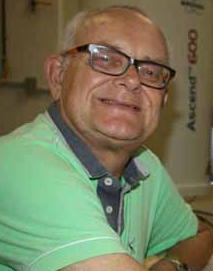 Hellmut Eckert合作论文数São Carlos Institute of Physics, University of São Carlos2
 Samir F. Matar合作论文数Lebanese German University2Henry Paulus合作论文数2J. Markl合作论文数2Marc Schlosser合作论文数2Anton M. Heyns合作论文数2daniel kurowski合作论文数1A. Uffrecht合作论文数1Michael F. Bräu合作论文数1Christian K Fink合作论文数1Claudia Steiner合作论文数1Ul Klement合作论文数1Klaus J��rgen Range合作论文数1
 Michael Vogel合作论文数Technische University Darmstadt1
 Eyert Volker合作论文数Materials Design Inc1
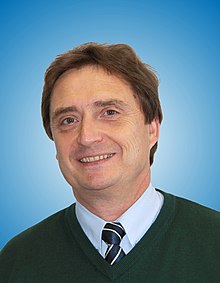 Armin Buschauer合作论文数Universität Regensburg1
 Dirk Wilmer合作论文数Institut für Physikalische Chemie, Schloβplatz 4/7, 48/49 Münster, Germany1
 Wilfried Hoffbauer合作论文数1
 Irina Anusca合作论文数1Hans Burzlaff合作论文数1G. Bruederl合作论文数1Christian Brinkmann合作论文数1Rupert Marx合作论文数1U. Schiessl合作论文数1
 Volker Krey合作论文数International Institute for Applied Systems Analysis1C. Fink合作论文数1Welf Bronger合作论文数1Freia Von Krziwanek合作论文数1Gudrun Auffermann合作论文数1Beate Panzer合作论文数1Christian Preitschaft合作论文数1U. Kathage合作论文数1




