CONTEXT Recently, vitamin D (VitD) has been recognized as increasingly importance in many cellular functions of several tissues and organs other than bone. In particular, VitD showed important beneficial effects in the cardiovascular system. Although the relationship among VitD, endothelium, and cardiovascular disease is well established, little is known about the antioxidant effect of VitD. OBJECTIVE Our objective was to study the intracellular pathways activated by VitD in cultured human umbilical vein endothelial cells undergoing oxidative stress. DESIGN Nitric oxide production, cell viability, reactive oxygen species, the mitochondrial permeability transition pore, membrane potential, and caspase-3 activity were measured during oxidative stress induced by administration of 200 μM hydrogen peroxide for 20 minutes. Experiments were repeated in the presence of specific vitamin D receptor ligand ZK191784. RESULTS Pretreatment with VitD alone or in combination with ZK191784 is able to reduce the apoptosis-related gene expression, involving both intrinsic and extrinsic pathways. At the same time, it has been shown the activation of pro-autophagic beclin 1 and the phosphorylation of ERK1/2 and Akt, indicating a modulation between apoptosis and autophagy. Moreover, VitD alone or in combination with ZK191784 is able to prevent the loss of mitochondrial potential and the consequent cytochrome C release and caspase activation. CONCLUSIONS The present study shows that VitD may prevent endothelial cell death through modulation of the interplay between apoptosis and autophagy. This effect is obtained by inhibiting superoxide anion generation, maintaining mitochondria function and cell viability, activating survival kinases, and inducing NO production.
Coeliac disease (CD) is a chronic intolerance to gluten, contained mainly in wheat, rye and barley. The only therapy at present is the lifelong exclusion of gluten from the diet.Whether oats can be considered safe for CD patients has long been debated, and oats have been included among gluten-free ingredients only recently (EU Regulation 41/2009), provided the gluten content does not exceed 20 ppm.The aim of this study was to evaluate the suitability of 36 different oat cultivars for CD patients using biochemical and immunochemical approaches. The cross-reactivity between avenins and gliadins was evaluated by both SDS-PAGE/Immunoblotting and ELISA.The protein pattern of each oat cultivar showed both qualitative and quantitative differences that correlated with different binding affinity for specific anti-gliadin antibodies in immunoblotting. In most oat samples, the content of cross-reactive proteins measured by ELISA was below 20 ppm, but in a few varieties was above 80 ppm.Although the taxonomic and biochemical characteristics of oats allow to conclude that their use could be safe for CD patients, it is essential to select those cultivars having the lowest level of gluten-like proteins. (C) 2011 Elsevier Ltd. All rights reserved.
Background and purpose: Levosimendan acts as a vasodilator through the opening of ATP‐sensitive K+channels (KATP) channels. Moreover, the coronary vasodilatation caused by levosimendan in anaesthetized pigs has recently been found to be abolished by the nitric oxide synthase (NOS) inhibitor Nω‐nitro‐L‐arginine methyl ester, indicating that nitric oxide (NO) has a role in the vascular effects of levosimendan. However, the intracellular pathway leading to NO production caused by levosimendan has not yet been investigated. Thus, the purpose of the present study was to examine the effects of levosimendan on NO production and to evaluate the intracellular signalling pathway involved.Experimental approach: In porcine coronary endothelial cells (CEC), the release of NO in response to levosimendan was examined in the presence and absence of Nω‐nitro‐L‐arginine methyl ester, an adenylyl cyclase inhibitor, KATPchannel agonists and antagonists, and inhibitors of intracellular protein kinases. In addition, the role of Akt, ERK, p38 and eNOS was investigated through Western blot analysis.Key results: Levosimendan caused a concentration‐dependent and K+‐related increase of NO production. This effect was amplified by the mitochondrial KATPchannel agonist, but not by the selective plasma membrane KATPchannel agonist. The response of CEC to levosimendan was prevented by the KATPchannel blockers, the adenylyl cyclase inhibitor and the Akt, ERK, p38 inhibitors. Western blot analysis showed that phosphorylation of the above kinases lead to eNOS activation.Conclusions and implications: In CEC levosimendan induced eNOS‐dependent NO production through Akt, ERK and p38. This intracellular pathway is associated with the opening of mitochondrial KATPchannels and involves cAMP.
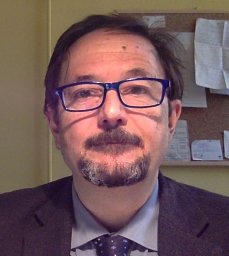 Claudio Molinari合作论文数Istituto di Fisiologia Umana, Università degli Studi7
 G Vacca合作论文数6C. Cisari合作论文数4P Restani合作论文数4
 Elena Grossini合作论文数4C Ballabio合作论文数3
 Stefano Carda合作论文数3
 Elena Penas合作论文数3
 Marco Invernizzi合作论文数2Morsanuto Vera合作论文数2L Botana合作论文数1D. Fuggetta合作论文数1M. Silano合作论文数1
 Andrea Anderloni合作论文数1M Eichenmüller合作论文数1F. Mori合作论文数1
 Eva Alonso合作论文数1Krisztina Meszaros合作论文数1Agnes Prókai合作论文数1Fumiko Yamamoto合作论文数1Kaori Hirata合作论文数1Megumi Ishii合作论文数1Francesca Pribble合作论文数1
 Cristina Felli合作论文数1
 Henning Frohlich合作论文数heidelberg university1Takahiro Katano合作论文数1
 Peter Degrell合作论文数1
 Christine Zelenak合作论文数1
 Adam Vannay合作论文数ELKH SE Pediat & Nephrol Res Grp1
 Liudmila Cebotaru合作论文数Department of Physiology, School of Medicine, Johns Hopkins University1
 Syed J Khundmiri合作论文数Faculty of Life Sciences, Aligarh Muslim University1
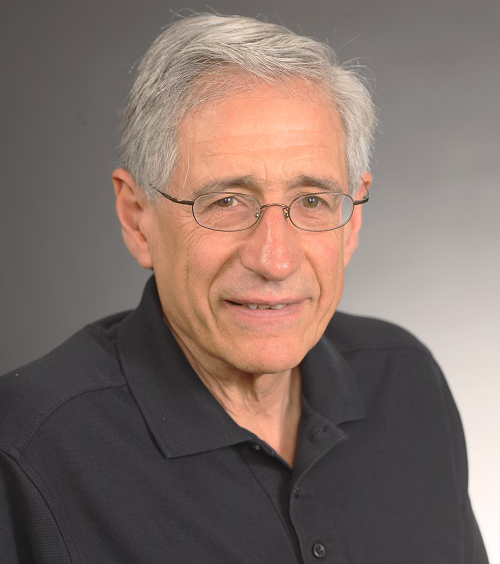 William Guggino合作论文数Department of Physiology, Johns Hopkins University School of Medicine1
 Ivonne Regel合作论文数1
 Nasser Al-Shanti合作论文数Inst Biomed Res Human Movement & Hlth, Manchester Metropolitan Univ1Rusai Krisztina合作论文数1Urano K合作论文数1
 Ismahil Mohamed Ameen合作论文数Department of Medicine, University of Alabama at Birmingham and Birmingham VAMC;and Department of Medicine, University of Louisville;University of Alabama at Birmingham and Birmingham VAMC, University of Louisville1Netty Santoso合作论文数Departments of Genetics and1Le Bellego Laurent合作论文数1
 Catassi Carlo合作论文数Dipartimento di Scienze Cliniche Specialistiche e Odontostomatologiche, Università Politecnica delle Marche1
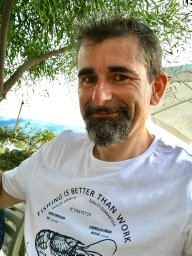 Budelli Andrea合作论文数1Lasorsa Domenica合作论文数1Lin Jihong合作论文数1Tashiro Kaori合作论文数1
 Stephen Faulkner合作论文数Department of Chemistry, University of Oxford;Keble College, University of Oxford1
 Ranieri Marianna合作论文数Dept of Biosciences, Biotechnologies and Biopharmaceutics, University of Bari1
 Squarzanti Diletta Francesca合作论文数1R. Redaelli合作论文数1Rodriguez Vieytes Mercedes合作论文数1




