For over 10,000 years, Andeans have resided at high altitude where the partial pressure of oxygen challenges human survival. Recent studies have provided evidence for positive selection acting in Andeans on the HIF2A (also known as EPAS1) locus, which encodes for a central transcription factor of the hypoxia-inducible factor pathway. However, the precise mechanism by which this allele might lead to altitude-adaptive phenotypes, if any, is unknown. By analyzing whole genome sequencing data from 46 high-coverage Peruvian Andean genomes, we confirm evidence for positive selection acting on HIF2A and a unique pattern of variation surrounding the Andean-specific single nucleotide variant (SNV), rs570553380, which encodes for an H194R amino acid substitution in HIF-2 & alpha;. Genotyping the Andean-associated SNV rs570553380 in a group of 299 Peruvian Andeans from Cerro de Pasco, Peru (4,338 m), reveals a positive association with increased fraction of exhaled nitric oxide, a marker of nitric oxide biosynthesis. In vitro assays show that the H194R mutation impairs binding of HIF-2 & alpha; to its heterodimeric partner, aryl hydrocarbon receptor nuclear translocator. A knockin mouse model bearing the H194R mutation in the Hif2a gene displays decreased levels of hypoxia-induced pulmonary Endothelin-1 transcripts and protection against hypoxia-induced pulmonary hypertension. We conclude the Andean H194R HIF2A allele is a hypomorphic (partial loss of function) allele.
The creation of global research partnerships is critical to produce shared knowledge for the implementation of the UN 2030 Agenda for Sustainable Development. Sustainability science promotes the coproduction of inter- and transdisciplinary knowledge, with the expectation that studies will be carried out through groups and truly collaborative networks. As a consequence, sustainability research, in particular that published in high impact journals, should lead the way in terms of ethical partnership in scientific collaboration. Here, we examined this issue through a quantitative analysis of the articles published in Nature Sustainability (300 papers by 2135 authors) and Nature (2994 papers by 46,817 authors) from January 2018 to February 2021. Focusing on these journals allowed us to test whether research published under the banner of sustainability science favoured a more equitable involvement of authors from countries belonging to different income categories, by using the journal Nature as a control. While the findings provide evidence of still insufficient involvement of Low-and-Low-Middle-Income-Countries (LLMICs) in Nature Sustainability publications, they also point to promising improvements in the involvement of such authors. Proportionally, there were 4.6 times more authors from LLMICs in Nature Sustainability than in Nature articles, and 68.8-100% of local Global South studies were conducted with host country scientists (reflecting the discouragement of parachute research practices), with local scientists participating in key research steps. We therefore provide evidence of the promising, yet still insufficient, involvement of low-income countries in top sustainability science publications and discuss ongoing initiatives to improve this.
Peru celebrates 200 years of independence in 2021. Over this period of independent life, and despite the turbulent socio-political scenarios, from internal armed conflict to economic crisis to political instability over the last 40 years, Peru has experienced major changes on its epidemiological and population health profile. Major advancements in maternal and child health as well as in communicable diseases have been achieved in recent decades, and today Peru faces an increasing burden of non-communicable diseases including mental health conditions. In terms of the configuration of the public health system, Peru has also strived to secure country-wide optimal health care, struggling in particular to improve primary health care and intercultural services. The science and technology infrastructure has also evolved, although the need for substantial investments remains if advancing science is to be a national priority. Climate change will also bring significant challenges to population health given Peru's geographical and microclimates diversity. Looking back over the 200-years of independence, we present a summary of key advances in selected health-related fields, thus serving as the basis for reflections on pending agendas and future challenges, in order to look forward to ensuring the future health and wellbeing of the Peruvian population. Resumen translated abstract:El Perú cumple 200 años de independencia en 2021. Durante estos dos siglos de vida independiente, junto con periodos sociales y políticos turbulentos, incluyendo un conflicto armado interno, hiperinflación y la inestabilidad política de los últimos 40 años, el Perú ha experimentado importantes cambios en su perfil epidemiológico con repercusiones directas en la salud de la población. En las últimas décadas, los indicadores de salud materno-infantil y de las enfermedades transmisibles muestran mejoría importante, pero el país se enfrenta de manera simultánea a una carga cada vez mayor de enfermedades no transmisibles y de salud mental. En cuanto a los sistemas de salud pública, se han realizado esfuerzos por aumentar la cobertura y calidad de la atención de salud en todo el país, apostándose en particular por mejorar la atención primaria. La ciencia y tecnología relacionadas con la salud también han mejorado, aunque si se quiere que la ciencia sea una prioridad nacional, son necesarias inversiones sustanciales. El cambio climático traerá importantes desafíos para la salud de la población, dada la diversidad geográfica y de microclimas del país. Para conmemorar los 200 años de vida independiente del Perú, presentamos un resumen de avances clave en diversas áreas y temas relacionados con la salud. Este repaso sirve como base para reflexionar sobre agendas y desafíos pendientes y futuros, con el fin de asegurar la salud y el bienestar de la población peruana en las próximas décadas.
Erythrocytosis, or increased production of red blood cells, is one of the most well-documented physiological traits that varies within and among in high-altitude populations. Although a modest increase in blood O-2-carrying capacity may be beneficial for life in highland environments, erythrocytosis can also become excessive and lead to maladaptive syndromes such as chronic mountain sickness (CMS).
Background: Inorganic lead (Pb) is common in the environment, and is toxic to neurological, renal, and cardiovascular systems. Pb exposure influences the epigenome with documented effects on DNA methylation (DNAm). We assessed the impact of low levels of Pb exposure on DNAm among non-miner individuals from two locations in Peru: Lima, the capital, and Cerro de Pasco, a highland mining town, to study the effects of Pb exposure on physiological outcomes and DNAm. Methods: Pb levels were measured in whole blood (n = 305). Blood leukocyte DNAm was determined for 90 DNA samples using the Illumina MethylationEPIC chip. An epigenome-wide association study was performed to assess the relationship between Pb and DNAm. Results: Individuals from Cerro de Pasco had higher Pb than individuals from Lima (p-value = 2.00E-16). Males had higher Pb than females (p-value = 2.36E-04). Pb was positively associated with hemoglobin (p-value = 8.60E-04). In Cerro de Pasco, blood Pb decreased with the distance from the mine (p-value = 0.04), and association with soil Pb was approaching significance (p-value = 0.08). We identified differentially methylated positions (DMPs) associated with genes SOX18, ZMIZ1, and KDM1A linked to neurological function. We also found 45 differentially methylated regions (DMRs), seven of which were associated with genes involved in metal ion binding and nine to neurological function and development. Conclusions: Our results demonstrate that even low levels of Pb can have a significant impact on the body including changes to DNAm. We report associations between Pb and hemoglobin, Pb and distance from mining, and between blood and soil Pb. We also report associations between loci- and region-specific DNAm and Pb.
High-altitude adaptation is a classic example of natural selection operating on the human genome. Physiological and genetic adaptations have been documented in populations with a history of living at high altitude. However, the role of epigenetic gene regulation, including DNA methylation, in high-altitude adaptation is not well understood. We performed an epigenome-wide DNA methylation association study based on whole blood from 113 Peruvian Quechua with differential lifetime exposures to high altitude (>2,500) and recruited based on a migrant study design. We identified two significant differentially methylated positions (DMPs) and 62 differentially methylated regions (DMRs) associated with high-altitude developmental and lifelong exposure statuses. DMPs and DMRs were found in genes associated with hypoxia-inducible factor pathway, red blood cell production, blood pressure, and others. DMPs and DMRs associated with fractional exhaled nitric oxide also were identified. We found a significant association between EPAS1 methylation and EPAS1 SNP genotypes, suggesting that local genetic variation influences patterns of methylation. Our findings demonstrate that DNA methylation is associated with early developmental and lifelong high-altitude exposures among Peruvian Quechua as well as altitude-adaptive phenotypes. Together these findings suggest that epigenetic mechanisms might be involved in adaptive developmental plasticity to high altitude. Moreover, we show that local genetic variation is associated with DNA methylation levels, suggesting that methylation associated SNPs could be a potential avenue for research on genetic adaptation to hypoxia in Andeans.
Background: The soluble form of the erythropoietin (Epo) receptor (sEpoR) is an endogenous antagonist of Epo. Decreasing plasma sEpoR increases free Epo, thereby increasing the availability of the hormone. In humans, short-term intermittent normobaric hypoxia exposure reduces sEpoR concentration in plasma. However, whether similar changes occur during continuous hypoxia, such as during high-altitude exposure with ongoing acclimatization, is yet unknown. Therefore, this study aimed to characterize the time-course concentration profile of sEpoR, and also of Epo, reticulocyte count (RC), and hematocrit in healthy lowlanders during 4 days at high altitude. Methods: Twenty-two men residents at sea level traveled by road (∼7 hours) from Lima to Cerro de Pasco (4340 m) for 72 hours. Oxygen saturation as measured by pulse oximetry (SpO2), heart rate, systolic and diastolic blood pressure, Lake Louise Score, sEpoR, Epo, RC, and hematocrit were evaluated every 12 hours, starting 12 hours before the ascent. Results: Plasma sEpoR decreased by 19% and remained below baseline values throughout high-altitude exposure. In parallel, Epo levels increased during the first hours, reaching a peak at 48 hours, and then progressively decreased until 72 hours. As a result, the Epo-to-sEpoR ratio (Epo/sEpoR) remained significantly elevated compared with baseline values. RC increased linearly until the end of the protocol, and hematocrit only showed a marginal increase. Conclusion: Our results show that high-altitude hypoxia causes a significant and stable reduction of plasma sEpoR concentration within the first 24 hours, whereas plasma Epo constantly decreases after having reached a maximum by 48 hours. This simultaneous change leads to a relatively high Epo/sEpoR after 72 hours at high altitude. The early increase in hematocrit likely relates to hemoconcentration, but the steady increase in RC reflects a sustained erythropoietic drive that will lead to elevate hematocrit to a new steady state after acclimatization.
ANTHROPOLOGY Correction for “Association of EGLN1 gene with high aerobic capacity of Peruvian Quechua at high altitude,” by Tom D. Brutsaert, Melisa Kiyamu, Gianpietro Elias Revollendo, Jenna L. Isherwood, Frank S. Lee, Maria Rivera-Ch, Fabiola LeonVelarde, Sudipta Ghosh, and Abigail W. Bigham, which was first published November 11, 2019; 10.1073/pnas.1906171116 (Proc. Natl. Acad. Sci. U.S.A. 116, 24006–24011). The authors note that on page 24010, right column, first full paragraph, line 2, the citation of reference 45 is incorrect. The correct reference was omitted from the publication. This text should instead include a citation to the below article. The online version has been corrected.
BACKGROUND:Both chronic hypoxia (CH) and long-term chronic intermittent hypoxia (CIH) exposure lead to right ventricular hypertrophy (RVH). Weight loss is an effective intervention to improve cardiac function and energy metabolism in cardiac hypertrophy. Likewise, caloric restriction (CR) also plays an important role in this cardioprotection through AMPK activation. We aimed to determine the influence of body weight (BW) on RVH, AMPK and related variables by comparing rats exposed to both hypoxic conditions.METHODS:Sixty male adult rats were separated into two groups (n = 30 per group) according to their previous diet: a caloric restriction (CR) group and an ad libitum (AL) group. Rats in both groups were randomly assigned to 3 groups: a normoxic group (NX, n = 10), a CIH group (2 days hypoxia/2 days normoxia; n = 10) and a CH group (n = 10). The CR group was previously fed 10 g daily, and the other was fed ad libitum. Rats were exposed to simulated hypobaric hypoxia in a hypobaric chamber set to 428 Torr (the equivalent pressure to that at an altitude of 4,600 m above sea level) for 30 days. Measurements included body weight; hematocrit; serum insulin; glycemia; the degree of RVH (Fulton's index and histology); and AMPK, mTOR, and PP2C expression levels in the right ventricle determined by western blotting.RESULTS:A lower degree of RVH, higher AMPK activation, and no activation of mTOR were found in the CR groups exposed to hypobaric hypoxia compared to the AL groups (p < 0.05). Additionally, decreased glycemia and serum insulin levels were observed. Interestingly, PP2C expression showed an increase in the AL groups but not in the CR groups (p < 0.05).CONCLUSION:Maintaining a low weight before and during exposure to high-altitude hypoxia, during either CH or CIH, could prevent a major degree of RVH. This cardioprotection would likely be due to the activation of AMPK. Thus, body weight is a factor that might contribute to RVH at high altitudes.
We present evidence for seawater intrusions occurring at tidal frequencies over many kilometers beneath the grounded ice of Thwaites Glacier, West Antarctica, a major contributor to sea level rise. The results call into question the ...Warm water from the Southern Ocean has a dominant impact on the evolution of Antarctic glaciers and in turn on their contribution to sea level rise. Using a continuous time series of daily-repeat satellite synthetic-aperture radar interferometry data from ...
One of the consequences of high altitude (hypobaric hypoxia) exposure is the development of right ventricular hypertrophy (RVH). One particular type of exposure is long-term chronic intermittent hypobaric hypoxia (CIH); the molecular alterations in RVH in this particular condition are less known. Studies show an important role of nicotinamide adenine dinucleotide phosphate (NADPH) oxidase complex-induced oxidative stress and protein kinase activation in different models of cardiac hypertrophy. The aim was to determine the oxidative level, NADPH oxidase expression and MAPK activation in rats with RVH induced by CIH. Male Wistar rats were randomly subjected to CIH (2 days hypoxia/2 days normoxia; n = 10) and normoxia (NX; n = 10) for 30 days. Hypoxia was simulated with a hypobaric chamber. Measurements in the RV included the following: hypertrophy, Nox2, Nox4, p22phox, LOX-1 and HIF-1α expression, lipid peroxidation and H2O2 concentration, and p38α and Akt activation. All CIH rats developed RVH and showed an upregulation of LOX-1, Nox2 and p22phox and an increase in lipid peroxidation, HIF-1α stabilization and p38α activation. Rats with long-term CIH-induced RVH clearly showed Nox2, p22phox and LOX-1 upregulation and increased lipid peroxidation, HIF-1α stabilization and p38α activation. Therefore, these molecules may be considered new targets in CIH-induced RVH.
ObjectiveIn Peru, the past three decades have witnessed impressive growth in biomedical research catalyzed from a single research university and its investigators who secured international partnerships and funding. We conducted a bibliometric analysis of publications by Peruvian authors to understand the roots of this growth and the spread of research networks within the country.MethodsFor 1997-2016, publications from Web of Science with at least one author affiliated with a Peruvian institution were examined by year, author affiliations, funding agencies, co-authorship linkages, and research topics.ResultsFrom 1997-2016, the annual number of publications from Peru increased 9-fold from 75 to 672 totaling 6032. Of these, 56% of the articles had co-authors from the US, 13% from the UK, 12% from Brazil, and 10% from Spain. Universidad Peruana Cayetano Heredia (UPCH) was clearly the lead research institution noted on one-third of publications. Of the 20 most published authors, 15 were Peruvians, 14 trained at some point at UPCH, and 13 received advanced training abroad. Plotting co-authorships documented the growth of institutional collaborations, the robust links between investigators and some lineages of mentorship.ConclusionsThis analysis suggests that international training of Peruvian physician-scientists who built and sustained longstanding international partnerships with funding accelerated quality research on diseases of local importance. The role of a single research university, UPCH, was critical to advance a culture of biomedical research. Increased funding from the Peruvian Government and its Council for Science, Technology and Innovation will be needed to sustain this growth in the future. Middle-income countries might consider the Peruvian experience where long-term research and training partnerships yielded impressive advances to address key health priorities of the country.
Highland native Andeans have resided at altitude for millennia. They display high aerobic capacity (VO2max) at altitude, which may be a reflection of genetic adaptation to hypoxia. Previous genomewide (GW) scans for natural selection have nominatedEgl-9 homolog 1gene (EGLN1) as a candidate gene. The encoded protein, EGLN1/PHD2, is an O2sensor that controls levels of the Hypoxia Inducible Factor-α (HIF-α), which regulates the cellular response to hypoxia. From GW association and analysis of covariance performed on a total sample of 429 Peruvian Quechua and 94 US lowland referents, we identified 5EGLN1SNPs associated with higher VO2max (L⋅min−1and mL⋅min−1⋅kg−1) in hypoxia (rs1769793, rs2064766, rs2437150, rs2491403, rs479200). For 4 of these SNPs, Quechua had the highest frequency of the advantageous (high VO2max) allele compared with 25 diverse lowland comparison populations from the 1000 Genomes Project. Genotype effects were substantial, with high versus low VO2max genotype categories differing by ∼11% (e.g., for rs1769793 SNP genotype TT = 34.2 mL⋅min−1⋅kg−1vs. CC = 30.5 mL⋅min−1⋅kg−1). To guard against spurious association, we controlled for population stratification. Findings were replicated forEGLN1SNP rs1769793 in an independent Andean sample collected in 2002. These findings contextualize previous reports of natural selection atEGLN1in Andeans, and support the hypothesis that natural selection has increased the frequency of anEGLN1causal variant that enhances O2delivery or use during exercise at altitude in Peruvian Quechua.
 Maria Rivera-Ch合作论文数38
 Tom D. Brutsaert合作论文数32
 Kiyamu Melisa合作论文数Department of Anthropology, University at Albany29Jean-Paul Richalet合作论文数27C Monge合作论文数22
 Abigail Bigham合作论文数Department of Anthropology, College of Social Sciences, University of California22
 Patricia Siques合作论文数20Julio Brito合作论文数20
 Alfredo Gamboa合作论文数Autonomic Dysfunction Center, Vanderbilt University19
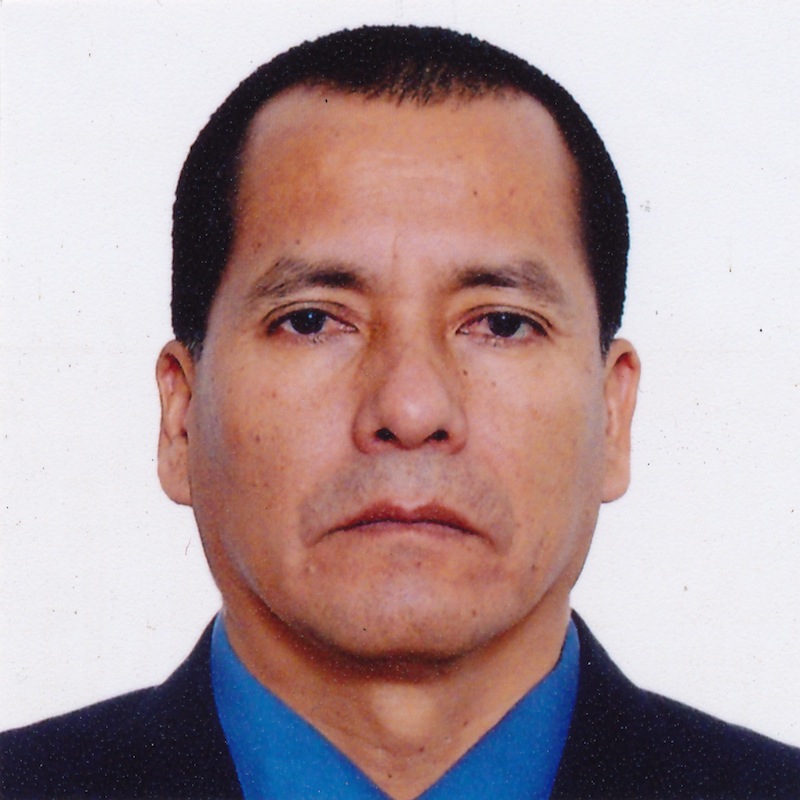 Luis Huicho合作论文数Universidad Peruana Cayetano Heredia18
 Mark D. Shriver合作论文数Department of Anthropology, College of the Liberal Arts, The Pennsylvania State University15C Monge-C合作论文数14M Rivera-Ch合作论文数13Ja Palacios合作论文数13
 Esteban Parra合作论文数Department of Anthropology, Faculty of Arts and Science, University of Toronto13Alberto Arregui合作论文数MRC Neurochemical Pharmacology Unit, Medical School, Cambridge CB2 2QD, U.K.13
 Francisco C. Villafuerte合作论文数Departamento de Ciencias Biológicas y Fisiológicas, Facultad de Ciencias e Ingeniería, Universidad Peruana Cayetano Heredia12
 Peter Robbins合作论文数Department of Physiology, Anatomy and Genetics, Medical Sciences Division, University of Oxford;The Queen's College, University of Oxford12Carlos Monge合作论文数11
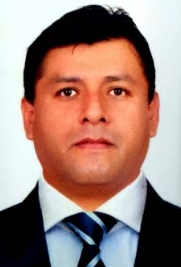 Jose Luis Macarlupu Bernuy合作论文数Universidad Peruana Cayetano Heredia11Frank S. Lee合作论文数10Jenna L. Isherwood合作论文数9
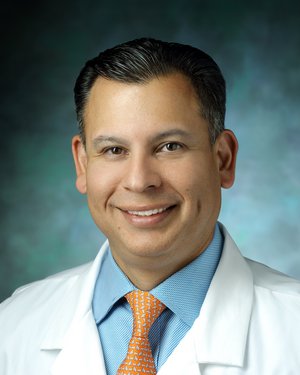 William Checkley合作论文数Department of Otolaryngology-Head and Neck Surgery, School of Medicine, Johns Hopkins University9
 Robert H. Gilman合作论文数Department of Molecular Microbiology and Immunology, Bloomberg School of Public Health, Johns Hopkins University;Department of International Health, Bloomberg School of Public Health, Johns Hopkins University;Center for Global Health, Johns Hopkins University9J. Jaime Miranda合作论文数9M Rivera-Chira合作论文数8
 Gianpietro Elias合作论文数Dept Exercise Sci, Syracuse Univ8
 Maria Rivera合作论文数Dept Biomed Sci, Univ Alcala8Otto Appenzeller合作论文数8Gianpietro Elias Revollendo合作论文数7Norcliffe Lucy J合作论文数7
 Sudipta Ghosh合作论文数7
 Victoria Claydon合作论文数Faculty of Medicine, The University of British Columbia7Karem Arriaza合作论文数6Juan Jose de la Cruz合作论文数6D Clark合作论文数6
 Jonathan P Moore合作论文数6Naveas Nelson合作论文数6
 Fabrice Favret合作论文数6Roger Hainsworth合作论文数6Luciano Bernardi合作论文数6
 Silvia M. Arribas合作论文数Department of Physiology, Faculty of Medicine, Autonomous University of Madrid6
 Vasthi Lopez合作论文数6Catherine Privat合作论文数6R Kacimi合作论文数5Rainer Boeger合作论文数5C Carey合作论文数5
 Ainash Childebayeva合作论文数Dept Archaeogenet, Max Planck Inst Sci Human Hist MPI SHH5Rosario López合作论文数5




