Tabular data contains rich structural semantics and plays a crucial role in organizing and manipulating information. Recent methods employ Multi-modal Large Language Models (MLLMs) to address table-related tasks across various modalities of table representations. However, existing studies mainly focus on exploring the table understanding ability of MLLMs using unimodal representations, which limits further exploration of multi-modal representations to enable more effective table reasoning. To better capture structural semantics from the tabular data, this paper introduces the HybrId-modal Preference oPtimizatiOn (HIPPO) model, which represents tables using both text and image, optimizing MLLMs by learning more comprehensive table information from these multiple modalities. Specifically, HIPPO samples MLLM responses from hybrid-modal table representations and designs a modality-consistent sampling strategy to enhance response diversity and mitigate modality bias during Direct Preference Optimization (DPO) training. Experiments on table question answering and table fact verification tasks demonstrate the effectiveness of HIPPO, achieving a 4 https://github.com/NEUIR/HIPPO .
Multiplex Graph Contrastive Learning (MGCL) has attracted significant attention. However, existing MGCL methods often struggle with suboptimal graph structures and fail to fully capture intricate interdependencies across multiplex views. To address these issues, we propose a novel self-supervised framework, Multiplex Graph Refinement with progressive fusion (MGRefine), for multiplex graph contrastive representation learning. Specifically, MGRefine introduces a multi-view learning module to extract a structural guidance matrix by exploring the underlying relationships between nodes. Then, a progressive fusion module is employed to progressively enhance and fuse representations from different views, capturing and leveraging nuanced interdependencies and comprehensive information across the multiplex graphs. The fused representation is then used to construct a consensus guidance matrix. A self-enhanced refinement module continuously refines the multiplex graphs using these guidance matrices while providing effective supervision signals. MGRefine achieves mutual reinforcement between graph structures and representations, ensuring continuous optimization of the model throughout the learning process in a self-enhanced manner. Extensive experiments demonstrate that MGRefine outperforms state-of-the-art methods and also verify the effectiveness of MGRefine across various downstream tasks on several benchmark datasets.
Hypergraph Neural Networks (HGNNs) build on Graph Neural Networks (GNNs) by using hyperedges to capture complex, high-order relationships in data. However, training HGNNs on large hypergraphs is limited by computational and memory bottlenecks on a single machine. To overcome this, we propose LCHGNN, a distributed training method based on a new data structure called the communication graph, which simplifies hypergraph communication by representing cut hyperedges as vertices for structured message passing. LCHGNN employs a vertex-centric, hyperedge-replication-based storage scheme and introduces specialized forward and backward propagation mechanisms tailored for distributed execution. To mitigate communication overhead, We propose a lightweight optimization strategy that employs full synchronization in the initial round, followed by lightweight synchronization in subsequent rounds. Additionally, we present a learnable semi-supervised synchronization (LSS) aggregation mechanism for adaptive hyperedge selection. Extensive experiments on benchmark datasets demonstrate that LCHGNN preserves training accuracy while substantially reducing communication costs and enhancing scalability. This work addresses a critical gap in distributed HGNN research by delivering a communication-efficient and scalable training method, thereby facilitating the application of hypergraph learning to large-scale problems.
Tabular data contains rich structural semantics and plays a crucial role in organizing and manipulating information. Recent methods employ Multi-modal Large Language Models (MLLMs) to address table-related tasks across various modalities of table representations. However, existing studies mainly focus on exploring the table understanding ability of MLLMs using unimodal representations, which limits further exploration of multi-modal representations to enable more effective table reasoning. To better capture structural semantics from the tabular data, this paper introduces the HybrId-modal Preference oPtimizatiOn (HIPPO) model, which represents tables using both text and image, optimizing MLLMs by learning more comprehensive table information from these multiple modalities. Specifically, HIPPO samples MLLM responses from hybrid-modal table representations and designs a modality-consistent sampling strategy to enhance response diversity and mitigate modality bias during Direct Preference Optimization (DPO) training. Experiments on table question answering and table fact verification tasks demonstrate the effectiveness of HIPPO, achieving a 4
Structural graph clustering is a data analysis technique that groups nodes within a graph based on their connectivity and structural similarity. The Structural graph clustering SCAN algorithm, a density-based clustering method, effectively identifies core points and their neighbors within areas of high density to form well-defined clusters. However, the clustering quality of SCAN heavily depends on the input parameters, ϵ and μ, making the clustering results highly sensitive to parameter selection. Different parameter settings can lead to significant differences in clustering results, potentially compromising the accuracy of the clusters. To address this issue, a novel structural graph clustering algorithm based on the adaptive selection of density peaks is proposed in this paper. Unlike traditional methods, our algorithm does not rely on external parameters and eliminates the need for manual selection of density peaks or cluster centers by users. Density peaks are adaptively identified using the generalized extreme value distribution, with consideration of the structural similarities and interdependencies among nodes, and clusters are expanded by incorporating neighboring nodes, enhancing the robustness of the clustering process. Additionally, a distance-based structural similarity method is proposed to re-cluster noise nodes to the correct clusters. Extensive experiments on real and synthetic graph datasets validate the effectiveness of our algorithm. The experiment results show that the ADPSCAN has a superior performance compared with several state-of-the-art (SOTA) graph clustering methods.
Unsupervised Graph Contrastive Learning (GCL) aims to derive graph representations for downstream tasks without labeled data. While GCL methods have made significant progress, they suffer from limitations including noise amplification and neglecting global structural and semantic information. In this paper, we propose Diffusion Model-Enhanced Graph Contrastive Learning (DiffGCL) to overcome these limitations and enhance graph representation learning for the first time. Specifically, a graph-specific diffusion module is designed to explicitly capture global structural and semantic patterns by controlled Gaussian noise injection and an attention-based graph denoising network. A GCL module focuses on capturing local discriminative information. Through integrating the diffusion model with GCL, a shared graph encoder can acquire both global and local structures and semantic information within the graph while efficiently removing noise, leading to significant performance enhancement. Experimental results on real-world datasets demonstrate the effectiveness of DiffGCL, showing that it outperforms state-of-the-art competitors in graph classification accuracy.
To address the limitations of existing graph contrastive learning methods, which fail to adaptively integrate feature and topological information and struggle to efficiently capture multi-hop information, we propose an adaptive multi-view parallel graph contrastive learning framework (AMPGCL). It is an unsupervised graph representation learning method designed to generate task-agnostic node embeddings. AMPGCL constructs and encodes feature and topological views to mine feature and global topological information. To encode global topological information, we introduce an H-Transformer to decouple multi-hop neighbor aggregations, capturing global topology from node subgraphs. AMPGCL learns embedding consistency among feature, topology, and original graph encodings through a multi-view contrastive loss, generating semantically rich embeddings while avoiding information redundancy. Experiments on nine real datasets demonstrate that AMPGCL consistently outperforms thirteen state-of-the-art graph representation learning models in classification accuracy, whether in homophilous or non-homophilous graphs.
Over the past few years, there has been a surge in research attention towards tasks involving graph data, largely due to the impressive performance demonstrated by graph neural networks (GNNs) in handling such information. Currently, out-of-distribution (OOD) detection in graphs is a hot research topic. The goal of graph OOD detection is to identify nodes or new graphs that differ from the training data distribution, primarily in terms of attributes and structures. OOD detection is crucial for enhancing the stability, security, and robustness of models. In various applications, such as biological networks and financial fraud, graph OOD detection can help models identify anomalies or unforeseen situations, thereby enabling appropriate responses. In node-level OOD detection, existing models typically only consider first-order neighbors. This paper introduces graph diffusion to the OOD detection task for the first time, proposing the HOOD model, a graph diffusion-based OOD node detection algorithm. Specifically, the original graph is processed through graph diffusion to obtain a new graph that can directly capture high-order neighbor information, overcoming the limitation that message passing must go through first-order neighbors. The new graph is then sparsified using a top-k approach. Based on entropy information, regularization is employed to ensure the uncertainty of OOD nodes, thereby giving these nodes higher scores and enabling the model to effectively detect OOD nodes while ensuring the accuracy of in-distribution node classification. Experimental results demonstrate that the HOOD model outperforms existing methods in both node classification and OOD detection tasks on multiple benchmarks, highlighting its robustness and effectiveness.
Missing data is a common and inevitable phenomenon. In practical applications, the datasets usually contain noises for various reasons. Most of the existing missing data imputing algorithms are affected by noises which reduce the accuracy of the imputation. This paper proposes a noise-aware missing data multiple imputation algorithm NPMI in static data. Different multiple imputation models are proposed according to the missing mechanism of data. Secondly, the method to determine the imputation order of multivariablesmissing is given. A random sampling consistency algorithm is proposed to estimate the initial values of the parameters of the multiple imputation model to reduce the influence of noise data and improve the algorithm's robustness. Experiments on two real datasets and two synthetic datasets verify the accuracy and efficiency of the proposed NPMI algorithm, and the results are analyzed.
Graph node importance estimation, which evaluates the importance of graph nodes, is an important graph mining problem and has been widely used in many fields such as search engines and recommender systems. Different from ordinary graphs, there are various types of nodes and relationships in knowledge graphs. The relationships in knowledge graphs encode different information, so the information of nodes in a knowledge graph is richer, which leads to the evaluation of the importance of nodes in knowledge graphs being more complicated. The existing research on the importance of nodes in knowledge graphs is mainly based on the assumption that there are enough labels, which even reach 70% of the dataset. However, there are usually few labels in reality. To better study the importance estimation of nodes in a knowledge graph when labels are sparse, we propose a node importance evaluation algorithm based on contrastive learning. First, an unsupervised contrastive loss is designed to generate rich node representations by maximizing the consistency of representations under different views of the same node. To utilize scarce but valuable labeled data for learning node importance, we design a semi-supervised contrastive loss, which solves the problem of failing to determine positive and negative examples in the task of node importance evaluation. In order to improve the effectiveness of contrastive learning, we propose a negative sampling strategy based on label similarity. Negative samples are constructed according to the label difference. Finally, the experimental results on real-world datasets confirm the effectiveness of CLNIE, which achieves a significant performance improvement over the state-of-the-art solutions.
In the real world, many complex systems consist of a large number of interacting groups of entities. A hypergraph consists of vertices and hyperedges that can connect multiple vertices. Since hypergraphs can effectively simulate complex intergroup relationships among entities, they have a wide range of applications such as computer vision and bioinformatics. In this paper, we study the subhypergraph containment query problem which is one of the most basic problems in the processing of hypergraphs. Existing methods on the subgraph query are designed for ordinary graphs and do not consider hypergraph features. If they are directly applied to subhypergraph containment query, they will suffer from hyperedge semantic incompleteness and label diversity sensitivity issues, resulting in inefficient algorithm performance. This motivates us to improve the performance by exploiting hyperedge features. In our work, we propose a novel framework for subhypergraph containment query called hyperedge filtering vertex testing. Based on the features of hypergraph, we propose an efficient filtering algorithm that can reduce the cost of the traditional filtering stage. In addition, we further propose efficient isomorphism testing techniques based on hyperedge vertex candidates to improve the performance. Extensive experiments on real datasets validate the superiority of our algorithm compared to existing methods.
Graph Neural Network (GNN) has shown powerful learning and reasoning ability. However, graphs in the real world generally exist dynamically, i.e., the topological structure of graphs is constantly evolving over time. On the one hand, the learning ability of the networks declines since the existing GNNs cannot process the graph streaming data. On the other hand, the cost of retraining GNNs from scratch becomes prohibitively high with the increasing scale of graph streaming data. Therefore, we propose an online incremental learning framework IncreGNN based on GNN in this paper, which solves the problem of high computational cost of retraining GNNs from scratch, and prevents catastrophic forgetting during incremental training. Specifically, we propose a sampling strategy based on node importance to reduce the amount of training data while preserving the historical knowledge. Then, we present a regularization strategy to avoid over-fitting caused by insufficient sampling. The experimental evaluations show the superiority of IncreGNN compared to existing GNNs in link prediction task.
Hyperspace hashing which is often applied to NoSQL data-bases builds indexes by mapping objects with multiple attributes to a multidimensional space. It can accelerate processing queries of some secondary attributes in addition to just primary keys. In recent years, the rich computing resources of GPU provide opportunities for implementing high-performance HyperSpace Hash. In this study, we construct a fully concurrent dynamic hyperspace hash table for GPU. By using atomic operations instead of locking, we make our approach highly parallel and lock-free. We propose a special concurrency control strategy that ensures wait-free read operations. Our data structure is designed considering GPU specific hardware characteristics. We also propose a warp-level pre-combinations data sharing strategy to obtain high parallel acceleration. Experiments on an Nvidia RTX2080Ti GPU suggest that GHSH performs about 20-100X faster than its counterpart on CPU. Specifically, GHSH performs updates with up to 396 M updates/s and processes search queries with up to 995 M queries/s. Compared to other GPU hashes that cannot conduct queries on non-key attributes, GHSH demonstrates comparable building and retrieval performance.
Hyperspace hashing which is often applied to NoSQL data-bases builds indexes by mapping objects with multiple attributes to a multidimensional space. It can accelerate processing queries of some secondary attributes in addition to just primary keys. In recent years, the rich computing resources of GPU provide opportunities for implementing high-performance HyperSpace Hash. In this study, we construct a fully concurrent dynamic hyperspace hash table for GPU. By using atomic operations instead of locking, we make our approach highly parallel and lock-free. We propose a special concurrency control strategy that ensures wait-free read operations. Our data structure is designed considering GPU specific hardware characteristics. We also propose a warp-level pre-combinations data sharing strategy to obtain high parallel acceleration. Experiments on an Nvidia RTX2080Ti GPU suggest that GHSH performs about 20–100X faster than its counterpart on CPU. Specifically, GHSH performs updates with up to 396 M updates/s and processes search queries with up to 995 M queries/s. Compared to other GPU hashes that cannot conduct queries on non-key attributes, GHSH demonstrates comparable building and retrieval performance.
As one of the most challenging problems in data management, query processing and optimization are always widely concerned by researchers. However, it is very difficult for traditional techniques to meet the diverse requirements of modern database system due to the needs of hand-tuning for specific workloads and datasets. Inspired by advances in applying artificial intelligence (AI) to multi-field researches, recently, the AI powered new techniques for query processing and optimization have been proposed and made significant success. In view of these researches, this paper first presents the main tasks of the AI powered new techniques of query processing and optimization, and analyzes the differences between the new tasks and traditional AI tasks. Second, the recent research progress is reviewed, and the main advantages and application bottlenecks are summarized. Third, this paper discusses the main challenges of the AI powered new techniques of query processing and optimization. Finally, the future research directions are prospected.
The count of one column for high-dimensional datasets, i.e., the number of records containing this column, has been widely used in numerous applications such as analyzing popular spots based on check-in location information and mining valuable items from shopping records. However, this poses a privacy threat when directly publishing this information. Differential privacy (DP), as a notable paradigm for strong privacy guarantees, is thereby adopted to publish all column counts. Prior studies have verified that truncating records or grouping columns can effectively improve the accuracy of published results. To leverage the advantages of the two techniques, we combine these studies to further boost the accuracy of published results. However, the traditional penalty function, which measures the error imported by a given pair of parameters including truncating length and group size, is so sensitive that the derived parameters deviate from the optimal parameters significantly. To output preferable parameters, we first design a smart penalty function that is less sensitive than the traditional function. Moreover, a two-phase selection method is proposed to compute these parameters efficiently, together with the improvement in accuracy. Extensive experiments on a broad spectrum of real-world datasets validate the effectiveness of our proposals.
交互式数据探索是一组多样的发现式应用程序的关键技术,着重于交互、探索和发现;在许多场景和领域中广泛应用.以海量的学术文献数据探索为背景,对交互式数据探索的特征自适应技术进行研究.首先,提出一种适用于面向学术文献数据探索的特征自适应交互式数据探索框架FA-IDE(feature-adaptive interactive data exploration),在每次迭代过程中动态地调整特征子集,以满足用户兴趣多样性的需求.其次,针对该框架,提出特征子集的均匀度BFS(balance of feature subsets)评价准则,并给出了基于BFS的序列前向特征选择算法.再次,针对相关样本发现问题,提出划分等级建立方法,根据决策树模型对用户兴趣区域划分后,提出基于相似度的结果集排序策略.实验结果表明,所提出方法可有效提高用户探索效率和最终结果的准确性.
Cyber-Physical System is a novel intelligent system integrating computing and physical procedures, which combines computing, communication and control technologies. Event is the key element to link the cyber world and the physical world. However, the time stamp of the event is imprecise in practical applications because of data loss, mismatching of the time granularities of events from different monitoring systems, or asynchronism of events in the distributed systems and so on. We improve the Low Water Mark algorithm originally designed for the event scheduling with deterministic timestamps by leveraging tailored pruning techniques considering the time uncertainty. Specifically a scheduling algorithm of events with uncertain timestamps is proposed, which can support effective scheduling of reading events and writing events in CPS. The experiments verify that the scheduling algorithm is more accurate, which guarantees providing correct feedback of the event sequences to CPS.
Cyber-physical system (CPS) is a novel intelligent system integrating computing and physical proce-dures, which combines computing, communication and control technologies. Event is the key element to link the cyber world and the physical world. However, the time stamp of the event is imprecise in practical applications because of data missing, mismatching of the time granularities of event from different monitoring systems, or asynchronism of events in the distributed systems and so on. By improving the scheduling algorithm of events with precise time-stamps named low water mark leveraging the pruning algorithm of composite events with imprecise timestamps, this paper proposes a scheduling algorithm of events with imprecise timestamps, which supports effective scheduling of reading events and writing events in CPS. The experiments verify that the scheduling algorithm is more accurate, which guarantees providing the correct feedback of event sequences to CPS.
 Ge Yu (于戈)合作论文数College of Computer Science and Engineering, Northeastern University40
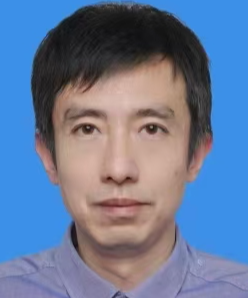 Yu Gu (谷峪)合作论文数School of Computer Science and Engineering, Northeastern University27
 Chuanwen Li (李传文)合作论文数School of Computer Science and Engineering, Northeastern University10
 Xiaohua Li (李晓华)合作论文数School of Computer Science and Engineering, Northeastern University9
 Jia Xu (许嘉)合作论文数School of Computer, Electronics and Information, Guangxi University6Yumeng SONG (宋雨萌)合作论文数Northeastern University5
 Xiaochun Yang (杨晓春)合作论文数School of Computer Science and Engineering, Northeastern University4
 Ning Wang (王宁)合作论文数School of Cyberspace Security, Guangzhou University4
 Zhenghao Liu (刘正皓)合作论文数Information Retrieval Lab, Department of Computer Science and Engineering, School of Computer Science and Engineering, Northeastern University3
 Qi Shi合作论文数Research Center for Social Computing and Information Retrieval, Harbin Institute of Technology2Zhuo Ren合作论文数2Xinze Li合作论文数S-Lab, Nanyang Technological University2
 Xiaocui Yang合作论文数DeCLaRe Lab, Singapore University of Technology and Design2WANG Meng-xiang (王蒙湘)合作论文数2Zhibo Feng (冯智博)合作论文数2Qian MA (马茜)合作论文数2
 Chong Liu (刘冲)合作论文数School of Mechanical Engineering and Automation, Northeastern University2
 Zhigang Wang (王志刚)合作论文数College of Information Science and Engineering, Ocean University of China2
 Zhe Chen (陈哲)合作论文数Software Verification Lab, College of Computer Science and Technology, Nanjing University of Aeronautics and Astronautics2Yanfei Lv合作论文数2
 Chong Fu (付冲)合作论文数School of Computer Science and Engineering, Northeastern University2
 Tiancheng Zhang (张天成)合作论文数School of Computer Science and Engineering, Northeastern University2Yaxin Yu (于亚新)合作论文数School of Computer Science and Engineering, Northeastern University2junji ma (马俊骥)合作论文数1Qian Ma (马茜)合作论文数1
 Yuhang Su合作论文数1zhibo feng合作论文数1Na Guo合作论文数1
 Yangshuai Wang合作论文数1
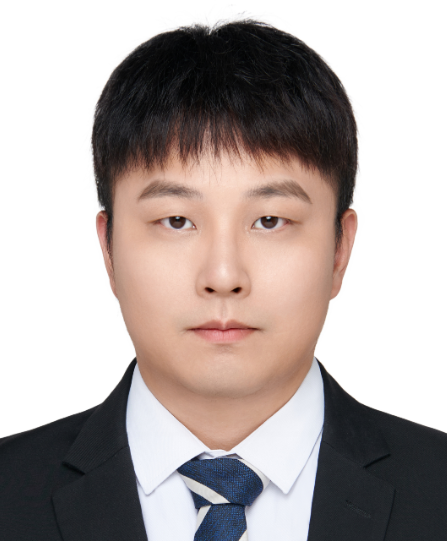 Zhen Song (宋振)合作论文数School of Software, Shandong University1Li-Juan Cheng合作论文数1
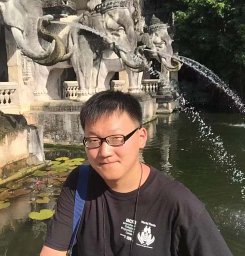 Hengyu Liu合作论文数Northeastern University, China1
 Yukun Yan合作论文数Tsinghua Univ, Sch Med, Dept Biomed Engn, Beijing, Peoples R China1
 Hongbiao Chen合作论文数Shenzhen Institute of Advanced Technology, Chinese Academy of Sciences;Shenzhen-Hong Kong Institute of Brain Science-Shenzhen Fundamental Research Institutions;Shenzhen-Hong Kong Institute of Brain Science-Shenzhen Fundamental Research Institutions, Chinese Academy of Sciences1
 Xiaoyu Jiang合作论文数Hebei Key Lab Gastroenterol, Hebei Med Univ1CHENG Yan (程研)合作论文数1YiQiu Li (李怡秋)合作论文数1
 Tianyi Li (李天益)合作论文数1DongQiang Zhao (赵东强)合作论文数1Feng Zhang (张峰)合作论文数1
 Shanshan Wu合作论文数Google1
 Xiaofeng Zhu (朱晓峰)合作论文数School of Computer Science and Engineering, University of Electronic Science and Technology of China;School of Computer Science and Technology, Hainan University1Wang Wenbin合作论文数1
 Junli Shi合作论文数1
 Xianwen Gao合作论文数1
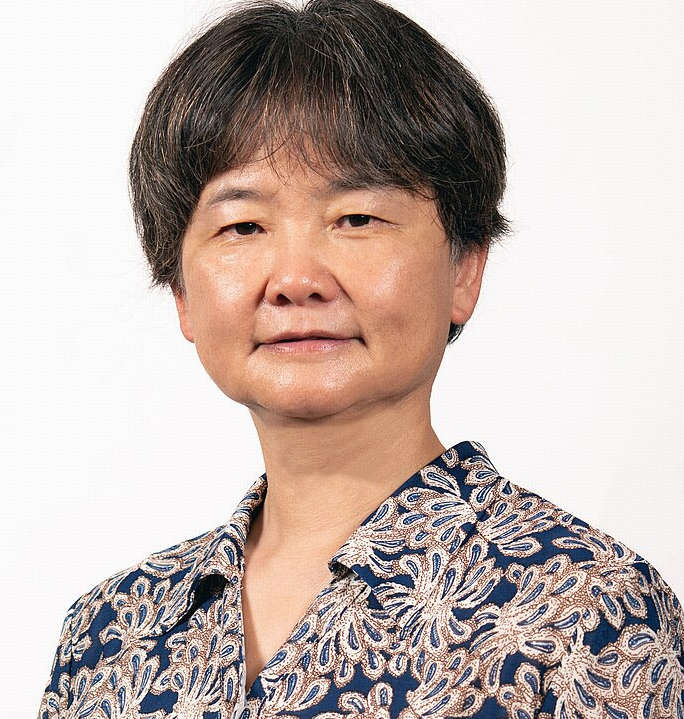 Jingbo Wang合作论文数School of Physics, Mathematics and Computing, University of Western Australia1
 Baoyan Song (宋宝燕)合作论文数College of Computer Science, Liaoning University1Zhi-Bo Feng (冯志波)合作论文数1




