Embedded devices typically lack the resources of GPU-equipped machines, and existing inference methods suffer from either high computational overhead (patch-based) or accuracy loss (approximation-based). We propose GaLe, a memory-efficient technique that enables the deployment of pretrained networks on constrained devices without retraining. GaLe partitions feature maps into two components: a local exact (Le) representation that preserves fine details and a global approximate (Ga) representation that retains long-range dependencies. Unlike standard tiling, GaLe supports global operations and attention mechanisms found in hybrid CNN-transformer models. Validated on ImageNet, our method matches exact-inference performance while achieving up to 65
This paper introduces WrenNet, an efficient neural network enabling real-time multi-species bird audio classification on low-power microcontrollers for scalable biodiversity monitoring. We propose a semi-learnable spectral feature extractor that adapts to avian vocalizations, outperforming standard mel-scale and fully-learnable alternatives. On an expert-curated 70-species dataset, WrenNet achieves up to 90.8% accuracy on acoustically distinctive species and 70.1% on the full task. When deployed on an AudioMoth device (≤1MB RAM), it consumes only 77mJ per inference. Moreover, the proposed model is over 16x more energy-efficient compared to Birdnet when running on a Raspberry Pi 3B+. This work demonstrates the first practical framework for continuous, multi-species acoustic monitoring on low-power edge devices.
Vision transformers (ViTs) have become the go-to solution in many computer vision tasks due to their ability to capture long-range dependencies in data and, consequently, achieve remarkable performance in dense prediction tasks. However, their high computational and memory requirements make these architectures unsuitable for embedded and low-power devices. This work introduces a novel linear ViT architecture optimized for resource-constrained embedded hardware. Our model operates with less than 1MB of parameters and 400KB of RAM, relying only on operations compatible with most embedded runtimes. We propose a linear attention mechanism based solely on fully connected layers, enabling execution on platforms that do not support typical transformer operations. To ease deployment, we apply a Hardware-Aware Scaling (HAS) strategy that enables one-shot network scaling to meet specific hardware constraints, without requiring an expensive Network Architecture Search (NAS). Using just three hyperparameters, HAS supports independent control over model size, memory usage, and computational cost. Our network architecture shows better generalization performance and up to 80 90% reduction in latency compared to existing approaches, thanks to better optimization for the lightweight CPUs and small accelerators typical of tiny, resource-constrained devices.
Spiking Neural Networks (SNNs), particularly Spiking Transformers, offer energy-efficient processing of event-based sensor data for healthcare applications. Yet current architectures are rigid: they are trained and deployed as static networks with fixed parameter counts and computational graphs. This limits deployment on neuromorphic hardware such as Loihi and SpiNNaker, where on-chip constraints often require smaller models that trade accuracy for feasibility. We introduce the Elastic Spiking Transformer, a runtime-adaptive architecture that brings elasticity into the spiking paradigm. Inspired by Matryoshka-style representation learning, it embeds nested elasticity in the Feature Extractor, Spiking Self-Attention, and Feed-Forward blocks. Through granularity-aware weight sharing, a single universal model can dynamically slice network width and attention heads at inference time without retraining. This design provides two key advantages for SNNs. First, it allows the model to adjust its parameter footprint to different hardware memory budgets. Second, reducing active neurons also lowers spike firing rates, yielding proportional reductions in synaptic operations, an energy benefit not directly available in standard artificial neural networks. We evaluate the approach on CIFAR10/100, CIFAR10-DVS, and the EHWGesture clinical gesture understanding dataset. Results show that one Elastic Spiking Transformer spans a broad range of complexity-accuracy trade-offs, matching or surpassing independently trained baselines while supporting adaptive, real-time gesture recognition on resource-constrained edge devices.
Portrait segmentation (isolating a picture’s subject from the background) has become a key step for applications such as video conferencing, augmented reality, and mobile imaging. Deploying these capabilities directly on low-power devices, including smartphones, action cameras, and even within image sensors themselves, eliminates reliance on external processors, reducing system complexity and power consumption. In this work, we present SINergy, a scalable and hardware-aware portrait segmentation network specifically designed for embedded deployment. SINergy builds upon efficient backbones such as XiNet and PhiNet, optimizing arithmetic intensity, memory access patterns, and operator compatibility rather than conventional FLOP-centric metrics. We systematically evaluate SINergy across heterogeneous platforms, ranging from consumer microcontrollers to small accelerators, single-board computers, and GPU-equipped edge devices. Our experimental results show that SINergy achieves 2× to 5× speedup over existing architectures while preserving accuracy, and delivers the first real-time implementation of portrait segmentation on microcontrollers. Beyond tiny devices, the same hardware-aware principles yield over 80% latency reduction on GPU-equipped platforms. On a Greenwaves GAP9 microcontroller, SINergy requires just 6.4 ms for segmentation under 60 mW of power. These results establish SINergy as a scalable and energy-efficient solution, enabling practical deployment of portrait segmentation across the full spectrum of embedded computing. Code is available at https://github.com/RickyBenevelli/SINergy
Hand gesture understanding is essential for several applications in human-computer interaction, including automatic clinical assessment of hand dexterity. While deep learning has advanced static gesture recognition, dynamic gesture understanding remains challenging due to complex spatiotemporal variations. Moreover, existing datasets often lack multimodal and multi-view diversity, precise ground-truth tracking, and an action quality component embedded within gestures. This paper introduces EHWGesture, a multimodal video dataset for gesture understanding featuring five clinically relevant gestures. It includes over 1,100 recordings (6 hours), captured from 25 healthy subjects using two high-resolution RGB-Depth cameras and an event camera. A motion capture system provides precise ground-truth hand landmark tracking, and all devices are spatially calibrated and synchronized to ensure cross-modal alignment. Moreover, to embed an action quality task within gesture understanding, collected recordings are organized in classes of execution speed that mirror clinical evaluations of hand dexterity. Baseline experiments highlight the dataset's potential for gesture classification, gesture trigger detection, and action quality assessment. Thus, EHWGesture can serve as a comprehensive benchmark for advancing multimodal clinical gesture understanding.
Over the past decade, pervasive computing has been influenced by two major trends. First, the widespread adoption of smart, connected, and always active Internet of Things (IoT) devices, pushed by advancements in modern microcontrollers, which now offer more powerful processors, greater efficiency, and faster clock speeds Second, deep learning techniques have grown exponentially, driven by faster processors and the availability of large training datasets. However, traditional deep learning models are often too resource-intensive for embedded systems and can only be run on powerful (and power-hungry) general-purpose GPUs (GP-GPUs) [1] , [2] . The emerging field of TinyML is addressing the gap between small, low-power embedded devices and the high computational requirements of modern deep-learning workloads. This cutting-edge field is working on applying the transformative power of machine learning (ML) in the constrained environment of tiny devices and embedded systems [3] . TinyML has been successfully applied across various domains, including audio processing and sound event detection [1] , biosignal analysis [4] , gesture recognition [5] , and general time-series data. Among these areas, computer vision stands out as one of the most prominent applications of TinyML - allowing advanced multimedia processing algorithms to run on tiny, power-efficient devices. We propose two novel architectures to optimize the current resources and performance tradeoffs in embedded devices.
Brain-Computer Interfaces (BCIs) suffer from high inter-subject variability and limited labeled data, often requiring lengthy calibration phases. In this work, we present an end-to-end approach that explicitly models the subject dependency using lightweight convolutional neural networks (CNNs) conditioned on the subject's identity. Our method integrates hyperparameter optimization strategies that prioritize class imbalance and evaluates two conditioning mechanisms to adapt pre-trained models to unseen subjects with minimal calibration data. We benchmark three lightweight architectures on a time-modulated Event-Related Potentials (ERP) classification task, providing interpretable evaluation metrics and explainable visualizations of the learned representations. Results demonstrate improved generalization and data-efficient calibration, highlighting the scalability and practicality of subject-adaptive BCIs.
We propose a probabilistic framework for dynamic quantization of neural networks that allows for a computationally efficient input-adaptive rescaling of the quantization parameters. Our framework applies a probabilistic model to the network's pre-activations through a lightweight surrogate, enabling the adaptive adjustment of the quantization parameters on a per-input basis without significant memory overhead. We validate our approach on a set of popular computer vision tasks and models, observing only a negligible loss in performance. Our method strikes the best performance and computational overhead tradeoff compared to standard quantization strategies.
Recent advances in Visual Anomaly Detection (VAD) have introduced sophisticated algorithms leveraging embeddings generated by pre-trained feature extractors. Inspired by these developments, we investigate the adaptation of such algorithms to the audio domain to address the problem of Audio Anomaly Detection (AAD). Unlike most existing AAD methods, which primarily classify anomalous samples, our approach introduces fine-grained temporal-frequency localization of anomalies within the spectrogram, significantly improving explainability. This capability enables a more precise understanding of where and when anomalies occur, making the results more actionable for end users. We evaluate our approach on industrial and environmental benchmarks, demonstrating the effectiveness of VAD techniques in detecting anomalies in audio signals. Moreover, they improve explainability by enabling localized anomaly identification, making audio anomaly detection systems more interpretable and practical.
Neural Audio Codecs have become powerful tools for audio processing, offering learnable compression methods that balance high compression ratios with perceptual quality. This paper introduces a signal processing system that utilizes the latent space of Neural Audio Codecs for signal reconstruction and feature extraction in edge computing environments. We design a lightweight NAC encoder inspired by SoundStream, optimized for resource-constrained devices. Our evaluation on speech recognition and classification tasks highlights the system's adaptability to Internet of Things applications. The proposed design achieves a 40× audio waveform compression with only a 3% increase in word error rate for transcription tasks and a 94.6% accuracy on end-to-end intent classification, demonstrating its practicality for real-world deployment. Additionally, the encoder operates at a real-time factor of 1.77 on an ARM Cortex-A53 using a single thread for intra/inter-operation, ensuring efficient real-time compression and 12-8 times less energy consumption compared to the original model encoder.
While numerous methods achieving remarkable performance exist in the Object Detection literature, addressing data distribution shifts remains challenging. Continual Learning (CL) offers solutions to this issue, enabling models to adapt to new data while maintaining performance on previous data. This is particularly pertinent for edge devices, common in dynamic environments like automotive and robotics. In this work, we address the memory and computation constraints of edge devices in the Continual Learning for Object Detection (CLOD) scenario. Specifically, (i) we investigate the suitability of an open-source, lightweight, and fast detector, namely NanoDet, for CLOD on edge devices, improving upon larger architectures used in the literature. Moreover, (ii) we propose a novel CL method, called Latent Distillation (LD), that reduces the number of operations and the memory required by state-of-the-art CL approaches without significantly compromising detection performance. Our approach is validated using the well-known VOC and COCO benchmarks, reducing the distillation parameter overhead by 74% and the Floating Points Operations (FLOPs) by 56% per model update compared to other distillation methods.
Visual Anomaly Detection (VAD) has gained significant research attention for its ability to identify anomalous images and pinpoint the specific areas responsible for the anomaly. A key advantage of VAD is its unsupervised nature, which eliminates the need for costly and time-consuming labeled data collection. However, despite its potential for real-world applications, the literature has given limited focus to resource-efficient VAD, particularly for deployment on edge devices. This work addresses this gap by leveraging lightweight neural networks to reduce memory and computation requirements, enabling VAD deployment on resource-constrained edge devices. We benchmark the major VAD algorithms within this framework and demonstrate the feasibility of edge-based VAD using the well-known MVTec dataset. Furthermore, we introduce a novel algorithm, Partially Shared Teacher-student (PaSTe), designed to address the high resource demands of the existing Student Teacher Feature Pyramid Matching (STFPM) approach. Our results show that PaSTe decreases the inference time by 25%, while reducing the training time by 33% and peak RAM usage during training by 76%. These improvements make the VAD process significantly more efficient, laying a solid foundation for real-world deployment on edge devices.
Vision transformers (ViTs) have recently become the go-to standard for solving various computer vision tasks due to their superior performance and generalization capabilities. However, these architectures are complex to use in embedded and heavily resource-constrained devices for two main reasons: their high memory requirements and the use of complex operators seldom supported by embedded inference pipelines. Meanwhile, in embedded environments, it is still common to use older architectures with lower performance, but offering reduced memory consumption and higher compatibility with the limited embedded runtimes, usually supporting only a limited number of operators. In this paper, we present a neural architecture based on a novel linear transformer block capable of bridging the gap between the performance achieved by modern computer vision models and the broader support offered by architectures currently used in embedded environments. We also propose a solution for one-shot scaling of our architecture, called Hardware-Aware Scaling. This approach allows us to develop architectures tailored to embedded devices with different computational resources without requiring a lengthy network architecture search or manual architecture tuning. We tested our architecture on an object detection task and achieved performance comparable to recent versions of YOLO, with lower latency and parameter count while maximizing compatibility.
Object Detection is a highly relevant computer vision problem with many applications such as robotics and autonomous driving. Continual Learning (CL) considers a setting where a model incrementally learns new information while retaining previously acquired knowledge. This is particularly challenging since Deep Learning models tend to catastrophically forget old knowledge while training on new data. In particular, Continual Learning for Object Detection (CLOD) poses additional difficulties compared to CL for Classification. In CLOD, images from previous tasks may contain unknown classes that could reappear labeled in future tasks. These missing annotations cause task interference issues for replay-based approaches. As a result, most works in the literature have focused on distillation-based approaches. However, these approaches are effective only when there is a strong overlap of classes across tasks. To address the issues of current methodologies, we propose a novel technique to solve CLOD called Replay Consolidation with Label Propagation for Object Detection (RCLPOD). Based on the replay method, our solution avoids task interference issues by enhancing the buffer memory samples. Our method is evaluated against existing techniques in CLOD literature, demonstrating its superior performance on established benchmarks like VOC and COCO.
Neural style transfer (NST) is a powerful technique that merges the content of one image with the artistic style of another. However, existing NST models often suffer from computational inefficiency, limiting their practical applicability. In this paper, we propose a lightweight NST approach based on XiNets, neural networks especially developed for microcontrollers and embedded applications. Our XiNet-based pipeline achieves an extremely lightweight transfer style mechanism and high-quality stylized outputs, significantly reducing computational complexity. Furthermore, we explore various optimizations and loss functions to optimize network generation performance. The combination of our novel loss factors and an extremely lightweight generative network enables performance comparable to those offered by networks of larger orders of magnitude. Experimental results demonstrate comparable style transfer quality to state-of-the-art approaches while running on embedded devices like a Raspberry Pi 4 single-board computer and an STM32H7 microcontroller. Our lightweight NST framework allows for real-time style transfer applications on resource-constrained devices without compromising visual fidelity.
Human skin classification is an essential task for several machine vision applications such as human-machine interfaces, people/object tracking, and classification. In this paper, we describe a hybrid CMOS/memristor vision sensor architecture embedding skin detection over a wide dynamic range. In-sensor RGB to r g -chromaticity color-space conversion is executed on-the-fly through a pixel-level automatic exposure time control. Each pixel of the array delivers two pre-filtered analog signals, the r and g values, suitable for being efficiently classified as skin or non-skin through an analog memristive neural network (NN), without the need for any further signal processing. Moreover, we study the NN performance and theorize how it should be added in the hardware. The skin classifier is organized in an array of column-level memristor-based NN to exploit the nano-scale device characteristics and non-volatile analog memory capabilities, making the proposed sensor architecture highly flexible, customizable for various use-case scenarios, and low-power. The output is a skin bitmap that is robust against variations of the illuminant color and intensity.
Neural Vocoders convert time-frequency representations, such as mel-spectrograms, into corresponding time representations. Vocoders are essential for generative applications in audio (e.g. text-to-speech and text-to-audio). This paper presents a scalable vocoder architecture for small-footprint edge devices, inspired by Vocos and adapted with XiNets and PhiNets. We test the developed model capabilities qualitatively and quantitatively on single-speaker and multi-speaker datasets and benchmark inference speed and memory consumption on four microcontrollers. Additionally, we study the power consumption on an ARM Cortex-M7-powered board. Our results demonstrate the feasibility of deploying neural vocoders on resource-constrained edge devices, potentially enabling new applications in Internet of Sounds (IoS) and Embedded Audio scenarios. Our best-performing model achieves a MOS score of 3.95/5 while utilizing 1.5MiB of FLASH and 517KiB of RAM and consuming 252 mW for a 1s audio clip inference.
The unprecedented development of deep learning approaches for video processing has caused growing privacy concerns. To ensure data analysis while maintaining privacy, it is essential to address how to protect individuals' identities. One solution is to anonymize data at the source, avoiding the transmission or storage of information that could lead to identification. This study introduces XimSwap, a novel deep learning technique for real-time video anonymization, which can remove facial identification features directly on edge devices with minimal computational resources. Our approach offers a comprehensive solution that guarantees privacy by design. This novel method for implementing face-swapping ensures that the pose and expression of a target face remain unchanged and can be used on embedded devices with very limited computational resources. By incorporating style transfer layers into convolutional ones and optimizing the network's operation, we achieved a reduction of over 98% in the required operations and parameters compared with state-of-the-art architectures. Our approach also significantly reduces RAM usage, making it possible to implement the anonymization process on tiny edge devices, including microcontrollers, such as the STM32H743.
Contrastive Language-Audio Pretraining (CLAP) became of crucial importance in the field of audio and speech processing. Its employment ranges from sound event detection to text-to-audio generation. However, one of the main limitations is the considerable amount of data required in the training process and the overall computational complexity during inference. This paper investigates how we can reduce the complexity of contrastive language-audio pre-trained models, yielding an efficient model that we call tinyCLAP. We derive an unimodal distillation loss from first principles and explore how the dimensionality of the shared, multimodal latent space can be reduced via pruning. TinyCLAP uses only 6% of the original Microsoft CLAP parameters with a minimal reduction (less than 5%) in zero-shot classification performance across the three sound event detection datasets on which it was tested
 Luca Benini合作论文数Institut fur Integrierte Systeme, Eidgenossische Technische Hochschule Zurich;Department of Information Technology and Electrical Engineering, Eidgenossische Technische Hochschule Zurich91
 Bojan Milosevic合作论文数University of Bologna30
 Francesco Paissan合作论文数Fondazione Bruno Kessler;Mila;University of Trento26
 Alberto Ancilotto合作论文数Fondazione Bruno Kessler20
 Davide Brunelli合作论文数Department of Industrial Engineering, University of Trento19
 Simone Benatti合作论文数Univ. of Bologna;c;Univ. of Bologna16
 Bruno Riccó合作论文数University of Bologna12
 Piero Zappi合作论文数12
 Davide Giovanelli合作论文数FBK, ICT Ctr, Trento, Italy11
 Lorenzo Chiari合作论文数Dipartimento di Ingegneria dell'Energia Elettrica e dell'Informazione, Alma Mater Studiorum Università di Bologna11
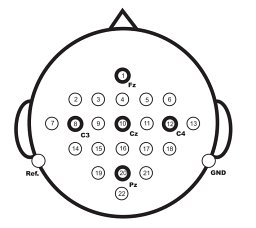 Velu Prabhakar Kumaravel合作论文数CIMeC, Univ Trento9
 Massimo Gottardi合作论文数8
 Andrea Acquaviva合作论文数Department of Electrical, Electronic, and Information Engineering, Alma Mater Studiorum – Università di Bologna8
 Filippo Casamassima合作论文数University of Bologna8
 Laura Rocchi合作论文数8
 Marco Benocci合作论文数7
 Gianmarco Cerutti合作论文数7Maria Elena Bonfigli合作论文数7
 Alessio Brutti合作论文数Fondazione Bruno Kessler7Augusto Pieracci合作论文数University of Bologna7
 Manuele Rusci合作论文数Univ Bologna, DEI, Bologna, Italy6
 Marco Buiatti合作论文数CEA/DRM/DSV, Service Hospitalier Frederic Joliot6
 Michela Lecca合作论文数6Davide Rossi合作论文数5Davide Dalle Pezze合作论文数Universitá degli Studi di Padova5Carlo Tacconi合作论文数Department of Computer Science, University of Bologna5
 Gian Antonio Susto合作论文数Department of Information Engineering, University of Padova5
 Omar Cafini合作论文数4
 Rita Cucchiara合作论文数Dipartimento di Ingegneria “Enzo Ferrari”, Università di Modena e Reggio Emilia4S. Bartolini合作论文数4
 Michele Magno合作论文数Department of Information Technology and Electrical Engineering, ETH Zürich4
 Amy L. Murphy合作论文数Embedded Systems Unit, Center for Information and Communication Technology, Fondazione Bruno Kessler4
 Tullio Salmon Cinotti合作论文数Department of Electronics Informatics and Systems4Federico De Bon合作论文数3Matteo Moncalero合作论文数3
 Rahul Prasad合作论文数Fdn Bruno Kessler, ICT Irst, Trento, Italy3
 Victor Kartsch合作论文数Department of Electrical, Electronic and Information Engineering, University of Bologna, Bologna, Italy3
 Fabio Montagna合作论文数University of Bologna3
 Marco Gaiani合作论文数3
 Daniel Roggen合作论文数School of Engineering and Informatics, University of Sussex;Sensor Technology Research Centre, University of Sussex;Google3
 Qiuting Huang (黄秋庭)合作论文数Department of Information Technology and Electrical Engineering, ETH Zürich;Institute for Integrated Systems, ETH Zürich3
 Gerhard Tröster合作论文数Digital Systems and Wearable Computing Lab, Institute for Electronics, Department of Information Technology and Electrical Engineering, Eidgenössische Technische Hochschule Zürich3
 Alessandra Costanzo合作论文数Department of Electrical, Electronic, and Information Engineering, University of Bologna3
 Alberto Del Bimbo合作论文数Department of Information Engineering, Università di Firenze;Media Integration and Communication Center, Università di Firenze3
 Andrea Prati合作论文数Dipartimento di Ingegneria e Architettura, Università degli studi di Parma;Department of Information Engineering, Università degli Studi di Parma3
 Marco Pistore合作论文数Smart Community Lab, Center for Information and Communication Technology, Fondazione Bruno Kessler3
 Stefano Baraldi合作论文数University of Florence3




