Physiological signals are often corrupted by motion artifacts, baseline drift, and other low-SNR disturbances, which pose significant challenges for analysis. Additionally, these signals exhibit strong non-stationarity, with sharp peaks and abrupt changes that evolve continuously, making them difficult to represent using traditional time-domain or filtering methods. To address these issues, a novel wavelet-based approach for physiological signal analysis is presented, aiming to capture multi-scale time-frequency features in various physiological signals. Leveraging this technique, two large-scale pretrained models specific to EMG and ECG are introduced for the first time, achieving superior performance and setting new baselines in downstream tasks. Additionally, a unified multi-modal framework is constructed by integrating pretrained EEG model, where each modality is guided through its dedicated branch and fused via learnable weighted fusion. This design effectively addresses challenges such as low signal-to-noise ratio, high inter-subject variability, and device mismatch, outperforming existing methods on multi-modal tasks. The proposed wavelet-based architecture lays a solid foundation for analysis of diverse physiological signals, while the multi-modal design points to next-generation physiological signal processing with potential impact on wearable health monitoring, clinical diagnostics, and broader biomedical applications.
Human-machine interaction, particularly in prosthetic and robotic control, has seen progress with gesture recognition via surface electromyographic (sEMG) signals.However, classifying similar gestures that produce nearly identical muscle signals remains a challenge, often reducing classification accuracy. Traditional deep learning models for sEMG gesture recognition are large and computationally expensive, limiting their deployment on resource-constrained embedded systems. In this work, we propose WaveFormer, a lightweight transformer-based architecture tailored for sEMG gesture recognition. Our model integrates time-domain and frequency-domain features through a novel learnable wavelet transform, enhancing feature extraction. In particular, the WaveletConv module, a multi-level wavelet decomposition layer with depthwise separable convolution, ensures both efficiency and compactness. With just 3.1 million parameters, WaveFormer achieves 95
Understanding motor unit (MU) behavior in dynamic movements remains a critical gap in neuro-rehabilitation, prosthetics, and human-machine interfaces (HMI). While machine learning applied to surface electromyography (sEMG) enables movement classification, it provides little insight into neural control, limiting the development of more precise and adaptive assistive technologies. Recent studies have demonstrated that MU activity can be accurately extracted using high-density sEMG decomposition under isometric conditions. However, extracting and tracking MUs during dynamic tasks remains challenging due to signal non-stationarity caused by changes in muscle length. This study investigates MU control in the forearm flexor muscles across different contraction velocities (5°/s, 10°/s, 20°/s) and force levels (15% and 25% of the maximum voluntary contraction [MVC]). We investigate whether increases in movement velocity are primarily achieved through MU recruitment strategies or by adjusting the discharge rates of already-recruited units. Our findings show that MU control in the upper limb follows a velocity-dependent modulation pattern (p-value < 0.05), favoring discharge rate adjustments over additional MUs recruitment at higher speeds. We also validate the feasibility of MU tracking in dynamic conditions, opening new opportunities for neurotechnology applications such as HMI.
The electromyography (EMG) signal is particularly useful in monitoring muscle activity, and it can be acquired noninvasively on the skin surface. Thanks to these key characteristics, EMG-based human-machine interfaces (HMIs) for prosthetic myocontrol, as well as gesture recognition, are becoming widespread. A key challenge in this context is to design embedded systems to process EMG signals and generate motor commands with miniaturized, unobtrusive, and low-power devices, reliably and in real time, at a relatively low cost to provide continuous monitoring without causing stigma or discomfort. This article presents an in-depth review of the current status and future research challenges in systems and circuits for EMG acquisition and processing. We start by illustrating the sensor interfaces and acquisition systems required for signal analysis to provide efficient and effective ways of understanding the signal and its nature. We, then, focus on conventional state-of-the-art (SoA) EMG gesture recognition algorithms as well as novel architectures that tackle EMG processing challenges, i.e., hyperdimensional computing (HDC), blind source separation (BSS), and spiking neural networks (SNNs). Finally, we discuss open challenges, such as EMG variability, natural control, and efficient computation, to bring the myocontrol completely out of the laboratory, filling the gap between research prototypes and real-world applications.
Given its profound economic and societal impact, the automotive industry calls for enhancing driver and driving safety. Current approaches mainly focus on detecting unsafe vehicle behavior, often overlooking crucial factors related to the driver's physiological state, such as stress or drowsiness. This study introduces a multimodal, unobtrusive driver monitoring system for stress detection. It integrates photoplethysmography (PPG) and electrocardiography (ECG) sensors into a smart steering wheel. Data were collected from five participants using a driving simulator under controlled stress-inducing scenarios. A Temporal Convolutional Network (TCN) was used to classify stress levels based solely on physiological signals, achieving an average cross-validated accuracy of 95.14%, an F1-score of 82.29%. This system outperforms many state-of-the-art wearable approaches while performing unobtrusive multimodal driver vital signs monitoring. An ablation study was also conducted to assess the individual and combined contribution of each signal modality. Results confirmed that the sensor fusion of PPG and ECG provides a performance improvement compared to using either signal alone.
Open hardware, which includes both silicon and embedded hardware platforms, has fueled progress in multiple sectors. The RISC-V instruction set architecture is at the leading edge of this transformation thanks to its flexibility and vast adoption. The efficiency of RISC-V-based processors and accelerators enables artificial intelligence-based biomedical applications to operate in real-time, safeguarding user privacy while ensuring long battery life. These capabilities are critical in human-machine interaction (HMI) systems to bridge the gap between complex high-end systems and low-power, low-cost wearable hardware to provide real-time and long-term consumer interfaces with medical-grade performance. To shed more light on this topic, we examine different processing platforms in the context of electromyography (EMG)-based gesture recognition. Based on experimental EMG data, we also extend analysis and profiling to sensor interfaces, feature extraction methods, and classification algorithms to optimize accuracy, energy efficiency, and cost in various application scenarios, thereby providing a resource for researchers and practitioners interested in open-source design at the system level, enabling them to select the most appropriate solution that achieves an optimal balance between performance and complexity. Our results indicate that for applications such as gaming and consumer object control, where cost and time-to-market outweigh precision and power constraints, low-complexity algorithms (e.g., linear discriminant analysis) implemented on low-cost microcontroller-based platforms offer sufficient classification accuracy. On the other hand, medical-grade performance for continuous monitoring in wearable devices requires the next generation of ultra-low-power RISC-V architectures, capable of executing high-performance and computationally demanding algorithms. These results highlight the potential of open hardware in biomedical applications, not only for the performance of current RISC-V architectures but also for their flexibility, which allows designers to modify current integrated circuits and system designs for specific applications (without incurring licensing costs), further reducing the gap with high-end systems.
This article presents DermaBridge, an innovative adaptive mixed-signal system designed for precise measurement of electrodermal activity (EDA) using a dynamically controlled ac Wheatstone bridge tailored for driver physiological-monitoring systems in automotive scenarios. DermaBridge demonstrates high sensitivity and a wide dynamic range, with experimental results showing a relative error (RE) of less than 1% and a minimum equivalent noise conductance (ENCo) of 25 pS. The system features a 12-bit successive approximation register (SAR) analog-to-digital converter (ADC), which provides an average conductance theoretical resolution of 60.6 pS, allowing for the detection of subtle changes in skin conductance. Its real-time adaptability and accuracy are confirmed through measurements of reference resistors and physiological signals acquired with a sampling frequency of 35 Hz by the proposed system and cross validated against a certified commercial device. These measurements illustrate the system's ability to capture both skin conductance levels (SCLs) and skin conductance responses (SCRs) under various test conditions. In addition, DermaBridge supports seamless integration with tools such as NeuroKit2 for advanced signal analysis.
Modeling hand kinematics and dynamics is a key goal for research on Human-Machine Interfaces, with surface electromyography (sEMG) being the most commonly used sensing modality. Though under-researched, sEMG regression-based modeling of hand movements and forces is promising for finer control than allowed by mapping to fixed gestures. We present an event-based sEMG encoding for multi-finger force estimation implemented on a microcontroller unit (MCU). We are the first to target the HYSER High-Density (HD)-sEMG dataset in multi-day conditions closest to a real scenario without a fixed force pattern. Our Mean Absolute Error of (8.4 ± 2.8)% of the Maximum Voluntary Contraction (MVC) is on par with State-of-the-Art (SoA) works on easier settings such as within-day, single-finger, or fixed-exercise. We deploy our solution for HYSER’s hardest task on a parallel ultra-low power MCU, getting an energy consumption below 6.5 uJ per sample, 2.8× to 11× more energy-efficient than SoA single-core solutions, and a latency below 280 us per sample, shorter than HYSER’s HD-sEMG sampling period, thus compatible with real-time operation on embedded devices.
Ultrasound-based Hand Gesture Recognition has gained significant attention in recent years. While static gesture recognition has been extensively explored, only a few works have tackled the task of movement regression for real-time tracking, despite its importance for the development of natural and smooth interaction strategies. In this paper, we demonstrate the regression of 3 hand-wrist Degrees of Freedom (DoFs) using a lightweight, A-mode-based, truly wearable US armband featuring four transducers and WULPUS, an ultra-low-power acquisition device. We collect US data, synchronized with an optical motion capture system to establish a ground truth, from 5 subjects. We achieve state-of-the-art performance with an average root-mean-squared-error (RMSE) of $7.32^{\circ}$ $\pm$ $1.97^{\circ}$ and mean-absolute-error (MAE) of $5.31^{\circ}$ $\pm$ $1.42^{\circ}$. Additionally, we demonstrate, for the first time, robustness with respect to transducer repositioning between acquisition sessions, achieving an average RMSE value of $11.11^{\circ}$ $\pm$ $4.14^{\circ}$ and a MAE of $8.46^{\circ}$ $\pm$ $3.58^{\circ}$. Finally, we deploy our pipeline on a real-time low-power microcontroller, showcasing the first instance of multi-DoF regression based on A-mode US data on an embedded device, with a power consumption lower than $30 \mathrm{mW}$ and end-to-end latency of $\approx$ $80 \mathrm{ms}$.
Most Wearable Ultrasound (WUS) devices lack the computational power to process signals at the edge, instead relying on remote offload, which introduces latency, high power consumption, and privacy concerns. We present Maestro, a RISC-V SoC with unified Vector-Tensor Unit (VTU) and memory-coupled Fast Fourier Transform (FFT) accelerators targeting edge processing for wearable ultrasound devices, fabricated using low-cost TSMC 65nm CMOS technology. The VTU achieves peak 302GFLOPS/W and 19.8GFLOPS at FP16, while the multi-precision 16/32-bit floating-point FFT accelerator delivers peak 60.6GFLOPS/W and 3.6GFLOPS at FP16. We evaluate Maestro on a US-based gesture recognition task, achieving 1.62GFLOPS in signal processing at 26.68GFLOPS/W, and 19.52GFLOPS in Convolutional Neural Network (CNN) workloads at 298.03GFLOPS/W. Compared to a state-of-the-art SoC with a similar mission profile, Maestro achieves a $5\times $ speedup while consuming only 12mW, with an energy consumption of 2.5mJ in a wearable US channel preprocessing and ML-based postprocessing pipeline.
Hand gesture recognition based on biosignals has shown strong potential for developing intuitive human-machine interaction strategies that closely mimic natural human behavior. In particular, sensor fusion approaches have gained attention for combining complementary information and overcoming the limitations of individual sensing modalities, thereby enabling more robust and reliable systems. Among them, the fusion of surface electromyography (EMG) and A-mode ultrasound (US) is very promising. However, prior solutions rely on power-hungry platforms unsuitable for multi-day use and are limited to discrete gesture classification. In this work, we present an ultra-lowpower (sub-50 mW) system for concurrent acquisition of 8-channel EMG and 4-channel A-mode US signals, integrating two state-of-the-art platforms into fully wearable, dry-contact armbands. We propose a framework for continuous tracking of 23 degrees of freedom (DoFs), 20 for the hand and 3 for the wrist, using a kinematic glove for ground-truth labeling. Our method employs lightweight encoder-decoder architectures with multitask learning to simultaneously estimate hand and wrist joint angles. Experimental results under realistic sensor repositioning conditions demonstrate that EMG-US fusion achieves a root mean squared error of 10.6 degrees +/- 2.0 degrees, compared to 12.0 degrees +/- 1 degrees for EMG and 13.1 degrees +/- 2.6 degrees for US, and a R-2 score of 0.61 +/- 0.1, with 0.54 +/- 0.03 for EMG and 0.38 +/- 0.20 for US.
This research introduces the second version of smArt steeriNG wheel for driver Safety (ANGELS), an embedded system designed to analyze photoplethysmography (PPG) and electrodermal activity (EDA) signals in the context of driver monitoring. ANGELS is a cost-effective and energy-efficient solution that performs real-time acquisition and processing of PPG and EDA signals, enabling continuous monitoring of driver physiological parameters. Notably, ANGELS operates autonomously without needing accelerometer data to mitigate distortions caused by vehicle motion. Following an initial validation in collaboration with Maserati, supplementary experiments were conducted within our laboratory-level driving simulator. ANGELS v2 integrates an additional EDA sensor compared with its predecessor. Despite its unobtrusive nature, ANGELS v2 features a mean absolute error (MAE) of 1.19 BPM in heart rate (HR) detection and 1.9 misdetected peaks per minute in EDA peak detection, which is the standard metric to evaluate EDA. These results are achieved within a power envelope of 230 mW. These results underscore the reliability and promising potential of ANGELS v2 to enhance driver safety.
Recent advancements in head-mounted wearable technology are revolutionizing the field of biopotential measurement, but the integration of these technologies into practical, user-friendly devices remains challenging due to issues with design intrusiveness, comfort, reliability, and data privacy. To address these challenges, this paper presents GAPses, a novel smart glasses platform designed for unobtrusive, comfortable, and secure acquisition and processing of electroencephalography (EEG) and electrooculography (EOG) signals. We introduce a direct electrode-electronics interface within a sleek frame design, with custom fully dry soft electrodes to enhance comfort for long wear. The fully assembled glasses, including electronics, weigh 40 g and have a compact size of 160 mm x 145 mm. An integrated parallel ultra-low-power RISC-V processor (GAP9, Greenwaves Technologies) processes data at the edge, thereby eliminating the need for continuous data streaming through a wireless link, enhancing privacy, and increasing system reliability in adverse channel conditions. We demonstrate the broad applicability of the designed prototype through validation in a number of EEG-based interaction tasks, including alpha waves, steady-state visual evoked potential analysis, and motor movement classification. Furthermore, we demonstrate an EEG-based biometric subject recognition task, where we reach a sensitivity and specificity of 98.87% and 99.86% respectively, with only 8 EEG channels and an energy consumption per inference on the edge as low as 121 $\mu$J. Moreover, in an EOG-based eye movement classification task, we reach an accuracy of 96.68% on 11 classes, resulting in an information transfer rate of 94.78 bit/min, which can be further increased to 161.43 bit/min by reducing the accuracy to 81.43%. The deployed implementation has an energy consumption of 40 $\mu$J per inference and a total system power of only 12.4 mW, of which only 1.61% is used for classification, allowing for continuous operation of more than 22 h with a small 75 mAh battery.
Abstract Electroencephalography (EEG) is widely used to monitor epileptic seizures, and standard clinical practice consists of monitoring patients in dedicated epilepsy monitoring units via video surveillance and cumbersome EEG caps. Such a setting is not compatible with long-term tracking under typical living conditions, thereby motivating the development of unobtrusive wearable solutions. However, wearable EEG devices present the challenges of fewer channels, restricted computational capabilities, and lower signal-to-noise ratio. Moreover, artifacts presenting morphological similarities to seizures act as major noise sources and can be misinterpreted as seizures. This paper presents a combined seizure and artifacts detection framework targeting wearable EEG devices based on Gradient Boosted Trees. The seizure detector achieves nearly zero false alarms with average sensitivity values of $$65.27\%$$ 65.27 % for 182 seizures from the CHB-MIT dataset and $$57.26\%$$ 57.26 % for 25 seizures from the private dataset with no preliminary artifact detection or removal. The artifact detector achieves a state-of-the-art accuracy of $$93.95\%$$ 93.95 % (on the TUH-EEG Artifact Corpus dataset). Integrating artifact and seizure detection significantly reduces false alarms—up to $$96\%$$ 96 % compared to standalone seizure detection. Optimized for a Parallel Ultra-Low Power platform, these algorithms enable extended monitoring with a battery lifespan reaching 300 h. These findings highlight the benefits of integrating artifact detection in wearable epilepsy monitoring devices to limit the number of false positives.
Individual finger forces can be predicted by regression of high-density surface electromyography (sEMG) signals. This is promising for applications in human-machine interfaces, specifically prosthesis control, although the large number of electrodes imposes high computational requirements. In this study, we present strategies for a-priori channel selection guided by motor unit spatial activation patterns to reduce computational costs without compromising decoding accuracy. In contrast to subject-specific data-driven selection, we test the hypothesis that pre-selecting sEMG channels for finger-specific force estimation can still generalize across subjects. We show that a subset of 32 channels, out of a total of 256, achieves an RMSE of 6.32 ± 2.34 % of the Maximum Voluntary Contraction (MVC) on the HYSER RANDOM dataset, competitive with the state-of-the-art baseline model, using all channels, which attains an RMSE of 5.57 ± 1.94 % MVC. These results highlight the potential of simple, a-priori channel selection strategies in decoding finger forces from sEMG, which would be particularly suited for applications with limited computational resources.
High-density surface electromyography (HD-sEMG) holds promise for advancing intuitive and non-invasive human-machine interfaces (HMIs) due to its higher spatial resolution compared to sparse sEMG. We address the challenge of integrating the HD-sEMG's data volume with embedded computing to enable fully wearable control systems. We target HD-sEMG data from the wearable EMaGer 4x16 sensors system, with a Temporal Convolutional Network (TCN) that processes all channels and yields (94.7 +/- 1.2)% accuracy on 6 classes. Moreover, we analyze the TCN's 4x16 Class Activation Maps with an approach inspired by computer vision, showing that channel relevance has a row-wise behavior not shown before. We deploy our TCN on the parallel ultra-low-power GAP9 MCU, consuming only 28.7 mW, 13.7 uJ per inference, and 475 us inference computation time, compatible with the constraints of real-time processing. Our work advances the SoA in the integration of HD-sEMG and embedded computing for wearable HMIs by combining wearable HD acquisition and embedded inference.
The widespread diffusion of long-term cardiac monitoring using wearable devices is a key opportunity for analyzing the health conditions of chronic patients. The continuous analysis of the heartbeat, even reduced to minimal configuration (i.e., two leads), can diagnose and keep track of many severe cardiac conditions, such as abnormal atrial and ventricular contractions. Since wearable devices are battery-powered, it is essential to design solutions that can improve the power efficiency of this monitoring, leveraging HW/SW optimization on low-power platforms. State-of-the-art algorithms based on advanced machine learning (ML) approaches achieve high accuracy but are extremely demanding in terms of energy consumption. In the context of battery-powered devices, determining a trade-off between accuracy and energy consumption is paramount to extending battery lifetime. This work presents a system design for analyzing the Electrocardiogram (ECG) signal to detect pathological conditions using an energy-efficient methodology based on Convolutional Neural Networks (CNNs). We assessed our solution on GAP9, a parallel microcontroller-class platform based on the RISC-V architecture. We achieved a 95.0% accuracy on the MIT-BIH Arrhythmia dataset, which includes five classes of pathological conditions. This value is marginally lower (3%) than the current state-of-the-art based on transformers. However, we identified the best energy-accuracy trade-off configuration, reducing the energy consumption of 3 x (0.03 mJ vs. 0.09 mJ) which guarantees a longer battery lifetime for critical applications.
Capacitive noncontact electrodes offer a promising solution to improve comfort and unobtrusiveness in continuous monitoring ECG systems which are becoming more widespread in wearable devices. Most implementations based on off-the-shelf components require rather large electrodes and power budgets while custom applicationspecific integrated circuits (ASICs) face significantly higher adoption challenges. In this article, we present a novel micropower ultrahigh impedance front-end with an equivalent input capacitance of 70 fF in the ECG band, enabling contactless ECG acquisition with electrodes as small as 78.5 mm(2) with a power consumption of only 15 mu W. The front-end implements a novel power supply bootstrapping architecture and is integrated in a full acquisition system which includes a 24-bit analog to digital converter (ADC) and a bluetooth low energy (BLE)-capable Cortex M4 processor, achieving up to ten days of continuous operation on a 600 mAh PR44 battery.
Increasing driver and driving safety is one of the most compelling needs of the automotive industry, both in terms of economic and social impact. Current approaches primarily focus on analyzing unsafe vehicle behavior, often overlooking the critical factor of the driver's physiological state. This paper introduces a novel solution leveraging temporal convolutional networks (TCNs) for unobtrusive driver drowsiness detection based on photoplethys-mography (PPG). PPG data is collected seamlessly using sensors integrated into the steering wheel, providing a non-invasive assessment of the autonomic nervous system (ANS). We benchmarked our model on 16 subjects using a leave-one-subject-out (LOSO) cross-validation scheme, achieving an average accuracy of 77.03%. The model also shows good performance in avoiding false alarms when the driver is alert with a false positive ratio of just 8.21% and correctly detecting drowsiness with a low false negative ratio of 13.92%, improving the state-of-the-art for PPG based approaches. A quantized version of the model is deployed on a commercial ultra-low-power (ULP) system-on-a-chip (SoC), demonstrating real-world feasibility with an inference time of 4.8 ms and energy per inference of 117 mu J. This work represents a significant step towards unobtrusive, real-time physiological monitoring in driving environments, contributing to the ongoing efforts to improve driver's safety.
 Luca Benini合作论文数Institut fur Integrierte Systeme, Eidgenossische Technische Hochschule Zurich;Department of Information Technology and Electrical Engineering, Eidgenossische Technische Hochschule Zurich99
 Victor Kartsch合作论文数Department of Electrical, Electronic and Information Engineering, University of Bologna, Bologna, Italy26
 Marcello Zanghieri合作论文数University of Bologna, Bologna, Italy16
 Alessio Burrello合作论文数University of Bologna, Bologna, Italy16
 Elisabetta Farella合作论文数Dipartimento di Elettronica, Informatica e Sistemistica16Davide Rossi合作论文数15
 Andrea Cossettini合作论文数Swiss Fed Inst Technol, Integrated Syst Lab, Zurich, Switzerland15
 Fabio Montagna合作论文数University of Bologna14
 Marco Guermandi合作论文数ARCES, University of Bologna12Pierangelo Maria Rapa合作论文数11
 Mattia Orlandi合作论文数11
 Elisa Donati合作论文数9
 Giuseppe Tagliavini合作论文数Institute of Analytical Chemistry, University of Padua9
 Abbas Rahimi合作论文数UC San Diego9
 Thorir Mar Ingolfsson合作论文数D ITET, Swiss Fed Inst Technol8
 Jan M. Rabaey合作论文数Department of Electrical Engineering and Computer Sciences, University of California, Berkeley8
 Francesco Conti 0001合作论文数University of Bologna8
 Bojan Milosevic合作论文数University of Bologna8Sebastian Frey合作论文数6
 Andrea Amidei合作论文数6Ali Moin合作论文数University of California Berkeley5
 Daniele Jahier Pagliari合作论文数Department of Control and Computer Engineering, Politecnico di Torino5
 Massimo Poncino合作论文数Department of Control and Computer Engineering, Politecnico di Torino;Dipartimento di Automatica e Informatica, Politecnico di Torino5
 Paolo Pavan合作论文数Dipartimento di Ingegneria "Enzo Ferrari", Università di Modena e Reggio Emilia5Philippe Ryvlin合作论文数5
 Davide Brunelli合作论文数Department of Industrial Engineering, University of Trento5
 Schekeb Fateh合作论文数5Victor Javier Kartsch Morinigo合作论文数4Pauline Ducouret合作论文数4
 Andy Zhou合作论文数Intology4
 Pasquale Davide Schiavone合作论文数ETH Zürich, Zürich, Switzerland4
 Angelo Garofalo合作论文数Univ Bologna, Bologna, Italy4
 Xiaying Wang合作论文数Swiss Fed Inst Technol, Dept Informat Technol & Elect Engn, Zurich, Switzerland4
 Enrico Macii合作论文数Interuniversity Department of Regional and Urban Studies and Planning, Politecnico di Torino4
 Qiuting Huang (黄秋庭)合作论文数Department of Information Technology and Electrical Engineering, ETH Zürich;Institute for Integrated Systems, ETH Zürich4
 Roberto Meattini合作论文数Department of Electrical, Electronic, and Information Engineering, University of Bologna3
 Marco Tomasini合作论文数3Clemente Villani合作论文数3
 Daniele Rossi合作论文数3Mattia Sinigaglia合作论文数3
 Benedetta Mazzoni合作论文数3
 Luca Valente合作论文数Department of Electrical, Electronic and Information Engineering, University of Bologna3
 Alisha Menon合作论文数Univ Calif Berkeley, Dept EECS, Berkeley Wireless Res Ctr, Berkeley, CA 94720 USA3
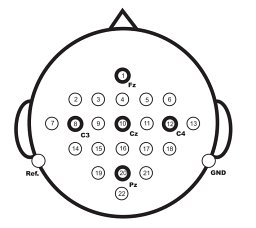 Velu Prabhakar Kumaravel合作论文数CIMeC, Univ Trento3Senam Tamakloe合作论文数3
 Matteo Risso合作论文数Politecn Torino, Dept Control & Comp Engn, Turin, Italy3
 Moritz Scherer合作论文数ETH Zürich3
 Luca Bertaccini合作论文数Swiss Fed Inst Technol3Adriano Bernini合作论文数Centre Hospitalier Universitaire Vaudois (CHUV), Lausanne University Hospital3




