Integral-fin tubes with high heat transfer capability are a promising solution for improving the compactness of condensers used in the exploitation of offshore natural gas at sea, and the sloshing motions including rolling and pitching would inevitably affect the performance of tubes. For applying integral-fin tubes offshore, the effects of rolling and pitching motions on condensation heat transfer characteristics of integral-fin tubes should be known. In this study, the condensation heat transfer characteristics of integral-fin tubes under rolling and pitching motions are experimentally investigated and the effects of motion angle and frequency are quantitatively analyzed. The results show that the sloshing motions have both positive and negative effects on the heat transfer of integral-fin tubes during a period, and the pitching motion has a greater influence than the rolling motion. As the sloshing angle increases from 0 deg to 12 deg, the maximum increase and reduction rates of the ratio of local wall subcooling temperature under pitching motion to that under static conditions are 10.9% and 12.5%, respectively, and the time-averaged condensation heat transfer coefficient (HTC) increases by 3.5% maximally. As the sloshing frequency increases from 0 to 0.25 Hz, the maximum increase and reduction rates of the ratio of local wall subcooling temperature under pitching motion to that under static conditions are 7.7% and 15.2%, respectively, and the increase rate of the time-averaged condensation HTC remains about 2%.
制冷系统中的有效充注量的计算依赖于制冷剂在润滑油中的动态析出特性.本文的目的是通过实验研究制冷剂在润滑油中析出时质量分数随时间变化的特性,并建立预测制冷剂质量分数动态变化的数学模型.实验方面,采用了外压骤降时制冷剂会析出的原理,搭建了动态溶析实验台,通过测量溶液折射率得到了R410A制冷剂在POE68润滑油中析出时质量分数的实时变化.实验结果表明,随着压力的骤降,制冷剂几乎同步析出,质量分数呈现急速下降、缓慢下降并最后稳定的动态变化趋势;随着压降幅度的增大,制冷剂最大析出速率增大,质量分数每秒最大下降16.4%,制冷剂质量分数稳定的时间变短,最短仅有4 s.建模方面,基于一维质量扩散原理,开发了能够预测制冷剂质量分数随时间变化的析出模型.模型结果表明,质量分数预测值与实验数据的平均绝对误差小于5%,平均相对误差小于25%.
Applying partially miscible lubricating oil-refrigerant mixtures instead of completely miscible ones in refrigeration systems is a promising way to avoid the refrigerant insufficiency, and the application of partially miscible oil requires the clarity of nucleate pool boiling characteristics of partially miscible mixtures. As partially miscible mixtures at boiling conditions show an entirely different stratification process compared to completely miscible mixtures or partially miscible mixtures at non-boiling conditions studied by former researchers, the existing researches cannot be directly applied to evaluate pool boiling characteristics of the partially miscible mixture. The purpose of this study is to experimentally investigate and model both stratification and heat transfer performance of nucleate pool boiling of the partially miscible oil-refrigerant mixture. The stratification phenomenon at boiling of partially miscible mixtures is observed, and up to four layers (i.e., an oil-rich micro-layer, a middle oil-poor layer, a top oil-rich layer, and a gas phase layer) are found. The boiling process of partially miscible mixtures stratifying from a single layer into four layers is modelled, and calculation methods of mass transfer rates among layers are proposed. The model validation shows that predicted thicknesses of layers accord with experimental images, which covers the conditions of heat flux ranging from 5 to 15 kW/m(2), initial oil mass fraction ranging from 5 to 15%, and initial height ranging from 80 to 120 mm. Predicted heat transfer coefficients agree with 80% of the experimental data within the deviation of & PLUSMN; 25%, and the mean deviation is 15.3%.
Metal foam wrapped tube has the advantages of large specific surface area, and thus it has great potential to enhance the condensation heat transfer for marine shell and tube condensers, which have the requirements of "high compactness" and "high reliability" under sloshing conditions. In the present study, the effects of the metal foam pore density and the sloshing conditions on the condensation heat transfer on metal foam wrapped tubes were experimentally investigated. The pore density of metal foam covers the widely used structure ranging from 5 PPI to 40 PPI; the sloshing conditions include six-freedom motions of surging, swaying, heaving, rolling, pitching and yawing; the sloshing displacement ranges from 0 to 120 mm; the sloshing angle ranges from 0 to 12'; and the sloshing frequency ranges from 0 to 0.33 Hz. The experiment results show that the condensation heat transfer coefficients of metal foam wrapped tubes increase firstly and then decrease with the increase of PPI, and the 10 PPI metal foam wrapped tube shows the optimal condensation performance. The rolling motion has significant effect on the condensation heat transfer of metal foam wrapped tube, while the other five sloshing motions have negligible effect on the condensation heat transfer of metal foam wrapped tube. With the increase of rolling angle from 0 to 12 degrees, the condensation heat transfer performance of 10 PPI and 20 PPI metal foam wrapped tube gradually increases and the increase rate of the condensation heat transfer coefficient is up to 12%; while the condensation heat transfer performance of metal foam wrapped tube with 5 PPI increases as the rolling angle is larger than 10 degrees. With the increase of rolling frequency, the condensation heat transfer performance of metal foam wrapped tube decreases, and the decrease rate of the condensation heat transfer coefficient is up to 8%. (C) 2021 Elsevier Ltd. All rights reserved.
Droplet retention on metal fibers is a common physical phenomenon, and its drainage is significantly affected by the droplet shape. The purpose of this study is to experimentally investigate the effect of gravity on the shape of droplet on a metal fiber, and to present a method to quantitatively describe the droplet shape. It is found that droplets on a metal fiber are in the shape of clam-shell, and the droplet profile curves from the front view and the side view are both approximate to ellipse arcs or circle arcs. This finding inspires the description method of the droplet shape, covering the solid-liquid interface and the gas-liquid interface. In this method, the solid-liquid interface is described by a cylindrical function with the triple contact line as the boundary, and the triple contact line is expressed as the intersection line of two cylindrical surfaces; the gas-liquid interface is simplified as the curved surface formed by the profile curve revolving around the vertical axis, and the profile curve at an arbitrary azimuthal angle is described by the ellipse function with the variable semi-axis. The proposed model is validated by the experiments and the results show that, the goodness of fit of the predicted profiles is larger than 88%, and fthe deviations between the predicted volume and the experimental volume are within 10%. (C) 2020 Elsevier Ltd. All rights reserved.
通过搭建可视化试验台观测了重力场中水平金属纤维表面的液滴形状,并测量了液滴形状参数,包括液滴直径、高度、接触角、接触线宽度和接触线高度.通过拟合参数关联式,求解了液滴固-液界面子模型和气-液界面子模型的描述方程,开发了一种椭球形的纤维液滴形状模型.液滴模型的轮廓预测结果和观测试验得到的液滴图像吻合度较好,可以在±10%的误差范围内描述98%的试验结果,平均偏差为4.6%.
Flow mode transitions on metal foam wrapped tubes in shell and tube heat exchanger may affect the condensate characteristics obviously because the condensate inundation severely depends on the flow mode. In the present study, the flow mode transitions were experimentally investigated by observing the flow modes on metal foam wrapped tubes and determining the Reynolds numbers (Re) of flow mode transitions. The experimental conditions cover the metal foam pore density from 5 to 40 PPI (pore per inch), the tube spacing from 6 to 20 mm, working fluids of pure water and water/ethylene glycol mixture, and the flowing process of increasing flow rate and decreasing flow rate. The experiment results show that, as the PPI increases, the Reynolds numbers of droplet/droplet-column (D/DC) transition and droplet-column/column (DC/C) transition both increase, but the Reynolds numbers of column/column-sheet (C/CS) transition and column-sheet/sheet (CS/S) transition both decrease; as the Galileo number increases, the Reynolds numbers of flow mode transition increases. It is also found that, the Reynolds numbers of the D/DC and DC/C transition does not change obviously with the tube spacing, while the Reynolds numbers of the C/CS and CS/S transition increases sharply at first and then slightly with the increase of tube spacing. Correlations for flow mode transitions on metal foam wrapped tubes are developed, and the predicted results of the correlations agree with 94% of experimental data within a deviation of 20%.
泡沫金属应用于海上管壳式换热器时,需要保证海上工况下冷凝液体从泡沫金属中及时疏泄,为此需要明确泡沫金属内液体的疏泄性能.本文搭建了滴注疏泄测试实验台,在稳定和横摇工况下分别测量了孔密度分别为5、10、20和40 PPI的泡沫金属内液体疏泄后的单位体积存液量.结果表明:随着孔密度从5 PPI增加到40 PPI,液体存在泡沫金属内的形态逐渐从部分悬挂液滴变成完整液层,单位体积存液量约增加了300%;随着横摇角度和横摇频率的增大,泡沫金属的疏泄性能变好,存液量减小;孔密度10为PPI的泡沫金属在横摇工况下疏泄性能最优,而孔密度为40 PPI的疏泄性能最差,存液量在实验工况范围内最多变化了45%和8%.
Metal foams have great potential for improving the condensation heat transfer characteristics of shell-and-tube heat exchangers in FLNG plants, and the drainage characteristics in metal foam under sloshing conditions should be promoted through modifying the surface wettability. For revealing the liquid drainage mechanism of metal foam with different surface wettability, the influence of surface wettability on liquid drainage characteristics under sloshing conditions was experimentally investigated in the present study. The tested samples include the hydrophilic, uncoated and hydrophobic metal foams; the experimental conditions include foam pore density of 5-40 PPI (pores per inch), the sloshing frequency of 0-1 Hz and the angle from 0 degrees to 25 degrees. The experimental results show that, the decreasing wettability of metal foam promotes the liquid drainage characteristics, and the promotion effect is more significant for the metal foam with larger PPI. The liquid retention mass in metal foam with various surface wettability decreases maximally by 30% under the rolling motions, while it only decreases by 5% under the swaying and heaving motions. The wettability impact factors of the hydrophilic and hydrophobic metal foams under the sloshing conditions are within 0.96-1.33 and 0.26-0.97, respectively. A correlation for predicting the liquid retention mass in metal foam with various wettability under the sloshing conditions is developed within a deviation of 25%. (C) 2019 Elsevier Ltd and IIR. All rights reserved.
For applying metal foam in enhancing the condensation heat transfer of shell-and-tube heat exchangers, the liquid drainage characteristics of metal foams under sloshing conditions are investigated experimentally. The experimental conditions include the pore density of 5-40 PPI and the porosity of 0.85-0.95. The results show that, the liquid drainage performance of metal foams is improved by sloshing motions; as the sloshing frequency and angle increase, the liquid retention of metal foam decreases by a maximum of 44%. A sloshing impact factor is employed to evaluate the influence of sloshing motions, and the impact factors of rolling, swaying and heaving motions are within 0.56-1.0, 0.93-1.0 and 0.92-1.0, respectively. With the increasing PPI, the shape of liquid retained in metal foam changes from droplet to scattered or full layer, which has significant effect on the drainage performance. A correlation for predicting the mass liquid retention was developed within a deviation of +/- 20%. (C) 2018 Elsevier Ltd and IIR. All rights reserved.
第二十八届国际制冷、空调、供暖、通风及食品冷冻加工展览会于2017年4月12~14日在上海举行.本文分析了制冷展反映的制冷行业最新技术进展,包括制冷部件技术、空调机组及热泵技术、环保节能以及智能控制技术等方面的最新技术;讨论了新产品的技术特征,汇总并分析了新产品和新技术的国内外研究现状和发展趋势.
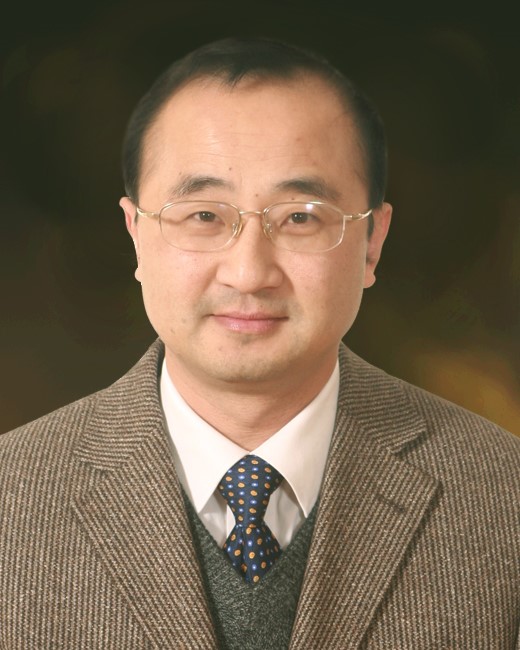 Guoliang Ding (丁国良)合作论文数Institute of Refrigeration and Cryogenics, School of Mechanical Engineering, Shanghai Jiao Tong University11
 Dawei Zhuang (庄大伟)合作论文数School of Mechanical Engineering, Shanghai Jiao Tong University6
 Tianhong Lu合作论文数4
 Haitao Hu (胡海涛)合作论文数School of Mechanical Engineering, Shanghai Jiao Tong University4Zhancheng Lai合作论文数3Guang Li (李广)合作论文数1G. Yang合作论文数1GAO Huan (高欢)合作论文数1Liyi XIE (谢丽懿)合作论文数1HuaiYi Yang (杨怀毅)合作论文数1XuDong Xu (许旭东)合作论文数1
 Ruzhu Wang (王如竹)合作论文数Institute of Refrigeration and Cryogenics, School of Mechanical Engineering, Shanghai Jiao Tong University;Engineering Research Center of Solar Power and Refrigeration of Ministry of Education, Shanghai Jiao Tong University1




