Chromosomes with multiple DNA replication origins are a hallmark of Eukaryotes and some Archaea. All eukaryal nuclear replication origins are defined by the origin recognition complex (ORC) that recruits the replicative helicase MCM(2-7) via Cdc6 and Cdt1. We find that the three origins in the single chromosome of the archaeon Sulfolobus islandicus are specified by distinct initiation factors. While two origins are dependent on archaeal homologs of eukaryal Orc1 and Cdc6, the third origin is instead reliant on an archaeal Cdt1 homolog. We exploit the nonessential nature of the orc1-1 gene to investigate the role of ATP binding and hydrolysis in initiator function in vivo and in vitro. We find that the ATP-bound form of Orc1-1 is proficient for replication and implicates hydrolysis of ATP in downregulation of origin activity. Finally, we reveal that ATP and DNA binding by Orc1-1 remodels the protein's structure rather than that of the DNA template.
Escherichia coli is a Gram-negative, rod-shaped bacterium that is commonly found in the intestine of warm-blooded organisms. Most E. coli strains are harmless, but some serotypes can cause serious food poisoning in humans. Here, we present the complete genome sequence of Escherichia coli LCT-EC106, which was isolated from CGMCC 1.2385.
Here we report the draft genome sequence of one Acinetobacter genomic species 3 strain, D499, which harbors the bla(NDM-1) gene. The total length of the assembled genome is 4,103,824 bp, and 3,896 coding sequences (CDSs) were predicted within the genome. A previously unreported bla(NDM-1)-bearing plasmid was identified in this strain.
An outbreak caused by Shiga-toxin–producing Escherichia coli O104:H4 occurred in Germany in May and June of 2011, with more than 3000 persons infected. Here, we report a cluster of cases associated with a single family and describe an open-source genomic analysis of an isolate from one member of the family. This analysis involved the use of rapid, bench-top DNA sequencing technology, open-source data release, and prompt crowd-sourced analyses. In less than a week, these studies revealed that the outbreak strain belonged to an enteroaggregative E. coli lineage that had acquired genes for Shiga toxin 2 and for antibiotic resistance.
 Dongfang Li (李东方)合作论文数School of Mathematics and Statistics, Huazhong University of Science and Technology3
 Xiangna Zhao (赵向娜)合作论文数2Yin Li合作论文数2
 Yujun Cui合作论文数Laboratoire Navier, Ecole des Ponts ParisTech2Yajun Song (宋亚军)合作论文数Academy of Military Medical Sciences2
 Ruifu Yang (杨瑞馥)合作论文数Institute of Microbiology and Epidemiology, Academy of Military Medical Sciences;Hebei Medical University2Rachel Y. Samson合作论文数1Tianzhi Li合作论文数1Todd A. Stone合作论文数1Rentao Yang合作论文数1Guoqin Jiang合作论文数1Yuanlin Guan合作论文数1Zhong Cen合作论文数1Yanqun Xu合作论文数1Feng Xi合作论文数1Moritz Hentschke合作论文数1Catarina Gadelha合作论文数1Yan Wang合作论文数1Meiru Zhao合作论文数1
 Junjie Qin (覃俊杰)合作论文数School of Life Science and Technology, Wuhan Polytechnic University,All rights reserved1Yanting Yuan合作论文数1Xianwei Yang合作论文数Beijing Inst Microbiol & Epidemiol, State Key Lab Pathogen & Biosecur, Beijing, Peoples R China1Ting Liang合作论文数1Zhaoxi Zhang合作论文数1Qing Song合作论文数1XueGe Jiang (姜学革)合作论文数1
 Jun Wang (王军)合作论文数Key Laboratory of Pathogenic Microbiology and Immunology, Institute of Microbiology, Chinese Academy of Sciences1
 Longxiang Su (苏龙翔)合作论文数ICU, Peking Union Medical College Hospital1Peng Wang (王鹏)合作论文数1
 Huanming Yang (杨焕明)合作论文数Chinese Academy of Medical Sciences;BGI Group;Advanced Institute for Life and Health, Southeast University1Zhao Wei合作论文数Key Laboratory of Tropical Forest Ecology, CAS;University of Chinese Academy of Sciences;Key Laboratory of Tropical Forest Ecology, University of Chinese Academy of Sciences1
 Wang Jian (汪建)合作论文数Beijing Genomics Institute1Qin Nan合作论文数1Jiao Zhao合作论文数1Jamal N. Faqiri合作论文数1
 Xiangqun Fang (方向群)合作论文数Chinese PLA General Hospital1
 Yunxiang Liang (梁运祥)合作论文数College of Life Science and Technology, Huazhong Agricultural University1
 Qunxin She (佘群新)合作论文数State Key Laboratory of Microbial Technology, Shandong University1
 Junhua Li (李俊桦)合作论文数BGI Research-Europe;Infection Omics Research Institute, BGI Research1
 Sebastian Loos合作论文数1Li Xu (徐丽)合作论文数1Long Liang (梁龙)合作论文数军事医学科学院生物工程研究所1
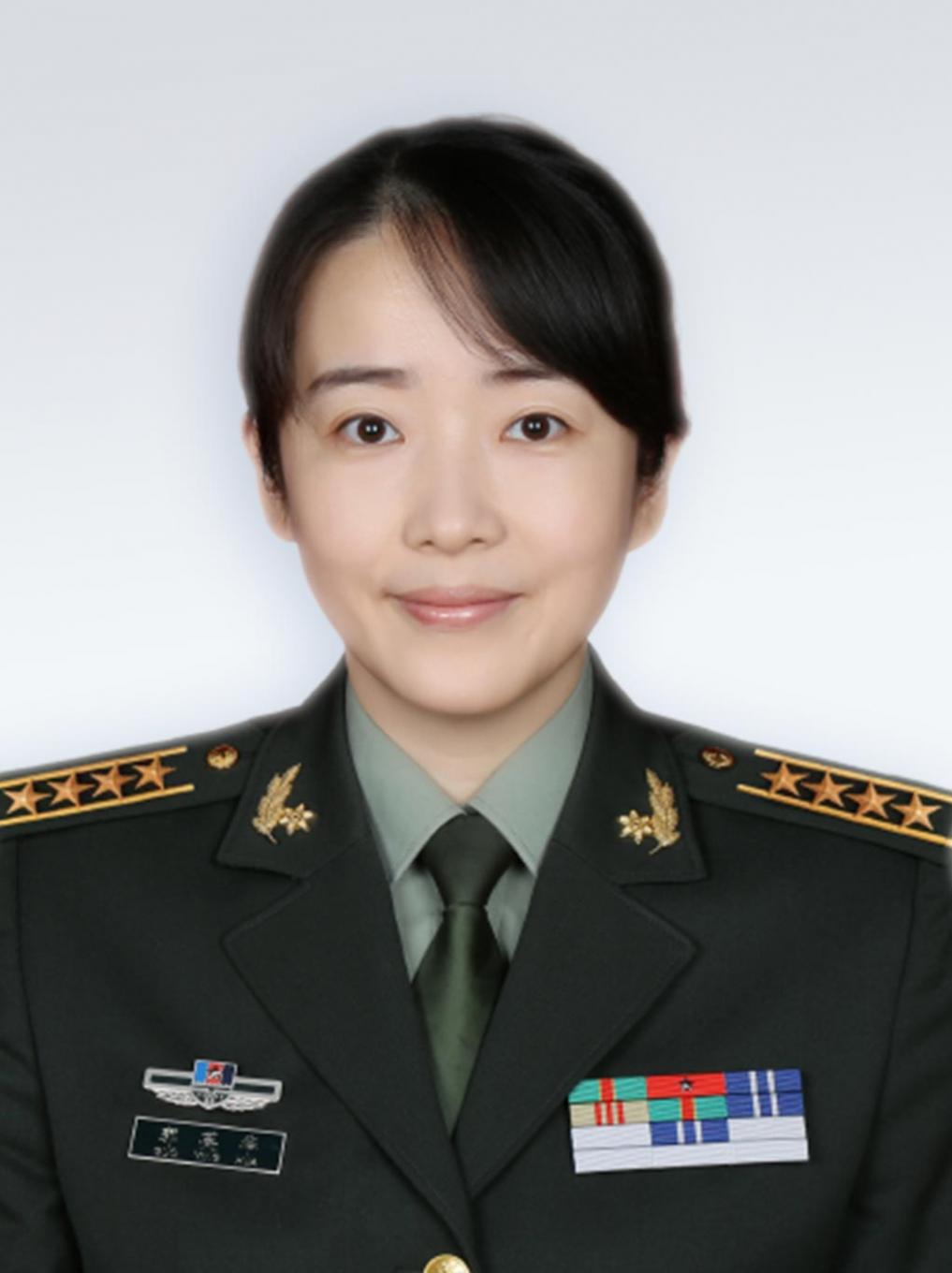 Yinghua Guo (郭英华)合作论文数Chinese PLA General Hospital1Na Guo (郭娜)合作论文数1
 JiYong Yang (杨吉勇)合作论文数Chinese PLA General Hospital1
 Junfeng Wang (王俊锋)合作论文数Chinese Pla General Hospital1Changting Liu (刘长庭)合作论文数Chinese PLA General Hospital1
 Li Han (韩黎)合作论文数Academy of Military Medical Sciences1
 Liang Yang (杨亮)合作论文数School of Medicine, Southern University of Science and Technology1




