Abstract In the development of Web information system, the traditional monolithic application architecture is simple and effective for small-scale projects. Because all business logics are combined together in those projects, secondary development and maintenance become very difficult. In recent years, there are methods to solve this problem, which are popular Web distributed architecture solution. The first step of the solution is to separate front-end and back-end of Web system and the second step is to decompose system’s services into micro-services. Micro-service architecture splits application into smaller scale services and each service completes only performs special function. Through service registration centre, micro-service architecture provides unified mechanism of service discovery and registration, it provides unified interfaces for calls from front-end through gateway technology; it protects stability and fault tolerance via back-off mechanism and circuit-breaker mechanism. We have developed a campus Web information system, which adopts two techniques, the separation of front-end and back-end and micro-service architecture By using Spring Cloud framework as back-end developing architecture, the solution of splitting application to micro-services is obtained, and then problems in monolithic application architecture are solved. The high reusability of back-end services is realized and the advantages of micro-service architecture are tested in our system.
In traditional Java Web project, the code of front-end and back-end are highly mixed together. Since the static resources and dynamic resources are merged together in server, the pressure of server is huge. If some problems arise in server, the front-end and back-end will collapse at the same time so that user experience is terrible. In the age of big data, the performance requirements of Internet project are becoming higher and higher, so the architecture of mixing together front-end and back-end can’t gradually meet the need of applications. The separation of front-end and back-end has become a direction for Web project. Along with the development and iteration of front-end technique, some front-end frameworks appear such as React, Argluar and Vue. In this paper, we introduce a campus information system in which software architecture is based on Spring Cloud for micro-services and React for the separation of front-end and backend. The key technique and realization used in the system have been described in this paper. Through decoupling of front-end and back-end, load capacity of the system has been raised by big percentages and good performance of the system embody the design advantage of micro-services and separation of front-end and back-end.
For the functions of enhancing students’ learning performance by integrating advanced technologies and equipment, the smart classroom has become a worldwide research issue recently. This study aims to produce a model to determine what variables affect students’ interaction in a smart learning environment. Participants consist of 254 undergraduate students and master students who have experience of learning in a smart classroom for more than one semester. Two scales were adopted in this study as a data instrument. The first one is the “Smart Classroom Inventory”. The second one is “Interaction and Student Satisfaction Scales”. The Structural Equation Model (SEM) was used in this study for data analysis. A model is built to explain the relations between students’ interaction and variables related to the smart classroom. According to the research results, we find that students’ interaction can be positively affected by variables of Spatial physical design, Learning data, Differentiation, and Cooperation related to the smart classroom.
automatic testing is very important for agile software development.There are some testing tasks can be finished by automatic tools, but most of them can not meet the actual needs of enterprises which is the direct reason of building an agile automatic testing framework named as Agilework.The structure, operation principle and building steps of the Agilework are descripted in details.The Agilework is a scalable framework which has high efficiency and flexibility.It can meet the requirements of the automatic testing in agile software development.
The RESTful Web services is a lightweight framework which includes some important ideas such as addressability of resources, statelessness, connectedness, and uniform interface and has good interaction and elasticity by its loose coupling and other distributed components. In this paper, we aim at to solve the problem of information islands in the construction of Chinese medicine informatization and propose a valid scheme based on the techinque of RESTful Web Services. In accordance with the classification and cording of Chinese medicine provided by National Science Data Sharing Project, the difinition of information resources of Chinese medicine is first completed. In order to realize sharing and concordancy of Chinese medicine resources, a registration center is built so that Chinese medicine resources can be registered and released. Through reserching Restlet framework, an elementary Chinese medicine information system based on RESTful Web Services technique is obtained. Since distributed retrieval and sharing of Chinese medicine information is briefly relizied in this system, further research on how to intergrate the data resources will be continued.
Many software applications today are written as web-based applications to be run in an Internet browser. Selenium is a set of powerful different software tools working with many browsers, operating systems, programming languages, and testing frameworks each with a different approach to supporting automation test for testing web-based applications. JMeter is used to simulate a heavy load on a server, network or object to test its strength or to analyze overall performance under different load types. JMeter operates at the protocol-level, on the other hand, Selenium works at the user-level.In this paper, authors have designed an automatic software testing framework for web applications based on the Selenium and JMeter. With the use of the software framework, we efficiently improve the extensibility and reusability of automated test. The results show that the new software framework improves software products quality and develop efficiency. This paper also illustrates how to design web-based test automation framework in details.
This paper mainly analyzed some existing problems in the integration of information technology and curriculum in colleges,and put forward some constructive suggestions on how to carry out the integration effectively.
 Yifei Gong合作论文数2Kengbin Chen合作论文数2
 Feng Gu合作论文数2Sun Wei合作论文数1Xinrong Tao (陶鑫荣)合作论文数1Mengyao ZHANG (章梦瑶)合作论文数1
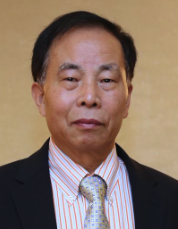 George Du (杜文才)合作论文数Institute for Data Engineering and Science, University of Saint Joseph1
 Ning Ma (马宁)合作论文数Faculty of Education, Beijing Normal University;The Joint Laboratory for Mobile Learning, Ministry of Education- China Mobile Communications Corporation, Beijing Normal University1




