Traditional X-ray computed tomography (CT) scanning strategies typically select projection angles uniformly and allocate dose equally. In practice, however, CT scans often need to be fast, radiation-efficient, and adaptive. Sparse-view tomography addresses these requirements by reducing both the number of angles and the total dose budget. Under such constraints, angle selection and dose allocation should be information-driven, with more dose assigned to informative directions. To this end, we propose a dose-aware acquisition and reconstruction framework that combines a PWLS-PnP reconstruction backbone with an RL-based strategy for adaptive angle selection, explicitly accounting for angle-dependent photon statistics. Numerical experiments show that the proposed approach improves overall reconstruction quality and enhances defect detectability compared with conventional strategies, particularly when only a small number of projections or a constrained dose budget is available.
Diffusion-based image generators are promising priors for ill-posed inverse problems like sparse-view X-ray Computed Tomography (CT). As most studies consider synthetic data, it is not clear whether training data mismatch (“domain shift”) or forward model mismatch complicate their successful application to experimental data. We measured CT data from a physical phantom resembling the synthetic Shepp-Logan phantom and trained diffusion priors on synthetic image data sets with different degrees of domain shift towards it. Then, we employed the priors in a Decomposed Diffusion Sampling scheme on sparse-view CT data sets with increasing difficulty leading to the experimental data. Our results reveal that domain shift plays a nuanced role: while severe mismatch causes model collapse and hallucinations, diverse priors outperform well-matched but narrow priors. Forward model mismatch pulls the image samples away from the prior manifold, which causes artifacts but can be mitigated with annealed likelihood schedules that also increase computational efficiency. Overall, we demonstrate that performance gains do not immediately translate from synthetic to experimental data, and future development must validate against real-world benchmarks.
Photoacoustic tomography (PAT) is a medical imaging modality that can provide high-resolution tissue images based on the optical absorption. Classical reconstruction methods for quantifying the absorption coefficients rely on sufficient prior information to overcome noisy and imperfect measurements. As these methods utilize computationally expensive forward models, the computation becomes slow, limiting their potential for time-critical applications. As an alternative approach, deep learning-based reconstruction methods have been established for faster and more accurate reconstructions. However, most of these methods rely on having a large amount of training data, which is not the case in practice. In this work, we adopt the model-based learned iterative approach for the use in Quantitative PAT (QPAT), in which additional information from the model is iteratively provided to the updating networks, allowing better generalizability with scarce training data. We compare the performance of different learned updates based on gradient descent, Gauss-Newton, and Quasi-Newton methods. The learning tasks are formulated as greedy, requiring iterate-wise optimality, as well as end-to-end, where all networks are trained jointly. The implemented methods are tested with ideal simulated data as well as against a digital twin dataset that emulates scarce training data and high modeling error.
In industrial X-ray Computed Tomography (CT), the need for rapid in-line inspection is critical. Sparse-angle tomography plays a significant role in this by reducing the required number of projections, thereby accelerating processing and conserving resources. Most existing methods aim to balance reconstruction quality and scanning time, typically relying on fixed scan durations. Adaptive adjustment of the number of angles is essential; for instance, more angles may be required for objects with complex geometries or noisier projections. The concept of optimal stopping, which dynamically adjusts this balance according to varying industrial needs, remains overlooked. Building on our previous work, we integrate optimal stopping into sequential Optimal Experimental Design (sOED) and Reinforcement Learning (RL). We propose a novel method for computing the policy gradient within the Actor-Critic framework, enabling the development of adaptive policies for informative angle selection and scan termination. Additionally, we investigate the gap between simulation and real-world applications in the context of the developed learning-based method. Our trained model, developed using synthetic data, demonstrates reliable performance when applied to experimental X-ray CT data. This approach enhances the flexibility of CT operations and expands the applicability of sparse-angle tomography in industrial settings.
X-ray radiographs from industrial, medical, and laboratory x-ray equipment can degrade severely due to fast and/or low-dose acquisition, x-ray scatter, and electronic noise from the detector instrument. As a consequence, noise and artifacts propagate into computed tomography (CT) images. Recently, a new class of self-supervised deep learning methods, with Noise2Self and Noise2Void, demonstrated state-of-the-art denoising results on data sets of pixelwise statistically-independent noisy images. These methods, called blind-spot networks (BSNs), are promising for applications where clean training examples or pairs of noisy examples are unavailable. For x-ray imaging, however, the detection principle of x-ray scintillators leads to a spatially-correlated mix of Poisson and Gaussian noise, rendering BSNs ineffective. In this article, we propose and validate a denoising workflow that reverts the correlations by a direct deconvolution with an estimate of the scintillator point-response function . We show that it can restore the denoising performance of Noise2Self, and demonstrate it for dynamic sparse-view CT reconstruction of single-bubble gas-solids fluidized beds using a data set of unpaired noisy radiographs from cesium-iodine scintillator flat-panel detectors.
We introduce SMART-SPI, a software framework for seamless integration of advanced experimental and computational research in single-pixel imaging, such as compressed-sensing-based image reconstruction, and automatic adaptation of illumination pattern and measurement optics.
Three-dimensional quantitative photoacoustic tomography is challenged by uncertainties in light fluence distribution and artifacts from limited view problem. This study evaluates advanced acoustic reconstruction algorithms using model-based inversion schemes to improve chromophore and oxygenation quantification. (c) 2025 The Author(s)
Like in many other research fields, recent developments in computational imaging have focused on developing machine learning (ML) approaches to tackle its main challenges. To improve the performance of computational imaging algorithms, machine learning methods are used for image processing tasks such as noise reduction. Generally, these ML methods heavily rely on the availability of high-quality data on which they are trained. This work explores the application of ML methods, specifically convolutional neural networks (CNNs), in the context of noise reduction for computed tomography (CT) imaging. We utilize a large 2D computed tomography dataset for machine learning to carry out for the first time a comprehensive study on the differences between the observed performances of algorithms trained on simulated noisy data and on real-world experimental noisy data. The study compares the performance of two common CNN architectures, U-Net and MSD-Net, that are trained and evaluated on both simulated and experimental noisy data. The results show that while sinogram denoising performed better with simulated noisy data if evaluated in the sinogram domain, the performance did not carry over to the reconstruction domain where training on experimental noisy data shows a higher performance in denoising experimental noisy data. Training the algorithms with an optimization in the reconstruction domain mapping directly from sinogram to reconstruction significantly improved model performance, emphasizing the importance of matching raw measurement data to high-quality CT reconstructions. The study furthermore suggests the need for more sophisticated noise simulation approaches to bridge the gap between simulated and real-world data in CT image denoising applications and gives insights into the challenges and opportunities in leveraging simulated data for machine learning in computational imaging.
Image reconstruction in photoacoustic tomography relies on an accurate knowledge of the speed of sound in the target. However, the speed of sound distribution is not generally known, which may result in artefacts in the reconstructed distribution of initial pressure. Therefore, reconstructing the speed of sound simultaneously with the initial pressure would be valuable for accurate imaging in photoacoustic tomography. Furthermore, the speed of sound distribution could provide additional valuable information about the imaged target. In this work, simultaneous reconstruction of initial pressure and speed of sound in photoacoustic tomography is studied. This inverse problem is known to be highly ill-posed. To overcome this, we study an approach where the ill-posedness is alleviated by utilising multiple photoacoustic data sets that are generated by different initial pressure distributions within the same imaged target. Then, these initial pressure distributions are reconstructed simultaneously with the speed of sound distribution. A methodology for solving this minimisation problem is formulated using a gradient-based iterative approach equipped with bound constraints and a multigrid approach. The methodology was evaluated with numerical simulations. Different approaches for generating multiple initial pressure distributions and their effect on the solution of the image reconstruction problem were studied. The results show that initial pressure and speed of sound can be simultaneously reconstructed from photoacoustic data. Furthermore, utilising multiple initial pressure distributions improves the reconstructions such that the locations of initial pressure and speed of sound inhomogeneities can be better distinguished and image artifacts are reduced.
Sparse-angle X-ray Computed Tomography (CT) plays a vital role in industrial quality control but leads to an inherent trade-off between scan time and reconstruction quality. Adaptive angle selection strategies try to improve upon this based on the idea that the geometry of the object under investigation leads to an uneven distribution of the information content over the projection angles. Deep Reinforcement Learning (DRL) has emerged as an effective approach for adaptive angle selection in X-ray CT. While previous studies focused on optimizing generic image quality measures using a fixed number of angles, our work extends them by considering a specific downstream task, namely image-based defect detection, and introducing flexibility in the number of angles used. By leveraging prior knowledge about typical defect characteristics, our task-adaptive angle selection method, adaptable in terms of angle count, enables easy detection of defects in the reconstructed images.
This paper presents a novel method for the reconstruction of high-resolution temporal images in dynamic tomographic imaging, particularly for discrete objects with smooth boundaries that vary over time. Addressing the challenge of limited measurements per time point, we propose a technique that synergistically incorporates spatial and temporal information of the dynamic objects. This is achieved through the application of the level-set method for image segmentation and the representation of motion via a sinusoidal basis. The result is a computationally efficient and easily optimizable variational framework that enables the reconstruction of high-quality 2D or 3D image sequences with a single projection per frame. Compared to current methods, our proposed approach demonstrates superior performance on both synthetic and pseudo-dynamic real X-ray tomography datasets. The implications of this research extend to improved visualization and analysis of dynamic processes in tomographic imaging, finding potential applications in diverse scientific and industrial domains.
Significance: Photoacoustic tomography (PAT) has great potential in monitoring disease progression and treatment response in breast cancer. However, due to variations in breast repositioning, there is a chance of geometric misalignment between images. Further, poor repositioning can affect light fluence distribution and imaging field-of-view, making images different from one another. The net effect is that it becomes challenging to distinguish between image changes due to repositioning effects and those due to true biological variations. Aim: The aim is to develop a three-dimensional image registration framework for geometrically aligning repeated PAT volumetric images, which are potentially affected by repositioning effects such as misalignment, changed radiant exposure conditions, and different fields-of-view. Approach: The proposed framework involves the use of a coordinate-based neural network to represent the displacement field between pairs of PAT volumetric images. A loss function based on normalized cross correlation and Frangi vesselness feature extraction at multiple scales was implemented. We refer to our image registration framework as MUVINN-reg, which stands for multiscale vesselnessbased image registration using neural networks. The approach was tested on a longitudinal dataset of healthy volunteer breast PAT images acquired with the hybrid photoacoustic-ultrasound Photoacoustic Mammoscope 3 imaging system. The registration performance was also tested under unfavorable repositioning conditions such as intentional mispositioning, and variation in breast-supporting cup size between measurements. Results: A total of 13 pairs of repeated PAT scans were included in this study. MUVINN-reg showed excellent performance in co-registering each pair of images. The proposed framework was shown to be robust to image intensity shifts and fieldof-view changes. Furthermore, MUVINN-reg could align vessels at imaging depths greater than 4 cm. Conclusions: The proposed framework will enable the use of PAT for quantitative and reproducible monitoring of disease progression and treatment response.
Ultrafast ultrasound imaging insonifies a medium with one or a combination of a few plane waves at different beam-steered angles instead of many focused waves. It can achieve much higher frame rates, but often at the cost of reduced image quality. Deep learning approaches have been proposed to mitigate this disadvantage, in particular for single plane wave imaging. Predominantly, image-to-image post-processing networks or fully learned data-to-image neural networks are used. Both construct their mapping purely data-driven and require expressive networks and large amounts of training data to perform well. In contrast, we consider data-to-image networks which incorporate a conventional image formation techniques as differentiable layers in the network architecture. This allows for end-to-end training with small amounts of training data. In this work, using f-k migration as an image formation layer is evaluated in-depth with experimental data. We acquired a data collection designed for benchmarking data-driven plane wave imaging approaches using a realistic breast mimicking phantom and an ultrasound calibration phantom. The evaluation considers global and local image similarity measures and contrast, resolution and lesion detectability analysis. The results show that the proposed network architecture is capable of improving the image quality of single plane wave images on all evaluation metrics. Furthermore, these image quality improvements can be achieved with surprisingly little amounts of training data.
In X-ray Computed Tomography (CT), projections from many angles are acquired and used for 3D reconstruction. To make CT suitable for in-line quality control, reducing the number of angles while maintaining reconstruction quality is necessary. Sparse-angle tomography is a popular approach for obtaining 3D reconstructions from limited data. To optimize its performance, one can adapt scan angles sequentially to select the most informative angles for each scanned object. Mathematically, this corresponds to solving an optimal experimental design (OED) problem. OED problems are high-dimensional, non-convex, bi-level optimization problems that cannot be solved online, i.e., during the scan. To address these challenges, we pose the OED problem as a partially observable Markov decision process in a Bayesian framework, and solve it through deep reinforcement learning. The approach learns efficient non-greedy policies to solve a given class of OED problems through extensive offline training rather than solving a given OED problem directly via numerical optimization. As such, the trained policy can successfully find the most informative scan angles online. We use a policy training method based on the Actor-Critic approach and evaluate its performance on 2D tomography with synthetic data.
 Ben Cox合作论文数Department of Medical Physics and Biomedical Engineering, University College London35
 Joost Batenburg合作论文数FleX-Ray Lab, Department of Computational Imaging, Centrum Wiskunde & Informatica;Universiteit Leiden20
 Simon Arridge合作论文数Department of Computer Science, Faculty of Engineering Science, University College London18
 Paul Beard合作论文数Department of Medical Physics and Biomedical Engineering, Faculty of Engineering Sciences, University College London16
 Tristan van Leeuwen合作论文数Dept Earth Ocean & Atmospher Sci, Univ British Columbia14
 Nam Huynh合作论文数Medical Physics and Biomedical Engineering, Faculty of Engineering Sciences, University College London13
 Marta M. Betcke合作论文数Department of Computer Science, University College London12
 Carsten Wolters合作论文数Institute for Biomagnetism and Biosignalanalysis, University of Münster12Srirang Manohar合作论文数8
 Sophia Bethany Coban合作论文数Department of Mathematics, University of Manchester8
 Edward Zhang合作论文数Dept of Med Phys & Biomedical Eng, University College London8
 Andreas Hauptmann合作论文数Faculty of Science, University of Oulu;University College London7
 Tanja Tarvainen合作论文数Department of Technical Physics, Faculty of Science, Forestry and Technology, University of Eastern Finland;Institute of Photonics, University of Eastern Finland6
 Martin Burger合作论文数Department of Mathematics, Friedrich-Alexander-Universitaet Erlangen-Nuernberg6Georgios Pilikos合作论文数4Maximilian B. Kiss合作论文数4
 Bruno De Santi合作论文数Multimodal Med Imaging M3I, Univ Twente4
 Maureen van Eijnatten合作论文数Computat Imaging Grp, CWI4
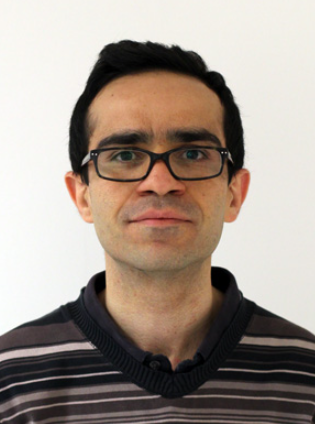 Ashkan Javaherian合作论文数Biomedical Ultrasound Group, Department of Medical Physics and Biomedical Engineering, University College London4Olumide Ogunlade合作论文数4
 Johannes Vorwerk合作论文数4
 Ellwood Robert合作论文数4
 Pulkkinen Aki合作论文数4Adriaan B. M. Graas合作论文数3
 Maura Dantuma合作论文数Multimodal Med Imaging, Univ Twente3
 Poulami Somanya Ganguly合作论文数Mathematical Institute, Leiden University3
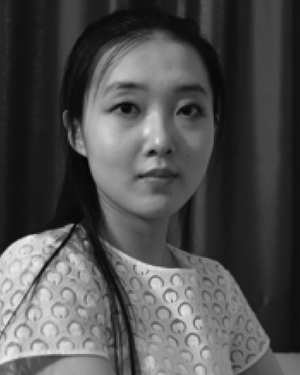 Jiaqi Zhu合作论文数Dept Bioengn, Imperial Coll London3
 Nicola Viganò合作论文数ESRF Grenoble;c;ESRF Grenoble3Hörchens Lars合作论文数3
 Fiederer Lukas Dominique Josef合作论文数3
 Carola Bibiane Schönlieb合作论文数Department of Applied Mathematics and Theoretical Physics, University of Cambridge;Alan Turing Institute3
 Thom F. Oostendorp合作论文数Department of Cognitive Neuroscience, University Medical Center St. Radboud3
 Umit Aydin合作论文数Department of Electrical and Electronics Engineering, Middle East Technical University3
 Sampsa Pursiainen合作论文数HELSINKI;UNIVERSITY OF TECHNOLOGY;HELSINKI|UNIVERSITY OF TECHNOLOGY3
 S. Lew合作论文数3
 Benjamin Lanfer合作论文数3Hermen Jan Hupkes合作论文数Universiteit3
 Tymour Forouzanfar合作论文数2Marta Fajardo合作论文数2Tianyuan Wang合作论文数2
 Jonas Adler合作论文数Google DeepMind2Guy Long合作论文数2Nargiza Djurabekova合作论文数2
 Jordi Minnema合作论文数3D Innovationlab, Vrije Univ Amsterdam2Mathé T. Zeegers合作论文数Ctr Wiskunde & Informat2Ander Biguri合作论文数2Ombeline de La Rochefoucauld合作论文数2
 Alexandra Koulouri合作论文数Fac Informat Technol & Commun Sci, Tampere Univ2Jenni Tick合作论文数Univ Eastern Finland, Dept Appl Phys, POB 1627, Kuopio 70211, Finland2




