We describe our experimental setup for creating stable Bose-Einstein condensates (BECs) of (85)Rb with tunable interparticle interactions. We use sympathetic cooling with (87)Rb in two stages, initially in a tight Ioffe-Pritchard magnetic trap and subsequently in a weak, large-volume, crossed optical dipole trap, using the 155 G Feshbach resonance to manipulate the elastic and inelastic scattering properties of the (85)Rb atoms. Typical (85)Rb condensates contain 4 x 10(4) atoms with a scattering length of a=+200a(0). Many aspects of the design presented here could be adapted to other dual-species BEC machines, including those involving degenerate Fermi-Bose mixtures. Our minimalist apparatus is well suited to experiments on dual-species and spinor Rb condensates, and has several simplifications over the (85)Rb BEC machine at JILA, which we discuss at the end of this article.
We report on measurements of inelastic loss processes in ultracold {sup 85}Rb |F=2> atoms. Our apparatus creates ultracold {sup 85}Rb clouds by sympathetic cooling with a {sup 87}Rb reservoir in a quadrupole-Ioffe magnetic trap and subsequently in a weak, large-volume optical dipole trap. We demonstrate strong sympathetic cooling of {sup 85}Rb in the magnetic trap, increasing its phase-space density by three orders of magnitude with no detectable loss in number. Ultracold samples created in this way are used to observe the variation of inelastic loss in {sup 85}Rb |F=2, m{sub F}=-2> clouds as a function of magnetic field near the 155-G Feshbach resonance and to measure the decay due to inelastic losses in all five Zeeman sublevels of the F=2 manifold, finding a particularly high three-body recombination rate in the lowest energy state. We have also observed and characterized a previously unobserved loss feature at 219.9(1) G with a width of 0.28(6) G, which we associate with a narrow Feshbach resonance predicted by theory.
We study the properties of an atom laser beam derived from a Bose-Einstein condensate using three different outcouplers, one based on multistate radio-frequency transitions and two others based on Raman transitions capable of imparting momentum to the beam. We first summarize the differences that arise in such systems, and how they may impact on the use of an atom laser in interferometry. Experimentally, we examine the formation of a bound state in all three outcouplers, a phenomenon which limits the atom laser flux, and find that a two-state Raman outcoupler is the preferred option for high-flux, low-divergence atom laser beams.
Every measurement of the population in an uncorrelated ensemble of two-level systems is limited by what is known as the quantum projection noise limit. Here, we present quantum projection noise limited performance of a Ramsey type interferometer using freely propagating coherent atoms. The experimental setup is based on an electro-optic modulator in an inherently stable Sagnac interferometer, optically coupling the two interfering atomic states via a two-photon Raman transition. Going beyond the quantum projection noise limit requires the use of reduced quantum uncertainty (squeezed) states. The experiment described demonstrates atom interferometry at the fundamental noise level and allows the observation of possible squeezing effects in an atom laser, potentially leading to improved sensitivity in atom interferometers.
We present results on a free-space atom interferometer operating on the first order magnetically insensitive |F = 1,mF = 0) --> |F = 2,mF = 0) ground state transition of Bose-condensed (87)Rb atoms. A pulsed atom laser is output-coupled from a Bose-Einstein condensate and propagates through a sequence of two internal state beam splitters, realized via coherent Raman transitions between the two interfering states. We observe Ramsey fringes with a visibility close to 100% and determine the current and the potentially achievable interferometric phase sensitivity. This system is well suited to testing recent proposals for generating and detecting squeezed atomic states.
We present results on a Raman laser-system that resonantly drives a closed two-photon transition between two levels in different hyperfine ground states of (87)Rb. The coupler is based on a novel optical design for producing two phase-coherent optical beams to drive a Raman transition. Operated as an outcoupler, it produces an atom laser in a single internal atomic state, with the lower divergence and increased brightness typical of a Raman outcoupler. Due to the optical nature of the outcoupling, the two-state outcoupler is an ideal candidate for transferring photon correlations onto atom-laser beams. As our laser system couples just two hyperfine ground states, it has also been used as an internal state beamsplitter, taking the next major step towards free space Ramsey interferometry with an atom laser.
In this work, we examine a system for coherent transfer of atoms into a Bose-Einstein condensate. We utilize two spatially separate Bose-Einstein condensates in different hyperfine ground states held in the same dc magnetic trap. By means of a pulsed transfer of atoms, we are able to show a clear resonance in the timing of the transfer, both in temperature and in number, from which we draw conclusions about the underlying physical process. The results are discussed in the context of the recently demonstrated pumped atom laser.
A pulsed atom laser derived from a Bose-Einstein condensate is used to probe a second target condensate. The target condensate scatters the incident atom laser pulse. From the spatial distribution of scattered atoms, one can infer important properties of the target condensate and its interaction with the probe pulse. As an example, we measure the s-wave scattering length that, in low energy collisions, describes the interaction between the |F = 1,m(F) = -1) and |F = 2,m(F) = 0) hyperfine ground states in (87)Rb.
We study optical collisions of Na atoms with N(2), CO, C(2)H(2), and CO(2) molecules in a crossed-beam experiment. Excited electronic states of the collision complex are selectively populated during the collision. We measure the relative population of the Na(3p) fine-structure levels after the collision and observe in this way the nonadiabatic transitions occuring in the final phase of the collision process. For the NaCO, NaC(2)H(2), and NaCO(2) systems new ab initio potential surfaces were generated. The theoretical analysis of the nonadiabatic electron dynamics on the excited potential surfaces is made within the classical-path formalism. The results are in good qualitative agreement with the experimental data and provide insight into the nonadiabatic mechanisms prevailing during the evolution in the upper 3p manifold. The differences between the different collisional systems are related to the presence and system-specific locations of conical intersections and avoided crossing seams in the excited potential surfaces.
We report the experimental realization of a multibeam atom laser. A single continuous atom laser is outcoupled from a Bose-Einstein condensate via an optical Raman transition. The atom laser is subsequently split into up to five atomic beams with slightly different momenta, resulting in multiple, nearly copropagating, coherent beams which could be of use in interferometric experiments. The splitting process itself is a realization of Bragg diffraction, driven by each of the optical Raman laser beams independently. This presents a significantly simpler implementation of an atomic beam splitter, one of the main elements of coherent atom optics.
Atom interferometry has proven to be an increasingly valuable technique for precision measurements over the last years. Compared to photons, atoms offer the advantage of having an intrinsically more complex structure and therefore allowing a larger range of possible measurements to be undertaken. There have been a number of fundamentally important experiments making use of the atomic mass to measure the Newtonian gravitational constant G [1] and the fine structure constant α [2].
We present results on a free-space atom interferometer operating on the first order magnetically insensitive |F=1,mF=0> -> |F=2,mF=0> transition of Bose-condensed 87Rb atoms. A pulsed atom laser is output-coupled from a Bose-Einstein condensate and propagates through a sequence of two internal state beam splitters, realized via coherent Raman transitions between the two interfering states. We observe Ramsey fringes with a visibility close to 100% and determine the current and the potentially achievable interferometric phase sensitivity. This system is well suited to testing recent proposals for generating and detecting squeezed atomic states.
The atom laser, a bright, coherent matter wave derived from a Bose–Einstein condensate, holds great promise for precision measurement and for fundamental tests of quantum mechanics. But despite significant experimental efforts, no method has been demonstrated to enable continuous and irreversible replenishment of a trapped Bose–Einstein condensate while simultaneously producing a free, coherent atom beam. Here, we report an experiment that uses two spatially separated Bose–Einstein condensates of rubidium in different internal hyperfine states, and show that while continuously output-coupling an atom laser beam from one Bose–Einstein condensate, we can simultaneously and irreversibly pump new atoms from a physically separate cloud into the trapped condensate that forms the lasing mode.
We present experimental and theoretical results showing the improved beam quality and reduced divergence of an atom laser produced by an optical Raman transition, compared to one produced by an rf transition. We show that Raman outcoupling can eliminate the diverging lens effect that the condensate has on the outcoupled atoms. This substantially improves the beam quality of the atom laser, and the improvement may be greater than a factor of 10 for experiments with tight trapping potentials. We show that Raman outcoupling can produce atom lasers whose quality is only limited by the wave function shape of the condensate that produces them, typically a factor of 1.3 above the Heisenberg limit.
We discuss recent developments in our laboratory, in particular focusing on continuous Raman output coupling. We show how recent advances allow the atom laser beam quality to approaching the Heisenberg limit.
We investigate the linewidth of a quasicontinuous atom laser within a semiclassical framework. In the high flux regime, the lasing mode can exhibit a number of undesirable features such as density fluctuations. We show that the output therefore has a complicated structure that can be somewhat simplified using Raman outcoupling methods and energy-momentum selection rules. In the weak outcoupling limit, we find that the linewidth of an atom laser is instantaneously Fourier limited, but, due to the energy "chirp" associated with depletion of the condensate, the long-term linewidth of an atom laser is equivalent to the chemical potential of the condensate source. We show that correctly sweeping the outcoupling frequency can recover the Fourier-limited linewidth.
We investigate the spatial structure and temporal dynamics created in a Bose-Einstein condensate by radio-frequency atom laser-output couplers using a one-dimensional mean-field model. We compare the behavior of a ``pure'' two-state atom laser to the multilevel systems demonstrated in laboratories. In particular, we investigate the peak homogeneous output flux, classical fluctuations in the beam, and the onset of a bound state which shuts down the atom laser output.
In this paper we present experimental results on flux, fluctuations and noise on an atom laser beam and discuss the implications of these measurements to high precision interferometry with atoms.
 N. P. Robins合作论文数School of Physics and Engineering, Research21
 J. D. Close合作论文数Centre for Quantum Atom Optics, Australian;Department of Physics;Australian National University;Australian Centre for Quantum Atom Optics, Australian National University18
 Jan Grosser合作论文数11Frank Rebentrost合作论文数11M. Jeppesen合作论文数11
 Pia Astone合作论文数Istituto Nazionale di Fisica Nucleare;Department of Physics, La Sapienza University;Facoltà Di Ingegneria Dell'informazione, Informatica E Statistica, Sapienza Università di Roma10Hoffmann O合作论文数10
 John E. Debs合作论文数School of Physics and Engineering, Research10A Grimpe合作论文数5J. Dugue合作论文数5R Goldstein合作论文数4
 Joseph Hope合作论文数Department of Physics;Theoretical Physics;Australian National University;Department of Physics, Australian National University4R. Poldy合作论文数4
 G. R. Dennis合作论文数Centre for Quantum Atom Optics, Australian;Department of Quantum Science;Australian National University;Australian Centre for Quantum Atom Optics, Australian National University4Mattias Johnsson合作论文数Fachbereich Physik;Universitat Kaiserslautern;Fachbereich Physik, Universitat Kaiserslautern4D. Döring合作论文数3s a haine合作论文数2M. Jungen合作论文数2
 Adele K. Morrison合作论文数Research School of Earth Sciences, Australian National University2
 Hans-Albert Bachor合作论文数College of Science, Australian National University2dirk spelsberg合作论文数1Hoffmannn O合作论文数1Brumfield Brian E合作论文数Department of Chemistry, University of Illinois1BenYezzar Mohammed合作论文数1
 Mehran Taherkhani合作论文数1
 Gordon McDonald合作论文数1
 Claire Gmachl合作论文数Department of Electrical and Computer Engineering, School of Engineering and Applied Science, Princeton University1P. Summers合作论文数1J. Stalder合作论文数1T. Schmidt合作论文数1
 Jacob T. Stewart合作论文数Department of Chemistry, University of Illinois1
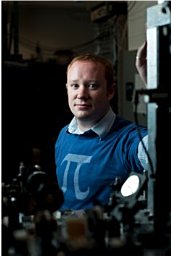 Justin T. Schultz合作论文数Juniata College;Department of Physics;Department of Physics, Juniata College1
 Simon A. Haine合作论文数Centre for Quantum-Atom Optics, Australian;Department of Physics;Australian National University;Australian Centre for Quantum-Atom Optics, Australian National University1Mikko Riese合作论文数1
 Klaus Müller Dethlefs合作论文数Tokyo Institute of Technology1
 Benjamin J. McCall合作论文数Department of Chemistry, College of Liberal Arts & Sciences, University of Illinois, Urbana-Champaign;Department of Astronomy, College of Liberal Arts & Sciences, University of Illinois, Urbana-Champaign;Planetary Limits Academic Network;Gund Institute for Environment;Department of Chemistry, College of Arts & Sciences, University of Dayton;Hanley Sustainability Institute, College of Arts & Sciences, University of Dayton1
 Matthew Escarra合作论文数Dept Phys & Engn Phys, Tulane Univ1Julien Dugué合作论文数1
 Scott Howard合作论文数University of Notre Dame1D. D ¨ Oring合作论文数1
 Susanna L Widicus Weaver合作论文数Department of Chemistry, Emory University1
 Laurent Longchambon合作论文数1




