The aim of this paper is to investigate the influence of gate resistance ($R_{G}$) and junction temperature on the dynamic performance of a buck converter. A simulation-based study of the performance of the SiC MOSFET in a DC-DC converter using LTSPICE has been done. The study focuses on the dynamic behavior of the device by assessing the drain-source voltage, drain current and the gate-source voltage under various operating scenarios. The effects on switching transients, waveform properties, and power losses are investigated. This work demonstrates that while operating conditions have an impact on conduction characteristics and loss distribution, variances in gate control have a considerable impact on switching speed variations, voltage transition, and current commutation. The results show how operating conditions impact SiC MOSFET-based power converters and offer valuable insights for gate driver design and temperature optimization.
The development of durable and highly active electrocatalysts is essential for advancing cost-effective hydrogen production through alkaline water electrolysis. In this work, we report template-assisted electrodeposition of composition-optimized NiFeS nanowires, followed by a low-temperature thermal treatment designed to stabilize sulphur species and improve durability. The resulting ternary alloy, containing 17 at% sulphur and 7 at% iron, exhibited remarkable oxygen evolution activity, which may be related to its partially amorphous nature and the sulphur-induced increase in active site density. However, medium-and long-term stability tests revealed progressive sulphur leaching and a consequent loss of the catalytic performance in the untreated samples. To mitigate this effect, post-deposition thermal treatment was introduced. After thermal treatment, the NiFeS nanowires required an overpotential of 206 mV at a current density of 10 mA cm-2 and exhibited fast reaction kinetics with a Tafel slope of 30 mV dec-1 in 30 wt% KOH. Long-term electrolysis experiments showed only a 30 mV increase in operating potential after 125 h of continuous operation at ambient temperature, indicating improved durability. Structural and compositional characterization confirmed that heat treatment effectively suppresses sulphur loss while preserving electrode integrity. Overall, these results demonstrate that thermally treated NiFeS nanostructured electrodes are highly promising oxygen evolution catalysts for alkaline electrolysis, offering a practical route to combine excellent catalytic performance with prolonged operational stability.
This paper presents a generalized modeling approach for $\mathbf{N}$-phase interleaved buck converters utilized to supply electrochemical loads, with particular focus on electrolyzers powered by renewable sources. The system under study interfaces a DC bus, typically supplied by renewable energy sources, with an electrolyzer stack requiring a regulated lower DC voltage. In this context, an interleaving topology is adopted to reduce current ripple. The main contribution of this work lies in the derivation of a scalable N-leg averaged model of the interleaved buck topology, suitable for both time-domain and frequency-domain analyses. The proposed model is validated through detailed simulations, including transient response analysis and small-signal frequency characterization via AC sweep analysis. Results demonstrate the accuracy of the model in predicting system dynamics. The developed framework provides a useful tool for the design and control of power converters for hydrogen production systems.
This paper explores the feasibility of utilizing existing trolleybus infrastructure as a power source for electric vehicle charging, specifically at the interface between two electrically isolated feeding sections (FSs). Three converter topologies are proposed: a double dual active bridge configuration and two variants of the triple active bridge. The performance of each solution is evaluated under balanced and unbalanced powersharing scenarios between the FSs, as well as during the outage of one section. A unified control strategy, common to all topologies, is introduced to ensure automatic power redistribution among the FSs. Finally, converter sizing and efficiency aspects are analyzed and validated through numerical simulations.
The aim of this paper is to perform a comprehensive simulation-based analysis of a DC-DC boost converter employing various SiC MOSFETs, using LTSPICE. The research investigates how device features affect converter performance in terms of power losses, thermal behavior, and total harmonic distortion (THD) while the converter is operating in continuous conduction mode (CCM). A range of switching frequencies, and output power levels are selected to generate to assess converter performance. The research shows how thermal stress, conduction and switching losses, and harmonic spectra are affected by switching dynamics and device parasites. The findings provide significant insights for the best choice of SiC MOSFETs in high-efficiency DCDC converter design by highlighting the trade-offs between fastswitching devices and electromagnetic performance.
This paper presents the integration of hybrid energy storage systems (HESS) with a DC microgrid network that feeds constant power loads (CPLs), which are challenging to manage due to their destabilizing nature. Single-inductor full-bridge buck-boost converters integrate the HESS with the microgrid. An improved droop controller is proposed for efficient power sharing within the HESS and an optimized terminal slidingmode controller for low-level switching control. The optimized sliding mode controller enhances performance and ensures largesignal stability of the closed-loop system, demonstrated through Lyapunov theory. The proposed method is validated via MATLAB/Simulink simulations and comparative analysis with SMC and integral sliding mode control (ISMC) Finally, real-time performance is evaluated using controller hardware-in-loop (C HIL) tests with Typhoon HIL and TI C2000 microcontrollers.
This paper presents an investigation on different strategies for the power management of tramway networks integrated with energy storage systems (ESS) and renewable energy sources (RES), based on two possible scenarios: the first one concerns the support by only stationary ESS, the second one involves also the support by RES. According to simulations through MATLAB software, a typical daily power profile regarding a traction substation (TSS) supplying a tramway route inside the Italian city of Palermo has been considered. The above-mentioned investigation has been carried out considering a Li-ion battery-based ESS and a typical winter photovoltaic (PV) daily power profile. The main goal of this work is the reduction of the maximum power that each TSS requires from the electrical grid, aiming at saving energy costs, by means of an accurate design of ESS and RES as well as of an improved algorithm of power management. This research, which is part of the funded project Smart Electric traNsport systems for Sustainable Urban Mobility (SENSUM), aims to provide a contribution for an effective integration of these systems in future smart cities.
In this article, the control of a photovalatic (PV)-battery-based dc microgrid is presented to power an electrolyzer-based hydrogen system. The three-phase interleaving topology is considered for three different converters: an interleaving boost converter, an interleaving four-switch single-inductor buck-boost converter, and an interleaving buck converter. MPPT and droop-based control are recommended for maximum power extraction from the PV system and regulation of the dc-bus voltage. A cascaded hybrid nonlinear controller is developed for current and voltage control, merging the advantages of both linear and nonlinear control theory. The design ensures an uninterrupted power supply to the electrolyzer for hydrogen production. The algorithm is simulated in MATLAB/Simulink and validated through rapid control prototyping using a TI C2000 microcontroller unit (MCU) and a Typhoon 404 device for real-time results. Moreover, a comparative analysis with other state-of-the-art control structures is also presented to show the efficiency of the proposed controller. The simulation results, comparative analysis, and hardware results under different conditions confirm the adaptability of the proposed control algorithms for real applications.
– High-efficiency power converter design and optimization depend on precise loss estimation in power semiconductor devices. This study examines a cascaded system that consists of a DC-DC boost converter and single-phase fullbridge inverter to produce a sinusoidal AC output for grid connected applications. To identify the primary loss causes, a simple analytical framework for evaluating MOSFET conduction and switching losses is devised, which includes device parasitic capacitances, gate charge dynamics, Miller’s plateau voltage and diode reverse recovery effects. LTSPICE simulations are used to validate the analytical model across a range of switching frequencies, showing a high degree of agreement between the simulated and predicted outcomes.
This paper proposes a transformerless, capacitively isolated inverter employing a full-bridge topology. Unlike conventional capacitively isolated converters, the proposed design eliminates the mean voltage across the isolation capacitors, significantly reducing voltage stress. A previous experimental validation of a capacitive isolated DC/DC converter demonstrated operation at switching frequencies up to 500 kHz and power levels of 6 kW (500 V, 12 A), achieving a peak efficiency exceeding 98% with negligible loss contribution from the isolating capacitors. Building on these results, the topology is extended to a single-stage inverter to leverage capacitive isolation for loss minimization. The inverter design was simulated, and key operating waveforms are presented to validate its functionality. Analysis of the DC/DC converter assessed the rectifying diodes as dominant contributors to power losses at elevated switching frequencies and are omitted in the inverter stage. This elimination, combined with the minimal impact of isolating capacitors, enables a projected inverter peak efficiency exceeding 99%, as derived from experimental data and analytical modeling.
This paper proposes a novel approach for mitigating cross-regulation errors in multi-output flyback converters by integrating a balancing capacitor. The approach establishes a low-impedance path between the transformer’s secondary windings, equalizing node voltages and reducing reducing load imbalance effects. Experimental validation on a prototype demonstrates significant mitigation of cross-regulation errors, with the balancing capacitor maintaining a negligible average voltage drop. Results reveal that residual output offsets under unbalanced loads stem primarily from differences in the forward voltages of the rectifying diodes. The analysis is extended to a multi-output flyback topology delivering balanced positive and negative outputs, confirming the method’s applicability to multi-output configurations. These findings underscore the versatility and effectiveness of the proposed strategy for improving cross-regulation in low-power industrial applications.
To achieve efficient electrochemical processes for the hydrogen evolution reaction (HER) and oxygen evolution reaction (OER), it is essential to develop rational designs and innovative modifications to low-cost, high-performance electrocatalysts able to work in direct connection with renewable sources. This paper presents the behavior of nanostructured NiFeP electrocatalysts to use for both HER and OER. The electrodes consist of nanowire arrays with a large surface area, ensuring high electrocatalytic activity. The most promising results were obtained for the OER, with a Tafel slope of 40 mV/dec. Electrodes demonstrate good stability over time without any evident signs of performance decay. Also, in the case of operation under intermittent power supply, applying current profiles typical of a day-night cycle of photovoltaic and wind energy, good performance was obtained. A lab-scale electrolyzer was fabricated and tested for a continuous operation of 6 h at 50 and 100 mA/ cm2, reaching a potential of 1.91 and 2.01 V, respectively, for overall water-spitting. Furthermore, the environmental impact of the manufacturing process of NiFeP nanowires was evaluated by applying the Life Cycle Assessment methodology, which is employed to assess the energy and environmental impacts of the life cycle of electrodes produced by the electrodeposition method.
This paper presents a comprehensive investigation of the performance of an electric drive powered by an asymmetric cascaded H-bridge multilevel inverter coupled with an interior permanent magnet synchronous motor (IPMSM). Different modulation strategies are evaluated and compared with a proposed hybrid technique to investigate the advantages of each method. Simulation results are used to assess dynamic behavior and harmonic performance, with a focus on total harmonic distortion and waveform quality. The findings demonstrate that the hybrid modulation approach achieves a better balance between efficiency and harmonic content, making it particularly well-suited for applications requiring rapid dynamic response and high-power quality, such as electric mobility.
This paper presents a streamlined two-layer control system for effective power sharing and switching control in a DC microgrid designed for electric vehicles. The system integrates Energy Storage Systems and advanced converters to ensure a broad operational range and bidirectional power flow. The Dual active bridge topology is used to integrate the EV to DC MG. Hence, the DC MG system has multiple power converter operating simultaneously. The enhanced droop control strategy is advised for the upper layer and the switching controller is derived using nonlinear controls theory embedding the barrier functions. The enhanced droop strategy shares the power considering the individual dynamics of the storage devices while Barrier-based sliding mode control is applied to converters for current/voltage tracking. Mathematical analysis, leveraging Lyapunov’s theory, confirms the large signal stability of the system. Demonstrated through MATLAB/Simulink-based simulations, the control system exhibits proficient load power sharing, and the adaptive nonlinear controller showcases robustness against unforeseen disturbances. Moreover, the comparative analysis provides insight into the performance of the proposed control methods concerning traditional methods. Hardware-in-loop tests, utilizing Typhoon HIL 404, authentically validate the real-time performance of the proposed control strategies. Different EV and Constant Power Load scenarios ensure a thorough examination, supporting the efficacy of the system. The study contributes valuable insights into the feasibility and efficiency of these control strategies, paving the way for advancements in sustainable electric mobility.
Due to the stochastic nature of RES energy storage systems (ESS) play a considerable role in the stability of modern microgrids. Among the possible bidirectional DC-DC converters that can connect ESS to Microgrids, the Single Inductor Four Switch Non-Inverting Buck-Boost (SIFBB) allows flexibility, due to the step-down or step-up operation. To increase the power rating while keeping a small current ripple, the multiphase inter-leaved connection is attractive. This paper proposes a multiphase interleaved SIFBB for ESS, and a non-linear control strategy is investigated for Microgrid connection. Lyapunov-based control also provides a large signal stability analysis of the closed-loop system. The goals are proper voltage regulation and current sharing while reducing the requirement for bulky and expensive filtering networks. Finally, the proposed system is simulated using PLECS, and results are presented. The results section also shows the hardware-in-loop (HIL) real-time tests under different scenarios to validate the strategy in real-time.
A technique for managing power generation in a spacecraft power bus is introduced. The proposed technique is based on a sectional MPPT approach, where the solar array is split into several sections, interfaced to the power bus by dedicated Array Power Regulators. The dc-dc converter inside each of them is enslaved to a multimode controller, capable of selecting either MMPT or regulation mode or standby. The operating mode is managed in such a way that the rough regulation is achieved by sequentially increasing/decreasing the number of converters in MPPT according to the fluctuations of the power absorption on the bus, while the fine regulation is performed by a single converter in the regulation mode. Some possible configurations of the system are analyzed. Simulations of the algorithm and experimental results are provided.
In this paper, the control of a PV-battery-based DC microgrid is studied for powering the electrolyzer. Three-phase interleaving topology is implemented for three different converters, boost, four switches single inductor buck-boost (FSIB), and buck respectively. The MPPT and droop-based control is advised for maximum power extraction and DC bus voltage regulation. Finally, a backstepping-based robust nonlinear controller is developed for current and voltage control. The proposed controller aims to provide a solution for two control problems of the interleaving converter, smooth power sharing between different phases of each power converter, and fine tracking of the desired reference. The systematic control design approach also prevents the use of multiple PI loops. Moreover, it provides a large signal stability analysis of the system using Lyapunov theory under different load scenarios. The proposed algorithm is simulated in MATLAB/Simulink to verify the results through numerical simulations.
In this paper, a focus on the opportunity charging for public transportation is made. In particular, the possibility of using a wireless charging system for the urban bus fleets is analyzed. A practical case study is presented. As a result, it is demonstrated how the use of the presented recharging concept contributes significantly to reducing the size, thus the cost of the on-board transport vehicles storage and distributing the power demand over the time, avoiding main grid overloads and optimizing the use of renewable energy sources.
Isolated power converters find application in different fields of electric mobility, such as battery charging, where galvanic insulation between on-board storage system and electrical grid is required. Conventional isolated systems are based on the use of transformers, which have the drawback to be bulky and expensive. Nevertheless, insulation implemented by capacitances can be attractive due to the recent technological advances, contributing to increasingly compact, cheap and efficient converters. In this paper, an isolated power converter based on capactive power transfer (CPT), along with the switched capacitor concept, is proposed. GaN FETs are employed as switching power devices in order to handle high operation frequencies with limited power losses. In this work a 500 kHz switching frequency has been selected, with notable benefits brought to the overall power converter in terms of compactness. The developed prototype has been experimentally tested according to a target power level of 3 kW, to prove the proper operation of the proposed converter. The experimental tests have demonstrated a power transfer efficiency as high as 95%.
The need to find an alternative to traditional energy sources has led to a strong growth in electricity production from renewable sources; among these, a widespread source of electricity is solar energy. Due to the nature of this energy source, one of the main limits of photovoltaic (PV) systems is the partial shading of the modules, due to weather conditions or cleaning of the module. In these conditions, the value of the PV generator voltage drops below the minimum power range of the solar inverter. To exceed this problem a solution to extend the Maximum Power Point Tracking (MPPT) range of the solar inverter is proposed; it consists of a control logic for the series connection between the PV source and a storage system, e.g. a battery, including a DC/DC converter, automatically by means of a switching matrix. Based on the values of the control quantities - PV generator voltage and State Of Charge (SOC) of the storage system- the system provides the proper commands to the switches. In this way the Battery Energy Storage System (BESS) is enabled to boost the input voltage of the solar inverter achieving the voltage minimum power point limit and avoiding any disconnection of the equipment.
 Rosario Miceli合作论文数52
 V. Castiglia合作论文数24
 Antonino Oscar Di Tommaso合作论文数university of palermo24
 Caruso, M.合作论文数22R. Miceli合作论文数21Fabio Viola合作论文数Dipartimento di Ingegneria Elettrica, Università degli Studi di Palermo, viale delle Scienze, 90128 Palermo, Italia20
 Nicola Campagna合作论文数19
 Giuseppe Schettino合作论文数18
 Valeria Boscaino合作论文数12
 Patrizia Livreri合作论文数11
 Guido Ala合作论文数Dipartimento di Ingegneria Elettrica, Elettronica e delle Telecomunicazioni, Università degli Studi di Palermo8
 Aqeel ur Rahman合作论文数School of Physics, University of Chinese Acedamy of Sciences7
 Di Dio, V.合作论文数7Capponi, G.合作论文数6
 Pierpaolo Granello合作论文数5
 Marco Trapanese合作论文数Dipartimento Ingn Elettr Elettron & Telecomunicaz, Univ Palermo5
 Alessandro Busacca合作论文数DIEET, Università di Palermo5Christian Puccio合作论文数4
 Claudio Nevoloso合作论文数4
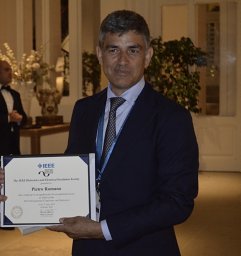 Pietro Romano合作论文数4
 Roberto La Rosa合作论文数4
 Giovanni Cipriani合作论文数4Rosalinda Inguanta合作论文数Dipartimento di Ingegneria Chimica dei Processi e dei Materiali, Università degli Studi di Palermo4
 Ciro Spataro合作论文数University of Palermo4
 G. Ricco Galluzzo合作论文数4Philippe Mandin合作论文数3Fabio Genduso合作论文数3
 Bernardo Patella合作论文数3
 Angelo Alberto Messina合作论文数3
 Antonino Imburgia合作论文数3Catherine Dehollain合作论文数STI3
 Giorgio Vassallo合作论文数DINFO, University of Palermo3
 Vincenzo Vinciguerra合作论文数3
 Salvatore Stivala合作论文数Optoelectronics Research Centre;University of Southampton;University " Roma Tre ";University of Southampton, University " Roma Tre "3P. Romano合作论文数2
 Luigi Schirone合作论文数2
 Antonino Parisi合作论文数2Giuseppe Capponi合作论文数2
 Gioacchino Scaglione合作论文数2Giuseppe Aiello合作论文数2Sonia Carbone合作论文数Dipartimento di Ingegneria, Università degli Studi di Palermo2v cecconi合作论文数2M. Corpora合作论文数2
 Giglia, G.合作论文数2Rizzo, R.合作论文数2
 Mattia Ricco合作论文数2
 Alfonso Damiano合作论文数2
 Maurizio Cellura合作论文数Dipartimento di Ricerche Energetiche e Ambientali (DREAM), Università di Palermo2




