Increasing market pressures require organizations to rethink the development of change capability. Building a sustainable and flexible organization capable of responding in a timely manner to quickly changing customer demands without compromising technological excellence and quality is a complex task. This chapter builds on a five-year study of transformation efforts at a product development unit of Ericsson. The complexity of designing and managing learning mechanisms as both a transformation engine and a way to improve new product development is captured. The chapter points toward the challenges of designing and managing learning mechanisms that enhance organizational agility.
Michael Beer is Cahners-Rabb professor of business administration, Emeritus at the Harvard Business School and chairman and cofounder of TruePoint, a research-based management consultancy. He has authored many articles, book chapters, and authored or coauthored 10 books. His most recent published in 2009 is High Commitment, High Performance. His1990 book The Critical Path to Corporate Renewal received the Johnson,
Contemporary and future challenges when managing research involve coping with emerging prerequisites which include, among other things, a new knowledge production discourse, new research funding methods and new ways for international collaboration. Managers for boundary-spanning research activities need to combine the sometimes opposing logics and perspectives of the multiple stakeholders—the individual researchers searching for independence, sustainability and freedom and others searching for integration, relevance and predictability. Based on a collaborative research set-up including interviews, discussions and workshops with major Swedish research funding agencies, research program managers, experienced industry partners and key stakeholders, the paper identifies six main managerial challenges: (i) lack of focus on research management and unsatisfying prerequisites, (ii) weak identity and low status of the role of the research managers, (iii) few incentives for research management, (iv) lack of leadership development opportunities for researchers, (v) multiple (and sometimes contradictory) expectations from different stakeholders, and (vi) sustained funding. Finally, the managerial implications of these challenges for universities and funding agencies are discussed.
We tend to assume that great leaders must make difficult choices between two or more conflicting outcomes. In an interview study with 26 CEOs of top American and European companies (incl. IKEA, Campbell Soups, Nokia, H&M), we find that instead of choosing between conflicting outcomes such as long-term strategy or short-term performance drivers, top tier managers argue that their role is to embrace such paradoxes to make both things happen simultaneously. The study identifies five groups of practices that make this possible. Together, they reveal a systematic approach to managerial work at the top, which is seldom found in the literature. By building on the engagement of many in the development of the organization, the practices are important for our understanding of how a CEO facilitates the partaking of many in strategy making. The paper contributes to theory by relating the current findings to the literature on the connection between commitment and performance and on the strategic management literature that focuses on the proliferation of strategy and strategy as practice.
Managing the tension between performance and people is at the heart of the CEO's job. But CEOs under fierce pressure from capital markets often focus solely on the shareholder, which can lead to employee disenchantment. Others put so much stock in their firms' heritage that they don't notice as their organizations slide into complacency. Some leaders, though, manage to avoid those traps and create high-commitment, high-performance (HCHP) companies. The authors' in-depth research of HCHP CEOs reveals several shared traits: These CEOs earn the trust of their organizations through their openness to the unvarnished truth. They are deeply engaged with their people, and their exchanges are direct and personal. They mobilize employees around a focused agenda, concentrating on only one or two initiatives. And they work to build collective leadership capabilities. These leaders also forge an emotionally resonant shared purpose across their companies. That consists of a three-part promise: The company will help employees build a better world and deliver performance they can be proud of, and will provide an environment in which they can grow. HCHP CEOs approach finding a firm's moral and strategic center in a competitive market as a calling, not an engineering problem. They drive their firms to be strongly market focused while at the same time reinforcing their firms' core values. They are committed to short-term performance while also investing in long-term leadership and organizational capabilities. By refusing to compromise on any of these terms, they build great companies.
This paper deals with how CEOs of top performing global firms act to create strategic change in their organizations. Research on top management leadership has been more concentrated on values, attitudes and traits than on what they do. Studies that describe leadership practices, often focus on everyday action. The focus in this paper is top leaders action to make strategy happen. In-depth interviews with 25 CEOs were made to understand the practices that these CEOs try to apply. The leaders seem to act through a paradoxical combination of trying to be “omnipresent” and at the same time stay away as much as possible to empower lower level leaders and employees. The paper informs the academic discussion on leadership and on strategizing in organizations.
Gestionar la tension entre el desempeno y las personas es parte de la esencia del trabajo del CEO. Pero los CEO bajo fuertes presiones de los mercados de capitales a menudo se concentran solo en el accionista, lo que puede llevar a un desencantamiento de los empleados. Otros ponen tanto enfasis en el legado de la firma que no se percatan de que sus organizaciones estan cayendo en la autocomplacencia. Sin embargo, algunos lideres se las arreglan para evitar esas trampas y crean empresas de alto compromiso y alto desempeno (HCHP). La profunda investigacion que hicieron los autores sobre los CEO HCHP revela varias caracteristicas comunes: estos CEO se ganan el respeto de sus organizaciones porque estan dispuestos a decir la verdad. Estan profundamente comprometidos con sus empleados y sus interacciones son directas y personales. Movilizan a los empleados en torno a una agenda enfocada, concentrada en una o dos iniciativas. Y trabajan para crear capacidades colectivas de liderazgo. Estos lideres tambien forjan un proposito compartido por toda la empresa, uno con alto contenido emocional. Este consiste en una promesa de tres partes: la empresa ayudara a los empleados a construir un mundo mejor y tener un desempeno del que se sientan orgullos, y brindara un entorno donde puedan crecer. Los CEO HCHP creen que encontrar un centro moral y estrategico para sus empresas en un mercado competitivo es un deber, no un problema de ingenieria. Impulsan a sus firmas a estar muy enfocadas en el mercado y al mismo tiempo a reforzar sus valores fundamentales. Tambien estan comprometidos con el desempeno en el corto plazo mientras que invierten en el liderazgo y las capacidades organizacionales de largo plazo. Al negarse a transar ninguno de estos aspectos, construyen grandes empresas.
The Formation of Collaborative Research at Novo Nordisk : Bridging Cognitive Frames and Aiming for a Sustainable Set-Up
 Niclas Adler合作论文数FENIX Centre for Innovations in Management25
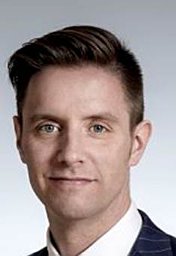 Tobias Fredberg合作论文数Dept Technol Management & Econ, Chalmers Univ Technol11
 h hart合作论文数7Michael Beer合作论文数6nathaniel foote合作论文数5Russell A. Eisenstat合作论文数5
 Sofia Börjesson合作论文数Department of Technology Management and Economics, Chalmers University of Technology4bengt stymne合作论文数3Joseph Schaller合作论文数3Bjorn E. Frossevi合作论文数3
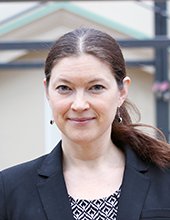 Maria Elmquist合作论文数Dept. of Technology Management and Economics, Chalmers University of Technology3Tomas Hellström合作论文数IMIT and Innovation Engineering and Management;Chalmers University of Technology;IMIT and Innovation Engineering and Management, Chalmers University of Technology2Abraham B. Shani合作论文数2
 Susanne Ollila合作论文数Dept Technol Management & Econ, Chalmers Univ Technol2
 Merle Jacob合作论文数Research Policy Institute, Lund University2Holly Hart合作论文数1
 Luis Felipe Gomez合作论文数1
 Guido Maes合作论文数1
 Kamilla Kohn Radberg合作论文数These authors contributed equally as first authors1
 William Pasmore合作论文数1
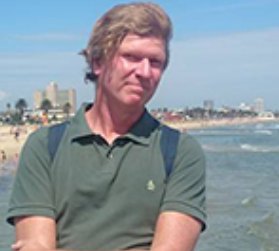 Alexander Styhre合作论文数Department of Business Administration, School of Business, Economics and Law, Göteborgs Universitet1
 Ethan S. Bernstein合作论文数Harvard Business School, Harvard University1
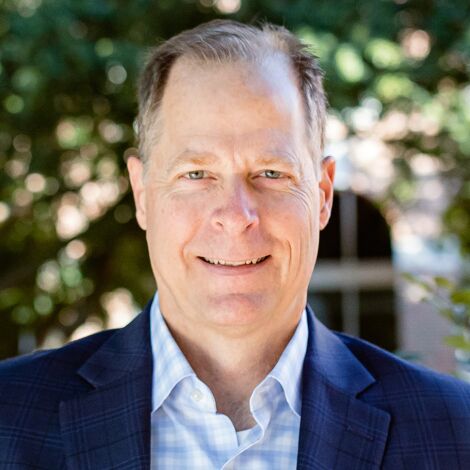 David A. Hofmann合作论文数Department of Management, Kenan Flagler Business School, University of North Carolina1
 Dawna I. Ballard合作论文数Dept Commun Studies, Univ Texas Austin1Susan Albers Mohrman合作论文数1
 Anders Ingelgard合作论文数1
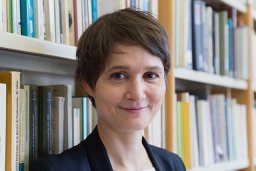 Blanche Segrestin合作论文数Mines ParisTech, PSL Res Univ1
 Lars Trygg合作论文数Department of Operations Management and Work Organization, Chalmers University of Technology1
 Frank Barrett合作论文数Naval Postgraduate School;School of Business;School of Business, Naval Postgraduate School1
 Victor J Friedman合作论文数1
 Karen J. Jansen合作论文数Department of Management and Organization, The Pennsylvania State University1




