1. DNA metabarcoding has developed into a commonly used tool for biodiversity assessment and monitoring. How results from DNA metabarcoding are compared with studies based on 'classic', in most cases morphological species identification, is still unclear. Studies investigating species detection against a known baseline are virtually non-existent.2. In this study, we used light trap samples collected in eastern Austria to investigate the concordance between morphological species lists and results obtained from COI metabarcoding using the Illumina MiSeq platform. Two primer combinations of different lengths (313 and 205 bp) were compared to assess the influence of amplicon length.3. Species detection rates ranged between 0.38 and 0.69; the shorter amplicon had on average higher species detection rates compared with the longer amplicon. Singleton species were less likely to be detected through metabarcoding.4. The major determinant for a species to be detected was its biomass, viz. smaller species had a lower chance to be detected. However, there is also evidence of taxonomic bias on the level of superfamilies. While the influence of biomass is to be expected, the presence of taxonomic bias gives reason for concern and requires further studies. Such a bias can be of significance when metabarcoding is used to determine conservation measures. Ordination analyses of all sampling sites showed that as far as community ecology is concerned, the overall pattern obtained from the full species list was mostly preserved in our metabarcoding results.
We analysed a molecular dataset of 1206 Geometroidea terminal taxa. In this paper we focus on New World taxa, with 102 Nearctic terminal taxa (97 of which have not previously been subject to molecular phylogenetic analysis) and 398 Neotropical terminal taxa (375 not previously analysed). Up to eleven molecular markers per specimen were included: one mitochondrial (COI) and ten proteincoding nuclear gene regions (Wingless, ArgK, MDH, RpS5, GAPDH, IDH, Ca-ATPase, Nex9, EF-1alpha, CAD). The data were analysed using maximum likelihood approach as implemented in IQ-TREE and RAxML. Photographs of almost all voucher specimens are provided together with relevant type material in illustrated electronic catalogues in order to make identities and taxonomic changes transparent. Our analysis concentrates on the level of tribes and genera, many of which are shown to be paraor polyphyletic. In an effort towards a natural system of monophyletic taxa, we propose taxonomic changes: We establish 11 new tribe names (Larentiinae, authors Brehm, MurilloRamos & Õunap): Brabirodini new tribe, Chrismopterygini new tribe, Psaliodini new tribe, Pterocyphini new tribe, Rhinurini new tribe, Ennadini new tribe, Cophocerotini new tribe, Erebochlorini new tribe; (Ennominae, authors Brehm, Murillo-Ramos & Sihvonen): Euangeronini new tribe, Oenoptilini new tribe, Pyriniini new tribe. We assign 27 genera for the first time to a tribe, propose 29 new tribe assignments and 26 new generic combinations, we synonymize one tribe and seven genera, revive one tribe, and propose to exclude 119 species from non-monophyletic genera (incertae sedis). Our study provides the data and foundation for numerous future taxonomic revisions of New World geometrid moths. We also examine broad-scale biogeographic patterns of New World Geometridae: While Nearctic species are often nested within the predominantly Neotropical clades, the austral South American fauna forms distinct clades, hinting at a long isolation from the remaining New World fauna.
We analysed a molecular dataset of 1206 Geometroidea terminal taxa. In this paper we focus on New World taxa, with 102 Nearctic terminal taxa (97 of which have not previously been subject to molecular phylogenetic analysis) and 398 Neotropical terminal taxa (375 not previously analysed). Up to eleven molecular markers per specimen were included: one mitochondrial (COI) and ten protein-coding nuclear gene regions (Wingless, ArgK, MDH, RpS5, GAPDH, IDH, Ca-ATPase, Nex9, EF-1alpha, CAD). The data were analysed using maximum likelihood approach as implemented in IQ-TREE and RAxML. Photographs of almost all voucher specimens are provided together with relevant type material in illustrated electronic catalogues in order to make identities and taxonomic changes transparent. Our analysis concentrates on the level of tribes and genera, many of which are shown to be para- or polyphyletic. In an effort towards a natural system of monophyletic taxa, we propose taxonomic changes: We establish 11 new tribe names (Larentiinae, authors Brehm, Murillo-Ramos & Ounap): Brabirodini new tribe, Chrismopterygini new tribe, Psaliodini new tribe, Pterocyphini new tribe, Rhinurini new tribe, Ennadini new tribe, Cophocerotini new tribe, Erebochlorini new tribe; (Ennominae, authors Brehm, Murillo-Ramos & Sihvonen): Euangeronini new tribe, Oenoptilini new tribe, Pyriniini new tribe. We assign 27 genera for the first time to a tribe, propose 29 new tribe assignments and 26 new generic combinations, we synonymize one tribe and seven genera, revive one tribe, and propose to exclude 119 species from non-monophyletic genera (incertae sedis). Our study provides the data and foundation for numerous future taxonomic revisions of New World geometrid moths. We also examine broad-scale biogeographic patterns of New World Geometridae: While Nearctic species are often nested within the predominantly Neotropical clades, the austral South American fauna forms distinct clades, hinting at a long isolation from the remaining New World fauna.
We analysed a molecular dataset of 1206 Geometroidea terminal taxa. In this paper we focus on New World taxa, with 102 Nearctic terminal taxa (97 of which have not previously been subject to molecular phylogenetic analysis) and 398 Neotropical terminal taxa (375 not previously analysed). Up to eleven molecular markers per specimen were included: one mitochondrial (COI) and ten proteincoding nuclear gene regions (Wingless, ArgK, MDH, RpS5, GAPDH, IDH, Ca-ATPase, Nex9, EF-1alpha, CAD). The data were analysed using maximum likelihood approach as implemented in IQ-TREE and RAxML. Photographs of almost all voucher specimens are provided together with relevant type material in illustrated electronic catalogues in order to make identities and taxonomic changes transparent. Our analysis concentrates on the level of tribes and genera, many of which are shown to be para-or polyphyletic. In an effort towards a natural system of monophyletic taxa, we propose taxonomic changes: We establish 11 new tribe names (Larentiinae, authors Brehm, Murillo-Ramos & Ounap): Brabirodini new tribe, Chrismopterygini new tribe, Psaliodini new tribe, Pterocyphini new tribe, Rhinurini new tribe, Ennadini new tribe, Cophocerotini new tribe, Erebochlorini new tribe; (Ennominae, authors Brehm, Murillo-Ramos & Sihvonen): Euangeronini new tribe, Oenoptilini new tribe, Pyriniini new tribe. We assign 27 genera for the first time to a tribe, propose 29 new tribe assignments and 26 new generic combinations, we synonymize one tribe and seven genera, revive one tribe, and propose to exclude 119 species from non-monophyletic genera (incertae sedis). Our study provides the data and foundation for numerous future taxonomic revisions of New World geometrid moths. We also examine broad-scale biogeographic patterns of New World Geometridae: While Nearctic species are often nested within the predominantly Neotropical clades, the austral South American fauna forms distinct clades, hinting at a long isolation from the remaining New World fauna. (Less)
Eois is one of the best-investigated genera of tropical moths. Its close association with Piper plants has inspired numerous studies on life histories, phylogeny and evolutionary biology. This study provides an updated view on phylogeny, host plant use and temporal patterns of speciation in Eois. Using sequence data (2776 bp) from one mitochondrial (COI) and one nuclear gene (Ef1-alpha) for 221 Eois species, we confirm and reinforce previous findings regarding temporal patterns of diversification. Deep diversification within Andean Eois took place in the Miocene followed by a sustained high rate of diversification until the Pleistocene when a pronounced slowdown of speciation is evident. In South America, Eois diversification is very likely to be primarily driven by the Andean uplift which occurred concurrently with the entire evolutionary history of Eois. A massively expanded dataset enabled an in-depth look into the phylogenetic signal contained in host plant usage. This revealed several independent shifts from Piper to other host plant genera and families. Seven shifts to Peperomia, the sister genus of Piper were detected, indicating that the shift to Peperomia was an easy one compared to the singular shifts to the Chloranthaceae, Siparunaceae and the Piperacean genus Manekia. The potential for close co-evolution of Eois with Piper host plants is therefore bound to be limited to smaller subsets within Neotropical Eois instead of a frequently proposed genus-wide co-evolutionary scenario. In regards to Eois systematics we confirm the monophyly of Neotropical Eois in relation to their Old World counterparts. A tentative biogeographical hypothesis is presented suggesting that Eois originated in tropical Asia and subsequently colonized the Neotropics and Africa. Within Neotropical Eois we were able to identify the existence of six clades not recognized in previous studies and confirm and reinforce the monophyly of all 9 previously delimited infrageneric clades.
We sampled 14,603 geometrid moths along a forested elevational gradient from 1020-3021 m in the southern Ecuadorian Andes, and then employed DNA barcoding to refine decisions on species boundaries initially made by morphology. We compared the results with those from an earlier study on the same but slightly shorter gradient that relied solely on morphological criteria to discriminate species. The present analysis revealed 1857 putative species, an 80% increase in species richness from the earlier study that detected only 1010 species. Measures of species richness and diversity that are less dependent on sample size were more than twice as high as in the earlier study, even when analysis was restricted to an identical elevational range. The estimated total number of geometrid species (new dataset) in the sampled area is 2350. Species richness at single sites was 32-43% higher, and the beta diversity component rose by 43-51%. These impacts of DNA barcoding on measures of richness reflect its capacity to reveal cryptic species that were overlooked in the first study. The overall results confirmed unique diversity patterns reported in the first investigation. Species diversity was uniformly high along the gradient, declining only slightly above 2800 m. Species turnover also showed little variation along the gradient, reinforcing the lack of evidence for discrete faunal zones. By confirming these major biodiversity patterns, the present study establishes that incomplete species delineation does not necessarily conceal trends of biodiversity along ecological gradients, but it impedes determination of the true magnitude of diversity and species turnover.
1. Information on the guild structure of foliage‐associated tropical insects is scarce, especially as caterpillars are mostly considered only as herbivores feeding on living leaves. However, many caterpillar species display alternative trophic associations, feeding on dead or withered leaves or epiphylls (‘non‐herbivores’).2. To determine the contribution of these non‐herbivores, caterpillar communities associated with Chusquea Kunth (Poaceae) in the Andes of southern Ecuador were investigated. Caterpillars were collected at two elevation levels (montane rainforest ∼2000 m and elfin forest at ∼3000 m a.s.l.) and assigned to three feeding guilds (strict herbivores, non‐herbivores, and switchers) based on feeding trials. Foliage quality and leaf area were recorded to test for their influence on guild composition and caterpillar density.3. Three hundred and eighty‐nine individuals belonging to 175 Lepidoptera species associated with Chusquea bamboos were found. The species richness of caterpillars was similarly high at both elevation levels but varied between feeding guilds. Approximately half (46.5%) displayed an alternative feeding association, i.e. were non‐herbivores (31.1%) or switchers (15.4%).4. Caterpillar density was nearly two‐fold higher in the elfin forest, but only strict herbivores and switchers increased significantly with elevation. Leaf area positively influenced the density of strict herbivores and switchers; foliage quality only affected strict herbivores. The density of non‐herbivores did not differ significantly between the forest types and was not related to leaf area or foliage quality.5. The present study underpins that non‐herbivores make up a considerable fraction of caterpillar communities in tropical mountain ecosystems and demonstrates that elevation, foliage quality and available plant biomass further shape feeding guild composition.
Lepidopteran caterpillars are typically classified as herbivorous insects. Other feeding associations have been known for a long time but are often neglected in the ecological literature. In samples from 194 shrubs belonging to 16 species of Piperaceae and Asteraceae, which were taken in a montane forest and succession habitats in southern Ecuador, caterpillar assemblages included an unexpectedly large fraction not feeding on the living biomass of their putative 'host'. Feeding trials revealed them to instead feed on foliose lichens, dead leaves and epiphylls (lichen, algae, bryophytes). These 'alternative feeders' accounted for 22.5% of the whole dataset and up to 80% of the caterpillars on individual plant species. Densities of alternative feeders were very similar across shrub species within each plant family, but differed strongly between Asteraceae in succession and Piperaceae in forest habitats. Herbivore caterpillars showed the opposite pattern with strong differences between individual plant species, but overall similar densities on both plant families.
The very species-rich tropical moth genus Eois Hübner (Lepidoptera: Geometridae) is a promising model group for studying host plant specialization and adaptive radiation. While most Eois species are assumed to be specialized herbivores on Piper L. species, records on other plant taxa such as Peperomia Ruiz & Pavón (Piperaceae) are still relatively scarce. Moreover, little is known about life history traits of most species, and only a few caterpillars have been described so far. We collected caterpillars associated with Peperomia (Piperaceae) host plants from June 2012 to January 2013 in three elevational bands of montane and elfin rainforests on the eastern slopes of the Andes in southern Ecuador. Caterpillars were systematically searched and reared to the adult stage. We were able to delimitate ten species of Eois on Peperomia by comparison of larval and adult morphology and by using 658 bp fragments of the mitochondrial COI gene (barcode sequences). Three of these species, Eois albosignata (Dognin), Eois bolana (Dognin), and Eois chasca (Dognin), are validly described whereas the other seven taxa represent interim morphospecies, recognized unequivocally by their DNA barcodes, and their larval and adult morphology. We provide information about their host plants, degree of parasitism, and describe the larval stages in their last instar. Additionally, caterpillars and moths are illustrated in color plates. This is the first comparative study dealing with Eois moths whose caterpillars feed on Peperomia hosts.
Caterpillar ensembles were sampled on 16 species of shrubs from the family Asteraceae and the genus Piper (Piperaceae) in open and forest habitats in the Andean montane forest zone of southern Ecuador between August 2007 and May 2009. Trophic affiliations of caterpillars to the host plants were confirmed in feeding trials. Overall, species richness of herbivorous caterpillars was high (191 species across all plants), but varied strongly between ensembles associated with different plant species (2–96 lepidopteran species per shrub species). Ensembles on Piper species were characterized by low effective species numbers and high dominance of one or two species of the Geometridae genus Eois Hübner. Low species number and high dominance were also found on latex-bearing Erato polymnioides, whereas ensembles on two other Asteraceae species were far more diverse and less strongly shaped by a few dominant species. The observed diversity patterns fit well to the concept that anti-herbivore defenses of plants are the major factors regulating associated insect ensembles. Local abundance and geographic range of host plants appear to have less influence. Lepidopteran species feeding on Asteraceae were found to be more generalistic than those feeding on Piper species. We conclude that caterpillar ensembles on most, but not all, studied plant species are defined by a small number of dominant species, which usually are narrow host specialists. This pattern was more distinct on Piper shrubs in forest understory, whereas Asteraceae in disturbed habitats had more open caterpillar ensembles.
The moth genus Eois Hubner (Lepidoptera: Geometridae: Larentiinae) comprises 254 validly described species, 211 of them (83%) occurring in the Neotropical region, 12% in the Asian-Australian region, and 5% in Africa. A checklist of Neotropical Eois is provided and some taxonomic changes are made. Aplogompha noctilaria (Schaus) is excluded from the genus, and Eois bermellada (Dognin) and Eois fragilis (Warren) are transferred to the genus. Further changes include Eois cellulata (Prout) stat. rev., Eois ambarilla (Dognin) stat. rev., and Eois telegraphica Prout stat. rev. By far, the majority of Eois species (82%) were described between 1891 and 1920; approximately half of all species by just two authors. Within the Neotropical region, the majority of species (55%) were described from the tropical Andes (Colombia, Ecuador, Peru, and Bolivia), followed by Central America and the Caribbean (28%), and the rest of South America (17%). Large regions such as the Amazon basin, eastern South America, but also northern Peru are heavily underrepresented. Regional diversity studies provide evidence that the wet tropical Andes are the diversity hotspot of Eois. From a forested elevational gradient (1,020-2,670 m above sea level) in southeastern Ecuador, 154 morphospecies are currently known, with only approximate to 12% of them described. Regional species richness in Central America is lower (Costa Rica, 66 observed morphospecies along a gradient from 40 to 2,730 m; approximate to 29% described). Total richness of the genus is estimated to be >1,000 species in the Neotropical region. If the low proportions of described species only partly recur in other groups of Neotropical geometrid moths, their number may exceed 19,000 species. A taxonomic revision of Eois will be a prerequisite for comparison of ecological data from different regions.
During four months of field surveys at the Reserva Biologica San Francisco in the south Ecuadorian Andes, caterpillars of 59 Geometridae species were collected in a montane rainforest between 1800 and 2800m altitude and reared to adults. The resulting data on host plant affiliations of these species was collated. The preimaginal stages of 58 and adult stages of all 59 species are depicted in colour plates. Observations on morphology and behaviour are briefly described. Five species, documented for the first time in the study area by means of larval collections, had not been previously collected by intensive light-trap surveys. Together with published literature records, life-history data covers 8.6% of the 1271 geometrid species observed so far in the study area. For 50 species these are the first records of their early stages, and for another 7 the data significantly extend known host plant ranges. Most larvae were collected on shrubs or trees, but more unusual host plant affiliations, such as ferns (6 geometrid species) and lichens (3 geometrid species), were also recorded. Thirty-four percent of the caterpillars were infested by wasp or tachinid parasitoids.
Eois is a pantropical genus of Geometridae moths with currently 250 valid described species, the majority of which occur in the Neotropics. Eois is a prominent component of Andean moth communities locally accounting for up to similar to 10% of geometrid individuals. We address the evolution of wing patterns and host plant use in Neotropical Eois and provide a preliminary assessment on the monophyly and biogeographic history of the entire genus as well as affinities within the subfamily Larentiinae. We applied Bayesian, maximum likelihood and maximum parsimony methods of phylogenetic reconstruction to a 142 taxon dataset of partial COI (1220 bp) and Ef1 alpha (1066 bp) sequences resulting in the largest taxon set of geometrid moths analyzed in a molecular phylogenetic study so far. Monophyly of Eois was always strongly supported. Ten monophyletic clades were found with good support, seven of which have characteristic wing pattern phenotypes. Only one wing pattern type occurs in two clades. Trophic associations with representatives of the family Piperaceae occur in all 8 (of 9) Neotropical clades for which host information is available. Apart from feeding on Piper, at least two Eois species in Ecuador feed on Peperomia, and one on Manekia (all Piperaceae); two further species live on Hedyosmum (Chloranthaceae). Species feeding on Peperomia, Manekia and Hedyosmum are usually nested in Piper-associated clades. Single records of associations with Gesneriaceae and Monimiaceae are scattered in otherwise Piperaceae-associated clades. These patterns suggest multiple parallel host shifts away from Piper as ancestral food plant. Old World Eois were recovered as monophylum and sister to Neotropical Eois. Within the subfamily Larentiinae the genus Eois has previously been placed close to the tribe Eupitheciini, but this was not supported in our phylogenetic analyses.
We analyzed the suitability of a combined sampling approach -consisting of visual search and branch-beating-for quantifying tropical caterpillar communities.Surveys were conducted in the Ecuadorian montane forest zone, with two shrub species from the genus Piperserving as focal targets.We sampled 160 shrubs in the course of four experiments following a standardized sampling protocol.Subsequently each shrub was completely defoliated accompanied by an intensive leaf-by-leaf search, in an effort to extract as close to 100% of all present caterpillars as possible.We analyzed the resulting dataset with regard to completeness, taxonomical bias, and influences of daytime, complexity of shrub structure, or experience of the researcher.The standardized sampling protocol extracted between 50.6% and 71.6% of the caterpillars present on a shrub.A minor taxonomic bias of the sampling protocol w'as observed, but appears to be of a simple and predictable nature, and is therefore easy to account for.We did not find any significant influences of daytime.Structure and size of shrubs had a strong influence on sampling results with small and simply structured shrubs being sampled most completely, large and complex shrubs most incompletely in our dataset.Researcher experience did not appear to have an influence on the sampling efficiency or taxonomic composiuon of samples obtained when w'e compared caterpillars obtained by standardized sampling with those collected by exhaustive leaf-by-leaf search.Comparison of caterpillar sizes revealed however, that inexperienced field assistants tended to overlook large fractions of the smallest caterpillars entirely.We conclude that our standardized combined sampling approach is fairly suitable for studies concerning caterpillar communities, especially w'hen resampling of the same shrub individuals is desired.
Die Gattung Eois (Larentiinae) ist Teil einer megadiversen Fauna von Geometriden in den Bergregenwaldern des sudlichen Ecuador. Angesichts der hohen Diversitat an Morphotypen und der engen Beziehung zu Futterpflanzen aus der Gattung Piper wurde die Gattung Eois zur weiterfuhrenden Untersuchung ausgewahlt. Hauptfragestellungen waren die Brauchbarkeit von Barcode-Ansatzen zur Artidentifikation sowie ein erster Einblick in phylogenetische Zusammenhange innerhalb von Eois. COI-Barcode-Sequenzen von 340 Individuen wurden generiert, um eine Datenbank der Artengemeinschaft an der Sammlungslokalitat zu erstellen. Dieses Inventar wird von grosem Nutzen bei der Identifikation von Raupen sein und damit die Zahl der Futterpflanzennachweise ohne die Notwendigkeit zeitraubender Zuchten erhohen. Die Analyse der Barcoding-Sequenzen zeigte, dass es im Fall einer rein Morphologie-basierten Artabgrenzung zu einer breiten Uberlappung von intra- und interspezifischen genetischen Distanzen kommt. Artabgrenzung auf Sequenzbasis mit einem Schwellenwert von 3% eliminiert 6 von 9 Fallen, die eine Uberlappung verursachen. Abgrenzung mit einem 2% Schwellenwert fuhrt zu einem klaren "barcoding gap". Es konnten allein aufgrund der Flugelzeichnungsmerkmale 30 neue Morphosspezies im vorliegenden Material identifiziert werden, deren Artstatus sich ausnahmslos durch Analyse der DNA-Barcode-Sequenzen bestatigte. Die Zahl der Eois-Arten in diesem kleinen, nur wenige Quadratkilometer grosen Areal an Bergregenwald steigt daher von 99 auf 129. Diese Zahl erhoht sich weiter (auf 138), wenn 9 potentielle Arten, welche durch genetische Artabgrenzung unter Anwendung eines 2% Schwellenwertes identifiziert wurden, mit eingerechnet werden. Erweiterte COI Sequenzen (1220bp) und Elongation-factor-1-alpha Sequenzen (1066bp) von 102 Taxa wurden generiert. Maximum parsimony und Bayes'sche Methoden der Phylogenierekonstruktion wurden angewandt, um die Verwandtschaftsverhaltnisse innerhalb Eois abzuschatzen. Alle Analysen bestatigten die Monophylie der untersuchten neotropischen Vertreter der Gattung Eois. Die Stammbaume zeigen, dass alle betrachteten Flugelmuster-Typen – bis auf eine Ausnahme – nur einmal entstanden sind. Diese Ausnahme betrifft den basalen Clade innerhalb Eois, welcher einem abgeleiteteren Clade ahnelt. Dies konnte den plesiomorphen Zustand reprasentieren oder ein Fall konvergenter Evolution sein. Futterpflanzenbeziehungen zu Piper sind uber die gesamte Gattung hinweg zu finden. Jedoch sind die vorliegenden Nachweise auf bestimmte Subclades konzentriert. Die bislang in der Literatur vermutete nahe phylogenetische Verwandtschaft der Gattung Eois mit dem Tribus Eupitheciini (Blutenspanner) konnte anhand der molekularen Daten nicht bestatigt werden.
 Konrad Fiedler合作论文数Department fur Botanik und Biodiversitatsforschung, Fakultat fur Lebenswissenschaften, Universitat Wien12
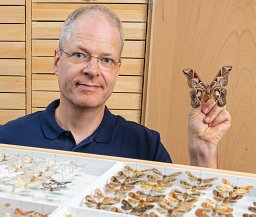 Gunnar Brehm合作论文数Institute of Systematic Zoology and Evolutionary Biology with Phyletic Museum, University of Jena12
 Patrick Strutzenberger合作论文数Department of Animal Biodiversity, University of Vienna7
 Leidys Murillo-Ramos合作论文数Dept Biol, Lund Univ3
 Carlo L. Seifert合作论文数Dept Forest Nat Conservat, Georg August Univ Gottingen3
 Ounap Erki合作论文数3Lindt Aare合作论文数3
 Niklas Wahlberg合作论文数Department of Biology, Faculty of Science, Lund University;Centre for Environmental and Climate Science, Faculty of Science, Lund University3
 B. CHRISTIAN Schmidt合作论文数Canadian Food Inspection Agency, Canadian National Collection of Insects, Arachnids and Nematodes3Pasi Sihvonen合作论文数Department of Entomology, University of Helsinki3
 Axel Hausmann合作论文数Bavarian State Collection of Zoology, Münchhausenstrasse 21, D-81247 München, Germany3
 Luis E. Parra合作论文数Departamento de Zoología;Facultad de Ciencias Naturales y Oceanográficas;Universidad de Concepción;Facultad de Ciencias Naturales y Oceanográficas, Universidad de Concepción3
 Alfred Moser合作论文数2Brigitte Gottsberger合作论文数Department of Zoology II, University of Erlangen-Nürnberg2Lars Möckel合作论文数1Lisamarie Lehner合作论文数1marcoliver adams合作论文数1
 Robert K. Colwell合作论文数Department of Ecology and Evolutionary Biology, University of Connecticut;University of Colorado Boulder;Universidade Federal de Goiás1Katrin Friedemann合作论文数Institut für Spezielle Zoologie und Evolutionsbiologie, FSU Jena;Max Planck Institute for Chemical Ecology, Jena, 07745, Germany.;Max Planck Institute for Chemical Ecology, FSU Jena1
 Paul Hebert合作论文数Department of Integrative Biology, College of Biological Science, University of Guelph;Centre for Biodiversity Genomics, University of Guelph1
 Martin Wiemers合作论文数Zoologisches Forschungsinstitut1Frank Hünefeld合作论文数1
 Jürgen Homeier合作论文数Plant Ecology, University of Göttingen1




