Patients with clinically significant portal hypertension (CSPH) are at high risk of developing severe complications of portal hypertension. The aim of our preliminary study was to assess multiparametric liver and spleen MRI and MR elastography for the estimation of CSPH. Seventy-eight patients with advanced chronic liver disease and hepatic venous pressure gradient measurements, who had liver and spleen MRI and MR elastography were assessed. Liver and spleen elasticity and viscosity maps with texture features were derived from the MR elastography acquisitions. Liver surface nodularity (LSN) and texture features were obtained from the T2-weighted MR images. Features were analyzed with regularized generalized canonical correlation analysis for dimensionality reduction. Models based on the combination of MRI and MR elastography features were trained and evaluated, using a support vector machine classifier. Forty-eight patients (62%) had CSPH. Most models based on hepatic and/or splenic MR elastography features, T2 texture features or LSN had fair performance (AUCs 0.7–0.79) for CSPH diagnosis. Multiparametric models that included MR elastography features and LSN had good diagnostic performance (AUCs 0.8–0.89), without improvement with the addition of T2 texture features. Our results suggest that combining liver and spleen MR elastography features with LSN may produce efficient models for diagnosing CSPH.
The main method for perfusion quantification in the liver is dynamic contrast-enhanced MR imaging, analyzed with semiquantitative descriptive approaches or more complex pharmacokinetics models. The liver is a mobile and large organ characterized by a dual vascular supply feeding a complex network of fenestrated sinusoids. The recent introduction of 3D time-resolved MRI perfusion sequences and free-breathing images of the liver offers the opportunity to improve image quality. In oncology, perfusion quantification has been applied for tumor detection and characterization, but most available data have focused on monitoring the tumor response to various treatments. In chronic liver diseases, most studies have focused on noninvasive quantification of the extent of liver fibrosis deposition and assessing the severity of cirrhosis and portal hypertension.
Small-molecule flux in tissue microdomains is essential for organ function, but knowledge of this process is scant due to the lack of suitable methods. We developed two independent techniques that allow the quantification of advection (flow) and diffusion in individual bile canaliculi and in interlobular bile ducts of intact livers in living mice, namely fluorescence loss after photoactivation and intravital arbitrary region image correlation spectroscopy. The results challenge the prevailing “mechano-osmotic” theory of canalicular bile flow. After active transport across hepatocyte membranes, bile acids are transported in the canaliculi primarily by diffusion. Only in the interlobular ducts is diffusion augmented by regulatable advection. Photoactivation of fluorescein bis-(5-carboxymethoxy-2-nitrobenzyl)-ether in entire lobules demonstrated the establishment of diffusive gradients in the bile canalicular network and the sink function of interlobular ducts. In contrast to the bile canalicular network, vectorial transport was detected and quantified in the mesh of interlobular bile ducts. The liver consists of a diffusion-dominated canalicular domain, where hepatocytes secrete small molecules and generate a concentration gradient and a flow-augmented ductular domain, where regulated water influx creates unidirectional advection that augments the diffusive flux.
In hepatobiliary imaging, systems detect the total amount of agents originating from extracellular space, bile canaliculi, and hepatocytes. They add in situ concentration of each compartment corrected by its respective volume ratio to provide liver concentrations. In vivo contribution of each compartment to liver concentration is inaccessible. Our aim was to quantify the compartmental distribution of two hepatobiliary agents in an ex vivo model and determine how their liver extraction ratios and cholestasis (livers lacking canalicular transporters) might modify it. We perfused labelled gadobenate dimeglumine (Bopta, 200 μM, 7% liver extraction ratio) and mebrofenin (Meb, 64 μM, 94% liver extraction ratio) in normal (n = 18) and cholestatic (n = 6) rat livers. We quantified liver concentrations with a gamma counter placed over livers. Concentrations in hepatocytes and bile canaliculi were calculated. Mann-Whitney and Kruskal-Wallis tests were used. Hepatocyte concentrations were 2,043 ± 333 μM (Meb) versus 360 ± 69 μM (Bopta, p < 0.001). Meb extracellular concentrations did not contribute to liver concentrations (1.3 ± 0.3%). The contribution of Bopta extracellular concentration was 12.4 ± 1.9% (p < 0.001 versus Meb). Contribution of canaliculi was similar for both agents (16%). Cholestatic livers had no Bopta in canaliculi but their hepatocyte concentrations increased in comparison to normal livers. Hepatocyte concentrations are correlated to liver extraction ratios of hepatobiliary agents. When Bopta is not present in canaliculi of cholestatic livers, hepatocyte concentrations increase in comparison to normal livers. This new understanding extends the interpretation of clinical liver images.
Background & Aims: Despite improvements in medical and surgical techniques, post-hepatectomy liver failure (PHLF) remains the leading cause of postoperative death. High postoperative portal vein pressure (P-PV) and portocaval gradient (PCG), which cannot be predicted by current tools, are the most important determinants of PHLF. Therefore, we aimed to evaluate a digital twin to predict the risk of postoperative portal hypertension (PHT). Methods: We prospectively included 47 patients undergoing major hepatectomy. A mathematical (0D) model of the entire blood circulation was assessed and automatically calibrated from patient characteristics. Hepatic flows were obtained from preoperative flow MRI (n = 9), intraoperative flowmetry (n = 16), or estimated from cardiac output (n = 47). Resection was then simulated in these 3 groups and the computed Ppv and PCG were compared to intraoperative data. Results: Simulated post-hepatectomy pressures did not differ between the 3 groups, comparing well with collected data (no significant differences). In the entire cohort, the correlation between measured and simulated P-PV values was good (r = 0.66, no adjustment to intraoperative events) or excellent (r = 0.75) after adjustment, as well as for PCG (respectively r = 0.59 and r = 0.80). The difference between simulated and measured posthepatectomy PCG was <= 3 mmHg in 96% of cases. Four patients suffered from lethal PHLF for whom the model satisfactorily predicted their postoperative pressures. Conclusions: We demonstrated that a OD model could correctly anticipate postoperative PHT, even using estimated hepatic flow rates as input data. If this major conceptual step is confirmed, this algorithm could change our practice toward more tailor-made procedures, while ensuring satisfactory outcomes. Lay summary: Post-hepatectomy portal hypertension is a major cause of liver failure and death, but no tool is available to accurately anticipate this potentially lethal complication for a given patient. Herein, we propose using a mathematical model to predict the portocaval gradient at the end of liver resection. We tested this model on a cohort of 47 patients undergoing major hepatectomy and demonstrated that it could modify current surgical decision-making algorithms. (C) 2020 European Association for the Study of the Liver. Published by Elsevier B.V. All rights reserved.
Background: Resection And Partial Liver Segment 2/3 Transplantation with Delayed total hepatectomy (RAPID) includes total hepatectomy in 2 steps with small graft transplantation at first stage. To avoid graft portal hyperperfusion, portal vein pressure monitoring is required after revascularization and right portal vein clamping. To date, portal flow modulation has not been reported but simulating hemodynamics in RAPID patients would be useful to anticipate these procedures. Our team developed hemodynamic 0D modeling; we aimed to assess if this mathematical model could be accurately used in the RAPID setting. Methods: The modified 0D model was retrospectively tested on 3 patients. We compared our estimated portal vein pressures and portocaval gradients to those intraoperatively measured, as indication to modulate portal flow relies on these measures. Findings: Portal pressures measured after right portal vein clamping (end of RAPID procedure) in patients 1, 2 and 3 were respectively of 14, 16 and 12 mmHg while the simulated pressures were of 13.1, 14.8 and 11.5 mmHg (p = 0.25). Portocaval gradients measured after right portal vein clamping in the 3 patients were respectively of 10, 11 and 7 mmHg while the simulated gradients were of 9.9, 11.6 and 8.3 mmHg (p = 0.5). Interpretation: We succeeded to predict portal vein pressures and portocaval gradients after RAPID. This promising report demonstrates that 0D simulation could be a useful tool for human decision-making. Moreover, such a patient-specific model could be of importance if we transpose RAPID experience to hepatocellular carcinoma bearing cirrhotics, a population with high probability of portal hypertension after RAPID.
L’hypertension portale postopératoire est un facteur de risque majeur de décompensation hépatique. Pourtant, il reste très difficile de prédire, pour un patient donné, l’étendue de la résection qui restera compatible avec un faible risque d’insuffisance hépatique. Nous avons développé un modèle mathématique qui, par analogie à un circuit électrique, permet de simuler l’hémodynamique patient-spécifique au cours de la chirurgie. L’objectif de ce travail est de s’assurer de la fiabilité des simulations. Application de l’algorithme à 47 patients opérés d’une hépatectomie, avec comme données d’entrée : tension, pouls, volumétrie, pressions porte et centrale, réalisation d’une embolisation portale, débit cardiaque/porte/artériel hépatique. Les valeurs simulées étaient comparées aux mesures post-résection. Un total de 87 % des patients étaient opérés d’un cancer, avec un nombre médian de 4,7 ± 1,2 segments réséqués. Un total de 26 % avaient eu une embolisation portale préopératoire. Après prise en compte des pertes sanguines et des vasoconstricteurs administrés, la corrélation entre les pressions porte simulées et mesurées en postrésection était excellente (r = 0,75, p < 0,0001), de même que le gradient portocave (GPC) (r = 0,8, p < 0,0001). La prédiction du risque de GPC ≥ 10 mmHg postresection était fiable (Se 100 %, Sp 94 %, VPP 86 %, VPN 100 %) et pour 94 % des prédictions, la différence entre le GPC simulé et celui mesuré était ≤ 3 mmHg. Avec des données simples, potentiellement accessibles dès la phase préopératoire, il est possible de prédire l’évolution de la pression porte et du GPC. On dispose donc désormais des outils décisionnels fiables pour aider le chirurgien dans ses indications opératoires.
The RAPID (Resection And Partial Liver Segment 2/3 Transplantation with Delayed total hepatectomy) concept is an innovative surgical procedure that was recently proposed to increase the availabilit...
Abdominal aortic aneurysms (AAA) are localized, commonly occurring aortic dilations. Following rupture only immediate treatment can prevent morbidity and mortality. AAA maximal diameter and growth are the current metrics to evaluate the associated risk and plan intervention. Although these criteria alone lack patient specificity, predicting their evolution would improve clinical decision. If the disease is known to be associated with altered morphology and blood flow, intraluminal thrombus deposit and clinical symptoms, the growth mechanisms are yet to be fully understood. In this retrospective longitudinal study of 138 scans, morphological analysis and blood flow simulations for 32 patients with clinically diagnosed AAAs and several follow-up CT-scans, are performed and compared to 9 control subjects. Several metrics stratify patients between healthy, low and high risk groups. Local correlations between hemodynamic metrics and AAA growth are also explored but due to their high inter-patient variability, do not explain AAA heterogeneous growth. Finally, high-risk predictors trained with successively clinical, morphological, hemodynamic and all data, and their link to the AAA evolution are built from supervise learning. Predictive performance is high for morphological, hemodynamic and all data, in contrast to clinical data. The morphology-based predictor exhibits an interesting effort-predictability tradeoff to be validated for clinical translation.
Post-operative liver failure (POLF) remains the leading cause of death after partial hepatectomy, the partial resection of the liver. Similarly, after liver transplantation (LT) of a whole or parti...
This work combines a particle injection system with our proposed magnetic resonance navigation (MRN) sequence with the intention of validating MRN in a two-bifurcation phantom for endovascular treatment of hepatocellular carcinoma (HCC). A theoretical physical model used to calculate the most appropriate size of the magnetic drug-eluting bead (MDEB, 200 μm) aggregates was proposed. The aggregates were injected into the phantom by a dedicated particle injector while a trigger signal was automatically sent to the MRI to start MRN which consists of interleaved tracking and steering sequences. When the main branch of the phantom was parallel to B0, the aggregate distribution ratio in the (left–left, left–right, right–left and right–right divisions was obtained with results of 8, 68, 24 and 0% respectively at baseline (no MRN) and increased to 84%, 100, 84 and 92% (p < 0.001, p = 0.004, p < 0.001, p < 0.001) after implementing our MRN protocol. When the main branch was perpendicular to B0, the right-left branch, having the smallest baseline distribution rate of 0%, reached 80% (p < 0.001) after applying MRN. Moreover, the success rate of MRN was always more than 92% at the 1st bifurcation in the experiments above.
Small-molecule flux in tissue-microdomains is essential for organ function, but knowledge of this process is scant due to the lack of suitable methods applicable to live animals. We developed a methodology based on dynamic and correlative imaging for quantitative intravital flux analysis. Application to the liver, challenged the prevailing ‘mechano-osmotic’ theory of canalicular bile flow. After active transport across hepatocyte membranes bile salts are transported in the canaliculi primarily by diffusion. Only in the interlobular ducts, diffusion is augmented by regulatable advection. We corroborate these observations with in silico simulations and pan-species comparisons of lobule size. This study demonstrates a flux mechanism, where the energy invested in transmembrane transport entropically dissipates in a sub-micron scale vessel network. One Sentence Summary Bile flux proceeds by diffusion in canaliculi, augmented by advection in ducts.
In order to rationalize the production of porous Metal-Organic Frameworks (MOFs) in ionic liquids (ILs) as main solvent, we selected the archetype UiO-66(Zr) to analyze its precipitation in four commercial candidates of Its commonly used in the literature. We did the choice to investigate the reactivity of two hydrophobic salts, 1-ethy1-3-methylimidazolium bis(trifluoromethylsulfonyl)imide ([Emim][NTf2]) and 1-butyl-3-methylimidazolium hexafluorophosphate [Bumim][PF6]), as well as two other salts considered as hydrophilic, ([Omim)[Cl]) and 1-ethy1-3- methylimidazolium trifluoromethanesulfonate ([Emim][TFO]). Whereas the synthesis in hydrophilic gave rise to the crystallization of pure UiO-66(Zr), the solvo-thermal reaction (120 degrees C) performed in hydrophobic salts did not lead to the same results. In the case of [Bumim][PF6], we noted the precipitation of zirconium phosphate Zr(HPO4)(2) H2O, while the synthesis in [Emim][NTf2] favored the formation of distinct zirconium terephthalate called hcp UiO-66. These different phases have been characterized by powder X-ray diffraction, BET, IR and SEM.
The industrial fluorination of UO2 to UF4 is based on a complex process involving the manipulation of a large amount of HF, a very toxic and corrosive gas. We present here a safer way to accomplish this reaction utilizing ionic liquid [Bmim][PF6] as a unique reaction medium and fluoride source.
Abdominal aortic aneurysms (AAA) are localized, commonly-occurring dilations of the aorta. When equilibrium between blood pressure (loading) and wall mechanical resistance is lost, rupture ensues, and patient death follows, if not treated immediately. Experimental and numerical analyses of flow patterns in arteries show direct correlations between wall shear stress and wall mechano-adaptation with the development of zones prone to thrombus formation. For further insights into AAA flow topology/growth interaction, a workout of patient-specific computational flow dynamics (CFD) is proposed to compute finite-time Lyapunov exponents and extract Lagrangian-coherent structures (LCS). This computational model was first compared with 4-D phase-contrast magnetic resonance imaging (MRI) in 5 patients. To better understand the impact of flow topology and transport on AAA growth, hyperbolic, repelling LCS were computed in 1 patient during 8-year follow-up, including 9 volumetric morphologic AAA measures by computed tomography-angiography (CTA). LCS defined barriers to Lagrangian jet cores entering AAA. Domains enclosed between LCS and the aortic wall were considered to be stagnation zones. Their evolution was studied during AAA growth. Good correlation - 2-D cross-correlation coefficients of 0.65, 0.86 and 0.082 (min, max, SD) - was obtained between numerical simulations and 4-D MRI acquisitions in 6 specific cross-sections from 4 patients. In follow-up study, LCS divided AAA lumens into 3 dynamically-isolated zones: 2 stagnation volumes lying in dilated portions of the AAA, and circulating volume connecting the inlet to the outlet. The volume of each zone was tracked over time. Although circulating volume remained unchanged during 8-year follow-up, the AAA lumen and main stagnation zones grew significantly (8 cm3/year and 6 cm3/year, respectively). This study reveals that transient transport topology can be quantified in patient-specific AAA during disease progression by CTA, in parallel with lumen morphology. It is anticipated that analysis of the main AAA stagnation zones by patient-specific CFD on a yearly basis could help to predict AAA growth and rupture.
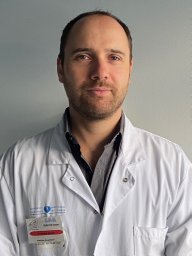 Golse Nicolas合作论文数Univ Paris-Sud, Univ Paris-Sud5
 Quentin Nicolas合作论文数Department of Earth and Planetary Sciences, University of California;qnicolas@berkeley.edu;Department of Earth and Planetary Sciences, University of California4
 E. Vibert合作论文数3
 Irene E. Vignon-Clementel合作论文数Department of Mechanical Engineering, Stanford University3
 Gilles Soulez合作论文数3Bernard E Van Beers合作论文数2I. Vignon-Clementel合作论文数2Maxime Ronot合作论文数2
 Adrian Friebel合作论文数2Mehdi Arab合作论文数2Philippe Devaux合作论文数2Bertrand Morel合作论文数2Noemie Boissier合作论文数2Georgia Guenther合作论文数2
 Ahmed Ghallab合作论文数2Jörs Simone合作论文数2
 Marie Rosselin合作论文数2
 Eric Vibert合作论文数2
 Daniel Cherqui合作论文数Hepatobiliary Center, Paul Brousse Hospital, Paris Sud University2
 René Adam合作论文数Hepato-Biliary Surgery, Cancer and Transplantation Unit, Paul Brousse Hospital;Faculty of Medicine Kremlin Bicêtre, Paris South University2
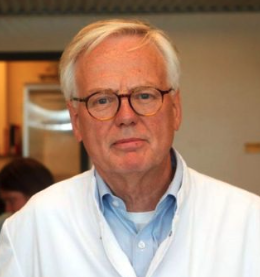 Peter Jansen合作论文数Maastricht University Medical Center2
 Dirk Drasdo合作论文数National Institute for Research in Digital Science and Technology;Interdisciplinary Centre for Bioinformatics, University of Leipzig;Institute National de Recherche en Informatique et en Automatique2
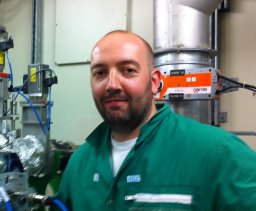 Christophe Volkringer合作论文数Institut Lavoisier (UMR CNRS 8180), Université de Versailles Saint Quentin en Yvelines2
 Stefan Hoehme合作论文数Interdisciplinary Centre for Bioinformatics, University of Leipzig2Maïté Lewin合作论文数Department of Radiology, Hopital St-Antoine2
 Claude Kauffmann合作论文数Department of Medical Imaging, University of Montreal and CRCHUM2Christian Hedberg合作论文数Department of Chemical Biology, Max Planck Institute for Molecular Physiology2Fabian Geisler合作论文数2Thierry Loiseau合作论文数Unité de Catalyse et Chimie du Solide2
 Simon Lessard合作论文数Département de Génie de la Production;École;Département de Génie de la Production|École2Pal Dag Line合作论文数1University of Geneva合作论文数1
 Olivier Lafon合作论文数1A. Sa Cunha合作论文数1
 Zeynab Nosrati合作论文数1Gerald Moran合作论文数1
 Amruta Damle-Vartak合作论文数Leibniz Res Ctr Working Environm & Human Factors, Tech Univ Dortmund IfADo1
 Chloe Audebert合作论文数Ctr Rech Inria Paris1Kathy Saatchi合作论文数Faculty of Pharmaceutical Sciences, The University of British Columbia1Paul Jean-Francois合作论文数1
 François Michaud合作论文数1
 Charles Tremblay合作论文数Dept. of Comput. & Software Eng., Ecole Polytech. de Montreal (EPM),;al;c;Dept. of Comput. & Software Eng., Ecole Polytech. de Montreal (EPM),1
 Vartak Nachiket合作论文数Department of Systemic Cell Biology, Max Planck Institute for Molecular Physiology1
 Philippe Garteiser合作论文数1Rosalie Plantefève合作论文数1
 Marc-Antoine Allard合作论文数Unité d'Hospitalisation en Chirurgie Hépatique, Centre Hépato-Biliaire, Hôpital Paul Brousse1
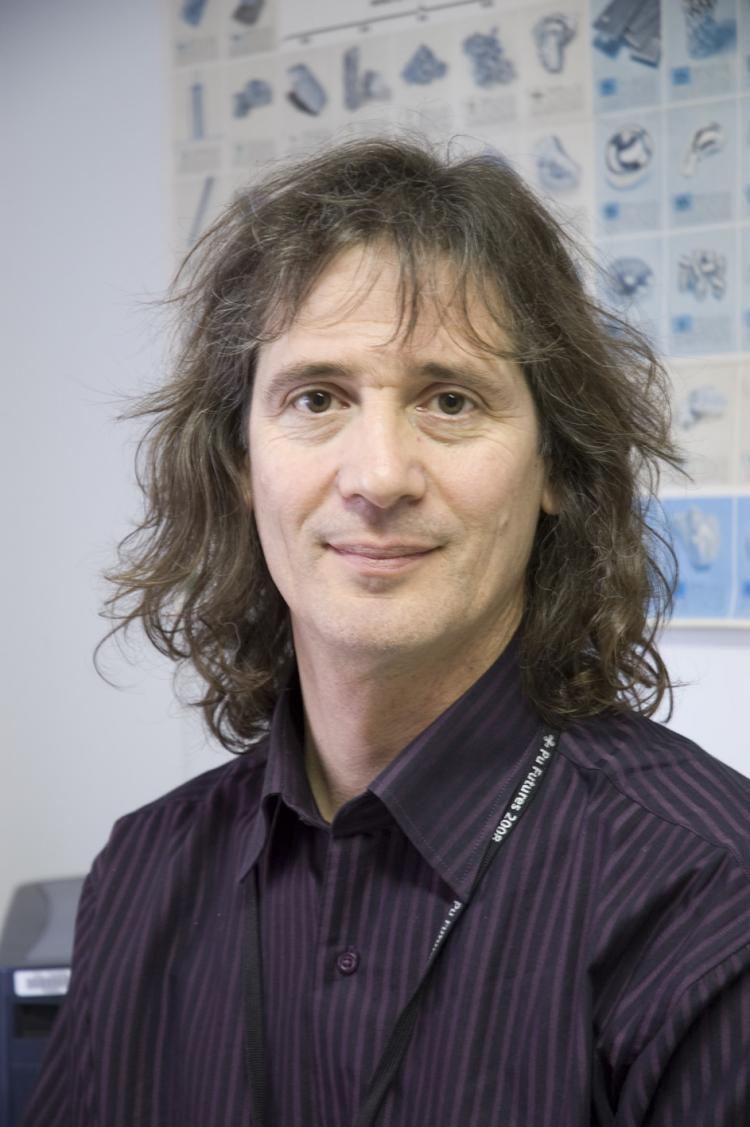 Philippe Moisy合作论文数Institut Franco-Chinois de l'Energie Nucleaire, Sun Yat-sen University;INSTN1
 Didier Samuel合作论文数Centre Hepato-Biliaire, Hopital Paul Brousse;Université Paris-Saclay;Inserm1




