The CLIN27 shared task evaluates the effect of translating historical text to modern text with the goal of improving the quality of the output of contemporary natural language processing tools appl ...
We present ANNISVis, a webapp for comparative visualization of geographical distribution of linguistic data, as well as a sample deployment for a corpus of Middle High German texts. Unlike existing geographical visualization solutions, which work with pre-existing data sets, or are bound to specific corpora, ANNISVis allows the user to formulate multiple ad-hoc queries and visualizes them on a map, and it can be configured for any corpus that can be imported into ANNIS. This enables explorative queries of the quantitative aspects of a corpus with geographical features. The tool will be made available to download in open source.
This paper deals with means of evaluating inter-annotator agreement for a normalization task.This task differs from common annotation tasks in two important aspects: (i) the class of labels (the normalized wordforms) is open, and (ii) annotations can match to different degrees.We propose a new method to measure inter-annotator agreement for the normalization task.It integrates common chancecorrected agreement measures, such as Fleiss's κ or Krippendorff's α.The novelty of our proposed method lies in the way the annotated word forms are treated.First, they are evaluated character-wise; second, certain characters are mapped to more general categories.
This paper deals with normalization of language data from Early New High German. We describe an unsupervised, rule-based approach which maps historical wordforms to modern wordforms. Rules are specified in the form of context-aware rewrite rules that apply to sequences of characters. They are derived from two aligned versions of the Luther bible and weighted according to their frequency. Applying the normalization rules to texts by Luther results in 91 % exact matches, clearly outperforming the baseline (65 %). Matches can be improved to 93 % by combining the approach with a word substitution list. If applied to more diverse language data from roughly the same period, performance goes down to 43 % exact matches (baseline: 35 %), and to 46 % using the combined method. The results show that rules derived from a highly different type of text can support normalization to a certain extent.
We present CorA, a web-based annotation tool for manual annotation of historical and other non-standard language data. It allows for editing the primary data and modifying token boundaries during the annotation process. Further, it supports immediate retraining of taggers on newly annotated data.
We present the outline of a robust, precision oriented alignment method that deals with a corpus of comparable texts without standardized spelling or sentence boundary marking. The method identifies comparable sequences over a source and target text using a bilingual dictionary, uses various methods to assign a confidence score, and only keeps the highest scoring sequences. For comparison, a conventional alignment is done with a heuristic sentence splitting beforehand. Both methods are evaluated over transcriptions of two historical documents in different Early New High German dialects, and the method developed is found to outperform the competing one by a great margin.
This paper presents work on manual and semi-automatic normalization of historical language data. We first address the guidelines that we use for mapping historical to modern word forms. The guidelines distinguish between normalization (preferring forms close to the original) and modernization (preferring forms close to modern language). Average inter-annotator agreement is 88.38% on a set of data from Early New High German. We then present Norma, a semi-automatic normalization tool. It integrates different modules (lexicon lookup, rewrite rules) for normalizing words in an interactive way. The tool dynamically updates the set of rule entries, given new input. Depending on the text and training settings, normalizing 1,000 tokens results in overall accuracies of 61.78‐79.65% (baseline: 24.76‐59.53%).
We present some experiments on text segmentation for German texts aimed at developing a method of segmenting historical texts. Since such texts have no (consistent) punctuation, we use a machine learning approach to label tokens with their relative positions in text segments using Conditional Random Fields. We compare the performance of this approach on the task of segmenting of text into sentences, clauses, and chunks, and find that the task gets easier, the smaller grained the target segments are.
This paper deals with normalization of language data from Early New High German. We describe an unsupervised, rulebased approach which maps historical wordforms to modern wordforms. Rules are specified in the form of context-aware rewrite rules that apply to sequences of characters. They are derived from two aligned versions of the Luther bible and weighted according to their frequency. The evaluation shows that our approach (83%‐91% exact matches) clearly outperforms the baseline (65%).
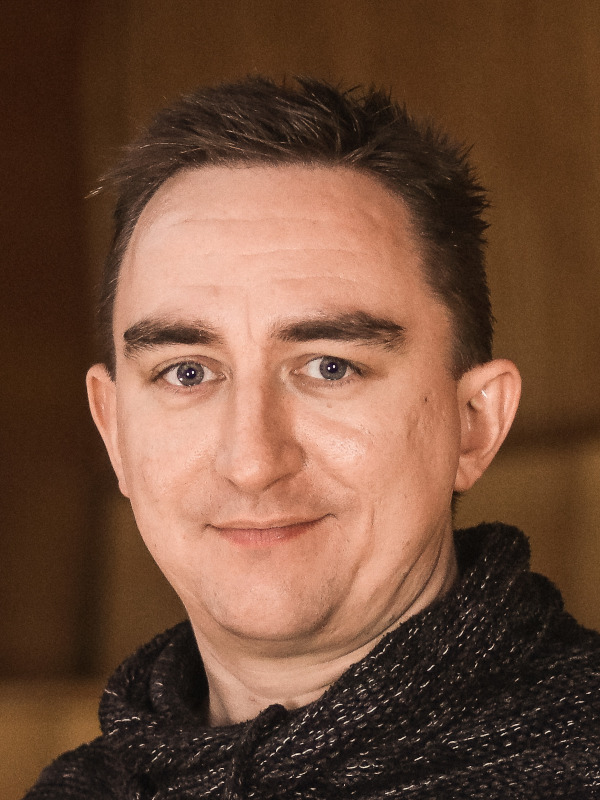 Marcel Bollmann合作论文数Department of Computer and Information Science, Linköping University8
 Stefanie Dipper合作论文数Institute of Natural Language Processing (IMS), Stuttgart University8
 Julia Krasselt合作论文数Institute of Language Competence, ZHAW School of Applied Linguistics, Theaterstrasse 17, Postfach, 8401, Winterthur, Switzerland3Robert Östling合作论文数1
 Jörg Tiedemann合作论文数Department of Digital Humanities, University of Helsinki1Thomas Klein合作论文数1Feike Dietz合作论文数1
 Miguel Domingo合作论文数Polytechnic University of Valencia1Leen Sevens合作论文数Katholieke Univ Leuven, Ctr Computat Linguist, Blijde Inkomststr 13, B-3000 Leuven, Belgium1
 Yves Scherrer合作论文数Department of Digital Humanities, University of Helsinki1
 Francisco Casacuberta合作论文数Pattern Recognition and Human Language Technology Research Center, Universitat Politecnica de Valencia1J.M. Van Koppen合作论文数1
 Nikola Ljubesic合作论文数Faculty of Humanities;Social Sciences;Faculty of Humanities|Social Sciences1
 Marijn Schraagen合作论文数Utrecht University Utrecht1Tom Vanallemeersch合作论文数College, Lessius University;Centre for Computational Linguistics;Centre for Computational Linguistics, Lessius University College1
 Erik F. Tjong Kim Sang合作论文数University of Antwerp1
 Eva Pettersson合作论文数Department of Linguistics;Philology, Uppsala University;Department of Linguistics, Uppsala University1




