To enhance the measuring capabilities of modern Non-Destructive Evaluation (NDE) devices, it has become essential to integrate standardized digitization services and industry-compliant functionalities. This perspective paper examines approaches for improving NDE systems by incorporating key Industry 4.0 technologies, specifically digital representations such as the Asset Administration Shell (AAS) and OPC UA (Open Platform Communications Unified Architecture). We discuss requirements for interoperable, semantically rich descriptions of NDE systems, outline how OPC UA information models and AAS submodels can be combined with MQTT-based transport, and illustrate these concepts through representative prototype implementations, including predictive maintenance and chatbot assistant use cases. By leveraging these technologies, NDE devices can be transformed into interoperable, data-rich, and intelligent components within smart industrial ecosystems. Compared with previous studies, this Perspective is the first to systematically bring together the requirements, architectural patterns, and evaluation criteria for digital representations designed specifically for NDE systems. It also provides, in a practical and accessible way, NDE-focused OPC UA and AAS-based architectures that support both predictive maintenance and LLM-assisted operator guidance. The presented implementations are at an early stage and serve as illustrative examples, while systematic quantitative validation is ongoing and is outlined as future work.
The digital transformation is fundamentally changing our industries, affecting planning, execution as well as monitoring of production processes in a wide range of application fields. With product line-ups becoming more and more versatile and diverse, the necessary inspection and monitoring sparks significant novel requirements on the corresponding Nondestructive Evaluation (NDE) systems. The establishment of increasingly powerful approaches to incorporate Artificial Intelligence (AI) may provide just the needed innovation to solve some of these challenges. In this paper we provide a comprehensive survey about the usage of AI methods in NDE in light of the recent innovations towards NDE 4.0. Since we cannot discuss each NDE modality in one paper, we limit our attention to magnetic methods, ultrasound, thermography, as well as optical inspection. In addition to reviewing recent AI developments in each field, we draw common connections by pointing out NDE-related tasks that have a common underlying mathematical problem and categorizing the state of the art according to the corresponding sub-tasks. In so doing, interdisciplinary connections are drawn that provide a more complete overall picture.
Current Simultaneous Localization and Mapping (SLAM) methods based on Neural Radiance Fields (NeRF) or 3D Gaussian Splatting excel in reconstructing static 3D scenes but struggle with tracking and reconstruction in dynamic environments, such as real-world scenes with moving elements. Existing NeRF-based SLAM approaches addressing dynamic challenges typically rely on RGB-D inputs, with few methods accommodating pure RGB input. To overcome these limitations, we propose Dy3DGS-SLAM, the first 3D Gaussian Splatting (3DGS) SLAM method for dynamic scenes using monocular RGB input. To address dynamic interference, we fuse optical flow masks and depth masks through a probabilistic model to obtain a fused dynamic mask. With only a single network iteration, this can constrain tracking scales and refine rendered geometry. Based on the fused dynamic mask, we designed a novel motion loss to constrain the pose estimation network for tracking. In mapping, we use the rendering loss of dynamic pixels, color, and depth to eliminate transient interference and occlusion caused by dynamic objects. Experimental results demonstrate that Dy3DGS-SLAM achieves state-of-the-art tracking and rendering in dynamic environments, outperforming or matching existing RGB-D methods.
Multidimensional data acquisition often requires extensive time and poses significant challenges for hardware and software regarding data storage and processing. Rather than designing a single compression matrix as in conventional compressed sensing, structured compressed sensing yields dimension-specific compression matrices, reducing the number of optimizable parameters. Recent advances in machine learning (ML) have enabled task-based supervised learning of subsampling matrices, albeit at the expense of complex downstream models. Additionally, the sampling resource allocation across dimensions is often determined in advance through heuristics. To address these challenges, we introduce Structured COmpressed Sensing with Automatic Resource Allocation (SCOSARA) with an information theory-based unsupervised learning strategy. SCOSARA adaptively distributes samples across sampling dimensions while maximizing Fisher information content. Using ultrasound localization as a case study, we compare SCOSARA to state-of-the-art ML-based and greedy search algorithms. Simulation results demonstrate that SCOSARA can produce high-quality subsampling matrices that achieve lower Cramér-Rao Bound values than the baselines. In addition, SCOSARA outperforms other ML-based algorithms in terms of the number of trainable parameters, computational complexity, and memory requirements while automatically choosing the number of samples per axis.
Ultrafast pulse-echo ultrasound imaging is performed by recording only one measurement cycle, which insonifies the entire region of interest. It has been shown that mathematical model of the received signal is suitable for image reconstruction based on sparsity-promoting algorithms if material parameters of measurement area can be sparsely represented with a suitable basis. However, reconstruction performance of these algorithms is affected by correlation of measured samples, which depends on the scatterer locations in the measurement area and transmitted signal parameters. In this paper, we create a model-based and self-supervised neural network, which learns the transmitted waveforms and delays of each transducer element with the task of minimizing the reconstruction error. It employs forward model as encoder and the Fast Iterative Shrinkage Thresholding Algorithm as decoder. The outcomes are evaluated against two existing scenarios: one involving randomly delayed and weighted transmission signals, and the other based on conventional plane wave imaging. Utilizing learned transmission waveform and time delays outperformed other cases in terms of contrast level and reconstruction accuracy.
This study considers the Block-Toeplitz structural properties inherent in traditional multichannel forward model matrices, using Full Matrix Capture (FMC) in ultrasonic testing as a case study. We propose an analytical convolutional forward model that transforms reflectivity maps into FMC data. Our findings demonstrate that the convolutional model excels over its matrix-based counterpart in terms of computational efficiency and storage requirements. This accelerated forward modeling approach holds significant potential for various inverse problems, notably enhancing Sparse Signal Recovery (SSR) within the context LASSO regression, which facilitates efficient Convolutional Sparse Coding (CSC) algorithms. Additionally, we explore the integration of Convolutional Neural Networks (CNNs) for the forward model, employing deep unfolding to implement the Learned Block Convolutional ISTA (BC-LISTA).
In ultrasound pulse-echo imaging, there is a trade-off between acquisition time and reconstruction accuracy. Although the minimum acquisition time in pulse-echo ultrasound imaging, which is by transmitting and receiving all samples from all transducer elements only one time, is achieved, the reconstruction accuracy still need to be improved. Since the common approach with these methods is to assume point scatterers in the measurement area, sparse signal recovery techniques can be exploited by adjusting the forward model in the form of matrix-sparse vector multiplication. In sparse signal recovery problems, coherence of the dictionary matrix is the essential factor for reconstruction accuracy. Therefore, in this work, we created an optimization algorithm, which minimizes the correlation between distinct samples of the received signals in each transducer by using the transmission amplitudes and delays as optimization variables. The reconstruction accuracy results outperform conventional plane wave imaging and state-of-the art implementation with randomly chosen transmission amplitudes and delays.
Strategic subsampling has become a focal point due to its effectiveness in compressing data, particularly in the Full Matrix Capture (FMC) approach in ultrasonic imaging. This paper introduces the Joint Deep Probabilistic Subsampling (J-DPS) method, which aims to learn optimal selection matrices simultaneously for transmitters, receivers, and Fourier coefficients. This task-based algorithm is realized by introducing a specialized measurement model and integrating a customized Complex Learned FISTA (CL-FISTA) network. We propose a parallel network architecture, partitioned into three segments corresponding to the three matrices, all working toward a shared optimization objective with adjustable loss allocation. A synthetic dataset is designed to reflect practical scenarios, and we provide quantitative comparisons with a traditional CRB-based algorithm, standard DPS, and J-DPS.
Traditional ultrasound synthetic aperture imaging relies on closely spaced measurement positions, where the pitch size is smaller than half the ultrasound wavelength. While this approach achieves high-quality images, it necessitates the storage of large data sets and an extended measurement time. To address these issues, there is a burgeoning interest in exploring effective subsampling techniques. Recently, Deep Probabilistic Subsampling (DPS) has emerged as a feasible approach for designing selection matrices for multi-channel systems. In this paper, we address spatial subsampling in single-channel ultrasound imaging for Nondestructive Testing (NDT) applications. To accomplish a model-based data-driven spatial subsampling approach within the DPS framework that allows for the optimal selection of sensing positions on a discretized grid, it is crucial to build an adequate signal model and design an adapted network architecture with a reasonable cost function. The reconstructed image quality is then evaluated through simulations, showing that the presented subsampling pattern approaches the performance of fully sampling and substantially outperforms uniformly spatial subsampling in terms of signal recovery quality.
In this work, we investigate the localization of point-like targets in the presence of multiple scattering.We focus on the often omitted scenario in which measurement data is affected by multiple scattering, and a simpler model is employed in the estimation.We study the impact of such model mismatch by means of the Misspecified Cramér-Rao Bound (MCRB). In numerical simulations inspired by tomographic inspection in Ultrasound Nondestructive Testing (UNDT), the MCRB is shown to correctly describe the estimation variance of localization parameters under misspecification of the wave propagation model. We provide extensive discussion on the utility of the MCRB in the practical task of verifying whether a chosen misspecified model is suitable for localization based on the properties of the maximum likelihood estimator and the nuanced distinction between bias and parameter space differences. Finally, we highlight that careful interpretation is needed whenever employing the classical CRB in the presence of mismatch through numerical examples based on the Born approximation and other simplified propagation models stemming from it. Although motivated by UNDT, the analysis and discussion throughout this work generally apply to localization tasks based on scalar wave field measurements.
Estimating the Time Difference of Arrival (TDoA), is a simple yet reliable technique to accurately perform an indoor monostatic localization. To implement TDoA estimation, one approach is to utilize a broadband radar system equipped with multiple receiving antenna elements. To obtain the Time of Arrival (ToA) at each antenna element, the round-trip time is required. However, the round-trip time does not only consist of the propagation delay in free space but the propagation delay within the antenna as well. To perform the localization precisely, it is desired that an antenna element introduces a uniform delay in all directions. To this end, a compact rectangular dielectric resonator antenna is designed for the operating frequency of 6.5 GHz with a fractional bandwidth of 20%. Al 2 O 3 with a dielectric constant of 9.8 is used for the substrate as well as the dielectric resonator. The antenna is designed to provide a high correlation between the input and the output pulses. To investigate the correlation, the antenna is excited with a modulated Gaussian pulse and the radiated pulses are studied. The antenna possesses an excellent behavior in terms of pulse preservation for the upper hemisphere. Therefore, when incoming pulses from the same distance but different directions impinge on the antenna, they reach the port of the antenna at a similar time. It is shown that this feature of the proposed antenna allows the utilization of TDoA estimation without the need for a calibration step. The characteristics of the antenna are verified by simulation and measurement.
In ultrasound NDT, Delay-and-Sum schemes are commonly used to reconstruct images from the measurement data. For single channel pulse-echo measurements, this is called Synthetic Aperture Focusing Technique (SAFT). In a multi-channel setup, SAFT is extended to the Total Focusing Method (TFM), where the focused image is reconstructed from measurements of all transmit-receive combinations, called Full Matrix Capture (FMC). In previous work, we showed that both SAFT and TFM can be cast as a sparse recovery problem that enables enhancing the Delay-and-Sum scheme to a physically motivated forward model that leads to improved image quality. The reconstruction is performed using l1 minimization. Further, this also allows to perform the reconstruction from compressed/subsampled measurements following compressed sensing theory. This subsampling was achieved by only measuring a subset of the frequency coefficients of the signal. In both the single channel and the multi-channel setup the amount of measurement data is thereby significantly reduced. Additionally, for the TFM, we added a spatial subsampling by only considering a subset of transmit and receive pairs, further reducing the measurement data and at the same time also reducing the measurement time. In our previous work, the frequency and spatial dimensions were considered separately for simplicity, using the same compression strategy for all spatial measurements. In this work we consider joint frequency/spatial compression schemes. We show that a joint multidimensional compression strategy where different Fourier subsets are considered for each channel pair leads to a superior reconstruction performance when the compression rate is fixed. Analysis based on an analytical model for a single defect and a real-world example with multiple defects shows that the approach works in practice.
By subsampling optimally in the spatial and temporal domains, ultrasound imaging can achieve high performance, while also accelerating data acquisition and reducing storage requirements. We study the design of experiment problem that attempts to find an optimal choice of the subsampling patterns, leading to a non-convex combinatorial optimization problem. Recently, deep learning was shown to provide a feasible approach for solving such problems efficiently by virtue of the softmax function as a differentiable approximation of the one-hot encoded subsampling vectors. We incorporate softmax neural networks into information theory-based and task-based algorithms, respectively, to design optimal subsampling matrices in Full Matrix Capture (FMC) measurements predicated on compressed sensing theory.
In pulse-echo ultrasound imaging, the goal is to achieve a certain image quality while minimizing the duration of the signal acquisition. In the past, fast ultrasound imaging methods applying sparse signal recovery have been implemented by accepting a single pulse-echo measurement. However, they have experienced a certain amount of reconstruction error. In sparse signal recovery, reducing the correlation between the samples of the measurements observed by the different receivers is beneficial for lowering the reconstruction error. Exploiting the Born approximation and Green's function for the wave equation, the analytical inverse scattering problem can be defined in matrix-vector form. Adopting this setting, it has been suggested in the past to reduce the correlation between the samples of the measurement using Cylindrical Waves (CWs) with randomly selected delays and weights. In a similar setting, we created an optimization problem accepting transmission delays and weights as variables to minimize the correlation between the samples of the measurement in each receiver. We demonstrate via simulations that CWs employing the optimized transmission parameters outperformed the cases with Plane Wave Imaging (PWI) and CWs with random transmission parameters in terms of reconstruction accuracy.
With the increasing power and speed of laser welding, in-process monitoring has become even more crucial to ensure process stability and weld quality. Due to its low cost and installation flexibility, acoustic process monitoring is a promising method and has demonstrated its effectiveness. Although its feasibility has been the focus of existing studies, the temporal resolution of acoustic emissions (AE) has not yet been addressed despite its utmost importance for realizing real-time systems. Aiming to provide a benchmark for further development, this study investigates the relationship between duration and informativeness of AE signals during high-power (3.5 kW) and high-speed (12 m/min) laser beam butt welding. Specifically, the informativeness of AE signals is evaluated based on the accuracy of detecting and quantifying joint gaps for various time windows of signals, yielding numerical comparison. The obtained results show that signals can be shortened up to a certain point without sacrificing their informativeness, encouraging the optimization of the signal duration. Our results also suggest that large gaps (>0.3 mm) induce unique signal characteristics in AE, which are clearly identifiable from 1 ms signal segments, equivalent to 0.2 mm weld seam.
This study aimed to explore the feasibility of using airborne acoustic emission in laser beam butt welding for the development of an automated classification system based on neural networks. The focus was on monitoring the formation of joint gaps during the welding process. To simulate various sizes of butt joint gaps, controlled welding experiments were conducted, and the emitted acoustic signals were captured using audible-to-ultrasonic microphones. To implement an automated monitoring system, a method based on short-time Fourier transformation was developed to extract audio features, and a convolutional neural network architecture with data augmentation was utilized. The results demonstrated that this non-destructive and non-invasive approach was highly effective in detecting joint gap formations, achieving an accuracy of 98%. Furthermore, the system exhibited promising potential for the low-latency monitoring of the welding process. The classification accuracy for various gap sizes reached up to 90%, providing valuable insights for characterizing and categorizing joint gaps accurately. Additionally, increasing the quantity of training data with quality annotations could potentially improve the classifier model’s performance further. This suggests that there is room for future enhancements in the study.
There is recently a notable rise in the exploration of pulse-echo ultrasound image reconstruction techniques that address the inverse problem employing sparse signal and rely on a single measurement cycle. Nevertheless, these techniques continue to pose significant challenges with regard to accuracy of estimations. Previous studies have endeavored to decrease the correlation between received samples in each transducer array in order to enhance accuracy of sparsely approximated solutions to inverse problems. In this paper, our objective is to learn the transmission parameters within a parametric measurement matrix by employing an autoencoder, which encodes sparse spatial data with a parametric measurement matrix and subsequently decodes it using Fast Iterative Shrinkage-Thresholding Algorithm (FISTA). Outcomes exhibit superior performance in comparison to both state-of-art random selection of the parameters and conventional plane wave imaging (PWI) scenarios in terms of reconstruction accuracy.
Traditional ultrasound synthetic aperture imaging relies on closely spaced measurement positions, where the pitch size is smaller than half the ultrasound wavelength. While this approach achieves high-quality images, it necessitates the storage of large data sets and an extended measurement time. To address these issues, there is a burgeoning interest in exploring effective subsampling techniques. Recently, Deep Probabilistic Subsampling (DPS) has emerged as a feasible approach for designing selection matrices for multi-channel systems. In this paper, we address spatial subsampling in single-channel ultrasound imaging for Nondestructive Testing (NDT) applications. To accomplish a model-based data-driven spatial subsampling approach within the DPS framework that allows for the optimal selection of sensing positions on a discretized grid, it is crucial to build an adequate signal model and design an adapted network architecture with a reasonable cost function. The reconstructed image quality is then evaluated through simulations, showing that the presented subsampling pattern approaches the performance of fully sampling and substantially outperforms uniformly spatial subsampling in terms of signal recovery quality.
 Martin Haardt合作论文数Department of Electrical Engineering and Information Technology, Ilmenau University of Technology;Communications Research Laboratory, Ilmenau University of Technology85
 Giovanni Del Galdo合作论文数Institute for Information Technology Ilmenau, Technische Universität Ilmenau56
 Eduardo Pérez合作论文数23
 Jan Kirchhof合作论文数Institute for Information Technology, Technische Universität Ilmenau21
 João Paulo Carvalho Lustosa da Costa合作论文数18
 Fabian Krieg合作论文数16
 Jens Steinwandt合作论文数Commun. Res. Lab., Ilmenau Univ. of Technol.;c;Commun. Res. Lab., Ilmenau Univ. of Technol.16
 Sebastian Semper合作论文数Technische Universität Ilmenau15
 Ahmad Osman合作论文数Fraunhofer Development Center X-ray Technologies EZRT, Fraunhofer Development Center for X-ray Technology (Fraunhofer EZRT)14
 Reiner S. Thomä合作论文数Fachgebiet Elektronische Messtechnik und Signalverarbeitung, Fakultät für Elektrotechnik und Informationstechnik, Technische Universität Ilmenau12
 Anastasia Lavrenko合作论文数12
 Mohamed Ibrahim合作论文数Ilmenau Univ Technol, Inst Informat Technol, Ilmenau, Germany11
 Jianshu Zhang合作论文数Commun Res Lab, Ilmenau Univ Technol11
 Bin Song合作论文数9
 Yao Cheng合作论文数9Martin Weis合作论文数9
 Alexander Ihlow合作论文数7
 Peter Husar合作论文数7Sayako Kodera合作论文数6
 Ricardo Kehrle Miranda合作论文数6
 Dunja Jannek合作论文数6Ozan Çakiroğlu合作论文数5
 Christoph Wagner合作论文数5
 Kefei Liu合作论文数University of Pennsylvania5
 Mingjie Dong合作论文数5Sheng Li合作论文数4
 Martin Schiffner合作论文数Med. Eng., Ruhr-Univ. Bochum;c;Med. Eng., Ruhr-Univ. Bochum4
 Marius Pesavento合作论文数Department of Electrical Engineering and Information Technology, Technische Universität Darmstadt4
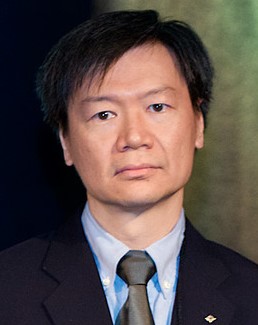 Hing Cheung So (蘇慶祥)合作论文数Department of Electrical Engineering, City University of Hong Kong4Orhan Arıkan合作论文数Department of Electrical and Electronics Engineering
Bilkent University4Norbert Franke合作论文数3David Bottger合作论文数3
Hing Cheung So (蘇慶祥)合作论文数Department of Electrical Engineering, City University of Hong Kong4Orhan Arıkan合作论文数Department of Electrical and Electronics Engineering
Bilkent University4Norbert Franke合作论文数3David Bottger合作论文数3 Leander Schmidt合作论文数These authors contributed equally to this work.3
 Benjamin Strass合作论文数3
 Klaus Schricker合作论文数Prod Technol Grp, Tech Univ Ilmenau3
 Marcus Grossmann合作论文数3
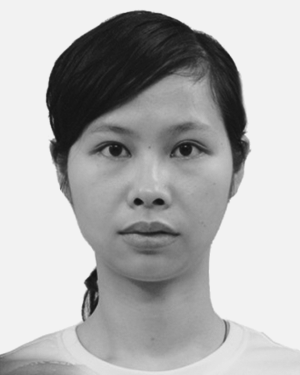 Yuan Zhou合作论文数3
 Rafael Timoteo de Sousa Junior合作论文数Dept. de Eng. Eletr., Univ. de Brasilia;lia;c;Dept. de Eng. Eletr., Univ. de Brasilia3
 Alieiev, Roman合作论文数3Benjamin Sackenreuter合作论文数3
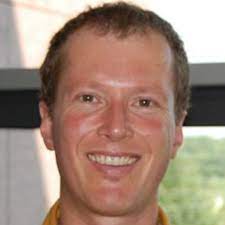 Gunther Auer合作论文数DOCOMO Euro-Labs3Niels Hadaschik合作论文数3
 Markus Landmann合作论文数Ilmenau Technical University3
 Jean Pierre Bergmann合作论文数Fachgebiet Fertigungstechnik, Technische Universität Ilmenau3Bernd Wolter合作论文数3
 Thomas Hotz合作论文数Institute for Mathematical Stochastics, University of Göttingen3
 Mingrui Li合作论文数School of Information and Communication Engineering, Dalian University of Technology;Department of Computer Science, Dalian University of Technology2Han Wang合作论文数2Andras Katai合作论文数2




