Zygnematophyceae are the algal sisters of land plants. Here we sequenced four genomes of filamentous Zygnematophyceae, including chromosome-scale assemblies for three strains of Zygnema circumcarinatum. We inferred traits in the ancestor of Zygnematophyceae and land plants that might have ushered in the conquest of land by plants: expanded genes for signaling cascades, environmental response, and multicellular growth. Zygnematophyceae and land plants share all the major enzymes for cell wall synthesis and remodifications, and gene gains shaped this toolkit. Co-expression network analyses uncover gene cohorts that unite environmental signaling with multicellular developmental programs. Our data shed light on a molecular chassis that balances environmental response and growth modulation across more than 600 million years of streptophyte evolution.
MADS-box genes represent a paneukaryotic gene family encoding transcription factors. Given its importance for essential functions in plants, animals and fungi, such as development of organ identity and mating type determination, the phylogeny of MADS-box genes is of great biological interest. It has been well established that a gene duplication in the stem group of extant eukaryotes generated two clades of MADS-box genes, termed Type I and Type II genes. Almost all Type II genes of land plants contain a keratin-like (K) domain in addition to the family-defining, DNA-binding MADS (M) domain and are also termed MIKC-type genes. Due to a lack of sampling of MADS-box genes in Archaeplastida (rhodophytes, glaucophytes, chlorophytes, and streptophytes) except land plants, the deep evolution of MADS-box genes in plants remains poorly understood, however. Here we use the genomic and transcriptomic ressources that have become available in recent years to answer longstanding questions of MADS-box gene evolution in Archaeplastida. Our results reveal that archaeplastid algae likely do not harbour Type I MADS-box genes. However, rhodophytes, glaucophytes, prasinodermophytes and chlorophytes possess Type II MADS-box genes without a K domain. Type II MADS-box genes with a K domain are found only in streptophytes. This corroborates previous views that some Type II gene acquired a K domain in the stem group of extant streptophytes, generating MIKC-type genes. Interestingly, we found both variants of Type II genes - with (MIKC) and without a K domain - in streptophyte algae, but not in land plants (embryophytes), suggesting that Type II genes without a K domain (ancestral Type II genes) were lost in the stem group of land plants. Our data reveal that the deep evolution of MADS-box genes in “plants” (Archaeplastida) was more complex than has previously been thought.### Competing Interest StatementThe authors have declared no competing interest.
In Arabidopsis thaliana , stomata are composed of two guard cells that control the aperture of a central pore to facilitate gas exchange between the plant and its environment, which is particularly important during photosynthesis. Although leaves are the primary photosynthetic organs of flowering plants, floral organs are also photosynthetically active. In the Brassicaceae, evidence suggests that silique photosynthesis is important for optimal seed oil content. A group of transcription factors containing MADS DNA binding domains is necessary and sufficient to confer floral organ identity. Elegant models, such as the ABCE model of flower development and the floral quartet model, have been instrumental in describing the molecular mechanisms by which these floral organ identity proteins govern flower development. However, we lack a complete understanding of how the floral organ identity genes interact with the underlying leaf development program. Here, we show that the MADS domain transcription factor AGAMOUS (AG) represses stomatal development on the gynoecial valves, so that maturation of stomatal complexes coincides with fertilization. We present evidence that this regulation by AG is mediated by direct transcriptional repression of a master regulator of the stomatal lineage, MUTE , and show data that suggests this interaction is conserved among several members of the Brassicaceae. This work extends our understanding of the mechanisms underlying floral organ formation and provides a framework to decipher the mechanisms that control floral organ photosynthesis.
During development of flowering plants, some MIKC-type MADS-domain transcription factors (MTFs) exert their regulatory function as heterotetrameric complexes bound to two sites on the DNA of target genes. This way they constitute "floral quartets" or related "floral quartet-like complexes" (FQCs), involving a unique multimeric system of paralogous protein interactions. Tetramerization of MTFs is brought about mainly by interactions of keratin-like (K) domains. The K-domain associated with the more ancient DNA-binding MADS-domain during evolution in the stem group of extant streptophytes (charophyte green algae + land plants). However, whether this was sufficient for MTF tetramerization and FQC formation to occur, remains unknown. Here, we provide biophysical and bioinformatic data indicating that FQC formation likely originated in the stem group of land plants in a sublineage of MIKC-type genes termed MIKCC-type genes. In the stem group of this gene lineage, the duplication of the most downstream exon encoding the K-domain led to a C-terminal elongation of the second K-domain helix, thus, generating the tetramerization interface found in extant MIKCC-type proteins. In the stem group of the sister lineage of the MIKCC-type genes, termed MIKC*-type genes, the duplication of two other K-domain exons occurred, extending the K-domain at its N-terminal end. Our data indicate that this structural change prevents heterodimerization between MIKCC-type and MIKC*-type proteins. This way, two largely independent gene regulatory networks could be established, featuring MIKCC-type or MIKC*-type proteins, respectively, that control different aspects of plant development.
MADS-domain transcription factors (MTFs) are involved in the control of many important processes in eukaryotes. They are defined by the presence of a unique and highly conserved DNA-binding domain, the MADS domain. MTFs bind to double-stranded DNA as dimers and recognize specific sequences termed CArG boxes (such as 5′-CC(A/T)6GG-3′) and similar sequences that occur hundreds of thousands of times in a typical flowering plant genome. The number of MTF-encoding genes increased by around two orders of magnitude during land plant evolution, resulting in roughly 100 genes in flowering plant genomes. This raises the question as to how dozens of different but highly similar MTFs accurately recognize the cis-regulatory elements of diverse target genes when the core binding sequence (CArG box) occurs at such a high frequency. Besides the usual processes, such as the base and shape readout of individual DNA sequences by dimers of MTFs, an important sublineage of MTFs in plants, termed MIKCC-type MTFs (MC-MTFs), has evolved an additional mechanism to increase the accurate recognition of target genes: the formation of heterotetramers of closely related proteins that bind to two CArG boxes on the same DNA strand involving DNA looping. MC-MTFs control important developmental processes in flowering plants, ranging from root and shoot to flower, fruit and seed development. The way in which MC-MTFs bind to DNA and select their target genes is hence not only of high biological interest, but also of great agronomic and economic importance. In this article, we review the interplay of the different mechanisms of target gene recognition, from the ordinary (base readout) via the extravagant (shape readout) to the idiosyncratic (recognition of the distance and orientation of two CArG boxes by heterotetramers of MC-MTFs). A special focus of our review is on the structural prerequisites of MC-MTFs that enable the specific recognition of target genes.
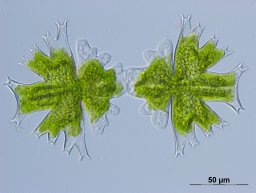
ABSTRACT The filamentous and unicellular algae of the class Zygnematophyceae are the closest algal relatives of land plants. Inferring the properties of the last common ancestor shared by these algae and land plants allows us to identify decisive traits that enabled the conquest of land by plants. We sequenced four genomes of filamentous Zygnematophyceae (three strains of Zygnema circumcarinatum and one strain of Z. cylindricum ) and generated chromosome-scale assemblies for all strains of the emerging model system Z. circumcarinatum . Comparative genomic analyses reveal expanded genes for signaling cascades, environmental response, and intracellular trafficking that we associate with multicellularity. Gene family analyses suggest that Zygnematophyceae share all the major enzymes with land plants for cell wall polysaccharide synthesis, degradation, and modifications; most of the enzymes for cell wall innovations, especially for polysaccharide backbone synthesis, were gained more than 700 million years ago. In Zygnematophyceae, these enzyme families expanded, forming co-expressed modules. Transcriptomic profiling of over 19 growth conditions combined with co-expression network analyses uncover cohorts of genes that unite environmental signaling with multicellular developmental programs. Our data shed light on a molecular chassis that balances environmental response and growth modulation across more than 600 million years of streptophyte evolution. HIGHLIGHTS Genomes of four filamentous algae ( Zygnema ) sisters to land plants Zygnema are rich in genes for multicellular growth and environmental acclimation: signaling, lipid modification, and transport Cell wall innovations: diversification of hexameric rosette cellulose synthase in Zygnematophyceae Co-expression networks reveal conserved modules for balancing growth and acclimation
Phytoplasmas are bacterial pathogens that live mainly in the phloem of their plant hosts. They dramatically manipulate plant development by secreting effector proteins that target developmental proteins of their hosts. Traditionally, the effects of individual effector proteins have been studied by ectopic overexpression using strong, ubiquitously active promoters in transgenic model plants. However, the impact of phytoplasma infection on the host plants depends on the intensity and timing of infection with respect to the developmental stage of the host. To facilitate investigations addressing the timing of effector protein activity, we have established chemical-inducible expression systems for the three most well-characterized phytoplasma effector proteins, SECRETED ASTER YELLOWS WITCHES' BROOM PROTEIN 11 (SAP11), SAP54 and TENGU in transgenic Arabidopsis thaliana. We induced gene expression either continuously, or at germination stage, seedling stage, or flowering stage. mRNA expression was determined by quantitative reverse transcription PCR, protein accumulation by confocal laser scanning microscopy of GFP fusion proteins. Our data reveal tight regulation of effector gene expression and strong upregulation after induction. Phenotypic analyses showed differences in disease phenotypes depending on the timing of induction. Comparative phenotype analysis revealed so far unreported similarities in disease phenotypes, with all three effector proteins interfering with flower development and shoot branching, indicating a surprising functional redundancy of SAP54, SAP11 and TENGU. However, subtle but mechanistically important differences were also observed, especially affecting the branching pattern of the plants.
We studied the DNA-binding profile of the MADS-domain transcription factor SEPALLATA3 and mutant variants by SELEX-seq. DNA-binding characteristics of SEPALLATA3 mutant proteins lead us to propose a novel DNA-binding mode. MIKC-type MADS-domain proteins, which function as essential transcription factors in plant development, bind as dimers to a 10-base-pair AT-rich motif termed CArG-box. However, this consensus motif cannot fully explain how the abundant family members in flowering plants can bind different target genes in specific ways. The aim of this study was to better understand the DNA-binding specificity of MADS-domain transcription factors. Also, we wanted to understand the role of a highly conserved arginine residue for binding specificity of the MADS-domain transcription factor family. Here, we studied the DNA-binding profile of the floral homeotic MADS-domain protein SEPALLATA3 by performing SELEX followed by high-throughput sequencing (SELEX-seq). We found a diverse set of bound sequences and could estimate the in vitro binding affinities of SEPALLATA3 to a huge number of different sequences. We found evidence for the preference of AT-rich motifs as flanking sequences. Whereas different CArG-boxes can act as SEPALLATA3 binding sites, our findings suggest that the preferred flanking motifs are almost always the same and thus mostly independent of the identity of the central CArG-box motif. Analysis of SEPALLATA3 proteins with a single amino acid substitution at position 3 of the DNA-binding MADS-domain further revealed that the conserved arginine residue, which has been shown to be involved in a shape readout mechanism, is especially important for the recognition of nucleotides at positions 3 and 8 of the CArG-box motif. This leads us to propose a novel DNA-binding mode for SEPALLATA3, which is different from that of other MADS-domain proteins known.
Phytoplasmas are intracellular bacterial plant pathogens that cause devastating diseases in crops and ornamental plants by the secretion of effector proteins. One of these effector proteins, termed SECRETED ASTER YELLOWS WITCHES' BROOM PROTEIN 54 (SAP54), leads to the degradation of a specific subset of floral homeotic proteins of the MIKC-type MADS-domain family via the ubiquitin-proteasome pathway. In consequence, the developing flowers show the homeotic transformation of floral organs into vegetative leaf-like structures. The molecular mechanism of SAP54 action involves binding to the keratin-like domain of MIKC-type proteins and to some RAD23 proteins, which translocate ubiquitylated substrates to the proteasome. The structural requirements and specificity of SAP54 function are poorly understood, however. Here, we report, based on biophysical and molecular biological analyses, that SAP54 folds into an α-helical structure. Insertion of helix-breaking mutations disrupts correct folding of SAP54 and compromises SAP54 binding to its target proteins and, concomitantly, its ability to evoke disease phenotypes in vivo. Interestingly, dynamic light scattering data together with electrophoretic mobility shift assays suggest that SAP54 preferentially binds to multimeric complexes of MIKC-type proteins rather than to dimers or monomers of these proteins. Together with data from literature, this finding suggests that MIKC-type proteins and SAP54 constitute multimeric α-helical coiled coils. Our investigations clarify the structure-function relationship of an important phytoplasma effector protein and may thus ultimately help to develop treatments against some devastating plant diseases.
The origin of the angiosperm flower is a long-standing problem of botany and evolutionary biology. One widely accepted milestone towards solving it is the reconstruction of the ancestral flower of extant angiosperms, here termed 'AFEA'. A recent approach employing novel methods gave results that were not anticipated. Most notably the reconstructed phyllotaxis of AFEA soon was criticized and sparked a heated debate in the literature. To better explain, clarify, and perhaps cool the debate, we first summarize the results of previous attempts to reconstruct AFEA and contrast them with the more recent, controversial prediction of its structure. We then outline the major arguments made by contrasting parties in the recent debate. Finally, we discuss two key topics, the molecular mechanism of phyllotaxis and the role of gene regulatory networks during flower development and evolution, that may help to clarify the issue in the intermediate future.
The origin of the angiosperm flower is a long-standing problem of botany and evolutionary biology. One widely accepted milestone towards solving it is the reconstruction of the ancestral flower of extant angiosperms, here termed 'AFEA'. A recent approach employing novel methods gave results that were not anticipated. Most notably the reconstructed phyllotaxis of AFEA soon was criticized and sparked a heated debate in the literature. To better explain, clarify, and perhaps cool the debate, we first summarize the results of previous attempts to reconstruct AFEA and contrast them with the more recent, controversial prediction of its structure. We then outline the major arguments made by contrasting parties in the recent debate. Finally, we discuss two key topics, the molecular mechanism of phyllotaxis and the role of gene regulatory networks during flower development and evolution, that may help to clarify the issue in the intermediate future.
SEPALLATA3 of Arabidopsis thaliana is a MADS-domain transcription factor (TF) and a key regulator of flower development. MADS-domain proteins bind to sequences termed CArG-boxes' [consensus 5-CC(A/T)(6)GG-3]. Because only a fraction of the CArG-boxes in the Arabidopsis genome are bound by SEPALLATA3, more elaborate principles have to be discovered to better understand which features turn CArG-boxes into genuine recognition sites. Here, we investigate to what extent the shape of the DNA is involved in a shape readout' that contributes to the binding of SEPALLATA3. We determined invitro binding affinities of SEPALLATA3 to DNA probes that all contain the CArG-box motif, but differ in their predicted DNA shape. We found that binding affinity correlates well with a narrow minor groove of the DNA. Substitution of canonical bases with non-standard bases supports the hypothesis of minor groove shape readout by SEPALLATA3. Analysis of mutant SEPALLATA3 proteins further revealed that a highly conserved arginine residue, which is expected to contact the DNA minor groove, contributes significantly to the shape readout. Our studies show that the specific recognition of cis-regulatory elements by a plant MADS-domain TF, and by inference probably also of other TFs of this type, heavily depends on shape readout mechanisms.
The development of angiosperm flowers is regulated by homeotic MIKC-type MADS-domain transcription factors that activate or repress target genes via the formation of DNA-bound, organ-specific tetrameric complexes. The protein-protein interaction (PPI) capabilities differ considerably between different MIKC-type proteins. In Arabidopsis thaliana the floral homeotic protein SEPALLATA3 (SEP3) acts as a hub that incorporates numerous other MADS-domain proteins into tetrameric complexes that would otherwise not form. However, the molecular mechanisms that underlie these promiscuous interactions remain largely unknown. In this study, we created a collection of amino acid substitution mutants of SEP3 to quantify the contribution of individual residues on protein tetramerization during DNA-binding, employing methods of molecular biophysics. We show that leucine residues at certain key positions form a leucine-zipper structure that is essential for tetramerization of SEP3, whereas the introduction of physicochemically very similar residues at respective sites impedes the formation of DNA-bound tetramers. Comprehensive molecular evolutionary analyses of MADS-domain proteins from a diverse set of flowering plants revealed exceedingly high conservation of the identified leucine residues within SEP3-subfamily proteins throughout angiosperm evolution. In contrast, MADS-domain proteins that are unable to tetramerize among themselves exhibit preferences for other amino acids at homologous sites. Our findings indicate that the subfamily-specific conservation of amino acid residues at just a few key positions accounts for subfamily-specific interaction capabilities of MADS-domain transcription factors and this has shaped the present-day structure of the PPI network controlling flower development.
In a world of global warming, the question emerges whether all plants have suitable mechanisms to keep pace with the rapidly changing environment. Most previous studies have focused on either the ability of plants to rapidly acclimatize via physiological and developmental plasticity, or long-term adaptation over thousands of years. However, we wonder whether plants can also adapt to changes in the environment within only a few generations. We hypothesize that rapidly evolving clusters of tandemly duplicated developmental control genes represent a source for fast adaptation. Specifically, we propose that a tandem cluster of FLC-like MADS-box genes involved in the transition to flowering in Arabidopsis functions as a facilitator for rapid adaptation to changes in ambient temperature.
In a world of global warming, the question emerges whether all plants have suitable mechanisms to keep pace with the rapidly changing environment. Most previous studies have focused on either the ability of plants to rapidly acclimatize via physiological and developmental plasticity, or long-term adaptation over thousands of years. However, we wonder whether plants can also adapt to changes in the environment within only a few generations. We hypothesize that rapidly evolving clusters of tandemly duplicated developmental control genes represent a source for fast adaptation. Specifically, we propose that a tandem cluster of FLC-like MADS-box genes involved in the transition to flowering in Arabidopsis functions as a facilitator for rapid adaptation to changes in ambient temperature.
Land plants evolved from charophytic algae, among which Charophyceae possess the most complex body plans. We present the genome of Chara braunii; comparison of the genome to those of land plants identified evolutionary novelties for plant terrestrialization and land plant heritage genes. C. braunii employs unique xylan synthases for cell wall biosynthesis, a phragmoplast (cell separation) mechanism similar to that of land plants, and many phytohormones. C. braunii plastids are controlled via land-plant-like retrograde signaling, and transcriptional regulation is more elaborate than in other algae. The morphological complexity of this organism may result from expanded gene families, with three cases of particular note: genes effecting tolerance to reactive oxygen species (ROS), LysM receptor-like kinases, and transcription factors (TFs). Transcriptomic analysis of sexual reproductive structures reveals intricate control by TFs, activity of the ROS gene network, and the ancestral use of plant-like storage and stress protection proteins in the zygote.
ABSTRACT The development of angiosperm flowers is regulated by homeotic MIKC-type MADS-domain transcription factors that activate or repress target genes via the formation of DNA-bound, organ specific tetrameric complexes. The protein-protein interaction (PPI) capabilities differ considerably between different MIKC-type proteins. The floral homeotic protein SEPALLATA3 (SEP3) acts as a hub that incorporates numerous other MADS-domain proteins into tetrameric complexes that would otherwise not form. However, the molecular mechanisms that underlie these promiscuous interactions remain largely unknown. In this study we created a collection of amino acid substitution mutants of SEP3 to quantify the contribution of individual residues on protein tetramerization during DNA-binding, employing methods of molecular biophysics. We show that leucine residues at certain key positions form a leucine zipper structure that is essential for tetramerization of SEP3, whereas the introduction of physicochemically very similar residues at respective sites impedes the formation of DNA-bound tetramers. Comprehensive molecular evolutionary analyses of MADS-domain proteins from a diverse set of flowering plants revealed exceedingly high conservation of the identified leucine residues within SEP3-subfamily proteins throughout angiosperm evolution. In contrast, MADS-domain proteins that are unable to tetramerize among themselves exhibit preferences for other amino acids at homologous sites. Our findings indicate that the subfamily-specific conservation of amino acid residues at just a few key positions account for subfamily-specific interaction capabilities of MADS-domain transcription factors and shaped the present-day structure of the PPI network controlling flower development.
Protein-protein interaction networks (PPIs) are usually scale-free networks that contain a small number of highly connected nodes (hubs) and many poorly connected nodes. However, the molecular mechanisms that underlie the promiscuous interactions of hub proteins remain largely unknown. Here, we show that the floral homeotic MADS-domain transcription factor SEPALLATA3 from Arabidopsis thaliana can act as a hub in the PPI controlling flower development because it contains leucine residues at inter- and intramolecular interaction interfaces. Comprehensive sequence analyses of diverse MADS-domain proteins indicate exceedingly high conservation of the identified leucine residues within SEPALLATA-subfamily proteins, whereas non-hub MADS-domain proteins exhibit preferences for other amino acids at homologous sites. Our results indicate that the conservation of leucine residues at positions critical for protein-protein interactions contributed significantly to the present-day structure of the PPI and may have facilitated the evolution of the flower.
Understanding how plants cope with changing habitats is a timely and important topic in plant research. Phenotypic plasticity describes the capability of a genotype to produce different phenotypes when exposed to different environmental conditions. In contrast, the constant production of a set of distinct phenotypes by one genotype mediates bet hedging, a strategy that reduces the temporal variance in fitness at the expense of a lowered arithmetic mean fitness. Both phenomena are thought to represent important adaptation strategies to unstable environments. However, little is known about the underlying mechanisms of these phenomena, partly due to the lack of suitable model systems. We used phylogenetic and comparative analyses of fruit and seed anatomy, biomechanics, physiology, and environmental responses to study fruit and seed heteromorphism, a typical morphological basis of a bet-hedging strategy of plants, in the annual Brassicaceae species Aethionema arabicum Our results indicate that heteromorphism evolved twice within the Aethionemeae, including once for the monophyletic annual Aethionema clade. The dimorphism of Ae. arabicum is associated with several anatomic, biomechanical, gene expression, and physiological differences between the fruit and seed morphs. However, fruit ratios and numbers change in response to different environmental conditions. Therefore, the life-history strategy of Ae. arabicum appears to be a blend of bet hedging and plasticity. Together with the available genomic resources, our results pave the way to use this species in future studies intended to unravel the molecular control of heteromorphism and plasticity.
 Günter Theißen合作论文数Department of Genetics, Friedrich Schiller University Jena23
 Rainer Melzer合作论文数Department of Genetics;University Jena;Department of Genetics, University Jena9
 Lydia Gramzow合作论文数Bio21 Molecular and Biotechnology Institute, The University of Melbourne7
 Stefan A. Rensing合作论文数Faculty of Chemistry and Pharmacy, University of Freiburg4
 Fabian B. Haas合作论文数3
 Sandra Kappel合作论文数3
 Pierre-Marc Delaux合作论文数Dept Agron, Univ Wisconsin3
 Jan de Vries合作论文数Department of Applied Bioinformatics, Institute for Microbiology and Genetics, University of Göttingen, Göttingen, German3
 Henrik Buschmann合作论文数Department of Cell and Developmental Biology;John Innes Centre;Department of Cell and Developmental Biology, John Innes Centre3Fay-Wei Li合作论文数2Noa Keren合作论文数2K von Schwartzenberg合作论文数2Julius Ben Ari合作论文数2Chiara Tessari合作论文数2
 William Scott Grayburn合作论文数2
 Maaike Bierenbroodspot合作论文数2Tim P Rieseberg合作论文数2
 Armin Dadras合作论文数2Christian Gafert合作论文数2
 Nina Rittmeier合作论文数2Jaccoline Zegers合作论文数2Romy Petroll合作论文数2Bo Zheng合作论文数2Janine M R Fürst-Jansen合作论文数2
 Charlotte Permann合作论文数2Lori Beth Boston合作论文数2Amra Dhabalia Ashok合作论文数Institute for Microbiology and Genetics, University of Goettingen2
 Orestis Nousias合作论文数Department of Food Science and Technology, University of Nebraska-Lincoln2Tang Li合作论文数2
 Zheng Jinfang合作论文数Huazhong Univ Sci & Technol, Sch Phys, Wuhan 430074, Hubei, Peoples R China2
 Jean Keller合作论文数UMR CNRS 6553 Ecobio, OSUR (Observatoire des Sciences de l'Univers de Rennes), University of Rennes 1, 263 av. du Général Leclerc, 35042 Rennes, France2
 Sophie de Vries合作论文数Dalhousie Univ, Dept Biochem & Mol Biol, Halifax, NS B3H 4R2, Canada2Richard D Hayes合作论文数2
 Marek Mutwil合作论文数School of Biological Sciences, College of Science, Nanyang Technological University2
 Jeffrey P Mower合作论文数Ctr Plant Sci Innovat, Univ Nebraska2
 Fernandez-Pozo Noe合作论文数Boyce Thompson Institute for Plant Research2
 John Archibald合作论文数Department of Biochemistry and Molecular Biology, Faculty of Medicine, Dalhousie University;Department of Microbiology & Immunology, Faculty of Medicine, Dalhousie University2
 Irisarri Iker合作论文数Departamento de Biodiversidad y Biología Evolutiva, Museo Nacional de Ciencias Naturales (CSIC),2Daum Chris合作论文数2
 Andreas Holzinger合作论文数Instiute of Botany, University of Innsbruck;Research Group Cell Biology, Department of Botany, University of Innsbruck2
 Elisabeth Fitzek合作论文数The Morton Arboretum2
 Igor Grigoriev合作论文数Joint Genome Institute, Lawrence Berkeley National Laboratory2Jinling Huang合作论文数Department of Biology, East Carolina University2
 Assaf Mosquna合作论文数2
 Chi Zhang合作论文数Sch Biol Sci, Univ Nebraska2
 Maike Lorenz合作论文数Albrecht-von-Haller-Institut für Pflanzenwissenschaften, Universität Göttingen2
 Xuehuan Feng合作论文数2
 Kerrie Barry合作论文数Berkeley National Lab;DOE Joint Genome Institute2
 Huihui Yu (喻辉辉)合作论文数University of Chinese Academy of Sciences;Kunming Institute of Botany, Chinese Academy of Sciences2




