In digital manufacturing education, integrating artificial intelligence with structured reflective learning may accelerate novice designers' creative development. The study introduces an AI-Enhanced Reflective Design Framework (AERDF), which integrates AI-driven feedback, scaffolded reflective journaling, and iterative digital fabrication tasks to support reflective learning in design education. To investigate this, fifty undergraduate students (18-24 years) participated in a two-week intensive pilot program featuring three iterative design cycles of 3D-printed chaotic attractors and 2D tessellation patterns. Each cycle combined automated AI-driven analysis of aesthetic and structural metrics with peer-led reflection sessions and prototype refinement. Artifact quality ratings increased from a mean of 3.2 to 3.9 (22 % improvement), design fluency rose by 30 % and originality by 25 %, while personalization scores correlated strongly with the proportion of peer suggestions incorporated (r = 0.62). Self-reported gains expanded from three core domains in Week 1 to eighteen distinct improvement categories in Week 2, and reflective challenges evolved from four broad barriers to eighteen nuanced metacognitive obstacles. Preliminary regression analyses suggest that initial peer-review prompts and journal entries in Week 1 yielded moderate gains in perceived effectiveness (slope ti 0.413, R2 ti 0.207), whereas the full two-week combination-adding AI feedback and advanced metacognitive prompts-produced stronger improvements in this pilot context (slope ti 0.612, R2 ti 0.923). These results demonstrate that embedding AI-augmented feedback within a scaffolded reflective framework yields statistically suggestive trends in creative performance and selfawareness, offering a scalable model for fostering innovation, adaptability, and critical thinking in design curricula.
This study examines the stylistic evolution of Pablo Picasso through a quantitative analysis of his artistic production. Using a corpus of 1170 digitised artworks sourced from WikiArt, we computed a set of image-based metrics grounded in aesthetic theory, including Shannon Entropy (EM), Fractal Dimension (FD), Birkhoff’s Aesthetic Measure (BAM), Euclidean Distance (ED) and Contextual Fit (CF). These metrics were used to characterise structural and compositional properties of the artworks and to examine their variation across Picasso’s major stylistic periods. By representing individual artworks as points in a multidimensional feature space defined by these metrics, the study reconstructs Picasso’s oeuvre as a trajectory through stylistic configurations over time. The analysis reveals consistent patterns in the distribution and temporal evolution of the metrics, highlighting phases of relative stability and periods of rapid stylistic transformation across the artist’s career. The computational framework is fully reproducible and scalable, enabling the application of the same analytical processes to other large visual corpora and artistic traditions. This trajectory-based approach provides a quantitative method for investigating artistic evolution and offers a complementary perspective to traditional art-historical interpretations of stylistic change.
Thanks to the application of the Industry 4.0 paradigm, contemporary factories consist of flexible production lines that can generate countless product variations without substantial increases in production costs. This study highlighted a scientific and technological gap between the flexible manufacturing system and the design system adopted to make products. In fact, commonly used CAD design technologies are static and do not allow the generation of dynamic and variable designs, causing the need to redesign models in whole or in part in order to realize variations in the generated shapes. In this paper, an algorithm-based generative design methodology oriented to the flexible manufacturing paradigm is proposed. This design approach, based on parametric modeling in Grasshopper, allows countless geometric variations of a product to be automatically generated while returning input CAD files for CNC machines. Specifically, the proposed design approach was tested by making two applications for the wood furniture industry; the output obtained in the case studies consists of a generative and parametric algorithm. The generative system provides a file for advanced manufacturing systems; in the case study, a numerically controlled laser cutter, one of the most popular machines for making flat panels from wood and metal, was chosen. The results obtained showed how the algorithmic design approach is of great importance in order to ensure customized production without substantial cost increases. This is made possible through algorithmic design automation and contemporary manufacturing technologies.
This paper presents a comprehensive laboratory project aimed at reconstructing and digitizing nearly 400 historical psychotechnical instruments as digital twins. These digital replicas will be integrated into an IoT-based medical system, enabling remote data acquisition, analysis, and reporting. The project involves the 3D virtual reconstruction of the instruments, followed by their physical realization through 3D printing, sensor integration, and circuit design. The digital twins will be optimized for computational use, allowing for remote interaction with human subjects wearing sensors. The system will simulate psychological processes, analyze collected data, and generate reports based on the specific metrics of each instrument. Additionally, the laboratory will develop a data platform that aggregates existing experimental data and new data from the digital twins. This platform will be integrated into a broader multi-omics medical project, facilitating cross-disciplinary research and enhancing the understanding of human cognitive and physiological processes. Furthermore, the digital twins will be made accessible to a wide audience, including students and the general public, through an interactive 3D environment. This environment will feature technical sheets detailing the history, constructors, and experiments associated with each instrument, offering an educational resource for understanding the historical roots of psychological and medical technology. This innovative approach bridges historical psychotechnical tools with modern IoT technology, offering new possibilities for psychological assessment, research, and education.
This paper presents E-MOTE (Emotion-aware Teacher Education Framework), a conceptual framework designed to enhance teacher education through the integration of the Facial Action Coding System (FACS), Artificial Intelligence (AI), and Virtual Reality (VR). Grounded in neuroscientific and educational research, the proposed framework aims to strengthen teachers' emotional awareness, teacher noticing, and social and emotional learning (SEL) competencies. E- MOTE outlines a design-based approach to addressing persistent gaps in current teacher preparation programs, which often lack tools for practicing real-time recognition of subtle emotional cues. As a theoretical and design-oriented proposal, it provides a structured foundation for developing emotionally responsive teaching and inclusive classroom management, while outlining essential ethical safeguards and scalable validation strategies for diverse educational contexts.
Transmission lines, devices employed for the transmission of electrical signals, can be used for the approximation of non-linear partial differential equations (PDEs) also in the nonlinear case. To this end, transmission lines are used to spatially discretize PDEs allowing the problem to be solved numerically even for intricate boundary conditions - e.g. at intersection of many wires in the system. Using transmission lines to solve the Korteweg-de Vries Equation (KdV) allows for efficient and accurate numerical solutions, as it provides a method to investigate the propagation of wave-like information in nonlinear and dispersive media with multiple dimensions. In the present paper a software developed in C# is presented, the latter employs discretization by transmission lines and the Runge-Kutta 4–5 integration algorithm to numerically solve the KdV equation in the one-dimensional case. The implemented program, named “WireExplorer," is able to simulate the propagation of solitonic pulses on different types of circuits composed of one or more wires, even in the case of intersections. Such conditions are not canonically solvable by resolution of the KdV equations, while approximate numerical resolution allowed the evaluation of these intricate cases. In particular, the obtained results showed the subdivision of the wave into smaller components, at intersections between wires, which propagate in different directions showing also the formation of dispersive tails propagating in the direction opposite to that of the main wave.
Our work explores the blend of science, art, and technology in chaos physicalization, translating complex mathematical models into tangible designs. It is closely aligned with research on data physicalization, drawing from design creativity and innovation models. Through interdisciplinary collaboration and innovative tools, we bridge theory and practice, fostering a culture of creativity. Industry 4.0 technologies and education enhance practicality and inspiration, blurring boundaries between art, science, and technology. Our methodology follows a comprehensive six-step process: Selection of the Chaotic Model, Computational Manipulation of forms to be physicalized, Material Choice, Manufacturing, Post-Processing, and Quality Control. This systematic approach has successfully resulted in an exhibition, showcasing tangible objects that serve as representations of various chaotic systems. Demonstrated through this art museum exhibition, we prove that chaos generates artistic and scientific novelty, transforming data into a source of creativity and design innovation. Furthermore, our project emphasizes the significance of cross-disciplinary synergy, demonstrating how the physicalization of chaos can act as a catalyst for new educational and professional perspectives, opening avenues for future collaborations among artists, scientists, and technologists.
The aesthetics of abstract shapes — shapes devoid of meaning or familiarity — offer an intriguing subject for study, as it can offer insights into how we perceive and appreciate visual stimuli, shedding light on the underlying mechanisms of visual cognition and the nature of artistic experience. This research investigates the impact of contour type (angular versus rounded edges) and complexity (number of vertices) on aesthetic preferences, including their potential interaction. Additionally, we explored the influence of movement as an aesthetic variable, given its potential to enhance complexity, though the relationship between movement and complexity remains unexplored. Our findings indicate that both contour type and complexity significantly influence preferences, with shapes featuring curved contours and fewer vertices being favoured. This highlights the aesthetic appeal of curvature and simplicity. Contrary to expectations, movement did not have a noticeable effect on aesthetic judgements. While no overall interaction between contour type and complexity was found, this lack of interaction was obscured by significant individual differences. Specifically, within individuals, strong interactions between contour type and complexity were observed. It appears that these individual differences are due more to the varying emphasis (dominance) placed on each variable rather than a difference in the preference for specific characteristics. Future research should further analyse these individual differences to understand the nuanced dynamics of aesthetic preferences.
Providing a product with characteristics of beauty and creative innovation is one of the aims of any contemporary industry to meet the needs of customers and satisfy their aesthetic and functional requirements. To study the production process and the realisation of creative products with aesthetically pleasing attributes, we created an environment that allows the construction of simple textured polygons (triangles, squares, rhombuses and pentagons) through a software application. To overcome traditional ways of assessing creative products, a Birkhoff aesthetic measure, Euclidean distance and entropy measure have been developed and applied to a sample of smart products, manufactured in the implemented environment, to analyse their aesthetic, creative and order-complexity-chaos features, respectively. The results provided us with measurable quantities of the required qualities for the sample and for each distinct product, combining the metrics to visualise the creative products in 2D and 3D spaces. Further mathematical methods, such as the point process and density probability map applied on the same sample, allowed us to move from a statistical space to probabilistic landscapes, with enhanced forecasting capability on creative features for all future products. Industrial applications are expected in the production and evaluation of products from a creative point of view.
Neurodevelopmental Disorders (NDDs) represent a significant healthcare and economic burden for families and society. Technology, including AI and digital technologies, offers potential solutions for the assessment, monitoring, and treatment of NDDs. However, further research is needed to determine the effectiveness, feasibility, and acceptability of these technologies in NDDs, and to address the challenges associated with their implementation. In this work, we present the application of social robotics using a Pepper robot connected to the OpenAI system (Chat-GPT) for real-time dialogue initiation with the robot. After describing the general architecture of the system, we present two possible simulated interaction scenarios of a subject with Autism Spectrum Disorder in two different situations. Limitations and future implementations are also provided to provide an overview of the potential developments of interconnected systems that could greatly contribute to technological advancements for Neurodevelopmental Disorders (NDD).
An intellectual journey that began with the discovery of strange attractors derived from Chua's circuit, their translation into physical shapes by means of 3D printers, and finally, to the production of jewelry is presented. After giving the mathematical characteristics of Chua's circuit, we explain the chaotic design process, used for creating jewels, providing specifications of the used methodological approach, for its reproduction. We discuss the feasibility of this approach and the transmission of scientific contents on chaos theory, usually restricted to university students, in a high school Science, Technology, Engineering, Art, and Mathematics course, for the realization of advanced educational processes, implemented both in computational and real environments. We think that the idea of transforming science into art forms can drive students in acquiring scientific knowledge and skills, allowing them to discover the inner beauty of chaos.
Mathematics offers a virtually infinite range of incomparably beautiful shapes and patterns that can be used in the production of design objects. In particular, the generation of a large number of patterns can be achieved by varying input parameters of reaction-diffusion models, which simulate the distribution of chemicals. These patterns can be used in the customization of objects whose prototypes are made through additive manufacturing (3D printers). This technique allows very complex shapes and unique pieces to be physicalized in a short period of time. This study highlighted the possibility of creating, through a visual script, a potentially infinite catalog of objects based on mathematical patterns, identified using a Grey Scott reaction-diffusion model, those pattern are mapped on a customizable target surface.
An educational robotics lab has been planned for undergraduate students in an Electronic Engineering degree, using the Project Based Learning (PBL) approach and the NAO robot. Students worked in a research context, with the aim of making the functions of the NAO robot as social and autonomous as possible, adopting in the design process the Wolfram Language (WL), from the Mathematica software. Interfacing the programming environment of the NAO with Mathematica, they solved in part the problem of autonomy of the NAO, thus realizing enhanced functions of autonomous movement, recognition of human faces and speech for improving the system social interaction. An external repository was created to streamline processes and stow data that the robot can easily access. Self-assessment processes demonstrated that the course provided students with useful skills to cope with real life problems. Cognitive aspects of programming by WL have also been collected in the students’ feedback.
New consumer needs have led industries to the possibility of creating virtual platforms where users can customize products by creating infinite combinations of different results. This made it possible to expand sales by guaranteeing a wide choice that would satisfy all requests. The dynamic and flexible evolution of factories is guaranteed by the introduction of new technologies such as robotization and 3D printers, recognized as two of the pillars of Industry 4.0. The main aim of this paper is to achieve a workflow for the creation and implementation of personalised jewellery based on faces with different emotional expressions. To date, there are few works in the literature investigating the intersection between smart manufacturing and emotion recognition, and these are mainly related to improving human–machine interaction. The authors’ aim is to research for innovation in the intersection of three different fields of study such as parametric modelling, smart manufacturing and emotion recognition in order to create personalized and innovative manufacturable models. To this purpose, an application has been generated that exploits both visual scripting, typical of parametric modelling, and scripting, in the Python programming language. The generated algorithm implements a machine learning for emotion recognition that identifies the label of each user-generated face, validating the effectiveness of the method.
Mathematics provides a virtually infinite library of shapes and patterns of incomparable beauty which, thanks to the automation of production processes, can be used in the production of design objects. In particular, reaction-diffusion patterns, which simulate the distribution of chemical substances, allow a large number of different patterns to be generated by varying the input parameters. These patterns can be used in the customization of objects, realized thanks to additive manufacturing (3D printers). This technique allows very complex shapes and unique pieces to be physicalized in a short space of time. This study has shown an accuracy degradation for virtual 3D models created with mathematical patterns in the discretization phase for printing platforms. A method to reduce the effect of discretization is proposed and preliminary results are shown to evaluate its effectiveness.
Aesthetics and evaluation of objects is becoming increasingly important in contemporary society. Although there have been many studies on processes related to computational aesthetic, a clear formalisation and visualization of the aesthetic field is still lacking. In this paper, we present a set of Machine Learning techniques and mathematical methods to extract the most important features related to aesthetical evaluation, thus making this process automatic, without the human intervention. The techniques are then applied to a sample of 83 images of triangles, produced by artists. The results of the empirical method provide a series of measurements that allow the extrapolation of mathematical aesthetic characteristics of the images and their location in the aesthetic space.
Understanding the relationship between brain architecture and brain function is a central issue in neuroscience. We modeled realistic spatio-temporal patterns of brain activity on a human connectome with a Boolean networks model with the aim of computationally replicating certain cognitive functions as they emerge from the standardization of many fMRI studies, identified as patterns of human brain activity. Results from the analysis of simulation data, carried out for different parameters and initial conditions identified many possible paths in the space of parameters of these network models, with normal (ordered asymptotically constant patterns), chaotic (oscillating or disordered) but also highly organized configurations, with countless spatial-temporal patterns. We interpreted these results as routes to chaos, permanence of the systems in regimes of complexity, and ordered stationary behavior, associating these dynamics to cognitive processes. The most important result of this work is the study of emergent neural circuits, i.e., configurations of areas that synchronize over time, both locally and globally, determining the emergence of computational analogues of cognitive processes, which may or may not be similar to the functioning of biological brain. Furthermore, results put in evidence the creation of how the brain creates structures of remote communication. These structures have hierarchical organization, where each level allows for the emergence of brain organizations which behave at the next superior level. Taken together these results allow the interplay of dynamical and topological roots of the multifaceted brain dynamics to be understood.
The new research and technologies that have ensured the digitalization of industries and the introduction of smart manufacturing are still characterized by poorly studied processes. In particular, communication and integration between different platforms, which form the ecosystem of smart manufacturing, are subject to various communication problems. The research conducted and propounded in this article is based on the implementation of an integrated manufacturing system that involves parametric modeling, optimization, and additive manufacturing. The ecosystem analyzed guarantees communication between IT platforms such as Rhino-Grasshopper, for parametric modeling, and PreForm, slicing software for Formlab’s stereolithographic 3D printers. For this purpose, C# scripts have been implemented in order to solve optimization problems in 3D modeling of objects and to guarantee integration between the two platforms. The latter script is configured as a real add-in for Rhino whose advantages are easily demonstrated thanks to the large number of recursive operations that are automated.
In this paper, we present a brief on the Industry 4.0 framework and the importance of these technologies for the tourism sector, motivating the reasons why it is crucial to transfer the theoretical, methodological and practical framework of the Fourth Industrial Revolution into tourism education paths. We then present the main topics developed and the critical skills that according to our educational experimentation have been chosen, mostly related to the analysis of textual and image big data on tourists' behaviour. Data were taken from social media and processed with Artificial Intelligence tools, such as Machine Learning and Big Data algorithms, capable to provide a better understanding of tourists' behaviour. The acquired skills and the results of the processes on tourists' behaviour data were then used by the students to create a communication product such as a marketing campaign, a website, a blog or an Instagram site, an advertising video on the touristic offer of their usual residences, typical Italian towns in the South of Italy. The results clearly demonstrated that students enjoyed the experimentation and gained awareness about the importance of the proposed technologies.
 Eleonora Bilotta合作论文数Centro Interdipartimentale della Comunicazione;Università della Calabria;Centro Interdipartimentale della Comunicazione, Università della Calabria67
 Pietro Pantano合作论文数Centro Interdipartimentale della Comunicazione;Università della Calabria;Centro Interdipartimentale della Comunicazione, Università della Calabria62
 Lorella Gabriele合作论文数Linguistics Department, University of Calabria26
 Assunta Tavernise合作论文数Universití della Calabria23
 Carmelo Scuro合作论文数Dept Phys, Univ Calabria11
 Francesco Demarco合作论文数10Simona Giglio合作论文数Physics Department, University of Calabria6
 Leticia Azucena Vaca-Cardenas合作论文数Univ Tecn Manabi5Vaca Cardenas合作论文数4
 Diana Olmedo-Vizueta合作论文数Facultad de Informática y Electrónica, ESPOCH4
 Stefano Vena合作论文数Longo&Longo s.a.s. c.da Lecco4
 Fabio Caldarola合作论文数Univ Calabria, Dept Math & Comp Sci, Cubo 31-A, I-87036 Arcavacata Di Rende, CS, Italy3Vincenzo Mazzeo合作论文数2giuseppe laria合作论文数2
 Michela De Pietro合作论文数2d e olmedo vizueta合作论文数2tullio romita合作论文数Department of Business and Legal Sciences, University of Calabria2
 Manuela Carini合作论文数Dipartimento di Ingegneria per l’Ambiente e il Territorio e Ingegneria Chimica, Università della Calabria2
 Francesco Lamonaca合作论文数Dept . of Electronics;System Sciences;University of Calabria;System Sciences, University of Calabria2Costantino Rizzuti合作论文数2Eugenia Lucia Bossio合作论文数2francesco rosa合作论文数1
 Alessandro Soranzo合作论文数1
 Leonardo Renteria合作论文数Fac Engn, Natl Univ Chimborazo1Giancarlo Gaudino合作论文数Minist Econ Dev, Rome, Italy1Antonello Cocco合作论文数Minist Econ Dev, Rome, Italy1Massimo Amendola合作论文数Minist Econ Dev, Rome, Italy1
 Marco Bracalenti合作论文数Univ Perugia, Dept Philosophy Social & Human Sci & Educ, Perugia, Italy1
 Rossella Rizzo合作论文数Discipline Med Gerontol, Trinity Coll Dublin1
 Nicola Sorrentino合作论文数Univ Calabria, Dept Mech Energy & Management Engn, I-87036 Arcavacata Di Rende, Italy1giuseppe ali合作论文数Dept Phys, Univ Calabria1
 Paolo Buono合作论文数Univ Bari Aldo Moro, Dipartimento Informat, Bari, Italy1
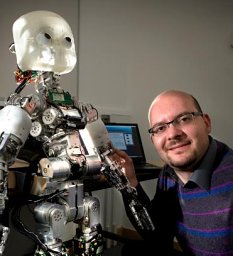 Davide Marocco合作论文数Institute of Cognitive Science and Technologies1
 Isabella Poggi合作论文数University of Rome 31
 Tiziana Catarci合作论文数Department of Computer, Control and Management Engineering, Sapienza - University of Roma1
 Andrea Marrella合作论文数Dipartimento di Ingegneria Informatica, Automatica e Gestionale, Sapienza Universita di Roma1A. Talarico合作论文数1
 Marco Bertamini合作论文数School of Psychology1
 Giuseppe Desolda合作论文数Università di Bari Aldo Moro1
 Maria Laura Mele合作论文数Interuniversity Center for Research in Cognitive Processing in Natural and Artificial Systems, Univeristy of Rome “La Sapienza”,1
 Maria Francesca Costabile合作论文数IVU laboratory
Dipartimento di Informatica
Universita degli Studi di Bari1
Maria Francesca Costabile合作论文数IVU laboratory
Dipartimento di Informatica
Universita degli Studi di Bari1 Domenico Luca Carnì合作论文数Department of Electronics;Computer and System Sciences;University of Calabria;Department of Electronics, University of Calabria1
 Laura Tarantino合作论文数Department of Computer Science
University of Rome "La Sapienza".1
Laura Tarantino合作论文数Department of Computer Science
University of Rome "La Sapienza".1 Marco Sammartino合作论文数Department of Engineering, University of Palermo1Stefano Federici合作论文数Universita di Roma "La Sapienza"1Maria Carmela Lombardo合作论文数Dipartimento di Matematica, Università di Palermo1
 Francesco Di Nocera合作论文数University of Rome1
 Rocco Servidio合作论文数Linguistics Department, University of Calabria1
 Rosa Lanzilotti合作论文数Department of Computer Science, University of Bari1




