There was an error in the original publication [...]
This article reports the process that allowed to check the condition of a steel railway bridge having a strategic position within the network. The framework representing the actions needed for the service life extension of the bridge is first described, then the conducted inspections are illustrated, together with the developed numerical analyses and the conception of specific tests on site. The conclusion, downstream of all these analyses and with the comparison of the real-life experiments, was to allow a limited extension of the useful life of the bridge, even with some reductions in the safety factor, respecting a reduction in the speed of railway trains and prescribing continuous monitoring of the bridge. In this context, all the test evaluations, combined with the surveillance/monitoring, and joined with an important numerical modelling activity, lead to the concept of "structural augmentation" of the bridge for service life extension purposes. The specific case of the examined bridge is supposed to be an example of good practice useful for infrastructure authorities.
In this paper the structural robustness assessment of concrete frame buildings under blast and under earthquake blast hazard chain scenarios is investigated. A deterministic methodology for connecting the robustness with the blast hazard intensity and for conducting the robustness analysis under earthquake-triggered blast is presented and applied to a 3D RC frame building by implementing nonlinear time history analyses considering both plastic behavior and large displacements. A preliminary sensitivity analysis on a 2D frame is conducted to identify the critical analysis parameters influencing the results. The robustness curves (residual structural capacity versus the level of damage occurring in the structure), evaluated both for the blast-only and for the earthquake-blast chained cases, are compared by considering different explosion locations inside the building (location of the blast-induced structural damage). Results show that neglecting the chained load scenarios would lead to the identification of an erroneous location as critical for the structural robustness performance.
A general solution of the diffusion problems which concern the R.C. structures, may be deduced by the limit analysis, by means of truss schemes suitable to model the load transfer mechanism. In particular such schemes allow us to share the carrying functions between concrete and steel reinforcement. Latest developments call this kind a solution Strut-and-Tie (S&T) modellization. In this paper a procedure for the automatic search for optima! S&T models in R.C. elements is proposed. A highly indeterminate pin-jointed framework of a given layout is generated within the assigned geometry of the concrete element and an optimum truss is found by the minimization of a suitable objective function. Such a function allows us to search for the optimum truss according to a reference behaviour (the principal stress field) deduced through a F.E.A. and assumed as representative of the given continuum. After having explained the theoretical principles and the mathematical formulation, some examples show the pratical application of the procedure and its capability in handling complex stress paths, through schemes which result rational and suitable for a consistent design.
In this paper the structural robustness assessment of concrete frame buildings under blast and under earthquake blast hazard chain scenarios is investigated.A deterministic methodology for connecting the robustness with the blast hazard intensity and for conducting the robustness analysis under earthquake-triggered blast is presented and applied to a 3D RC frame building by implementing nonlinear time history analyses considering both plastic behavior and large displacements.The robustness curves (residual structural capacity versus the level of damage occurring in the structure), evaluated both for the blast-only and for the earthquake-blast chained cases, are compared by considering different explosion locations inside the building (location of the blast-induced structural damage).Results show that neglecting the chained load scenarios would lead to the identification of an erroneous location as critical for the structural robustness performance..
This paper discusses and presents an example of fire risk analysis for a case study of an existing heritage building: the Duomo of Modena Cathedral, located in Italy. The main issues related to the application of the fire risk analysis to heritage buildings are discussed in detail, and an ad-hoc procedure is proposed to manage them for the case study. In order to assess the performances of the building in probabilistic terms, the fire risk analysis is conducted by the event-tree method, the fire dynamics are analyzed by numerical thermo-fluid dynamics models, while the structural behavior is investigated by advanced nonlinear thermomechanical finite element models. Results are expressed in terms of risk curves related to a fixed return period, which quantify the occurrence probability of different damage levels induced by fire in the wooden roof of the case study building. This kind of result is fully compatible with probabilistic performance-based engineering frameworks commonly accepted for other hazards (i.e., earthquakes).
This paper presents a numerical procedure for the robustness quantification of RC frames under blast-induced damage scenarios. The procedure is supported by a non-linear numerical analysis, by quantifying the structural response at the global level (i.e., response of the structural system/frame to the blast-induced damage) and by obtaining the so-called “robustness curves”, representing the residual strength of the structure under increasing damage levels. The procedure is then applied to a 2D RC frame structure. The sensitivity of the robustness curves with respect to a set of analysis parameters is discussed.
In recent years, natural disasters are recognized to be the cause of considerable human and socioeconomic losses, particularly in modern, infrastructure-dependent societies. For example, the 2011 earthquake and tsunami in Japan have been one of the most devastating disasters of the past decades. Likewise, the Katrina hurricane was in the US east coast in 2005. On the other hand, climate change is considered a major issue nowadays and its consequences have been considered only recently in risk assessment. In this context, the concepts of "resilience of urban areas" and "resilient community", have gathered the attention of researchers. On top of that, more recently, antifragile design came as an evolution of design for resilience (intended as the capacity to recover), or for structural robustness (a main dimension of resilience, intended as the ability of a structure to withstand events without being damaged to an extent disproportionate to the original cause). This study focuses on a modern approach in disaster resilience – including issues for the risk assessment in antifragile design – providing insight and a framework on important modelling aspects, in particular: The intention is to provide an umbrella framework and set of advises of correct practice that can help policy advisors and experts design for resilience in urban areas.
This paper summarizes the experimental campaign carried out for the development of a new steel energy dissipative device named Slit Dampers (SDs) designed for earthquake protection of structures.SDs consist in shear steel plates with appropriately shaped cut-out portions of material for allowing the maximum spread of plastic deformation along the device and then maximizing the hysteretic dissipative behavior.A total of eighty-two steel shear plates with different openings and thicknesses are tested to investigate their behavior under cyclic pseudostatic loading.Six types of steel shear plates are studied, including the SD with narrow slits that divide the plate into rectangular links, and the butterfly fuse with a diamond-shaped opening that creates butterfly shape links in the plate.Other varying test parameters are loading rate, material strength, and the number of in-parallel damper elements.It is expected that the proposed model can be successfully used to predict the behavior of dampers in real-world applications.
A quantitative procedure for the robustness and progressive collapse assessment of reinforced concrete (RC) frames under blast load scenarios is presented. This procedure is supported by multilevel numerical models, including nonlinear numerical analyses of the structural response of both local (i.e., response of the single structural element to the blast load) and global levels (i.e., response of the structural system to the blast-induced damage). Furthermore, the procedure is applied to a 2D RC frame structure. The novelty of the proposed procedure is that the global robustness is evaluated by the so-called "damage-presumption approach" where the considered damages are defined both in typology and extension depending on the blast scenario occurring at the local level. The dedicated local response analysis of a specified blast scenario leads to the proper definition of the so-called "blast-scenario dependent robustness curves".
This paper summarizes the experimental campaign carried out for the development of new steel energy dissipative devices named Slit Dampers (SDs) designed for earthquake protection of structures. A total of eighty‐two steel shear plates with different openings and thicknesses are tested to investigate their behaviour under cyclic pseudo‐static loading. Eight types of steel shear plates are studied, including the SD with narrow slits that divide the plate into rectangular links, and the butterfly fuse with a diamond‐shaped opening that creates butterfly shape links in the plate. Other varying test parameters are loading rate, material strength, and the number of in‐parallel damper elements. It is expected that the proposed model can be successfully used to predict the behaviour of dampers in real‐world applications.
Multi-hazard events involving bridge structures are more often nowadays as a consequence to man-made events and climate change. This study provides an overview of recent development in the field of multi-hazard analysis for bridge structures. Following that, it focuses on the structural behavior of a structure of strategic importance (a highway viaduct), under different hazard scenarios. Among the scenarios considered is the impact of a heavy vehicle (tank truck) on a bridge pier, and the fire spread following the collision due to the presence of inflammable material. The bridge structure is a typical multi-span composite highway viaduct. Different impact and fire scenarios are considered, including fire involving different parts of the bride (i.e. piers, deck). The outcomes of the analyses are evaluated and considerations are made for possible prevention actions.
This paper presents an optimal design procedure for a pendulum tuned mass damper (PTMD) to mitigate the global structural vibrations of offshore wind turbines (OWTs) in the fore-aft and side-side directions. The procedure is tested to the design of a PTMD to be applied to the 5-MW benchmark baseline monopile wind turbine proposed by the National Renewable Energy Lab (NREL). The computation of wind and wave spectra, as well as the evaluation of the hydrodynamic and aerodynamic loads, is conducted by using an in-house built MATLAB (R) routine working together with an ANSYS (R) 3-D finite element (FE) global model for evaluating the resultant peak displacement response at the OWT hub by a power spectral density (PSD) analysis. In order to validate the OWT FEM model, a result comparison is made with the NREL OpenFAST, finding good matches between the two codes. An in-house built genetic algorithm (GA) toolbox, coded in MATLAB (R), is then used to optimally design the parameters of a PTMD with a simplified 2-degrees-of-freedom (2DOF) model. The chosen GA fitness function targets the minimization of the peak response of the primary structure as evaluated by the 2DOF model. The design parameters of the PTMD are the flexural rigidity and damping, the mass ratio and pendulum length. After the 3-D FE model of the OWT without any control device has been validated, and the PTMD has been optimized by the simplified 2DOF model, the performances of the PTMD are examined on a 3-D global FE OWT + PTMD model in ANSYS (R).
In this paper, a procedure is proposed to determine the fatigue life of the electrical cable connected to a 5 MW floating offshore wind turbine, supported by a spar-buoy at a water depth of 320 m, by using a numerical approach that takes into account site-specific wave and wind characteristics. The effect of the intensity and the simultaneous actions of waves and wind are investigated and the outcomes for specific cable configurations are shown. Finally, the fatigue life of the cable is evaluated. All analyses have been carried out using the Ansys AQWA computational code, which is a commercial code for the numerical investigation of the dynamic response of floating and fixed marine structures under the combined action of wind, waves and current. Furthermore, this paper applies the FAST NREL numerical code for comparison with the ANSYS AQWA results.
This study focuses on multi-hazard analysis for bridges, following a two-tier approach. First, it identifies relevant open issues and recent literature developments in the field, presenting data in a meaningful manner, with specific focus on the issues related with the analysis of hazard chain scenario treated as low probability–high consequence events. Second, it describes a practically useful and sufficiently generic approach for efficient computational investigation of hazard chain scenarios in highway bridges. Following that, the applicability of the approach is exemplified in an appealing and commonly encountered in real-life hazard chain scenario, in which a multilevel modeling strategy is adopted to assess the structural response under hazard chain scenarios of a highway viaduct. Among the considered scenarios is the impact of a heavy vehicle (tank truck) on the bridge pier, and the fire spread following the collision due to the presence of inflammable materials. The bridge structure is a typical 189-m-long multi-span composite highway viaduct. The impact is modeled with a non-linear transient dynamic analysis that accounts the inertial effect of the global structure, while the fire modeling is performed with non-linear quasi static dynamic analysis focusing on local behavior with a substructured model. Then different impact and fire scenarios are considered, including different impact velocities of the truck.
This paper will explain the elementary aspects related to structural robustness. The concept of structural integrity is firstly introduced and next it is considered how it varies in time. The different kind of progressive collapses are introduced with reference to real cases. Design strategies are then explained with reference of bridges and viaducts, considering examples. Finally, considerations about a more general view of structural robustness are enlightened. The role of design clima and conceptual design is stressed also in connection with structural health monitoring. In the whole paper, a practical point of view is used, as needed by designer.
Long-span steel suspension bridges develop significant vibrations under the effect of external time-variable loadings because their slenderness. This causes significant stresses variations that could induce fatigue problems in critical components of the bridge. The research outcome presented in this paper includes a fatigue analysis of a long suspension bridge with 3300 meters central suspended span under wind action and train transit. Special focus is made on the counterintuitive interaction effects between train and wind loads in terms of fatigue damage accumulation in the hanger ropes. In fact the coupling of the two actions is shown to have positive effects for some hangers in terms of damage accumulation. Fatigue damage is evaluated using a linear accumulation model (Palmgren-Miner rule), analyses are carried out in time domain by a three-dimensional non-linear finite element model of the bridge. Rational explanation regarding the above-mentioned counterintuitive behavior is given on the basis of the stress time histories obtained for pertinent hangers under the effects of wind and train as acting separately or simultaneously. The interaction between wind and train traffic loads can be critical for a some hanger ropes therefore interaction phenomena within loads should be considered in the design.
This study focuses on the development and integrated design over a 24-month period of a high efficiency energy-harvesting (EH) temperature sensor, based on piezoelectric materials, with applications for the sustainability of smart buildings, structures and infrastructures. The EH sensor, harvests the airflow inside Heating, Ventilation and Air Conditioning (HVAC) systems, using a piezoelectric component and an appropriate customizable aerodynamic fin that takes advantage of specific air flow effects, and is implemented for optimizing the energy consumption in buildings. The project was divided in several work-packages (some running in parallel) that cover different aspects of the device development. Some of them focus on engineering aspects (starting from the numerical modeling, then prototyping, and concluding with experimental testing). Other aspects focus on the sensor promotion (including the development of a business plan, the intellectual property rights, the final design and the go-to-market actions). Considering the multidisciplinary character of the project (involving knowledge from fields such as wind engineering, electrical engineering, industrial design, entrepreneurship), this study tries to provide an insight on the complex design issues that arise when such complex, sometimes conflicting and overlapping aspects have to be managed within strict deadlines. In doing so, the most important design and development aspects are critically presented.
 Francesco Petrini合作论文数Department of Civil Engineering, University "La Sapienza",35
 Pier Giorgio Malerba合作论文数32
 Fabio Biondini合作论文数Department of Civil and Environmental Engineering,
Politecnico di Milano29
Fabio Biondini合作论文数Department of Civil and Environmental Engineering,
Politecnico di Milano29 Luca Sgambi合作论文数University of Rome24
 Konstantinos Gkoumas合作论文数Università di Roma;Faculty of Engineering;Faculty of Engineering, Università di Roma23
 Stefania Arangio合作论文数14
 Luisa Giuliani合作论文数Department of Civil and Mechanical Engineering (DTU-Construct),, Technical University of Denmark10
 Pierluigi Olmati合作论文数Explos & Impact Engn, Tokyo 1538515, Japan10
 C. Crosti合作论文数Sapienza University of Rome7
 Fabio Casciati合作论文数University of Pavia7
 Dan M. Frangopol合作论文数Department of Civil and Environmental Engineering, Engineering Research Center for Advanced Technology for Large Structural Systems, Lehigh University;Imbt Labs, Lehigh University;Department of Civil, Environmental, and Architectural Engineering;University of Colorado7
 Luciano Catallo合作论文数5
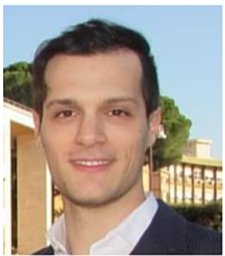 Mattia Francioli合作论文数4
 Filippo Gentili合作论文数ISISE, Univ Coimbra4
 Elsa Garavaglia合作论文数Department of Structural Engineering, Politecnico di Milano4F Giuliano合作论文数3Fmy Cabrera合作论文数3
 Lucia Faravelli合作论文数University of Pavia3
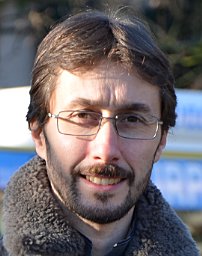 Sauro Manenti合作论文数3Giulia Milana合作论文数2patrick trasborg合作论文数2
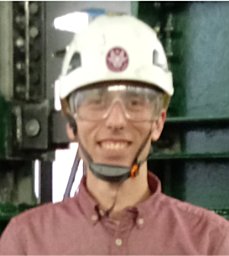 Ferit Gashi合作论文数2N. Basso合作论文数Waseda Univ2
 Madjid Karimirad合作论文数School of Natural and Built Environment2Marcello Ciampoli合作论文数2
 Paolo Franchin合作论文数Department of Civil and Environmental Engineering, University of California2
 Clay J. Naito合作论文数Dept Civil & Environm Engn, Lehigh Univ2francesca brando合作论文数1
 Gino Bertollucci Colherinhas合作论文数Instituto Federal de Educação Ciência e Tecnologia de Goiás1
 Filippo Ubertini合作论文数Dipartimento di Ingegneria Civile ed Ambientale, Università degli Studi di Perugia1
 Claudio Rossi合作论文数1
 Hui Li (李惠)合作论文数School of Civil Engineering, Harbin Institute of Technology1R Testa合作论文数1
 Salvatore Miliziano合作论文数Department of Structural and Geotechnical Engineering, University of Rome “La Sapienza”,1
 Liberato Ferrara合作论文数Laboratorio Prove Materiali, Politecnico di Milano;Dipartimento di Ingegneria Civile e Ambientale, Politecnico di Milano1
 Marcus V. G. de Morais合作论文数1Ingegnere Strutturista合作论文数1Fabio Giuliano合作论文数1
 Jamie Padgett合作论文数Department of Civil and Environmental Engineering, George R. Brown School of Engineering, Rice University1
 Emidio Nigro合作论文数1




