Many natural systems show emergent phenomena at different scales, leading to scaling regimes with signatures of deterministic chaos at large scales and an apparently random behavior at small scales. These features are usually investigated quantitatively by studying the properties of the underlying attractor, the compact object asymptotically hosting the trajectories of the system with their invariant density in the phase space. This multi-scale nature of natural systems makes it practically impossible to get a clear picture of the attracting set. Indeed, it spans over a wide range of spatial scales and may even change in time due to non-stationary forcing. Here, we combine an adaptive decomposition method with extreme value theory to study the properties of the instantaneous scale-dependent dimension, which has been recently introduced to characterize such temporal and spatial scale-dependent attractors in turbulence and astrophysics. To provide a quantitative analysis of the properties of this metric, we test it on the well-known low-dimensional deterministic Lorenz-63 system perturbed with additive or multiplicative noise. We demonstrate that the properties of the invariant set depend on the scale we are focusing on and that the scale-dependent dimensions can discriminate between additive and multiplicative noise despite the fact that the two cases have exactly the same stationary invariant measure at large scales. The proposed formalism can be generally helpful to investigate the role of multi-scale fluctuations within complex systems, allowing us to deal with the problem of characterizing the role of stochastic fluctuations across a wide range of physical systems.
Turbulent flows present rich dynamics originating from non-trivial energy fluxes across scales, non-stationary forcings and geometrical constraints. This complexity manifests in non-hyperbolic chaos, randomness, state-dependent persistence and unpredictability. All these features have prevented a full characterization of the underlying turbulent (stochastic) attractor, which will be the key object to unpin this complexity. Here we propose a novel formalism to trace the evolution of the structural characteristics of phase-space trajectories across scales, providing a full characterization of the attractor. We demonstrate that the properties of the dynamically invariant objects depend on the scale we are focusing on. In the case of laboratory experiments on fluids we observe the emergence of an intrinsic timescale, solely determined by nonlinear interactions, controlling the geometrical and topological properties of phase-space trajectories. Given the changing nature of such attractors in time and scales we term them chameleon attractors.
According to everyone's experience, predicting the weather reliably over more than 8 d seems an impossible task for our best weather agencies. At the same time, politicians and citizens are asking scientists for climate projections several decades into the future to guide economic and environmental policies, especially regarding the maximum admissible emissions of CO2. To what extent is this request scientifically admissible? In this review we will investigate this question, focusing on the topic of predictions of transitions between metastable states of the atmospheric or oceanic circulations. Two relevant examples are the switching between zonal and blocked atmospheric circulation at mid-latitudes and the alternation of El Niño and La Niña phases in the Pacific Ocean. The main issue is whether present climate models, which necessarily have a finite resolution and a smaller number of degrees of freedom than the actual terrestrial system, are able to reproduce such spontaneous or forced transitions. To do so, we will draw an analogy between climate observations and results obtained in our group on a laboratory-scale, turbulent, von Kármán flow in which spontaneous transitions between different states of the circulation take place. We will detail the analogy, investigate the nature of the transitions and the number of degrees of freedom that characterize the latter, and discuss the effect of reducing the number of degrees of freedom in such systems. We will also discuss the role of fluctuations and their origin and stress the importance of describing very small scales to capture fluctuations of correct intensity and scale.
Many natural systems show emergent phenomena at different scales, leading to scaling regimes with signatures of chaos at large scales and an apparently random behavior at small scales. These features are usually investigated quantitatively by studying the properties of the underlying attractor, the compact object asymptotically hosting the trajectories of the system with their invariant density in the phase-space. This multi-scale nature of natural systems makes it practically impossible to get a clear picture of the attracting set as it spans over a wide range of spatial scales and may even change in time due to non-stationary forcing. Here we combine an adaptive decomposition method with extreme value theory to study the properties of the instantaneous scale-dependent dimension, which has been recently introduced to characterize such temporal and spatial scale-dependent attractors in turbulence and astrophysics. To provide a quantitative analysis of the properties of this metric, we test it on the well-known low-dimensional deterministic Lorenz-63 system perturbed with additive or multiplicative noise. We demonstrate that the properties of the invariant set depend on the scale we are focusing on and that the scale-dependent dimensions can discriminate between additive and multiplicative noise, despite the fact that the two cases exhibit very similar stochastic attractors at large scales. The proposed formalism can be generally helpful to investigate the role of multi-scale fluctuations within complex systems, allowing us to deal with the problem of characterizing the role of stochastic fluctuations across a wide range of physical systems.
In a turbulent fluid, the time-reversal symmetry is explicitly broken by viscosity, and spontaneously broken in the inviscid limit. Recently, Drivas [J. Nonlinear Sci. 29, 65 (2019).JNSCEK0938-897410.1007/s00332-018-9476-8] proved the equivalence of two different local indicators of time irreversibility: (i) an Eulerian one, based on regularity properties of the velocity field [Duchon and Robert, Nonlinearity 13, 249 (2000).NONLE50951-771510.1088/0951-7715/13/1/312]; (ii) a Lagrangian one, based on symmetry properties of the trajectories under time reversal [Jucha et al., Phys. Rev. Lett. 113, 054501 (2014).PRLTAO0031-900710.1103/PhysRevLett.113.054501]. We test this equivalence in a turbulent Von Kármán experiment at a resolution of the order of the Kolmogorov scale using a high resolution 4D-PTV technique. We use the equivalence to perform the first joined Eulerian-Lagrangian exploration of the dynamics leading to time irreversibility, and find that it is linked with vortex interaction, suggesting a link between irreversibility and singularity.
We report hot-wire measurements performed in two very different, coand counter-rotating flows, in normal and superfluid helium at 1.6 K, 2 K, and 2.3 K. As recently reported, the power spectrum of the hot-wire signal in superfluid flows exhibits a significant bump at high frequency (Diribarne et al. [1]). We confirm that the bump frequency does not depend significantly on the temperature and further extend the previous analysis of the velocity dependence of the bump, over more than one decade of velocity. The main result is that the bump frequency depends on the turbulence intensity of the flow, and that using the turbulent Reynolds number rather than the velocity as a control parameter collapses results from both coand counter-rotating flows. The vortex shedding model previously proposed, in its current form, does not account for this observation. This suggests that the physical origin of the bump is related to the small scale turbulence properties of the flow. We finally propose some qualitative physical mechanism by which the smallest structures of the flow, at intervortex distance, could affect the heat flux of the hot-wire.
Considering the current advances in experimental capabilities in fluid mechanics and the advances in computing power and numerical methods in computational fluid mechanics, a question that naturally arises is whether the two sets of techniques are approaching a level of sophistication sufficiently high to deliver results on turbulent flows in realistic geometries that are comparable. The purpose of this paper is to give elements of answers to this question by considering the so-called von Karman flow where the fluid in a cylindrical container is driven by two counter-rotating impellers. We compare in the mentioned flow the torque and the flow topology obtained by experiments, direct numerical simulations (DNS), and large eddy simulations (LES) at various Reynolds numbers ranging from R-e = O(10(2)) to R-e = O(10(5)). In addition to validating the proposed LES model, the level of agreement that is observed between the numerical and the experimental data shows that the degree of accuracy of each of these techniques is reaching a threshold beyond which it is possible to use each of them with high confidence to explore and better understand turbulence in complex flows at R-e = O(10(5)) and beyond. (C) 2020 Elsevier Ltd. All rights reserved.
We have conducted an extensive study of the scaling properties of small scale turbulence using both numerical and experimental data of a flow in the same von Kármán geometry. We have computed the wavelet structure functions, and the structure functions of the vortical part of the flow and of the local energy transfers. We find that the latter obeys a generalized extended scaling, similar to that already observed for the wavelet structure functions. We compute the multi-fractal spectra of all the structure functions and show that they all coincide with each other, providing a local refined hypothesis. We find that both areas of strong vorticity and strong local energy transfer are highly intermittent and are correlated. For most cases, the location of local maximum of energy transfer is shifted with respect to the location of local maximum of vorticity. We however observe a much stronger correlation between vorticity and local energy transfer in the shear layer, that may be an indication of a self-similar quasi-singular structure that may dominate the scaling properties at large order structure functions.
According to everyone’s experience, predicting the weather reliably over more than 8 days seems an impossible task for our best weather agencies. At the same time, politicians and citizens are asking scientists for climate projections several decades into the future to guide economic and environmental policies, especially regarding the maximum admissible emissions of CO2. To what extent is this request scientifically admissible? In this review we will investigate this question, focusing on the topic of predictions of transitions between metastable states 5 of the atmospheric or oceanic circulations. Two relevant exemples are the switching between zonal and blocked atmospheric circulation at midlatitudes and the alternance of El Niño and La Niña phases in the Pacific ocean. The main issue is whether present climate models, that necessarily have a finite resolution and a smaller number of degrees of freedom than the actual terrestrial system, are able to reproduce such spontaneous or forced transitions. To do so, we will draw an analogy between climate observations and results obtained in our group on a laboratory-scale, turbulent, von Kármán flow, in which spontaneous 10 transitions between different states of the circulation take place. We will detail the analogy, and investigate the nature of the transitions, the number of degrees of freedom that characterizes the latter and discuss the effect of reducing the number of degrees of freedom in such systems. We will also discuss the role of fluctuations and their origin, and stress the importance of describing very small scales to capture fluctuations of correct intensity and scale.
Velocity measurements in turbulent superfluid helium between co-rotating propellers are reported. The parameters are chosen such that the flow is fully turbulent, and its dissipative scales are partly resolved by the velocity sensors. This allows for the first experimental comparison of spectra in quantum versus classical turbulence where dissipative scales are resolved. In some specific conditions, differences are observed, with an excess of energy at small scales in the quantum case compared to the classical one. This difference is consistent with the prediction of a pileup of superfluid kinetic energy at the bottom of the inertial cascade of turbulence due to a specific dissipation mechanism.
Abstract We study the three-dimensional structure of turbulent velocity fields around extreme events of local energy transfer in the dissipative range. Velocity fields are measured by tomographic particle velocimetry at the centre of a von Kármán flow with resolution reaching the Kolmogorov scale. The characterization is performed through both direct observation and an analysis of the velocity gradient tensor invariants at the extremes. The conditional average of local energy transfer on the second and third invariants seems to be the largest in the sheet zone, but the most extreme events of local energy transfer mostly correspond to the vortex stretching topology. The direct observation of the velocity fields allows for identification of three different structures: the screw and roll vortices, and the U-turn. They may correspond to a single structure seen at different times or in different frames of reference. The extreme events of local energy transfer come along with large velocity and vorticity norms, and the structure of the vorticity field around these events agrees with previous observations of numerical works at similar Reynolds numbers.
We investigate the ability of 4D Particle Tracking Velocimetry measurements at high particle density to explore intermittency and irreversibility in a turbulent swirling flow at various Reynolds numbers. For this, we devise suitable tools to remove the experimental noise, and compute the statistics of both Lagrangian velocity increments and wavelet coefficients of the Lagrangian power (the time derivative of the kinetic energy along a trajectory). We show that the signature of noise is strongest on short trajectories, and results in deviations from the regularity condition at small time scales. Considering only long trajectories to get rid of such effect, we obtain scaling regimes that are compatible with a reduced intermittency, meaning that long trajectories are also associated with areas of larger regularity. The scaling laws, both in time and Reynolds number, can be described by the multifractal model, with a log-normal spectrum and an intermittency parameter that is three times smaller than in the Eulerian case, where all the areas of the flow are taken into account.
This paper investigates the universality of the Eulerian velocity structure functions using velocity fields obtained from the stereoscopic particle image velocimetry (SPIV) technique in experiments and direct numerical simulations (DNS) of the Navier-Stokes equations. It shows that the numerical and experimental velocity structure functions up to order 9 follow a log-universality (Castaing et al. Phys. D Nonlinear Phenom. 1993); this leads to a collapse on a universal curve, when units including a logarithmic dependence on the Reynolds number are used. This paper then investigates the meaning and consequences of such log-universality, and shows that it is connected with the properties of a “multifractal free energy”, based on an analogy between multifractal and thermodynamics. It shows that in such a framework, the existence of a fluctuating dissipation scale is associated with a phase transition describing the relaminarisation of rough velocity fields with different Hölder exponents. Such a phase transition has been already observed using the Lagrangian velocity structure functions, but was so far believed to be out of reach for the Eulerian data.
The kinetic energy spectrum of high-Reynolds turbulent swirling flows is experimentally studied. This spectrum, obtained from direct measurements in space, exhibits nearly two decades of Kolmogorov k(-5/3) decay in the inertial range of scales. Beyond this regime, in the dissipative range of scales, a crossover to a stretched exponential decay on scale k(2/3) is observed, in full agreement with a recent theoretical prediction based on nonperturbative renormalization group theory.
We examine the connection between the singularities or quasisingularities in the solutions of the incompressible Navier-Stokes equation (INSE) and the local energy transfer and dissipation, in order to explore in detail how the former contributes to the phenomenon of intermittency. We do so by analyzing the velocity fields (a) measured in the experiments on the turbulent von Kármán swirling flow at high Reynolds numbers and (b) obtained from the direct numerical simulations of the INSE at a moderate resolution. To compute the local interscale energy transfer and viscous dissipation in experimental and supporting numerical data, we use the weak solution formulation generalization of the Kármán-Howarth-Monin equation. In the presence of a singularity in the velocity field, this formulation yields a nonzero dissipation (inertial dissipation) in the limit of an infinite resolution. Moreover, at finite resolutions, it provides an expression for local interscale energy transfers down to the scale where the energy is dissipated by viscosity. In the presence of a quasisingularity that is regularized by viscosity, the formulation provides the contribution to the viscous dissipation due to the presence of the quasisingularity. Therefore, our formulation provides a concrete support to the general multifractal description of the intermittency. We present the maps and statistics of the interscale energy transfer and show that the extreme events of this transfer govern the intermittency corrections and are compatible with a refined similarity hypothesis based on this transfer. We characterize the probability distribution functions of these extreme events via generalized Pareto distribution analysis and find that the widths of the tails are compatible with a similarity of the second kind. Finally, we make a connection between the topological and the statistical properties of the extreme events of the interscale energy transfer field and its multifractal properties.
Atmospheric motions are governed by turbulent motions associated to nontrivial energy transfers at small scales (direct cascade) and/or at large scales (inverse cascade). Although it is known that the two cascades coexist, energy fluxes have been previously investigated from the spectral point of view but not on their instantaneous spatial and local structure. Here, we compute local and instantaneous subfilter-scale energy transfers in two sets of reanalyses (NCEP–NCAR and ERA-Interim) in the troposphere and the lower stratosphere for the year 2005. The fluxes are mostly positive (toward subgrid scales) in the troposphere and negative in the stratosphere, reflecting the baroclinic and barotropic nature of the motions, respectively. The most intense positive energy fluxes are found in the troposphere and are associated with baroclinic eddies or tropical cyclones. The computation of such fluxes can be used to characterize the amount of energy lost or missing at the smallest scales in climate and weather models.
All previous experiments in open turbulent flows (e.g. downstream of grids, jets and the atmospheric boundary layer) have produced quantitatively consistent values for the scaling exponents of velocity structure functions (Anselmet et al., J. Fluid Mech., vol. 140, 1984, pp. 63–89; Stolovitzky et al., Phys. Rev. E, vol. 48 (5), 1993, R3217; Arneodo et al., Europhys. Lett., vol. 34 (6), 1996, p. 411). The only measurement of scaling exponents at high order (${>}6$) in closed turbulent flow (von Kármán swirling flow) using Taylor’s frozen flow hypothesis, however, produced scaling exponents that are significantly smaller, suggesting that the universality of these exponents is broken with respect to change of large scale geometry of the flow. Here, we report measurements of longitudinal structure functions of velocity in a von Kármán set-up without the use of the Taylor hypothesis. The measurements are made using stereo particle image velocimetry at four different ranges of spatial scales, in order to observe a combined inertial subrange spanning approximately one and a half orders of magnitude. We found scaling exponents (up to ninth order) that are consistent with values from open turbulent flows, suggesting that they might be in fact universal.
We report the experimental evidence of the existence of a random attractor in a fully developed turbulent swirling flow. By defining a global observable which tracks the asymmetry in the flux of angular momentum imparted to the flow, we can first reconstruct the associated turbulent attractor and then follow its route towards chaos. We further show that the experimental attractor can be modeled by stochastic Duffing equations, that match the quantitative properties of the experimental flow, namely, the number of quasistationary states and transition rates among them, the effective dimensions, and the continuity of the first Lyapunov exponents. Such properties can be recovered neither using deterministic models nor using stochastic differential equations based on effective potentials obtained by inverting the probability distributions of the experimental global observables. Our findings open the way to low-dimensional modeling of systems featuring a large number of degrees of freedom and multiple quasistationary states.
 Arnaud Chiffaudel合作论文数42
 Bérengère Dubrulle合作论文数Centre National de la Recherche Scientifique35
 J.-F. Pinton合作论文数Laboratoire de Physique;Ecole Normale Superieure de Lyon;Laboratoire de Physique, Ecole Normale Superieure de Lyon27
 Philippe Odier合作论文数Laboratoire de Physique, Ecole Normale Supérieure25
 Mickaël Bourgoin合作论文数Physics Laboratory, CNRS25
 Marie Louis合作论文数23
 Florent Ravelet合作论文数Laboratory for Aero and Hydrodynamics22Stephan Fauve合作论文数19
 Olivier Dauchot合作论文数CEA Saclay17Pantxo Diribarne合作论文数Service de Physique de l'État Condensé;CEA Saclay14
 Brice Saint-Michel合作论文数Laboratoire SPHYNX, CEA/IRAMIS/SPEC13
 Romain Monchaux合作论文数Service de Physique;CEA Saclay;Service de Physique, CEA Saclay13
 Daniel Bonamy合作论文数Division Physics of Condensed Matter, CEA Saclay12Francois Petrelis合作论文数12
 Eric Herbert合作论文数Laboratoire de Physique Statistique de l'École Normale Supérieure, associé aux Universités Paris 6 et 7 et au CNRS12
 Davide Faranda合作论文数Lab Sci Climat & Environm, Univ Paris Saclay11francois petrelis合作论文数10Bernard Rousset合作论文数10
 Nicolas Mordant合作论文数Laboratoire de Physique;Ecole Normale Superieure, CNRS;Laboratoire de Physique, CNRS10
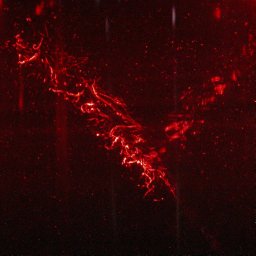 Michael Berhanu合作论文数Laboratoire de Physique;Ecole Normale Superieure;Laboratoire de Physique, Ecole Normale Superieure10
 J. -P. Laval合作论文数UMR 8107), Laboratoire de Mécanique de Lille (LML10Nicolas Plihon合作论文数Laboratoire de Physique de l’École Normale Supérieure de Lyon, CNRS & Université de Lyon10
 Javier Burguete合作论文数Department of Physics and Applied Mathematics;Faculty of Sciences;Universidad de Navarra;Faculty of Sciences, Universidad de Navarra10
 Julien Salort合作论文数Laboratoire de Physique de l'ENS de Lyon, CNRS/Université Lyon9
 Romain Volk合作论文数Laboratoire de Physique;Ecole Normale Superieure de Lyon;Universite de Lyon;Laboratoire de Physique, Universite de Lyon9L. Laurent合作论文数8
 Christophe Baudet合作论文数8
 Ewe-Wei Saw (苏酉伟)合作论文数School of Atmospheric Sciences, Sun Yat-sen University8
 Basile Gallet合作论文数Laboratoire de Physique;Ecole Normale Superieure;Laboratoire de Physique, Ecole Normale Superieure8P-P Cortet合作论文数7
 Denis Kuzzay合作论文数Univ PSL, Sorbonne Univ7a girard合作论文数7
 Jean Boisson合作论文数7Sebastien Aumaitre合作论文数7S. Bottin合作论文数7
 Mathieu Gibert合作论文数Max Planck;Institute for Dynamics and Self Organization;Max Planck|Institute for Dynamics and Self Organization7P.-E. Roche合作论文数6V. Padilla合作论文数6M. Bon Mardion合作论文数6
 Nicolas B Garnier合作论文数Service de Physique;CEA Saclay;Service de Physique, CEA Saclay6Gautier Verhille合作论文数Laboratoire de Physique de l’École Normale Supérieure de Lyon, CNRS & Université de Lyon6
 Jeanmarc Foucaut合作论文数UMR 8107), Laboratoire de Mecanique de Lille (LML6
 Valentina Valori合作论文数Inst Thermodynam & Fluid Mech, Tech Univ Ilmenau5J. P. Berge合作论文数5Yves Gagne合作论文数5Nathalie Mukolobwiez合作论文数5
 Sergey Nazarenko合作论文数Math Inst, Univ Warwick5
 Laurent Chevillard合作论文数Phys-ENS5




