We will present the outcomes of a GEANT4 simulation study of the energy resolution that can be achieved with a GRAiNITA detector. GRAiNITA is a new-generation sampling calorimeter based on the use of high-stopping power inorganic scintillator grains evenly distributed in a volume of high-density liquid, as absorber. As in a shashlik detector, the scintillation light produced by the grains, can be collected to the photodetectors by means of wavelength-shifting fibers. The characterization of a GRAiNITA prototype, filled with ZnWO 4 grains, proved that a stochastic fluctuation of $1 \% / \sqrt{E}[\mathrm{GeV}]$ on the energy resolution, due to photo-electron statistics, is at reach [1]. While this result is really encouraging, the estimation of the constant term contribution to the energy resolution, due the non-uniformity of the detector response and to the containment of the electromagnetic shower in the detection volume, remains crucial to demonstrate the real effectiveness of GRAiNITA.
The GRAiNITA project aims to propose a novel design for a next-generation calorimeter. This innovative approach uses a mixture of submillimeter sized inorganic scintillating crystals (around 1-2 mm) dispersed within a high-density, transparent liquid. This technology is expected to achieve excellent energy resolution at a significantly reduced cost compared to existing technologies. This paper presents the development and operation of a test bench designed to characterise the performance of the GRAiNITA prototyp. Its working principle is based on the reconstruction of the track of cosmic muons traversing the prototype. The length of the reconstructed track is directly correlated with the deposited energy within the detector. These measurements allow one to assess the light generation efficiency and its uniformity across the entire detector volume. The test bench incorporates a Timepix tracker to accurately reconstruct the muon trajectory within the detector. Additionally, a set of scintillators provides a trigger signal and a time stamp for each muon candidate event. This system is currently in operation and gives its first results, which will be presented in the upcoming conference. These measurements provide a first step before producing finer studies in test beams.
We will present the development of two medium-size prototypes of GRAiNITA, a next-generation shashlik calorimeter, based on the use of ZnWO 4 and BGO crystal grains, respectively, soaked in a high-density and high-refractive index liquid. As in the LiquidO detection technique[1], due to the presence of the grains, the scintillation light remains stochastically confined in the area of production; for this reason, it can be collected and transferred towards the photodetectors by the use of wavelength shifting fibers evenly distributed in the detection volume, similarly as in a conventional shashlik calorimeter.GRAiNITA represents a very appealing electromagnetic calorimeter candidate for high energy physics experiments for future electron-positron colliders. Indeed, due to the extreme fine sampling, GRAiNITA has the potential to reach a photon energy resolution of R~2%/sqrt(E) [2], thus increasing the precision of flavor physics with rare decays to photons or neutral pions. In this communication, we will present the outcomes of the study that led us to the choice of the best suited fibers for ZnWO 4 and BGO, respectively, and we will present the effect observed on the light propagation, when adding isopropanol in the detection volume (as a first approximation of future liquids), to fill the space between the crystal grains. Finally, we will discuss the development and characterization of the prototypes, presenting either the mechanical and the electronic design.
This erratum corrects measurements of the prompt and secondary (from-b).
In figure 11 of the original paper.
In figure 11 of the original paper.
Observations are reported of different sources of CP violation from an amplitude analysis of B^{+}→π^{+}π^{+}π^{-} decays, based on a data sample corresponding to an integrated luminosity of 3 fb^{-1} of pp collisions recorded with the LHCb detector. A large CP asymmetry is observed in the decay amplitude involving the tensor f_{2}(1270) resonance, and in addition significant CP violation is found in the π^{+}π^{-}S wave at low invariant mass. The presence of CP violation related to interference between the π^{+}π^{-}S wave and the P wave B^{+}→ρ(770)^{0}π^{+} amplitude is also established; this causes large local asymmetries but cancels when integrated over the phase space of the decay. The results provide both qualitative and quantitative new insights into CP -violation effects in hadronic B decays.
The calibration and performance of the LHCb Calorimeter system in Run 1 and 2 at the LHC are described. After a brief description of the sub-detectors and of their role in the trigger, the calibration methods used for each part of the system are reviewed. The changes which occurred with the increase of beam energy in Run 2 are explained. The performances of the calorimetry for $\gamma$ and $\pi^0$ are detailed. A few results from collisions recorded at $\sqrt {s}$ = 7, 8 and 13 TeV are shown.
Abstract The doubly Cabibbo-suppressed decay Ξ c + → pϕ with ϕ → K + K − is observed for the first time, with a statistical significance of more than fifteen standard deviations. The data sample used in this analysis corresponds to an integrated luminosity of 2 fb−1 recorded with the LHCb detector in pp collisions at a centre-of-mass energy of 8 TeV. The ratio of branching fractions between the decay Ξ c + → pϕ and the singly Cabibbo-suppressed decay Ξ c + → pK − π + is measured to be $$ \frac{\mathrm{\mathcal{B}}\left({\varXi}_c^{+}\to p\phi \right)}{\mathrm{\mathcal{B}}\left({\varXi}_c^{+}\to p{K}^{-}{\pi}^{+}\right)}=\left(19.8\pm 0.7\pm 0.9\pm 0.2\right)\times {10}^{-3}, $$ ℬ Ξ c + → p ϕ ℬ Ξ c + → p K − π + = 19.8 ± 0.7 ± 0.9 ± 0.2 × 10 − 3 , where the first uncertainty is statistical, the second systematic and the third due to the knowledge of the ϕ → K + K − branching fraction.
Bose-Einstein correlations for same-sign charged pions and kinematic b-bbar correlations in proton-proton collisions at a center-of-mass energy of 7 and 8 TeV are studied by the LHCb experiment. The dependence of Bose-Einstein correlation parameters on the charged-particle multiplicity is investigated. The correlation radius is observed to increase with multiplicity, while the chaoticity parameter decreases. The b-bbar correlations are studied using inclusive b quark decays to jpsi and are found to be in good agreement with theoretical predictions.
The prompt production of Λ c + baryons is studied in proton-lead collisions collected with the LHCb detector at the LHC. The data sample corresponds to an integrated luminosity of 1.58 nb −1 recorded at a nucleon-nucleon centre-of-mass energy of √(s_NN)=5.02 TeV. Measurements of the differential cross-section and the forwardbackward production ratio are reported for Λ c + baryons with transverse momenta in the range 2 < p T < 10 GeV/c and rapidities in the ranges 1.5 < y ∗ < 4.0 and −4.5 < y ∗ < −2.5 in the nucleon-nucleon centre-of-mass system. The ratio of cross-sections of Λ c + baryons and D 0 mesons is also reported. The results are compared with next-to-leading order calculations that use nuclear parton distribution functions.
Bottom baryons are composed of a b quark and two lighter quarks ðbqq0Þ. In the constituent quark model [1,2], such baryon states form multiplets according to the symmetries of their flavor, spin, and spatial wave functions [3]. The Λb baryon is the lightest of the bottom baryons and forms an isospin (I) singlet ðbudÞwith spin-parity JP 1⁄4 1 2 þ. Two I 1⁄4 1 triplets with JP 1⁄4 1 2 þ (Σb) and JP 1⁄4 2 (Σ b) are expected, with the spin of the flavor-symmetric qq0 diquark Sqq0 1⁄4 1. Four of those six states, the Σ b and Σ b baryons (uub and ddb), have been observed by the CDF collaboration [4,5] and reported briefly in a previous LHCb paper [6]. Beyond these ground states, radially and orbitally excited states are expected at higher masses, but only a few excited baryons have been observed in the bottom sector [7–10]. The search for and study of these states will cast light on the internal mechanisms governing the dynamics of the constituent quarks [11,12]. In this Letter, we report the observation of structures in both the Λbπ and Λbπ mass distributions (charge conjugation is implied throughout this Letter) using pp collision data collected by the LHCb experiment at ffiffi
A(c)(+) baryons and D-0 mesons are studied in pPb collisions at root S-NN = 5.02 TeV. The nuclear modification factor and forward-backward cross-section asymmetry are measured in order to study the cold nuclear matter effects. The prompt A(c)(+) production cross-section is compared to that of the prompt D-0 mesons, providing insights into the hadronisation mechanism of charmed hadrons.
At small Bjorken-x, the large gluon number density in the nucleon leads to gluon recombination competing with gluon splitting, which could result in saturation of the gluon PDF. This gluon saturation has yet to be conclusively observed. Direct photon production provides sensitivity to gluon densities in protons and nuclei, and the forward acceptance of LHCb detector allows for measurements of this process at low Bjorken-x, providing an ideal probe of saturation effects. Progress towards the measurement of forward direct photon production using the LHCb detector is presented.
 Daniel Decamp合作论文数857Pascal Perret合作论文数Laboratoire de Physique de Clermont Auvergne, Universite Blaise Pascal;CNRS826
 Monica Pepe Altarelli合作论文数European Organization for Nuclear Research825Luis Garrido合作论文数Departament de Tecnologia
Passeig Circumval·lacio 8823B. Pietrzyk合作论文数Laboratoire de Physique des Particules (LAPP),, IN2P3-CNRS806M. -N. Minard合作论文数797P. Campana合作论文数790B. Jost合作论文数787Pierre Henrard合作论文数Université Clermont Auvergne784
Monica Pepe Altarelli合作论文数European Organization for Nuclear Research825Luis Garrido合作论文数Departament de Tecnologia
Passeig Circumval·lacio 8823B. Pietrzyk合作论文数Laboratoire de Physique des Particules (LAPP),, IN2P3-CNRS806M. -N. Minard合作论文数797P. Campana合作论文数790B. Jost合作论文数787Pierre Henrard合作论文数Université Clermont Auvergne784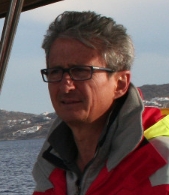 Giovanni Bencivenni合作论文数Laboratori Nazionali di Frascati, INFN779
 Glen Cowan合作论文数Centre for Particle Physics and Astronomy, Department of Physics, Royal Holloway, University of London773S. Monteil合作论文数768
 Ziad Ajaltouni合作论文数Département de Physique, Université Clermont Auvergne;Laboratoire de Physique Corpusculaire, Université Clermont Auvergne766
 Olivier Leroy合作论文数Centre De Physique Des Particules De Marseille, Institut National De Physique Nucléaire Et De Physique Des Particules, CNRS752
 Marco Cattaneo合作论文数European Organization for Nuclear Research737
 Marie-Hélène Schune合作论文数Laboratoire De L’accélérateur Linéaire, CNRS719
 Eric van Herwijnen合作论文数Chiojdeanu713C. Haen合作论文数712M. Ferro Luzzi合作论文数711F. Machefert合作论文数706D. Martinez Santos合作论文数694F. Ferreira Rodrigues合作论文数688
 Ricardo Graciani Díaz合作论文数Departament de Física Quàntica i Astrofísica, Facultat de Física, Universitat de Barcelona685Michael Schmelling合作论文数Max-Planck-Institut fuer Kernphysik684M. Frank合作论文数684
 Stephanie Hansmann-Menzemer合作论文数Physikalisches Institut, Universität Heidelberg679L. A. Granado Cardoso合作论文数679
 Concezio Bozzi合作论文数Istituto Nazionale di Fisica Nucleare Sezione di Ferrara677R. Lefèvre合作论文数676Sergey Filippov合作论文数Institute for Nuclear Research of Russian Academy of Sciences666
 Florin Maciuc合作论文数Horia Hulubei National Institute for R&D in Physics and Nuclear Engineering665
 Olivier Deschamps合作论文数Université Clermont Auvergne;Laboratoire de Physique de Clermont Auvergne664A. Comerma Montells合作论文数663
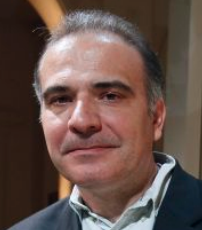 Frederic Teubert合作论文数European Organization for Nuclear Research663Marek Kucharczyk合作论文数663
 Clara Matteuzzi合作论文数Istituto Nazionale di Fisica Nucleare;University of Milan662G. Martellotti合作论文数659Saverio Simone合作论文数Dipartimento di Fisica, Università degli Studi di Bari Aldo Moro657Anatolii a Mazurov合作论文数657Yu. Guz合作论文数656
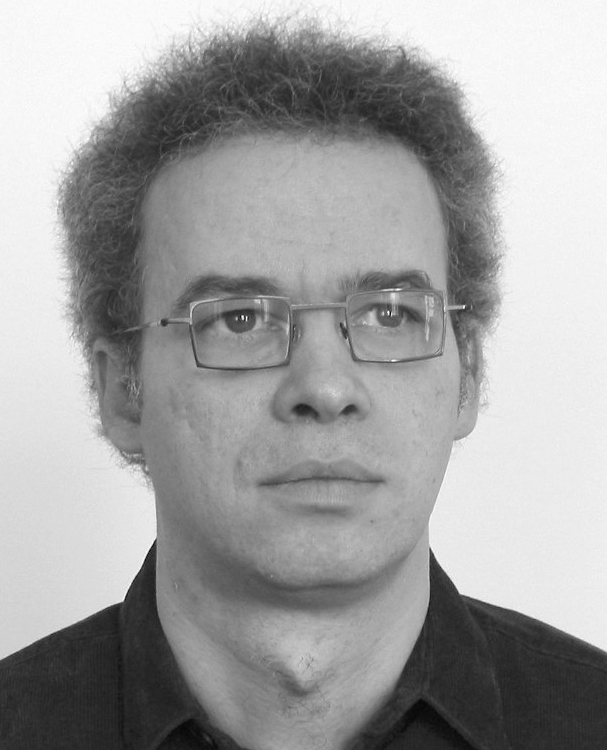 Renaud Le Gac合作论文数Centre de Physique des Particules de Marseille, Aix-Marseille Universite656
 Neville Harnew合作论文数Department of Physics, University of Oxford656
 Patrick Koppenburg合作论文数Nikhef655B. Khanji合作论文数655
 Marco Gersabeck合作论文数Physikalisches Institut, University of Freiburg654Eddy Jans合作论文数653O. Maev合作论文数651
 Tadeusz Lesiak合作论文数The Henryk Niewodniczański Institute of Nuclear Physics, Polish Academy of Sciences;Cracow University of Technology650
 Valerie Gibson合作论文数The Cavendish Laboratory, Department of Physics, University of Cambridge649




