The task of introducing Curt Richter is a difficult one that must be approached with humility and reservations about one's ability to describe and comprehend his many contributions. Rather than attempting to detail his career, I simply wish to devote this introduction to one feature of his research from which we all might gain a lesson, namely, its simplicity. Curt Richter's research is not characterized by elaborate theories, complex designs, convoluted statistical analyses, and complex apparatus. His ability to obtain elegant results from simple situations is due to the clarity with which he conceptualizes the problem under investigation. As a result, one always benefits by turning to his papers when embarking on a program of research. Usually one finds the central problem clearly stated and some interesting and provocative results. Each of Richter's original research areas has provided a career for one or more other researchers. Dr. Richter has taught us to watch the clock, to ask the rat what it needs in the way of nutrients to grow and prosper, how it defends its internal milieu with both behavior and physiology, what parts of its plumbing and wiring to look at to understand these regulatory processes, how it manages its social life and avoids ours, the disadvantages of domestication, the role of hormones in its love life, and on and on. His love 100affair with the rat has broadened our understanding of all animals including man.
Dr. Pribram received his bachelor of science and medical degrees from the University of Chicago. Following a residency at St. Luke's hospital, he became an instructor in surgery at the University of Tennessee. From there he moved on to the Yerkes Primate laboratory as a neurophysiologist while concurrently opening a private practice in neurology and neurosurgery in Florida. In 1948 he moved on to Yale Universtiy where he held appointments in the departments of Psychiatry and Psychology. From 1951 to 1958 he was also director of the Institute for Living in Hartford. Since 1959 he had been at Stanford in the departments of Psychology and Psychiatry and he is Head of the Neuropsychology Laboratories at Stanford. In 1962 he was given a lifetime research award by the National Institutes of Health.
In introducing Professor Howard Kendler let me give you a few biographical details and then some personal comments. The first important influence on Howard's professional life was the Gestalt psychologist Solomon Asch, whom Howard had as an undergraduate teacher in Brooklyn College. Asch kindled Howard's interest in experimental psychology and in the specific area of problem solving, on which, judging from later events, he became imprinted. Partly because of his interest in Gestalt psychology and partly because tuition was only $50 a semester, Howard went to Iowa State Univer-sity for his graduate education. Largely due to a chance encounter, however, he came under the apprenticeship of Kenneth Spence rather than of Kurt Lewin, who was on the faculty at the time. By 1943 Howard had earned his Ph.D. in experimental psychology with a minor in clinical psychology, and had acquired a wife and collaborator, Tracy, who also did her doctoral work with Spence.
A number of people asked me if they could introduce Frank Beach. As organizer of the symposium I exercised my perogative and answered "no" to each of them in order to save the honor for myself. It is a rare opportunity to be able to introduce someone who not only is a productive and innovative scientist but who also was instrumental in establishing a field of research. I refer, of course, to behavioral endocrinology.
Introducing Dr. Fred S. Keller is sufficient to make the day of any hard-core behaviorist. It is doubly sweet to do it on an occasion when we are asking him to give us his reflections and projections on the science of psychology just 10 years after the publication of the second edition of his book, The Definition of Psychology.
 Curt P. Richter合作论文数9Ronald Gandelman合作论文数6Fred S. Keller合作论文数6Howard H. Kendler合作论文数6Karl H. Pribram合作论文数6donald b lindsley合作论文数3Neal E. Miller合作论文数3Charles E. Osgood合作论文数3
 George A. Miller合作论文数Department of Psychology, Princeton University3Leon Festinger合作论文数3Roger G. Barker合作论文数3
 Paul Meehl合作论文数University of Minnesota3
 William Kaye Estes合作论文数Indiana University Bloomington3
 Jerome Bruner合作论文数School of Law, New York University3Wendell R. Garner合作论文数2james olds合作论文数2richard l solomon合作论文数2paul thomas young合作论文数2fritz heider合作论文数2henry a murray合作论文数2j p guilford合作论文数2s s stevens合作论文数2carl pfaffmann合作论文数2harry helson合作论文数2clarence h graham合作论文数2KW Spence合作论文数2nancy bayley合作论文数2wolfgang kohler合作论文数2Carl R. Rogers合作论文数2
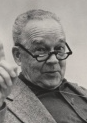 James Jerome Gibson合作论文数Smith College, Cornell University2Gordon W Allport合作论文数2Floyd H. Allport合作论文数2Donald O. Hebb合作论文数2Ernest Ropiequet Jack Hilgard合作论文数Stanford University2Carl I. Hovland合作论文数2Robert R. Sears合作论文数1roger w brown合作论文数1David Krech合作论文数1r duncan luce合作论文数1Edward S. Jones合作论文数1MARY D. SALTER AINSWORTH合作论文数1David Shakow合作论文数1David C. McClelland合作论文数1irving l janis合作论文数1
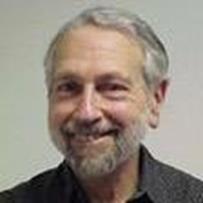 Saul Sternberg合作论文数Department of Psychology, School of Arts and Sciences, University of Pennsylvania1
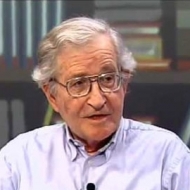 Noam Chomsky (诺姆·乔姆斯基)合作论文数Department of Linguistics and Philosophy, School of Humanities, Arts and Social Sciences, Massachusetts Institute of Technology1




