When a disaster occurs, a major difficulty is knowing where to find accurate information, and how to help coordinate efforts to share accurate information in a quick and organized manner. The establishment of a global information network, that is in place before a disaster occurs, could link all the communication efforts for relief. We propose that a Global Health Unit for Disaster and Relief Coordination be set up as part of the Global Health Network, utilizing the Internet as its backbone. This Unit would establish the links for the disaster information mosaic.
EDITOR,—Kobe, Chechnya, Bosnia, Rwanda… all these disasters have been characterised by difficulties in communication. How many people are injured? Homeless? Buried? Need food? Most of these pressing questions are answered by word of mouth. The lack of accurate and timely information is compounded by our inability to establish immediate, real time communications among international health agencies, non-government disaster and relief organisations, affected governments and localauthorities, and the people themselves, which leads to needless …
The regulation of genetically engineered crops, in Europe and within the legislation of the Cartagena biosafety protocol is built on false premises: The claim was (and unfortunately still is) that there is a basic difference between conventional and transgenic crops, this despite the fact that this has been rejected on scientifically solid grounds since many years. This contribution collects some major arguments for a fresh look at regulation of transgenic crops, they are in their molecular processes of creation not basically different from conventional crops, which are based in their breeding methods on natural, sometimes enhanced mutation. But the fascination and euphoria of the discoveries in molecular biology and the new perspectives in plant breeding in the sixties and seventies led to the wrong focus on transgenic plants alone. In a collective framing process the initial biosafety debates focused on the novelty of the process of transgenesis. When early debates on the risk assessment merged into legislative decisions, this wrong focus on transgenesis alone seemed uncontested. The process-focused view was also fostered by a conglomerate of concerned scientists and biotechnology companies, both with a vested interest to at least tolerate the rise of the safety threshold to secure research money and to discourage competitors of all kinds. Policy minded people and opponent activists without deeper insight in the molecular science agreed to those efforts without much resistance. It is interesting to realize, that the focus on processes was uncontested by a majority of regulators, this despite of serious early warnings from important authorities in science, mainly of US origin. It is time to change the regulation of genetically modified (GM) crops toward a more science based process — agnostic legislation. Although this article concentrates on the critique of the process-oriented regulation, including some details about the history behind, there should be no misunderstanding that there are other important factors responsible for the failure of this kind of process-oriented regulation, most importantly: the predominance of politics in the decision making processes combined with the lack of serious scientific debates on regulatory matters within the European Union and also in the Cartagena system, the obscure and much too complex decision making structures within the EU, and the active, professional, negative and intimidating role of fundamental opposition against GM crops on all levels dealing with flawed science, often declared as better parallel science published by ‘independent’ scientists.
I am delighted to have the opportunity to speak with the Joint Council today.I have a professional interest in immunology, but a personal interest in allergy.My staff likes to tell the story of the time a new secretary brought me a tuna fish sandwich.I had asked what was in it, and one of my assistants jokingly said that it was crab.The secretary missed the joke, and my alarmed reaction caused her to worry
Foodborne disease has become a contemporary issue. Several large, well-publicized outbreaks of foodborne disease have heightened public awareness that harmful microorganisms may be present in food and that chronic as well as acute disease may be caused by foodborne microbes. The field of food microbiology has likewise experienced a resurgence of interest. New tools, such as recombinant deoxyribonucleic acid technology and monoclonal antibody production, used to elucidate microbial virulence factors have facilitated identification of disease-causing microbes once thought to be harmless and demonstrated the complexity of individual virulence mechanisms previously considered to be well understood. Foodborne pathogens are also causing disease via some surprising food vectors, such as chopped, bottled garlic and sauteed onions. In addition to acute gastrointestinal disturbances, certain microorganisms may, through complex interactions with the human immune response, cause chronic diseases that affect several major organ systems. These microbes are serving as models in studies of molecular mimicry and genetic interrelatedness of procaryotes and eucaryotes. Other recently recognized attributes of foodborne microorganisms, such as the heat shock phenomenon and the possible nonculturability of some bacteria, may affect their ability to cause disease in humans. Because foodborne disease is a major cause of morbidity and mortality, the study of these diseases and their causative microorganisms presents a unique challenge to many professionals in the subdisciplines of microbiology, epidemiology, and clinical medicine.
A small but important fraction of the products the Food and Drug Administration (FDA) regulates arises from new technological achievements. Nowhere is this more evident than in biotechnology, whose powerful tools have already created myriad products—including food additives, drugs, biologies, and diagnostic tests.
BioEssaysVolume 8, Issue 4 p. 99-100 EditorialFree Access Planned introductions of engineered organisms: Wisdom from the U.S. National academy of sciences Henry I. Miller, Henry I. Miller Special Assistant to the Commissioner Food and Drugs Administration, 5600 Fisher's Lane, Rockville, MD 20857, USASearch for more papers by this authorFrank E. Young, Frank E. Young Commissioner of Food and Drugs Food and Drugs Administration, 5600 Fisher's Lane, Rockville, MD 20857, USASearch for more papers by this author Henry I. Miller, Henry I. Miller Special Assistant to the Commissioner Food and Drugs Administration, 5600 Fisher's Lane, Rockville, MD 20857, USASearch for more papers by this authorFrank E. Young, Frank E. Young Commissioner of Food and Drugs Food and Drugs Administration, 5600 Fisher's Lane, Rockville, MD 20857, USASearch for more papers by this author First published: April 1988 https://doi.org/10.1002/bies.950080402AboutPDF ToolsRequest permissionExport citationAdd to favoritesTrack citation ShareShare Give accessShare full text accessShare full-text accessPlease review our Terms and Conditions of Use and check box below to share full-text version of article.I have read and accept the Wiley Online Library Terms and Conditions of UseShareable LinkUse the link below to share a full-text version of this article with your friends and colleagues. Learn more.Copy URL Share a linkShare onFacebookTwitterLinked InRedditWechat No abstract is available for this article. Volume8, Issue4April 1988Pages 99-100 RelatedInformation
The "media" consistently inform us of all the "things" that are dangerous to us. However, time/space constraints, along with lack of knowledge and understanding of the area, often lead to inaccurate and/or insufficient dissemination of information. The areas of cancer and birth defects are particularly misrepresented. Such dissemination of inaccurate/incomplete/misleading information has resulted in almost a state of hysteria. As a result, the public′s perception of the role of chemicals in the incidences of cancer and birth defects is inconsistent with what has actually been documented in these areas. Although no one wants to be exposed to risks, people generally do not wish to be encumbered with unnecessary safety precautions. Thus, accurate information in the areas of carcinogenicity and teratogenicity should be documented in an effort to show how one can better assess the risks involved in work/home exposures to specific chemicals. A better understanding of how society perceives risk should enable one to better appraise the situation when confronted with information that could lead to "chemophobia." The consequences of misinformation about drugs and other synthetic chemicals have been particularly unfortunate with pregnant women: negligence in necessary drug use, unnecessary anxiety, and termination of planned pregnancies without reasonable cause.
Biotechnology Law ReportVol. 6, No. 1 BIOTECHNOLOGY: A 'SCIENTIFIC' TERM IN NAME ONLYDr. Frank E. Young and Dr. Henry I. MillerDr. Frank E. YoungSearch for more papers by this author and Dr. Henry I. MillerSearch for more papers by this authorPublished Online:18 Aug 2009https://doi.org/10.1089/blr.1987.6.11AboutSectionsPDF/EPUB Permissions & CitationsPermissionsDownload CitationsTrack CitationsAdd to favorites Back To Publication ShareShare onFacebookTwitterLinked InRedditEmail FiguresReferencesRelatedDetails Volume 6Issue 1Feb 1987 To cite this article:Dr. Frank E. Young and Dr. Henry I. Miller.BIOTECHNOLOGY: A 'SCIENTIFIC' TERM IN NAME ONLY.Biotechnology Law Report.Feb 1987.11-13.http://doi.org/10.1089/blr.1987.6.11Published in Volume: 6 Issue 1: August 18, 2009PDF download
 GA WILSON合作论文数14Vl Clark合作论文数13R E Yasbin合作论文数11Chatterjee A N合作论文数10
 Henry I Miller合作论文数9
 Daniel C Stein合作论文数Department of Cell Biology and Molecular Biology, University of Maryland9Bh Hebeler合作论文数7W Wong合作论文数6
 Richard William Gilpin合作论文数5Y Yoneda合作论文数5Hb Short合作论文数4Rj Doyle合作论文数4yuko yoneda合作论文数4Gary A. Wilson合作论文数4S Graham合作论文数4Fc Tenover合作论文数3michael j dul合作论文数3Chatterj.An合作论文数3UN STREIPS合作论文数3Si Chavin合作论文数3Hi Miller合作论文数US FDA,BUR DRUGS,WASHINGTON,DC 20204, USA3Sa Morse合作论文数3Ps Lovett合作论文数3Virginia L Clark合作论文数3
 Philip J. Fay合作论文数University of Rochester3Wilson G A合作论文数3Taubman S B合作论文数3
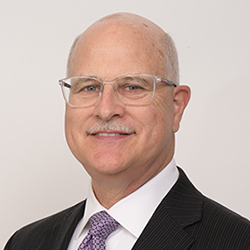 Fred C. Tenover合作论文数Department of Biology, College of Arts and Sciences, University of Dayton3John Spizizen合作论文数3
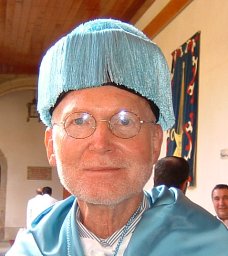 John Corcoran合作论文数CORPDRATION;U. S. DEPARTMENT OF ENERGY;CORPDRATION|U. S. DEPARTMENT OF ENERGY3Rt Wold合作论文数2Dc Birdsell合作论文数2Lj Lascolea合作论文数2VJ Marder合作论文数2MA SHIFLETT合作论文数2R S Farr合作论文数2A Villasenor合作论文数2Yasbin Ronald E合作论文数2
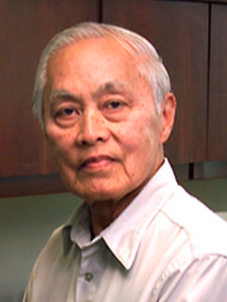 Eng M. Tan合作论文数Department of Molecular and Experimental Medicine, The Scripps Research Institute2
 Leonard Mayer合作论文数Meningitis & Vaccine Preventable Dis Branch, Ctr Dis Control & Prevent2E. M. Rubin合作论文数2D BROOKS合作论文数2Donald R. Callihan合作论文数2WG CHOU合作论文数2David J. Groves合作论文数2AJ THEWAINI合作论文数2persley g j thottappilly g合作论文数1R Marrero合作论文数1LK Kopec合作论文数1




