Thomassen famously proved that every planar graph is 5-choosable. We explore variants of this result, focusing on finding disjoint correspondence colorings, in the more general class of K_5-minor-free graphs. Correspondence colorings generalize list colorings as follows. Given a graph G and a positive integer t, a correspondence t-cover M assigns to each v∈ V(G) a set of allowable colors {1_v,…,t_v} and to each edge vw∈ E(G) a matching between {1_v,…,t_v} and {1_w,…,t_w}. An M-coloring φ picks for each vertex v a color φ(v) (from the set {1_v,…,t_v}) such that for each edge vw∈ E(G) the colors φ(v),φ(w) are not matched to each other. Two M-colorings φ_1,φ_2 of G are called disjoint if φ_1(v)_2(v) for all v∈ V(G). For every K_5-minor-free graph G and every correspondence 6-cover M of G, we construct 3 pairwise disjoint M-colorings φ_1,φ_2,φ_3. In contrast, we provide examples of K_5-minor-free graphs and correspondence 5-covers M that do not admit 3 disjoint M-colorings.
Total coloring of a graph is a coloring of its vertices and edges such that adjacent or incident elements receive distinct colors. Total coloring conjecture (stipulating that the total chromatic number of a graph G is at most Δ(G)+2) is known to be true for subcubic graphs – five colors are always enough. However, deciding whether a total coloring with only four colors exists remains a difficult problem, even in the class of bipartite cubic graphs. We solve the problem completely for cubic and subcubic Halin graphs, proving that there are only finitely many such graphs requiring five colors.
The problem of sampling edge-colorings of graphs with maximum degree Δ has received considerable attention and efficient algorithms are available when the number of colors is large enough with respect to Δ. Vizing's theorem guarantees the existence of a (Δ+1)-edge-coloring, raising the natural question of how to efficiently sample such edge-colorings. In this paper, we take an initial step toward addressing this question. Building on the approach of Dotan, Linial, and Peled, we analyze a randomized algorithm for generating random proper (Δ+1)-edge-colorings, which in particular provides an algorithmic interpretation of Vizing's theorem. The idea is to start from an arbitrary non-proper edge-coloring with the desired number of colors and at each step, recolor one edge uniformly at random provided it does not increase the number of conflicting edges (a potential function will count the number of pairs of adjacent edges of the same color). We show that the algorithm almost surely produces a proper (Δ+1)-edge-coloring and propose several conjectures regarding its efficiency and the uniformity of the sampled colorings.
Let G be a bridgeless cubic graph. In 2023, the three authors solved a conjecture (also known as the S_4 -Conjecture) made by Mazzuoccolo in 2013: there exist two perfect matchings of G such that the complement of their union is a bipartite subgraph of G. They actually show that given any 1^+ -factor F (a spanning subgraph of G such that its vertices have degree at least 1) and an arbitrary edge e of G, there exists a perfect matching M of G containing e such that G∖ (F∪ M) is bipartite. This is a step closer to comprehend better the Fan–Raspaud Conjecture and eventually the Berge–Fulkerson Conjecture. The S_4 -Conjecture, now a theorem, is also the weakest assertion in a series of three conjectures made by Mazzuoccolo in 2013, with the next stronger statement being: there exist two perfect matchings of G such that the complement of their union is an acyclic subgraph of G. Unfortunately, this conjecture is not true: Jin, Steffen, and Mazzuoccolo later showed that there exists a counterexample admitting 2-cuts. Here we show that, despite of this, every cyclically 3-edge-connected cubic graph satisfies this second conjecture.
We consider the robust chromatic number chi 1(G) of planar graphs G and show that there exists an infinite family of planar graphs G with chi 1(G) = 3, thus solving a recent problem of Bacs & oacute; et al. from [The robust chromatic number of graphs, Graphs Combin. 40 (2024), #89].
Since its beginnings, every Cycles and Colourings workshop holds one or two open problem sessions; this document contains the problems (together with notes regarding the current state of the art and related bibliography) presented by participants of the 33rd edition of the workshop which took place in Nový Smokovec, Slovakia during August 31st - September 5th, 2025 (see the workshop webpage https://candc.upjs.sk).
For an integer k \geq 1 and a graph G, let \scrKk(G) be the graph that has vertex set all proper k -colorings of G, and an edge between two vertices \alpha and \beta whenever the coloring \beta can be obtained from \alpha by a single Kempe change. A theorem of Meyniel from 1978 states that \scrK5(G) is connected with diameter O(5IV(G)I) for every planar graph G. We significantly strengthen this result by showing that there is a positive constant c such that \scrK5(G) has diameter O(|V(G)|c) for every planar graph G.
A circular r-coloring of a signed graph (G, \sigma ) is an assignment \phi of points of a circle Cr of circumference r to the vertices of (G, \sigma ) such that for each positive edge uv of (G, \sigma ) the distance of \phi(u) from \phi(v) is at least 1 and for each negative edge uv the distance of \phi(u) from the antipode of \phi(v) is at least 1. The circular chromatic number of (G, \sigma ), denoted \chic(G, \sigma ), is the infimum of r such that (G, \sigma ) admits a circular r-coloring. This notion was recently defined by Naserasr, Wang, and Zhu, who, among other results, proved that for any signed d-degenerate simple graph G<^>\ we have \chic(\<^>G) \leq 2\lfloor d 2 \rfloor + 2. For d \geq 3, examples of signed d-degenerate simple graphs of circular chromatic number 2\lfloor d2 \rfloor + 2 are provided. But for d = 2 only examples of signed 2-degenerate simple graphs of circular chromatic number arbitrarily close to 4 are given, noting that these examples are also signed bipartite planar graphs. In this work we first observe the following restatement of the 4-color theorem: If (G, \sigma ) is a signed bipartite planar simple graph where vertices of one part are all of degree 2, then \chic(G, \sigma ) \leq 165 . Motivated by this observation, we provide an improved upper bound of 4 -2 \lfloorn+1 2 \rfloor for the circular chromatic number of a signed 2-degenerate simple graph on n vertices and an improved upper bound of 4 -4 \lfloor n+2 2 \rfloor for the circular chromatic number of a signed bipartite planar simple graph on n vertices. We then show that each of the bounds is tight for any value of n \geq 2.
Let G be a bridgeless cubic graph. The Berge–Fulkerson Conjecture (1970s) states that G admits a list of six perfect matchings such that each edge of G belongs to exactly two of these perfect matchings. If answered in the affirmative, two other recent conjectures would also be true: the Fan–Raspaud Conjecture (1994), which states that G admits three perfect matchings such that every edge of G belongs to at most two of them; and a conjecture by Mazzuoccolo (2013), which states that G admits two perfect matchings whose deletion yields a bipartite subgraph of G. It can be shown that given an arbitrary perfect matching of G, it is not always possible to extend it to a list of three or six perfect matchings satisfying the statements of the Fan–Raspaud and the Berge–Fulkerson conjectures, respectively. In this paper, we show that given any 1+-factor F (a spanning subgraph of G such that its vertices have degree at least 1) and an arbitrary edge e of G, there always exists a perfect matching M of G containing e such that G∖(F∪M) is bipartite. Our result implies Mazzuoccolo's conjecture, but not only. It also implies that given any collection of disjoint odd circuits in G, there exists a perfect matching of G containing at least one edge of each circuit in this collection.
Abstract. A circular [Formula: see text]-coloring of a signed graph [Formula: see text] is an assignment [Formula: see text] of points of a circle [Formula: see text] of circumference [Formula: see text] to the vertices of [Formula: see text] such that for each positive edge [Formula: see text] of [Formula: see text] the distance of [Formula: see text] from [Formula: see text] is at least 1 and for each negative edge [Formula: see text] the distance of [Formula: see text] from the antipode of [Formula: see text] is at least 1. The circular chromatic number of [Formula: see text], denoted [Formula: see text], is the infimum of [Formula: see text] such that [Formula: see text] admits a circular [Formula: see text]-coloring. This notion was recently defined by Naserasr, Wang, and Zhu, who, among other results, proved that for any signed [Formula: see text]-degenerate simple graph [Formula: see text] we have [Formula: see text]. For [Formula: see text], examples of signed [Formula: see text]-degenerate simple graphs of circular chromatic number [Formula: see text] are provided. But for [Formula: see text] only examples of signed 2-degenerate simple graphs of circular chromatic number arbitrarily close to 4 are given, noting that these examples are also signed bipartite planar graphs. In this work we first observe the following restatement of the 4-color theorem: If [Formula: see text] is a signed bipartite planar simple graph where vertices of one part are all of degree 2, then [Formula: see text]. Motivated by this observation, we provide an improved upper bound of [Formula: see text] for the circular chromatic number of a signed 2-degenerate simple graph on [Formula: see text] vertices and an improved upper bound of [Formula: see text] for the circular chromatic number of a signed bipartite planar simple graph on [Formula: see text] vertices. We then show that each of the bounds is tight for any value of [Formula: see text].
We prove that planar graphs of maximum degree 3 and of girth at least 7 are 3-edge-colorable, extending the previous result for girth at least 8 by Kronk, Radlowski, and Franen from 1974.
Fullerene graphs, i.e., 3-connected planar cubic graphs with pentagonal and hexagonal faces, are conjectured to be Hamiltonian. This is a special case of a conjecture of Barnette and Goodey, stating that 3-connected planar cubic graphs with faces of size at most 6 are Hamiltonian. We prove Barnette and Goodey's conjecture.
There are several ways to generalize graph coloring to signed graphs. M\'a\v{c}ajov\'a, Raspaud and \v{S}koviera introduced one of them and conjectured that in this setting, for signed planar graphs four colors are always enough, generalising thereby The Four Color Theorem. We disprove the conjecture.
A circular r -coloring of a signed graph ( G, σ ) is an assignment φ of points of a circle C r of circumference r to the vertices of ( G, σ ) such that for each positive edge uv of ( G, σ ) the distance of φ ( v ) and φ ( v ) is at least 1 and for each negative edge uv the distance of φ ( u ) from the antipodal of φ ( v ) is at least 1. The circular chromatic number of ( G, σ ), denoted χ c ( G, σ ), is the infimum of r such that ( G, σ ) admits a circular r -coloring. This notion is recently defined by Naserasr, Wang, and Zhu who, among other results, proved that for any signed d -degenerate simple graph ˆ G we have χ c ( ˆ G ) ≤ 2 d . For d ≥ 3, examples of signed d -degenerate simple graphs of circular chromatic number 2 d are provided. But for d = 2 only examples of signed 2-degenerate simple graphs of circular chromatic number close enough to 4 are given, noting that these examples are also signed bipartite planar graphs. In this work we first observe the following restatement of the 4-color theorem: If ( G, σ ) is a signed bipartite planar simple graph where vertices of one part are all of degree 2, then χ c ( G, σ ) ≤ 165 . Motivated by this observation, we provide an improved upper bound of 4 − 2 (cid:98) n +12 (cid:99) for the circular chromatic number of a signed 2-degenerate simple graph on n vertices and an improved upper bound of 4 − n +22 (cid:99) for the circular chromatic number of a signed bipartite planar simple graph on n vertices. We then show that each of the bounds is tight for any value of n ≥ 4.
A fullerene graph is a 3-connected cubic planar graph with pentagonal and hexagonal faces. The leapfrog transformation of a planar graph produces the trucation of the dual of the given graph. A fullerene graph is leapfrog if it can be obtained from another fullerene graph by the leapfrog transformation. We prove that leapfrog fullerene graphs on $n=12k-6$ vertices have at least $2^{k}$ Hamilton cycles.
Fullerene graphs, i.e., 3-connected planar cubic graphs with pentagonal and hexagonal faces, are conjectured to be Hamiltonian. This is a special case of a conjecture of Barnette and Goodey, stating that 3-connected planar cubic graphs with faces of size at most 6 are Hamiltonian. We prove Barnette and Goodey's conjecture.
Abstract An incidence in a graph G is a pair (v, e) where v is a vertex of G and e is an edge of G incident to v. Two incidences (v, e) and (u, f) are adjacent if at least one of the following holds: (i) v = u, (ii) e = f, or (iii) edge vu is from the set {e, f}. An incidence coloring of G is a coloring of its incidences assigning distinct colors to adjacent incidences. The minimum number of colors needed for incidence coloring of a graph is called the incidence chromatic number. It was proved that at most Δ(G) + 5 colors are enough for an incidence coloring of any planar graph G except for Δ(G) = 6, in which case at most 12 colors are needed. It is also known that every planar graph G with girth at least 6 and Δ(G) ≥ 5 has incidence chromatic number at most Δ(G) + 2. In this paper we present some results on graphs regarding their maximum degree and maximum average degree. We improve the bound for planar graphs with Δ(G) = 6. We show that the incidence chromatic number is at most Δ(G) + 2 for any graph G with mad(G) < 3 and Δ(G) = 4, and for any graph with mad(G)<103 {\rm{mad}} ( G ) < {{10} \over 3} and Δ(G) ≥ 8.
We initiate a systematic study of the fractional vertex-arboricity of planar graphs and demonstrate connections to open problems concerning both fractional coloring and the size of the largest induced forest in planar graphs. In particular, the following three long-standing conjectures concern the size of a largest induced forest in a planar graph, and we conjecture that each of these can be generalized to the setting of fractional vertex-arboricity. In 1979, Albertson and Berman conjectured that every planar graph has an induced forest on at least half of its vertices, in 1987, Akiyama and Watanabe conjectured that every bipartite planar graph has an induced forest on at least five-eighths of its vertices, and in 2010, Kowalik, Lužar, and Škrekovski conjectured that every planar graph of girth at least five has an induced forest on at least seven-tenths of its vertices. We make progress toward the fractional generalization of the latter of these, by proving that every planar graph of girth at least five has fractional vertex-arboricity at most $2 - 1/324$.
A well-known conjecture of András Gyárfás and David Sumner states that for every positive integer m and every finite tree T there exists k such that all graphs that do not contain the clique Km or an induced copy of T have chromatic number at most k. The conjecture has been proved in many special cases, but the general case has been open for several decades. The main purpose of this paper is to consider a natural analogue of the conjecture for matroids, where it turns out, interestingly, to be false. Matroids are structures that result from abstracting the notion of independent sets in vector spaces: that is, a matroid is a set M together with a nonempty hereditary collection I of subsets deemed to be independent where all maximal independent subsets of every set are equicardinal. They can also be regarded as generalizations of graphs, since if G is any graph and I is the collection of all acyclic subsets of E(G), then the pair (E(G),I) is a matroid. In fact, it is a binary matroid, which means that it can be represented as a subset of a vector space over F2. To do this, we take the space of all formal sums of vertices and represent the edge vw by the sum v+w. A set of edges is easily seen to be acyclic if and only if the corresponding set of sums is linearly independent. There is a natural analogue of an induced subgraph for matroids: an induced restriction of a matroid M is a subset M′ of M with the property that adding any element of M−M′ to M′ produces a matroid with a larger independent set than M′. The natural analogue of a tree with m edges is the matroid Im, where one takes a set of size m and takes all its subsets to be independent. (Note, however, that unlike with graph-theoretic trees there is just one such matroid up to isomorphism for each m.) Every graph can be obtained by deleting edges from a complete graph. Analogously, every binary matroid can be obtained by deleting elements from a finite binary projective geometry, that is, the set of all one-dimensional subspaces in a finite-dimensional vector space over F2. Finally, the analogue of the chromatic number for binary matroids is a quantity known as the critical number introduced by Crapo and Rota, which in the case of a graph G turns out to be ⌈log2(χ(G))⌉ -- that is, roughly the logarithm of its chromatic number. One of the results of the paper is that a binary matroid can fail to contain I3 or the Fano plane F7 (which is the simplest projective geometry) as an induced restriction, but also have arbitrarily large critical number. By contrast, the critical number is at most two if one also excludes the matroid associated with K5 as an induced restriction. The main result of the paper is a structural description of all simple binary matroids that have neither I3 nor F7 as an induced restriction.
The model theory based notion of the first order convergence unifies the notions of the left-convergence for dense structures and the Benjamini-Schramm convergence for sparse structures. It is known that every first order convergent sequence of graphs with bounded tree-depth can be represented by an analytic limit object called a limit modeling. We establish the matroid counterpart of this result: every first order convergent sequence of matroids with bounded branch-depth representable over a fixed finite field has a limit modeling, i.e., there exists an infinite matroid with the elements forming a probability space that has asymptotically the same first order properties. We show that neither of the bounded branch-depth assumption nor the representability assumption can be removed.
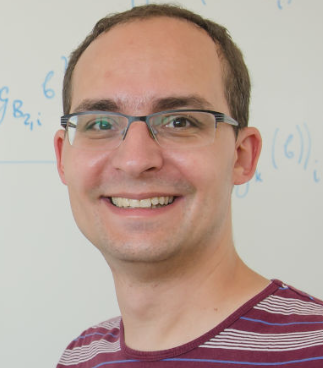 Daniel Kráľ合作论文数Faculty of Informatics, Masaryk University6
 Stanislav Jendrol’合作论文数institute of mathematics Prvol Jozef Safarik University 6J. Miškuf合作论文数5
 Július Czap合作论文数Faculty of Economics, Technical University of Košice5
 Riste Skrekovski合作论文数Department of Mathematics, Faculty of Mathematics and Physics, University of Ljubljana5
 Roman Sotak合作论文数Institute of Mathematics, Pavol Jozef Šafárik University5Jonathan Narboni合作论文数4
 Borut Luzar合作论文数Institute of Mathematics, Physics, and Mechanics Ljubljana Slovenia4
 Zhouningxin Wang (王周宁馨)合作论文数School of Mathematical Sciences, Nankai University3
 Vesna Andova合作论文数Faculty of Electrical Engineering and Information Techologies - Skopje3
 Ján Katrenič合作论文数Institute of Computer Science, P.J. Šafárik University3Jean Paul Zerafa合作论文数St. Edward's College2Martina Mockovciaková合作论文数2
 Tom Kelly合作论文数University of Glasgow2
 Marthe Bonamy合作论文数LaBRI, Université de Bordeaux2
 Jan Volec合作论文数Computer Science Institute, Charles University2Edita Máčajová合作论文数Department of Computer Science, Comenius University2
 Reza Naserasr合作论文数School of Mathematics and Statistics,2
 Luke Postle合作论文数Combinatorics and Optimization Department, University of Waterloo2Louis Esperet合作论文数Laboratoire G-SCOP (CNRS, Univ. Grenoble Alpes)2Jean-Sébastien Sereni合作论文数2
 Boštjan Brešar合作论文数Department of Mathematics and Computer Science, Faculty of Natural Sciences and Mathematics, University of Maribor2
 Gabriel Semanisin合作论文数Institute of Computer Science;Safarik University;Faculty of Science;Institute of Computer Science, Safarik University2Quentin Deschamps合作论文数1
 Clement Legrand-Duchesne合作论文数Univ Rennes1Alfred Onderko合作论文数1Théo Pierron合作论文数Univ. Bordeaux, Bordeaux INP, CNRS, LaBRI, UMR5800, F-33400 Talence, France1
 Wouter Cames van Batenburg合作论文数Radboud Univ Nijmegen, Dept Math, Nijmegen, Netherlands1
 Sergey Norin合作论文数Department of Mathematics & Statistics, McGill University1Mária Maceková合作论文数1
 Anita Liebenau合作论文数School of Mathematics and Statistics, Faculty of Science, The University of New South Wales1Peter Nelson合作论文数Dept Combinator & Optimizat, Univ Waterloo1Michaela Vrbjarová合作论文数1
 Daniel W. Cranston合作论文数dcransto@dimacs.rutgers.edu1
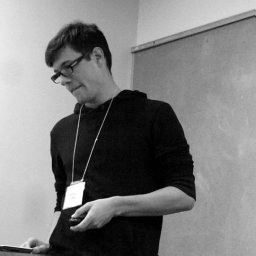 Andrew D. King合作论文数School of Computer Science, McGill University1Peter Hudák合作论文数1
 Matjaz Krnc合作论文数Department of Mathematics Slovenia, University of Ljubljana1Jozef Pócs合作论文数1
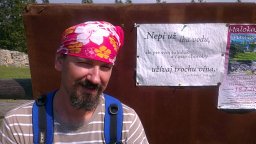 Tomas Madaras合作论文数Institute of Mathematics, P.J. Šafárik University1
 Ingo Schiermeyer合作论文数TU Bergakademie Freiberg1Eric Sopena合作论文数Bordeaux 1 Institute of Technology1János Barát合作论文数Department of Mathematics, Technical University of Denmark1
 Tomislav Doslic合作论文数Faculty of Agriculture;University of Zagreb;Faculty of Agriculture, University of Zagreb1
 Jana Pócsova合作论文数1Aurélie Lagoutte合作论文数Département Informatique, École normale supérieure de Cachan1Dávid Hudák合作论文数1Rok Erman合作论文数1
 Lukáš Mach合作论文数Faculty of Mathematics and Physics, Charles University in Prague1Guillem Perarnau合作论文数Departament de Matemítica Aplicada IV, Universitat Politècnica de Catalunya1




