Platelet-activating factor (PAF) is known to be synthesized by either a remodeling or de novo pathway. The enzymes responsible have been extensively studied by a number of laboratories. All evidence indicates the remodeling route is activated during inflammation and other hypersensitivity responses, whereas the de novo pathway is thought to be the source of PAF required for physiological functions. This article provides an update of what is currently known about the enzymatic systems that generate PAF as well as some preliminary findings we have obtained using potential inhibitors of the specific enzymes involved. Recent progress from our laboratory toward understanding the role of the CoA-independent and Co-A dependent transacylases in the formation of lyso-PAF and PAF is summarized.
Many studies suggest that moderate wine consumption is associated with lower mortality from cardiovascular diseases. In recent years, postprandial state is believed to be implicated in the development of atherosclerosis, the underlying cause of many cardiovascular diseases. The term postprandial dysmetabolism is frequently used to characterize the postprandial state accompanied by abnormally increased levels of glucose and lipids. This condition could create an environment capable of developing cardiovascular events since individuals in Western societies spend the majority of the day in a postprandial state.The purpose of this chapter is to summarize and present postprandial clinical studies concerning the effect of wine consumption, along with a meal, on the main pathophysiological systems that are implicated in cardiovascular diseases.
The microsomal fraction from rat spleen was shown to possess a CoA-dependent transacylase activity that produced 1-[3H]alkyl-2-lyso-sn-glycero-3-phosphocholine ([3H]lyso-PAF), the immediate precursor of PAF in the remodeling pathway of biosynthesis, from 1-[3H]alkyl-2-acyl-sn-glycero-3-phosphocholine. This CoA-dependent transacylase did not require ATP or metal ions for activity making it unlikely that either acyl-CoA-synthetase or a Ca2+-dependent phospholipase A2 were involved in the generation of [3H]lyso-PAF. Albumin, in addition to CoA, was required to demonstrate the formation of [3H]lyso-PAF from 1-[3H]alkyl-2-acyl-sn-glyco-3-phosphocholine. It appeared that a major function of albumin in the incubations was to complex the [3H]lyso-PAF formed, thus removing this end-product from the reaction.
Platelet-activating factor (PAF) acetylhydrolase catalyzes the conversion of PAF to lyso-PAF and acetate. In this study we show that induced cellular differentiation of HL-60 cells grown in chemically defined media by dimethylsulfoxide (DMSO) to granulocytic cells increases the acetylhydrolase activity with a concomitant increased secretion of the enzyme into the media. This increase in acetylhydrolase activity is blocked by the presence of actinomycin D (1 microM) or cycloheximide (1-2 microM) in the culture media. Acetylhydrolase is located both in the cytosolic and particulate fractions; the relative distribution of acetylhydrolase activity in the particulate fraction and cytosol increases and decreases respectively, as the differentiation progresses. The addition of an intracellular protein transport inhibitor, monensin, causes further accumulation of acetylhydrolase activity in the particulate fraction and a decrease in the media, with no effect on the acetylhydrolase activity in the cytosol. Acetylhydrolase in differentiated HL-60 cells acquires properties similar to those of the plasma acetylhydrolase in that it becomes less sensitive to 5,5'-dithiobis-2-nitrobenzoic acid and p-bromophenacylbromide inhibition than the acetylhydrolase in undifferentiated cells. The acetylhydrolase secreted into the media by the differentiated cells was almost totally insensitive to these inhibitors, whereas the acetylhydrolase from the particulate fraction gave an intermediate response; the cytosolic acetylhydrolase was sensitive to both inhibitors. However, the acetylhydrolase secreted by differentiated HL-60 cells has a different electrophoretic mobility, temperature sensitivity, and association with lipoproteins when compared to that of human plasma acetylhydrolase. Collectively, these results indicate cellular differentiation induces intracellular acetylhydrolase activity through a mechanism involving both transcriptional and translational events. Furthermore, the acetylhydrolase synthesized during the DMSO-induced differentiation of HL-60 cells is then secreted into the media via the intracellular membrane transport system for proteins. Based on results obtained with HL-60 cells as a cell model, it is likely that more than one isoform of acetylhydrolase exists in the extracellular milieu.
Effects of dietary fish oil ethyl esters and alkyldiacetylglycerols (an ether-linked lipid) on the distribution of subclasses of choline- and ethanolamine-glycerophospholipids as well as effects on highly unsaturated molecular species of ethanolamine plasmalogens from brain, spleen, kidney, lung, and testis of rats were examined. Supplementation of ethyl ester concentrates of n − 3 fatty acids had no effect on the distribution of subclasses in any of the tissues. However, the supplements of 1-0-octadec-9'-enyl-2,3-diacetyl-OT-glycerol (diacetates of selachyl alcohol) caused significant increases in the alkylacylglycerophosphocholine and alkylacylglycerophosphoethanolamine subclasses from spleen and lung and in the alkylacylglycerophosphoethanolamine subclass from kidney. Dietary supplements of fish oil ethyl esters reduced the arachidonate-containing species of ethanolamine plasmalogens whereas molecular species having 20:5(n − 3), 22:6(n − 3), and/or 22:5(n − 3) acyl groups were increased in the spleen, lung, and kidneys, but not brain. In testicular tissue from rats fed the fish oil diets, the molecular species of ethanolamine plasmalogens containing 22:5(n − 6) acyl groups were reduced. An increase of ethanolamine plasmalogens with 18:1 alk-1-enyl moieties paired with highly unsaturated sn-2 acyl groups were found in the tissues of rats fed the fish oil plus selachyl alcohol diacetate supplements. Rats on the diet containing fish oil ethyl esters had significantly lower [3H]alkyllysoglycerophosphocholine CoA-independent transacylase activity in spleen microsomes than controls. This suggests that supplements of n − 3 fatty acids interferes with the transacylation of arachidonate, an event that could seriously impair the release of arachidonate and lysophospholipids (e.g., lyso-PAF) that are precursors of potent bioactive lipid derivatives.
Both [3H]plasmenylethanolamine and [3H]plasmenylcholine were produced from substrates of [3H]alk-1-enylglycerol and [3H]alk-1-enyllysoglycerophosphoethanolamine by intact HL-60 cells. Molecular species analysis of the [3H]plasmenylcholine and [3H]plasmenylethanolamine formed indicated the major portion of plasmenylcholine originates from plasmenylethanolamine by a series of reactions catalyzed by phospholipase A2, lysophospholipase D, acyltransferase, phosphohydrolase, and cholinephosphotransferase. However, a significant but much smaller portion of the plasmenylcholine appeared to be synthesized from plasmenylethanolamine via a direct base-exchange or a coupled phospholipase C/cholinephosphotransferase reaction.
The metabolism of arachidonic acid is closely linked to the biosynthesis of platelet activating factor (PAF) and related O-alkyl- and O-alk-1-enyl-containing phospholipids. In this article, we describe several important factors (concentration of arachidonate, number of cells, cell differentiation, and time) that influence the movement of arachidonic acid among subclasses of acyl and ether-linked glycerolipids in HL-60 cells (undifferentiated and those differentiated into a granulocytic form). Kinetic studies in pulse- chase experiments indicate the final destination of arachidonate is the ethanolamine plasmalogens, which may be an important source for the release of 20:4 and PAF biosynthesis under certain conditions. In addition, our results also indicate differentiated HL-60 cells possess a novel CoA-independent transacylase that transfers 20:4 from alkylarachidonoyl-glycerophosphocholine to a lyso-phospholipid that serves as the acceptor molecule for the arachidonate. The resulting lyso-PAF is then acetylated to form PAF. The lyso-phospholipid acceptors (only choline- and ethanolamine-containing lyso- glycerophosphatides) for the transfer of the 20:4 group from the alkylarachidonoylgly- cerophosphocholne pool are believed to be generated in situ through the action of a putative phospholipase A2 activity.
 Ml Blank合作论文数56Tc Lee合作论文数41B Malone合作论文数32Veronica Fitzgerald合作论文数17C Piantadosi合作论文数13Rl Wykle合作论文数10
 Anne E. Cress合作论文数Department of Radiology/Radiation Oncology, University of Arizona Health Sciences Center Tucson8Z.L. Smith合作论文数7Y Uemura合作论文数6RL WYKLE合作论文数5MC OU合作论文数5
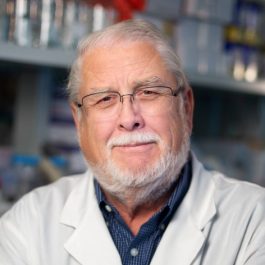 Charles O. Rock合作论文数Department of Host-Microbe Interactions, St. Jude Children's Research Hospital5Merle L. Blank合作论文数5Mitchell Robinson合作论文数5Piantado.C合作论文数4K. Chae合作论文数4Khalid S. Ishaq合作论文数4Ea Cress合作论文数3Ds Woodard合作论文数3N Stephens合作论文数3Vallari D S合作论文数3D Vallari合作论文数3Tomio Kawasaki合作论文数3Boyd Malone合作论文数2JW HUBBARD合作论文数2JE LAWLER合作论文数2D Woodard合作论文数2
 Robert Bittman合作论文数Department of Chemistry & Biochemistry, Queens College, City University of New York2
 Robert E. Anderson合作论文数Department of Ophthalmology, University of Oklahoma Health Sciences Center;Department of Cell Biology, University of Oklahoma Health Sciences Center;Dean A. McGee Eye Institute, University of Oklahoma Health Sciences Center2Qian C G合作论文数2Suga K合作论文数2David Ezra合作论文数2Robert E. Goldstein合作论文数Bethesda2
 Giora Zeev Feuerstein合作论文数2Taek Soon Lee合作论文数2Ten-Ching Lee合作论文数2RH COX合作论文数1koji shinozaki合作论文数1T C Lee合作论文数1Kp Chepenik合作论文数1Daniel H. Albert合作论文数1PJ MROCZKOWSKI合作论文数1LM BOYD合作论文数1Dc Swartzendruber合作论文数1Mr Grigor合作论文数1Pedro N. Guivisdalsky合作论文数1zigrida l smith合作论文数1Czaja, John F合作论文数1




