Sample return missions are the most difficult tasks we ask robotic spacecraft to undertake in exploring our solar system, but we do so because of the high value returned samples have for the planetary science community. Thus far, we have only acquired samples from: the Moon, three asteroids, a comet’s tail, and the solar wind at the Earth-Sun Lagrange Points. The National Academy’s most recent decadal survey of planetary science in NASA — Origins, Worlds, Life (OWL) — emphasized the value of samples returned to Earth for analysis and called for NASA to prioritize samples returned from Mars, the Moon’ South Pole, a Jupiter-family comet, and Ceres. Currently available rockets and propulsion technology impose severe, and possibly insurmountable, limits to where we can send robot explorers and return samples within a reasonable timescale. Now, the advent of large new rockets offers the potential for very high C3 Earth escape trajectories. Parallel developments in Nuclear Propulsion yield much higher ISP than chemical propulsion and can operate far away from the Sun. Our novel trajectory and mission architecture analysis shows that, combining these technologies, sample return from all across the solar system starts to become feasible within the career lifetime of a planetary scientist.
The surface and subsurface of worlds beyond Mars remain largely unexplored. Yet these worlds hold keys to fundamental questions in planetary science - from potentially habitable subsurface oceans on icy moons to ancient records preserved in Kuiper Belt objects. NASA's success in Mars exploration was achieved through incrementalism: 22 progressively sophisticated missions over decades. This paradigm, which we call Planetary Exploration 2.0 (PE 2.0), is untenable for the outer Solar System, where cruise times of a decade or more make iterative missions infeasible. We propose Planetary Exploration 3.0 (PE 3.0): a paradigm in which unvisited worlds are explored by a single or a few missions with radically adaptive space systems. A PE 3.0 mission conducts both initial exploratory science and follow-on hypothesis-driven science based on its own in situ data returns, evolving spacecraft capabilities to work resiliently in previously unseen environments. The key enabler of PE 3.0 is software-defined space systems (SDSSs) - systems that can adapt their functions at all levels through software updates. This paper presents findings from a Keck Institute for Space Studies (KISS) workshop on PE 3.0, covering: (1) PE 3.0 systems engineering including science definition, architecture, design methods, and verification validation; (2) software-defined space system technologies including reconfigurable hardware, multi-functionality, and modularity; (3) onboard intelligence including autonomous science, navigation, controls, and embodied AI; and (4) three PE 3.0 mission concepts: a Neptune/Triton smart flyby, an ocean world explorer, and an Oort cloud reconnaissance mission.
Sample return missions are among the most difficult tasks for robotic spacecraft in exploring our solar system. However, the samples they return to Earth have significantly high value for the planetary science community. Thus far, we have only acquired samples from the Moon, three asteroids, a comet's tail, and the solar wind at the Earth-Sun Lagrange Points. The National Academy's most recent decadal survey of planetary science at NASA emphasized the value of samples returned to Earth for analysis and called for NASA to prioritize samples returned from Mars, the Moon's South Pole, a Jupiter-family comet, and Ceres. Currently available rockets and propulsion technology impose severe, and possibly insurmountable, limits to where we can send robot explorers and return samples within a reasonable timescale. Now, the advent of large new rockets offers the potential for very high C3 (characteristic energy) Earth escape trajectories. Parallel developments in Nuclear Propulsion yield much higher ISP than chemical propulsion and can operate far away from the Sun. Our novel trajectory modeling results and mission architecture analysis show that, by combining these technologies, sample return from across the solar system becomes feasible within the career lifetime of a planetary scientist.
Motivation: The Origins, Worlds, and Life Decadal Survey recommends a Uranus Orbiter and Probe (UOP) mission as the next planetary flagship [1]. The current President's Budget Request for Fiscal Year 2025 does not support NASA-funded mission studies until 2027 [2], which will likely result in missing a potential Jupiter Gravity Assist (JGA). We thus need to find other trajectory options to Uranus, arriving ideally before Equinox in 2050 for unique observations. Additionally, other challenges drive the UOP design. We describe these challenges and a novel mission concept which mitigates them while achieving comparable science return to that in the Decadal Survey mission concept. Challenges: The UOP flagship faces numerous challenges. Losing the JGA means reducing flight system mass to maintain flight times to Uranus of 13.5 yrs with thermally-benign perihelia above 0.9 AU. Another challenge is power. Uranus will be 18-19 AU from the Sun, which makes Radioisotope Thermoelectric Generators (RTGs) the best power source option. Based on current best estimates, the inventory of RTGs is likely to be limited in this timeframe, driving a desire to reduce power demand and the number of RTGs required while maintaining flagship -worthy science and the earliest possible launch date that budget profiles will allow. Another challenge is ensuring launch date flexibility which allows CONOPS-similar backup launch opportunities. Perhaps the ultimate challenge is to meet these previously mentioned challenges using a credible low-cost and low-risk approach. Approach: Mass and power drivers were examined, informed by > 50 years of experience in developing space science missions at JPL. In this preliminary study, we assumed the same Decadal UOP study payload and probe mass [3]. Significant power and mass reductions were achieved by techniques such as eliminating reaction wheels and adopting new electrical power distribution architectures. While some technology evolution was required, we took a "no miracles" approach. We chose a trajectory that allows launch any year without a JGA and without going much below 1 AU (no Venus flybys), thus providing yearly launch and backup opportunities with virtually identical CONOPs and environments. Results: By using a combination of new design approaches, we were able to match the same payload and science as the Decadal UOP study with 42% less dry mass and a requirement of only two Next Gen Mod 1 RTGs. The mass reduction enabled a trajectory that matches the Decadal UOP's cruise duration while providing yearly launch opportunities. Our approach used a Falcon Heavy Expendable launch vehicle and a kick stage instead of a Falcon Heavy Expendable. The design was run through JPL's Team-X which demonstrated that all appropriate design and cost margins were achieved. Mission development and operations phase costs were comparable to the UOP Decadal study costs. This approach is potentially extensible to other future mission concepts. Conclusions: Based on this initial study, it appears that all challenges can be met with adequate margins while achieving comparable Decadal study science using this novel approach. Evolutionary technology was used that can achieve Technology Readiness Level (TRL) 6 by the end of Phase A.
The 30,000+ known Near Earth Objects (NEOs) are some of the closest objects to Earth. A few dedicated missions such as NEAR, Hayabusa-1 and -2, OSIRIS-Rex, and DART have revealed a lot about their nature, with more to come from ESA's Hera mission, and others. Dedicated space missions to individual NEOs are relatively costly, however, so we seek to find a way to reduce costs so that the composition and structure of more NEOs can be fully characterized, and we can continue to explore how to change the trajectory of selected objects, as was done with DART. Here we describe a low-cost approach to NEO missions for small body science and planetary defense that makes use of existing or planned space vehicles.
Observations of planet Earth from space are a critical resource for science and society. Satellite measurements represent very large investments and United States (US) agencies organize their effort to maximize the return on that investment. The US National Research Council conducts a survey of Earth science and applications to prioritize observations for the coming decade. The most recent survey prioritized a visible to shortwave infrared imaging spectrometer and a multispectral thermal infrared imager to meet a range of needs for studying Surface Biology and Geology (SBG). SBG will be the premier integrated observatory for observing the emerging impacts of climate change by characterizing the diversity of plant life and resolving chemical and physiological signatures. It will address wildfire risk, behavior, and recovery as well as responses to hazards such as oil spills, toxic minerals in minelands, harmful algal blooms, landslides, and other geological hazards. The SBG team analyzed needed instrument characteristics (spatial, temporal, and spectral resolutions, measurement uncertainty) and assessed the cost, mass, power, volume, and risk of different architectures. We present an overview of the Research and Applications trade-study analysis of algorithms, calibration and validation needs, and societal applications with specifics of substudies detailed in other articles in this special collection. We provide a value framework to converge from hundreds down to three candidate architectures recommended for development. The analysis identified valuable opportunities for international collaboration to increase the revisit frequency, adding value for all partners, leading to a clear measurement strategy for an observing system architecture.
The main objective of this chapter is to present an overview of the different areas of key technologies that will be needed to fly the technically most challenging of the representative missions identified in chapter 4 (the Pillar 2 Horizon 2061 report). It starts with a description of the future scientific instruments which will address the key questions of Horizon 2061 described in chapter 3 (the Pillar 1 Horizon 2061 report) and the new technologies that the next generations of space instruments will require (section 2). From there, the chapter follows the line of logical development and implementation of a planetary mission: section 3 describes some of the novel mission architectures that will be needed and how they will articulate interplanetary spacecraft and science platforms; section 4 summarizes the system-level technologies needed: power, propulsion, navigation, communication, advanced autonomy on board planetary spacecraft; section 5 describes the diversity of specialized science platforms that will be needed to survive, operate and return scientific data from the extreme environments that future missions will target; section 6 describes the new technology developments that will be needed for long-duration missions and semi-permanent settlements; finally, section 7 attempts to anticipate on the disruptive technologies that should emerge and progressively prevail in the decades to come to meet the long-term needs of future planetary missions.
The primary objective of this chapter is to present an overview of the different key technologies that will be needed in order to fly the technically most challenging of the representative missions identified in Chapter 4 (the Pillar 2 Horizon 2061 report, Lasue et al., 2021). It starts with a description of the future scientific instruments which will address the key questions of Horizon 2061 described in Chapter 3 (the Pillar 1 Horizon 2061 report, Dehant et al., 2021) and the new technologies that the next generations of space instruments will require (Section 2). From there, the chapter follows the line of logical development and implementation of a planetary mission: Section 3 describes some of the novel mission architectures that will be needed and how they will articulate interplanetary spacecraft and science platforms; Section 4 summarizes the system-level technologies needed: power, propulsion, navigation, communication, advanced autonomy on-board planetary spacecraft; Section 5 describes the diversity of specialized science platforms that will be needed to survive, operate, and return scientific data from the extreme environments that future missions will target; Section 6 describes the new technology developments that will be needed for long-duration missions and semipermanent settlements; finally, Section 7 attempts to anticipate some of the disruptive technologies that should emerge and progressively prevail in the decades to come to meet the long-term needs of future planetary missions.
The launch and successful operation of the Mars Cube One (MarCO) CubeSats in May of 2018 ushered in a new era of solar system exploration. The 13 interplanetary CubeSats slated to fly on Artemis 1 in 2020 along with MarCO represent the beginning of a new paradigm of planetary exploration—one that utilizes the CubeSat form factor as both primary and supporting exploration platforms. Enabling technologies required by interplanetary CubeSats including relatively high Δv propulsion systems, capable high-frequency transponders, radiation-tolerant components, and extremely capable miniaturized science instruments are now becoming commercially available making these missions possible. Interplanetary CubeSats require different and more sophisticated spacecraft systems architectures and must utilize different and more sophisticated ground station systems than LEO missions. These differences are discussed in this chapter in detail, using specific examples from current and planned missions.
NASA's Planetary Science Division (PSD) offers a wide spectrum of opportunities for planetary scientists to get involved in science missions, through ROSES calls for Data Analysis, Participating Scientist and Guest Investigator calls; announcements of opportunity for SIMPLEx, Discovery, and New Frontiers, and calls for Flagship mission science definition teams and science teams.While these opportunities have served the community well up to the present epoch, they may be overly restrictive, projecting forward over the next couple of decades.With a few relatively minor tweaks, NASA PSD could open up the range of mission science opportunities to energize its science community, riding a global tide of interest in deep space missions, and a wave of innovation using SmallSat technology.
Venus Corona and Tessera Explorer (VeCaTEx) would use an aerobot to descend repeatedly beneath the dense clouds for imaging targeted area of the surface in the near infrared to address six of the prime investigations prioritized by VEXAG. The technologies needed could be matured during the next decade.
Lead Team: Vlada Stamenkovic (Jet Propulsion Laboratory, California Institute of Technology), Kennda Lynch (LPI/USRA), Penelope Boston (NASA Ames), and Jesse Tarnas (Brown University).
Many advancements in planetary science are achieved by seizing upon the opportunity created by rare natural events (e.g. comet Shoemaker-Levy 9 Jupiter impact; 1994) and by planned physical interactions (e.g. Deep Impact into comet Tempel 1; 2005). A forthcoming opportunity to seize upon a natural physical “experiment” occurs on April 13, 2029 with the unprecedentedly close Earth encounter by the large 340m asteroid (99942) Apophis. On that date, nature is performing the “experiment” of subjecting the physical body of Apophis to Earth’s tidal torques as it approaches to within 31,000 km of Earth’s surface, a distance that is closer than orbiting geosynchronous satellites. A potentially hazardous asteroid (PHA) as large as Apophis encountering Earth this closely (within 0.1 lunar distances) is, on average, a once-per-thousand year event. (In context, Apophis is 7 times larger and 350 times more massive than the Tunguska 1908 impactor; 5000 times more massive than Chelyabinsk 2013.) Because of this event’s incredible rarity, knowledge gained through measurements and outcomes of the Apophis 2029 “natural experiment” are clearly a decadal, if not millennial, opportunity for planetary science. Most specifically, this knowledge opportunity is for the science supporting planetary defense. Further, on April 13, 2029 all of Earth will be watching: Apophis will be visible to the naked eye speeding across the evening sky for an estimated 2 billion people spanning western Europe and northern Africa. In this White Paper we outline our current best understanding, and uncertainties, for scientific advances in the physical study of potentially hazardous asteroids that may be achievable by measuring physical changes of Apophis’ spin, surface structure, and/or shape configuration in response to Earth’s tidal torques. If tidal torques themselves, or surface configuration changes induce any measurable seismic vibration signal inside Apophis, a new field of asteroid seismology has the potential to be born. Over six decades of planetary science, seismology has been achieved beyond Earth for only two planetary worlds: Moon and Mars. With this White Paper, we take no position on how to implement specific investigations capable of achieving the science advances offered by the Apophis 2029 opportunity. Instead we advocate that competitive selection of investigations, be they theoretical or observational (ground-based, space-based, or in situ), be executed under the direction of NASA’s Planetary Defense Coordination Office, with a projected and perhaps necessarily augmented budget capable of supporting them. International collaboration is strongly encouraged. Thus, summarizing in four specific points, we urge the framers of the Decadal Survey to: • Recognize the decadal, if not millennial, opportunity for the science of planetary defense presented by the Apophis 2029 once-per-thousand-year “natural experiment.” • Prioritize as a top-level planetary defense science goal modeling and measuring the physical outcome on Apophis exerted by Earth’s tidal torques so as to achieve the greatest possible new insights into the physical nature, including the internal structure, of PHAs. • Recognize that time is of the essence for defining and implementing investigations of physical effects on Apophis, particularly if in situ measurements are to be considered. An Apophis 2029 Science Definition Team may be prescribed. • Recognize that the achievable knowledge of PHAs presented by the Apophis 2029 opportunity could have immeasurable benefits to the future of humanity, in the highly unlikely, but not impossible necessity to mitigate a future impact threat
Miniaturized and highly capable science instruments are being developed for CubeSats at an increasing rate. These instruments have enabled significant, if niche, science to be performed by CubeSats in the areas of Earth remote sensing, astrophysics, space physics, and soon to include planetary science. CubeSat instruments now available and proven include infrared spectrometers, a variety of radiometers, magnetometers, radar for bistatic radar studies (relatively) high-resolution optical imagers, highly sensitive photometers, Lidar, field and particle sensors, and neutron spectrometers. Development of these instruments has been facilitated by a variety of evolving technologies leading to miniaturization, lower mass, low power consumption, and excellent capabilities. These capable new CubeSat instruments are starting to support applications and missions that were once the realm of large, extremely expensive spacecraft systems. A survey and overview of these instruments is provided along with an assessment of their impact and a brief projection of a vision for future development and related science missions.
Charles D. Edwards (Jet Propulsion Laboratory, California Institute of Technology). Co-Authors: 1. Vlada Stamenkovic Jet Propulsion Laboratory, California Institute of Technology; 2. Penelope Boston NASA Ames; 3. Kennda Lynch LPI/USRA … et al.
Co-Authors: Gonçalo Afonso Samuel Albert Hisham Ali Antonella Alunni James Arnold Gilles Bailet Patricia Beauchamp Alan Cassell Jim Cutts Rohan Deshmukh Robert Dillman Sarah D’Souza Soumyo Dutta Charles Edwards Donald Ellerby John Elliott Giusy Falcone Alberto Fedele Jay Feldman Anthony Freeman Roberto Gardi Athul Girija Jeffrey Hill Tiago Hormigo Shayna Hume Christopher Jelloian Vandana Jha Breanna Johnson Craig Kluever Jean-Pierre Lebreton Marcus Lobbia Ping Lu Ye Lu Rafael Lugo Daniel Matz Robert Moses Michelle Munk Adam Nelessen Isil Sakraker Özmen Miguel Pérez-Ayúcar Richard Powell Zachary Putnam Jeremy Rea Sachin Alexander Reddy Thomas Reimer Sarag Saikia Kunio Sayanagi Stephan Schuster Jennifer Scully David Skulsky Ronald Sostaric Christophe Sotin Ben Tackett Ethiraj Venkatapathy Paul Wercinski Michael Wilder Michael Wright Cindy Young
 Bruce Chapman合作论文数Jet Propulsion Laboratory;California Institute of Technology;Jet Propulsion Laboratory, California Institute of Technology21
 Paul A. Rosen合作论文数Jet Propulsion Laboratory, California Institute of Technology8
 Manfred Zink合作论文数Radar Institute German Aerospace Center8
 Ernesto Rodriguez合作论文数Jet Propulsion Laboratory, California Institute of Technology7
 Kenneth C. Jezek合作论文数Byrd Polar Research Center, School of Earth Sciences, The Ohio State University7
 Xiaoqing Pi合作论文数7
 Howard Zebker合作论文数Departments of Geophysics, Stanford University;Department of Electrical Engineering, Stanford University6
 Xiaoqing Wu合作论文数6
 Kamal Sarabandi合作论文数Radiation Laboratory, Department of Electrical Engineering and Computer Science, The University of Michigan5
 Paul Siqueira合作论文数5
 Sassan Saatchi合作论文数CTrees;Jet Propulsion Laboratory, California Institute of Technology5
 Scott Hensley合作论文数Jet Propulsion Laboratory, National Aeronautics and Space Administration5
 Morgan Cable合作论文数Harriet L. Wilkes Honors College, Florida Atlantic University5
 Joseph Lazio合作论文数Jet Propulsion Laboratory, California Institute of Technology5M. Alves合作论文数4john o elliott合作论文数4
 Edgard G Rivera-Valentin合作论文数Applied Physics Laboratory, Johns Hopkins University4Norikane, L.合作论文数4
 Siva Prasad Gogineni合作论文数Department of Aerospace Engineering and Mechanics, College of Engineering, The University of Alabama;Department of Electrical and Computer Engineering, College of Engineering, The University of Alabama4
 Wlodek Kofman合作论文数CEPHAG4
 Pascale Dubois-Fernandez合作论文数Department of Electromagnetism and Radar, Office National d'Études et de Recherches Aérospatiales4
 Alberto G. Fairen合作论文数Department of Astronomy, College of Arts & Sciences, Cornell University;Centro de Astrobiología4
 Carol A. Raymond合作论文数Jet Propulsion Laboratory, National Aeronautics and Space Administration4
 Fernando Rodriguez-Morales合作论文数Department of Electrical and Computer Engineering;University of Massachusetts Amherst;Department of Electrical and Computer Engineering, University of Massachusetts Amherst4
 Alain Herique合作论文数l’Institut de Planétologie et d’Astrophysique de Grenoble, Université Grenoble Alpes4jeffrey d klein合作论文数3Reza R. Karimi合作论文数3
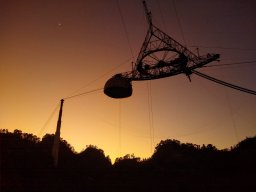 Flaviane Venditti合作论文数Arecibo Observ, Univ Cent Florida3
 Anne Virkki合作论文数Arecibo Observ, Univ Cent Florida3John C Curlander合作论文数3
 Mathieu Choukroun合作论文数3
 Christophe Sotin合作论文数Jet Propulsion Laboratory, California Institute of Technology;University of Nantes3
 James W Head合作论文数Department of Earth, Environmental and Planetary Sciences, Brown University3
 Eric Pottier合作论文数University of Rennes 13
 Mariko Sofie Burgin合作论文数3
 Michael A. Mischna合作论文数3
 My-Linh Truong-Loi合作论文数3
 Kris Zacny合作论文数Honeybee Robotics Spacecraft Mechanisms Corporation3
 Charles D. Edwards合作论文数Jet Propulsion Laboratory, California Institute of Technology3
 Larry Matthies合作论文数Jet Propulsion Laboratory, California Institute of Technology3
 Adam Loverro合作论文数Jet Propulsion Laboratory, California Institute of Technology3
 Paul Sava合作论文数Department of Geophysics, Colorado School of Mines;Center for Wave Phenomena, Colorado School of Mines3
 Robert E. Grimm合作论文数Southwest Research Institute3
 David H. Atkinson合作论文数Department of Electrical and Computer Engineering, University of Idaho3
 Andrea Donnellan合作论文数Jet Propulsion Laboratory, Pasadena, CA, USA3
 Essam Heggy合作论文数Lunar and Planetary Institute3
 Philippe Paillou合作论文数3William T. K. Johnson合作论文数3Patrick A. Taylor合作论文数3




