At a time when so many lives are still being lost to COVID-19, it might seem too early to ask ‘what’s gone wrong?’. As at least one senior government official has argued, we cannot learn any useful lessons while we are still in the middle of a crisis. Shouldn’t we wait before analysing the causes and consequences? Richard Horton, editor of The Lancet, has little sympathy with the argument for holding back. In a strongly worded critique of the political response to the COVID-19 crisis, he is actually more concerned by the silence of critical voices and by the absence of challenge. As he presents it on every page, we need to ask difficult questions. We need to explore what good can come from a very bad situation. We need to identify the mistakes made and act upon that awareness. And we need to anticipate (horrible as this might sound) the next pandemic. The catastrophe at the centre of Horton’s book, written in May 2020, has already grown. However, the main target of his attack is still very recognizable: a lack of leadership in the face of a lethal global challenge; in many countries, ‘the greatest science policy failure for a generation’. The political handling of the crisis in the United States and Britain comes in for particular criticism – with President Trump’s decision to cut WHO funding presented as a crime against humanity. But perhaps, the most harrowing testimony comes from workers in the British health service: ‘We feel completely abandoned’, ‘This is playing with lives’, ‘I don’t feel safe. I don’t feel protected’. In a short and punchy account, Horton works through the decisions that were taken or not taken. Why were we not better prepared? Why do politicians try to attribute blame elsewhere – and to China in particular (whose response Horton generally commends)? Why were the lessons of previous pandemics not taken more seriously? Sometimes Horton’s accusations can seem too much – as in the ‘crime against humanity’ allegation. Some might find his criticisms too broad and his judgments premature. But he certainly raises a series of key issues and succeeds in conveying the breadth, multi-dimensionality and severity of the crisis. Horton notes both the strong contribution of the international scientific community to our understanding of the virus and also the failures of the policy advisory process. He has particular criticisms of the medical systems in the United Kingdom and many Western nations. Drawing upon writers as disparate as Ulrich Beck, Slavoj Žižek, Arundhati Roy, Michel Foucault, Herbert Marcuse and Albert Camus, his case is for a kind of radical pessimism and humility: let us look hard at the worst that can happen and not foolishly assume that human control is absolute. 958522 PUS0010.1177/0963662520958522Public Understanding of ScienceBook reviews book-review2020
Elena Naumova will surely lead JPHP forward with imagination and rigor in an increasingly hazardous world.She has been our Statistical Editor since we took over JPHP in 2003, after Milton Terris, the founding Editor
We have never shied away from controversies where the health of populations and their very survival may be at stake (see Box 1 below.)We have a sense that at this moment in history, more is at stake than at any time in our lives.The Bulletin of Atomic Scientists has just reset its 'Doomsday Clock' closer to midnight.The Clock was created in 1953 to indicate how close the world is to a nuclear holocaust and to encourage nuclear disarmament.The Clock seems to be moving toward midnight.At 23 h 57:30, we are nearer to nuclear annihilation than at any time since 1953, when scientists first presented the Clock to the world.Although no other threat is as immediate as nuclear weapons, population health and survival are at risk from many causes.Many countries and their policies disfavor or threaten people in poverty, females, and others exploited for a long list of reasons, including race, ethnicity, sexual orientation, and religion.People become migrants and refugees fleeing war or economic instability, as well as environmental degradation.Bioterrorism enabled by gene editing and climate change may be long-term threats as great as nuclear weapons.Uncontrolled population growth exacerbates tensions.Health consequences can be disastrous -especially if they are coupled with aggression and violence carried out with modern weaponry.No regime or form of government seems to be intrinsically protective.Democracies in Europe now have mainstream racist parties or rightwing 'populists' whose members hate immigrants -Muslims, Jews, and dark-skinned people -to name a few.Autocratic and corrupt states almost always target or fail to protect particular segments of their populations.In the United States, immigrants from Latin America have suffered from discrimination and the new President has made discrimination against those wanting to cross into the United States from
The Indian Public Health Association and the World Federation of Public Health Associations (WFPHA) organized the 14th World Congress on Public Health in
We are pleased to publish in this issue an article that lays out a novel and promising global strategy for tuberculosis (TB). 1 Becerra and Swaminathan start with children, who within the global epidemic remain largely invisible.They explain why it is useful to think of children with TB as 'sentinels'as well as a neglected population that urgently needs quality attention.Every year about 1 million children get sick with TB.Children are exposed to TB, mostly in homes shared with others who cough the mycobacterium into the air.Each child is a sentinel, helping detect the infecting cases, and creating an opportunity for preventive treatment for some, treatment of active disease for many others.But it will not be easy.
Bilateral research cooperation between Sweden (Sida/SAREC) and Uganda has supported major advances in institutional research capacity strengthening at Makerere University (2000–2013). This case study illustrates how a department within Makerere’s Faculty of Medicine (Department of Pharmacy and Therapeutics) has contributed to transforming the post-graduate educational process with formation of a productive research team comprised of faculty and students to advance a research agenda targeting strategic priorities of national significance. We explain the evolution of research as an element of national development and development assistance plus the evolution of doctoral studies and strategic research worldwide, in Africa, and at Uganda’s oldest national university, Makerere, where Sweden has contributed the largest amount of external funding 2000–2012. We conclude with lessons and recommendations about Ph.D. programme start up, recruitment, supervision, international collaboration, and research infrastructure and environment for building institutional research capacity.
An Indian Supreme Court decision against a pharmaceutical giant, Novartis, is good news for public health.In this issue, 't Hoen explains the importance of the Indian Court ruling. 1 The Indian Court rejected a patent application for a new form of a known compound; their decision will extend benefits of an immensely beneficial drug to many more people. 2Patents, intended to encourage inventions, provide market exclusivity for a certain period of time and thus higher profits for the inventor.However, this also results in limited availability of drugs, diagnostics, and vaccines.With monopolies created by patent protection, newly invented products often remain too expensive for people living in low-or middle-resource countries, (in excess of 80 per cent of the world's population).More diversity in financing of pharmaceutical R&D could break through this cycle and provide a system where innovation is paid for and access to innovations secured.Every nation, the United Nations, and even the World Trade Organization, has declared itself in favor of actions that would improve population health.Governments of countries that are home to the largest pharmaceutical companies assert that they are committed to improving health globally.However, in the world race for affluence and power, when faced with choices between the economic competitiveness of their industries, and health of neglected populations, the United States (US) and the European Union (EU) continue to side with industry.We call your attention to several developments that might, with the support of the public health community, reshape research, development, regulatory approval, production, and distribution of biologics, diagnostics, and drugs.We conclude with ways all of us in public health can help.
 Anthony Robbins合作论文数29
 Ephata Kaaya合作论文数Cancer Center Karolinska (CCK),, Karolinska University Hospital Solna/Karolinska Institute;Department of Pathology, Muhimbili University of Health and Allied Sciences (MUHAS),4
 Sarah B. Macfarlane合作论文数4
 Charles Mkony合作论文数3Muhsin Aboud合作论文数1Selma Omer合作论文数1B Bluestone合作论文数1WR Moomaw合作论文数1JD McAteer合作论文数1frida kahlo合作论文数1sarah m lowe合作论文数1Kr Powell合作论文数1ramon cartwright合作论文数1Molly Fyfe合作论文数Sustainable Systems Research Foundation1Germana H Leyna合作论文数1Kwesigabo Gideon合作论文数1
 Mark A Miller合作论文数University of Gothenburg1
 Sabina Ferdinand Mugusi合作论文数Dept Internal Med, Muhimbili Univ Hlth & Allied Sci1
 Kakoko Deodatus合作论文数Muhimbili Department of Health Science, (MUHAS), P.O. Box 65015, Dar Es Salaam, Tanzania. knkuru@yahoo.com.1
 Edith A.M. Tarimo合作论文数Department of Nursing Management, Muhimbili University of Health and Allied Sciences1O'Sullivan Patricia S合作论文数1Wolde-Yohannes Sergut合作论文数1Robbins A合作论文数1Valenti Maria合作论文数1Makubi Abel合作论文数1
 Goodell Alex J合作论文数Blood Systems Research Institute;UC Berkeley-UCSF Joint Medical Program, UCSF;Blood Systems Research Institute, UCSF1Mwangu Mughwira合作论文数1Nana Mgimwa合作论文数1
 Eva Johansson合作论文数Faculty of Landscape Planning, Horticulture and Crop Production Sciences, Swedish University of Agricultural Sciences1
 Kisali Pallangyo合作论文数Muhimbili University of Health and Allied Sciences1Ik Warriner合作论文数1
 Larry Davis合作论文数Department of Computer Science, University of Maryland;Center for Automation Research, University of Maryland;Amazon1
 Bettina Borisch合作论文数1Joyce R Masalu合作论文数Faculty of Dentistry, Muhimbili University of Health and Allied Sciences1
 Nicholas A. Ashford合作论文数MIT Institute for Data, Systems, and Society/MIT Sloan School of Management/Department of Urban Studies and Planning, School of Architecture and Planning, Massachusetts Institute of Technology1
 Celestino Obua合作论文数College of Health Sciences, Makerere University1
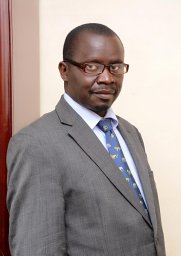 Paul Waako合作论文数College of Health Sciences, Makerere University1Helen Loeser合作论文数1Jasper Ogwal-Okeng合作论文数1
 Haile T. Debas合作论文数School of Medicine, University of California, San Francisco1Edward K. Kirumira合作论文数1
 Mainen Moshi合作论文数Institute of Traditional Medicine, MUHAS1
 Eligius Lyamuya合作论文数Muhimbili, University College of Health Sciences1
 Hannah Akuffo合作论文数1
 Japhet Killewo合作论文数1Appolinary R. Kamuhabwa合作论文数Laboratorium voor Farmaceutische Biologie en Fytofarmacologie, Katholieke Universiteit Leuven1




