Tables on the web are difficult to access with magnification. When magnified, only a portion of the table is visible. Consequently, users must scroll (or pan) around the table to access its cells which can be disorientating. This study explores visual and interactive mechanisms for table navigation. Two table navigation support mechanisms, annotations and crumbs, were implemented and evaluated in a user study with 30 participants. Results show that visually embellished tables improved access compared to plain tables. Annotating cells with header information led to the least movement and highest preference ratings, while highlighting visited table cells using crumbs gave the highest success rate but lower ratings. Combining several mechanisms may help make tables more accessible to magnifier users.
This study was triggered by the author’s experiences with participatory processes implemented in organizational development. On the one hand, leaders argue that everyone has had a chance to be heard, yet individuals sometimes experience quite the contrary. Similarly, the promises of empowering users, especially marginalized groups, through co-design or participatory design in interactive systems are indeed rather appealing. Yet, first-hand experiences of such processes—besides being “dry” and tedious—are associated with disappointment stemming from the perception that key decisions are made in advance or in the “backroom,” without user involvement. Using a review-of-reviews approach, multiple literature reviews were analyzed to identify co-design activities with high degree of involvement. The results confirm the impression that co-design is seemingly indistinguishable from other methods, as the most common activities included workshops, interviews, focus groups, community meetings, etc. Many of the studies also discussed the varying degrees of involvement and transparency. It was necessary to search for literature outside the domain of co-design to find high-involvement activities. Hence, most of these studies were not flagged as employing participatory design or co-design. Co-design activities employing artificial Intelligence (AI) are emerging but in their infancy. It is concluded designers could be more creative and innovative in how they invite users into studies to make these more engaging and motivating, so users perceive their input as meaningful and impactful.
Assistive Technology (AT) orthoses pose socio-technical challenges, with high abandonment rates linked to poor aesthetics and conventional manufacturing limits. For users with motor impairment, specialized 3D scanning is often hindered by the critical technical barrier of maintaining limb position, restricting access to personalized design benefits. This study proposes a Strategic Design Framework centered on virtual limb repositioning, an intangible design artefact, to overcome this limitation. Showcased in a case study of a male teenager with spastic Cerebral Palsy, the methodology establishes an interdisciplinary-based approach where designer and occupational therapist collaboratively validate the limb’s final functional pose using Blender software. This collaborative process, aligned with co-design principles, reconfigures the AT development process to prioritize user agency and aesthetic personalization, demonstrating a viable proposal for systemic intervention for AT provision, advancing sociotechnical innovation through the strategic alignment of clinical expertise and design tools.
Makerspaces are collaborative environments that provide local production capabilities to various maker groups. As the makerspaces aim to democratize production for as many people as possible, the accessibility of these spaces is getting increased research attention. This study investigates the potential of makerspaces to make themselves and their tools more accessible through their own means of local production. We applied a research-through-making approach in participatory co-making sessions with participants from a rehabilitation hospital and a university makerspace. Then, the 3D printing experience is analyzed with the use of the harmonised European Standard (EN 301 549) accessibility requirements for Information and Communication Technology (ICT) products and services. The findings from co-making sessions revealed three possible levels for ‘hacking’ and improving the accessibility of the (1) maker, (2) interface, and (3) space. On the maker level, hacks focus on aiding the maker personally while they navigate and interact with the makerspace and tools. The interface level would provide the user a connecting and guiding interface in-between different webpages, software, and hardware interfaces. The spatial level for possible hacks would provide the accessibility improvements related to clearances, reach and approach distances when the makers interact with 3D printers inside the makerspace. We argue that the goal of these hacks is to improve the agency and independence of people with disabilities and reduced physical functions, as well as assisting product users by increasing their access to making.
Novice learners in programming education often face high cognitive demands and struggle to regulate their thinking without structured support, which can hinder effective reflective engagement. While Creative Problem Solving (CPS) provides a structured framework for guiding idea generation and problem resolution, traditional reflective activities within CPS often lack timely feedback and systematic scaffolding. To address this issue, this study developed an AI-supported Socratic Questioning–based learning assistant and integrated it into the CPS process. A quasi-experimental design was employed to compare the proposed approach with traditional reflective practices among non-computer science undergraduate students. The results indicated that the proposed approach significantly improved students’ reflective thinking performance (F = 5.151, p = .029, partial η2 = .122). These findings suggest that embedding AI-supported, question-driven reflective scaffolding within CPS can enhance learners’ metacognitive monitoring and support more effective engagement in complex problem-solving processes.
Text similarity tools are widely used by educators for plagiarism prevention and detection in coursework, home exams, theses, and portfolios. Although most university-level subjects are text-oriented, there are also several subject areas that rely on visual elements, such as design, architecture, and engineering. In visually oriented subjects, it is natural to use images alongside text. However, there are few practical tools for, or documented studies on, applying image similarity analysis in educational contexts, despite a vast literature on image similarity and image plagiarism detection. The objective of this study was therefore to explore the opportunities offered by image similarity analysis within an educational context. Six use-cases were identified. A simple image analysis prototype was implemented as an experimental platform. The ideas were tested in a human-computer interaction course with around 250 undergraduate students where the coursework comprised more than 1,000 reports with more than 8,000 images. The results confirm that group efforts lead to more figures than solo efforts. The portion of individual images was inversely related to the group size. Increased figure counts were also observed with revised reports. Next, image similarity could be used to provide visual overviews, detect legitimate collaboration structures, detect possible unethical image borrowing, identify cases of potential lack of appropriate image attribution, and detect other anomalies that otherwise would be hard to detect. It is argued that image similarity tools hold potential for directing the teachers’ attention towards relevant cases that help provide timely formative feedback to students and thus promote learning. It is concluded that state-of-the-art educational technology should be extended to also include similarity analysis of visuals.
There are a wide range of mouse input devices available on the market. We wanted to explore if there are any observable differences between a mouse with high specifications compared to a mouse with more moderate specifications. A simple controlled experiment was conducted using a Fitts’ law methodology. The results showed that the mouse with higher technical specifications resulted in a significantly shorter movement time than the mouse with moderate specifications. The results suggest that technical specifications do matter when selecting a mouse as it may affect work efficiency.
There is considerable discussion of self-citations and the h-index in academia, yet there are few tools that facilitate the analysis of self-citations and their impact on the h-index. This letter presents a method for visualizing snapshots of self-citations at the publication level. The visualizations, coined pivotal self-citation plots, extend sorted citation bar graphs where each bar is divided into self-citations and foreign citations. Moreover, the pivotal citations to h-core papers—critical to an author’s h-index—are highlighted. The plots make it easier to spot self-citations possibly added to boost the h-index. A simple interactive web-based tool is provided for exploring such self-citation visualizations. Plots should be interpreted with caution, as pivotal self-citations may not necessarily be manipulative.
Mobile Instant Messaging is prevalent in online learning discussions but has inherent limitations in fostering higher-order thinking skills and managing information overload. This study investigates the pedagogical integration of ChatGPT within Mobile Instant Messaging platforms to enhance online learning, addressing a gap in artificial intelligence-enhanced educational technologies. In a 16-week randomized controlled trial with 63 graduate students enrolled in an Advanced Digital Learning course, this study examined the efficacy of a ChatGPT-enhanced Mobile Instant Messaging (ChatMIM) on student engagement and higher-order thinking skills development. Participants were randomly assigned to a treatment group (n = 33) using ChatMIM or a control group (n = 30) using traditional Mobile Instant Messaging. A mixed-methods research design incorporated preand post-intervention assessments using validated instruments for engagement and higher-order thinking skills, systematic content analysis of discussion logs, and semi-structured interviews grounded in the Technology Acceptance Model. Results showed considerable improvements in the experimental group across behavioral, cognitive, and emotional engagement dimensions. Enhancements were also observed in higher-order thinking skills domains, particularly in critical thinking, problem-solving, and creativity. Qualitative findings indicated favorable perceptions of ChatMIM, with participants reporting enhanced learning performance and strong intentions for future use. This study provides empirical evidence supporting the effectiveness of artificial intelligence-enhanced messaging systems in online learning, specifically in fostering student engagement and higher-order cognitive development. The findings advance understanding of artificial intelligence integration in educational technology through psychological theories of cognitive load and feedback.
Two-factor authentication was proposed to increase the security of computer systems. From being a specialized feature of critical systems such as online baking they have increasingly been deployed in other types of less critical systems. Considering the user experiences with such security features are crucial as unsuccessful implementations can hinder access and lead to info-exclusion. Users are sometimes given choices between two-factor authentication technology to suit a given context of use considering issues such as familiarity of use, personal preferences, perceived usability, and practical accessibility. This study explores which technologies are chosen by users, and if these choices are efficient. To explore this, we designed a small experiment involving two commonly used authentication systems currently used nationally in higher education in Norway. The results showed that most participants regularly used the recommended authentication method based on Microsoft authenticator. Moreover, results suggest that this is a rational choice as the national bankID system was more than 60
Groupwork is believed to have positive effects on learning. This study addresses a practical use-case where students solve assignments in groups yet demonstrate their learning outcomes through a portfolio of individual reports. When grading such coursework, it is beneficial to collectively examine the individual report written by all the group members. However, students often make mistakes when declaring their group composition, while others forget or refuse to disclose their team. This can be particularly challenging with anonymized portfolios. This paper presents a simple, accurate, and computationally efficient unsupervised algorithm for detecting group structures based on the contents of the reports. Tests on 2151 reports by approximately 500 students showed that a large portion of groups could be identified successfully (33
Automatic and reliable classification of human heart sounds is essential for self-monitoring heart conditions to improve life quality and public health. However, technology for self-monitoring of heart conditions is expensive, unavailable, and thus inaccessible to many people, especially in low-income regions. This study therefore presents a highly accurate automatic heart rate classification system using deep convolutional neural networks (DCNNs) conveniently implemented as a smartphone application that provide users with timely heart disease warnings. Two datasets were employed, and heart sound features were extracted using the Log-Mel spectrogram and the Mel-frequency cepstral coefficients (MFCCs). Five deep learning (DL) models were developed and combined through ensemble strategies that fused the predicted probabilities. When comparing the DL models using Log-Mel and the training technique two, the study found that Model 1c outperformed the others, attaining a 98.38% F1 score on the binary dataset. Meanwhile, Model 1b excelled with a 98.46% F1 score on the multi-class dataset. The improvements were statistically significant. The data augmentation method exhibited varying effects on model performance. Moreover, distinction in model predictions was observed when differentiating between normal and abnormal heart conditions using the Log-Mel feature and a Shapley Additive Explainability (SHAP) approach. The ensemble techniques were particularly successful, with the mean strategy in Ensemble C achieving a 98.62% F1 score for the binary dataset, surpassing existing methods, and reaching a 98.73% F1 score for the multi-class dataset.
A substantial portion of computer science research is published in conference proceedings. An academic conference allows researchers to meet, network, learn, exchange ideas, seek inspiration and share their experiences and findings. This study was triggered by an impression that some authors publish several papers within the same conference, sometimes filling an entire session. Such back-to-back presentations by the same author can be monotonous to witness. This study therefore set out to assess if this repeat author impression is supported by empirical evidence. An analysis was performed based on Scopus data for 31 key conferences within human–computer interaction. The results indeed confirm the phenomenon of repeat authors within conference proceedings. The maximum number of papers with the same author was six contributions based on the conference median, that is, in 16 of the 31 conferences at least one author was listed as co-author on at least six contributions. In the most extreme instance one author was listed on 32 contributions within the same conference. Papers by repeat authors often shared similar contents. The multiple co-author phenomenon was prominent in both highly ranked conferences as well conferences with a lower rank. Conference chairs (gatekeepers) were overrepresented among authors with multiple papers as more than 50
In some educational contexts it is necessary to record student attendance, yet the technical infrastructures for registration management may not be available. The goal of this work was to develop a tool to reduce the manual registration management effort. The tool was iteratively developed and tested in six courses over a period of four years. Analyses which were found to be particularly useful included attendance status overviews, individual attendance timelines, and anomalous registrations. The reports generated by the tool can be used to facilitate the formative dialogue between the students and the teacher during the learning process. The proposed scheme is different from most of the previous approaches in that it requires minimal setup and no dedicated infrastructure.
Many upper limb prostheses are heavy, difficult to control, and have limited functions. This often leads to device abandonment. The use of 3D printing in assistive devices has enabled customization and personalization, providing greater precision, comfort, and user satisfaction while reducing abandonment. However, there is still limited information regarding the mechanical specifications of models used for 3D-printed prostheses, such as evidence on functional performance, durability, need for reprints, comfort and limits of use. This research aimed to evaluate the functional performance of open-source 3D-printed prostheses, contributing to a better understanding of factors that may influence their performance, such as the use of silicone fingertip covers. The study assessed three open-source prosthesis models: the Kwawu Arm Thermoformed Version, the Kwawu Arm Socket Version, and the Unlimbited Arm. Their performance was evaluated based on the ability to hold 31 objects of various shapes and weights for 60 s through three attempts. Although the prostheses demonstrated functionality for handling objects, relatively high failure rates were observed across all three models. Considering that the objects are common everyday items, users may face challenges or even an inability to handle certain objects in practical scenarios. The results revealed a significant performance improvement with the use of silicone fingertip covers, with increases of approximately 20
Accidents involving escalators in mass rapid transit (MRT) systems pose a serious risk to public safety, often resulting from clothing or footwear getting caught, or large items toppling during movement. Despite the availability of passive warnings, such as signage and audio announcements, these methods often go unnoticed by commuters and lack the ability to adapt to real-time risks. Existing computer vision solutions are either too computationally intensive for deployment on edge devices or lack sufficient accuracy for practical use. To address these challenges, this study proposes a real-time, lightweight object detection system using a pruned YOLOv7-Tiny model, optimized for deployment on the NVIDIA Jetson Nano edge computing platform. The system is designed to identify safety-critical items, such as general footwear, high heels, long skirts, suitcases, strollers, and shopping trolleys, in real-time. Upon detection, it issues visual and auditory alerts, and in cases involving large items, sends email notifications to station personnel. Model pruning significantly reduces computational overhead while maintaining high accuracy. Experimental results demonstrate that the system achieves a mean average precision (mAP) of 94.69%, outperforming conventional detection models while maintaining real-time performance. These results highlight the system’s potential for enhancing passenger safety and operational efficiency in resource-constrained public transit environments.
Bird excrement deposited on solar panels can lead to hotspots, significantly reducing the efficiency of solar power plants. This article presents a novel solution to this problem leveraging unmanned aerial vehicle (UAV) systems for the automated geolocation and removal of bird excrement across large-scale solar power facilities. First, a UAV executes a predefined flight path to capture sequential aerial images of the plant. These images are subsequently stitched to produce a high-definition orthomosaic of the entire facility. An advanced detection framework based on YOLOv7, enhanced with an attention module, is employed to accurately detect bird excrement by reducing background noise and highlighting key features. An additional prediction head is integrated to improve detection of smaller bird excrements. To compute precise geolocation of the detected excrement, the midpoint pixel coordinates of the excrement along with the azimuth angle and actual ground distance (AGD) relative to a ground control point (GCP) is used. This article further proposes a cleaning technique that employs a traveling salesman problem (TSP) approximation algorithm to efficiently optimize flight path of the cleaning UAV. Experimental results indicate the system achieves an average detection precision (AP) of 93.91% and GPS coordinate accuracy with an average error of 0.149 m, demonstrating the efficacy of the proposed method in both geolocation and removal of bird excrement from solar panels.
The accurate determination of shrimp larvae is crucial as misestimation may lead to overfeeding or underfeeding problems. Traditional methods for aquaculture shrimp larvae counting were inefficient and error-prone due to the limitations associated with manual visual inspections. To tackle these challenges, we introduce ShrimpNet, a novel lightweight and efficient model based on YOLOv8n, designed specifically for detecting tiny shrimp larvae. To enhance feature extraction and effectively fuse local features with channel information, we propose a DWASNet backbone, incorporating depthwise separable convolution, a channelwise attention mechanism, and a channel shuffle module, optimizing both detection performance and model efficiency. To further reduce computational complexity while maintaining high detection accuracy, we implemented a dual-path concatenation (DPC) bottleneck and a DPCCSP fusion module that utilizes the cross-stage partial (CSP) network for feature fusion. We also optimized the detection head structure and adjusted feature map sizes, enhancing the model's ability to detect tiny objects. Moreover, we introduced a novel counting algorithm tailored for different scenarios, ensuring unique and accurate counts in both container-based (still water) and waterslide-based (flowing water) counting systems. Extensive experiments on public and custom shrimp larvae datasets demonstrated that the proposed model outperformed other state-of-the-art models in terms of detection accuracy and parameter quantity.
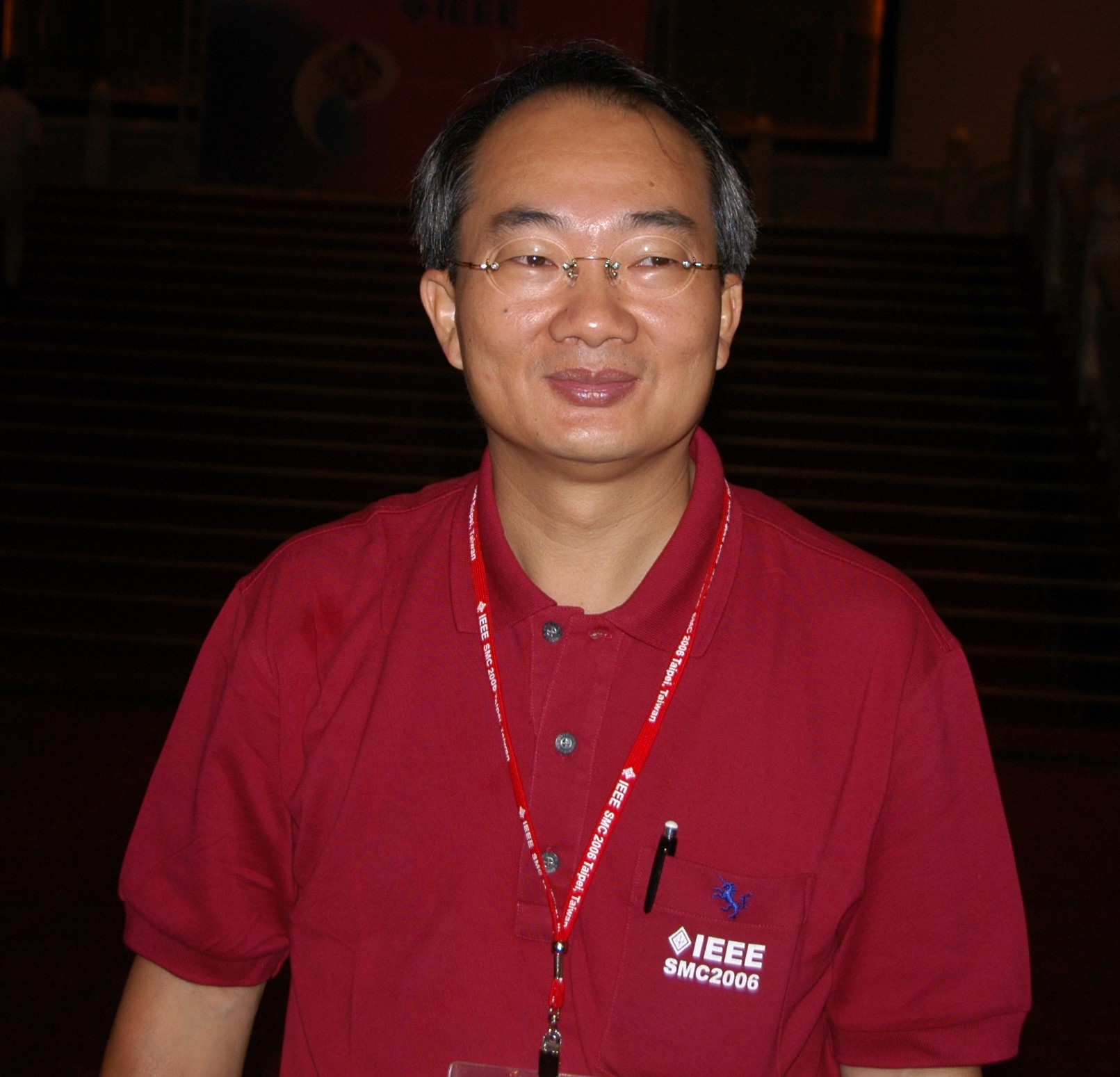 Yo-Ping Huang (黃有評)合作论文数Department of Electrical Engineering, National Taipei University of Technology, Taipei, Taiwan45
 Fausto Medola合作论文数Universidade Estadual de Londrina22
 Evelyn Eika合作论文数Oslo & Akershus Univ, Coll Appl Sci, Oslo, Norway10
 Raju Shrestha合作论文数Department of Computer and Communication, Hunan University9
 Yueh Min Huang (黄悦民)合作论文数Department of Engineering Science, National Cheng Kung University8
 Bineeth Kuriakose合作论文数Corresponding author.7Hua-Li Jian合作论文数7Tsun-Wei Chang合作论文数6
 Ana Lya Moya Ferrari合作论文数Dept Comp Sci, Oslo Metropolitan Univ5Li-Jen Kao合作论文数5
 Yueh-Tsun Chang合作论文数5Simen Hagen合作论文数5
 Jirarat Ieamsaard合作论文数4
 Paisarn Muneesawang合作论文数Multimedia Database Retrieval:: A Human-Centered Approach (Signals and Communication Technology)4
 Amanda Coelho Figliolia合作论文数3
 Guilherme Bertolaccini合作论文数Fac Technol Art & Design, Oslo Metropolitan Univ3H-L Jian合作论文数3
 Luis Paschoarelli合作论文数Fac. of Architecture, Arts and Communication, UNESP --- Univ. Estadual Paulista3Yun-Maw Cheng合作论文数3Chao-Lung Lee合作论文数3
 Luciana Ramos Baleotti合作论文数3Wei-Po Chuang合作论文数3
 Oliver Sinnen合作论文数Department of Electrical and Computer Engineering, Faculty of Engineering, The University of Auckland3Jung-Shian Jau合作论文数2
 Ana Claudia Tavares Rodrigues合作论文数2Li-Chieh Chen合作论文数2Da Lee合作论文数2
 Idinei Francisco Pires de Carvalho Filho合作论文数Dept Design, UNESP Univ Estadual Paulista2
 Aline Darc Piculo dos Santos合作论文数Dept Comp Sci, Oslo Metropolitan Univ2
 Levent Neyse合作论文数WZB, Berlin, Germany2
 Haobijam Basanta合作论文数Natl Taipei Univ Technol, Dept Elect Engn, Taipei 10608, Taiwan2
 Atiyeh Vaezipour合作论文数Recover Injury Research Centre, Faculty of Health and Behavioural Sciences, The University of Queensland2Siri Fagernes合作论文数College, Oslo University2
 Kris M. Y. Law合作论文数Department of Industrial and Systems Engineering,The Hong Kong Polytechnic University2Wei-Chia Chen合作论文数Department of Engineering and System Science, National Tsing Hua University2
 Pascal Rebreyend合作论文数CNRS URA2
 Meng-Yen Hsieh合作论文数2
 Ting-Ting (Tina) Wu合作论文数Graduate School of Technological and Vocational Education, National Yunlin University of Science and Technology2Ruey-Maw Chen合作论文数2
 Gerd Berget合作论文数Faculty of Technology, Art and Design, Oslo and Akershus University College of Applied Sciences2Graham M. Megson合作论文数2Tien-Chi Huang合作论文数1
 Melissa Marin合作论文数1Kjetil Madsen Knudsen合作论文数1Tanveer Hussain Awan合作论文数1Hamza Ali合作论文数1Shan-Shan Wang合作论文数1Anne Igeltjørn合作论文数1Dipak Ghosal合作论文数1




