Three regioisomeric 3,4-methylenedioxyphenethylamines having the same molecular weight and major mass spectral fragments of equivalent mass have been reported as components of clandestine drug samples in recent years. These drugs of abuse are 3,4-methylenedioxy-N-ethylamphetamine, 3,4-methylenedioxy-N,N-dimethylamphetamine, and N-methyl-1-(3,4-methylenedioxyphenyl)-2-butanamine. These three compounds are a subset of a total of ten regioisomeric 3,4-methylenedioxyphenethylamines of molecular weight 207, yielding regioisomeric fragment ions of equivalent mass (m/z 72 and 135/136) in the electron impact mass spectrum. The specific identification of one of these compounds in a forensic drug sample depends upon the analyst's ability to eliminate the other regioisomers as possible interfering or coeluting substances. This paper reports the synthesis, mass spectral characterization, and chromatographic analysis of these ten unique regioisomers. The ten regioisomeric methylenedioxyphenethylamines are synthesized from commercially available precursor chemicals. The electron impact mass spectra of these regioisomers show some variation in the relative intensity of the major ions with only one or two minor ions that might be considered side-chain specific fragments. Thus, the ultimate identification of any one of these amines with the elimination of the other nine regioisomeric substances depends heavily upon chromatographic methods. Chromatographic separation of these ten uniquely regioisomeric amines is studied using gas chromatographic temperature program optimization.
The popular drug of abuse 3,4-methylenedioxymethamphetamine (MDMA) is one of a total of 10 regioisomeric 2,3- and 3,4-methylenedioxyphenethylamines of MW 193 that yields regioisomeric fragment ions with equivalent mass (m/z 58 and 135/136) in the electron-impact (EI) mass spectrum. Thus, these 10 methylenedioxyphenethylamines are uniquely isomeric; they have the same molecular weight and equivalent major fragments in their mass spectra. The specific identification of one of these compounds (i.e., Ecstasy or 3,4-MDMA) in a forensic drug sample depends upon the analyst's ability to eliminate the other regioisomers as possible interfering or coeluting substances. This study reports the synthesis, chemical properties, spectral characterization, and chromatographic analysis of these 10 unique regioisomers. The ten 2,3- and 3,4-regioisomers of MDMA are synthesized from commercially available precursor chemicals. In the EI mass spectra, the side-chain regioisomers show some variation in the relative intensity of the major ions, with the exception of only one or two minor ions that might be considered side-chain specific fragments. The position of substitution for the methylenedioxy ring is not easily determined by mass spectral techniques, and the ultimate identification of any one of these amines with the elimination of the other nine must depend heavily upon chromatographic methods. The chromatographic separation of these 10 uniquely regioisomeric amines are studied using reversed-phase liquid chromatographic methods with gradient elution and gas chromatographic techniques with temperature program optimization.
The six regioisomeric dimethoxyamphetamines are prepared from the commercially available dimethoxybenzaldehydes. The dimethoxyamphetamines show very similar mass spectra, and chromatographic methods must be used to differentiate the positional isomers. Bromination of the six isomeric dimethoxyamphetamines yields a monobromination product as the major component in all cases except for 3,5dimethoxyamphetamine, which yields the 2,6-dibrominated species as the major product. Mass spectrometric analysis readily divides the regioisomeric bromodimethoxyamphetamines into two groups of three compounds each. Only those isomers having a bromine substituent "ortho-" to the alkylamine side-chain show a major fragment at m/z 194 from loss of bromine from the molecular ion. The major drug of abuse 4-bromo-2,5-dimethoxyamphetamine (DOB) is one of three compounds that do not yield the m/z 194 ion. Though the mass spectra for the three "non-m/z 194" isomers show some subtle differences, these compounds are best differentiated by a reversed-phase liquid chromatographic system.
The brominated products from all six positional isomers of dimethoxyphenethylamine are prepared, and their analytical properties are evaluated. The major bromination product from 3,5-dimethoxyphenethylamine is the 2,6-dibromo isomer; all other regioisomers of dimethoxyphenethylamine yield a monobromo species as the major product. The mass spectra divide these compounds into two distinct groups: one group showing a strong m/z 180 ion via loss of bromine from the molecular ion (M-Br)† and a second group showing no significant m/z 180 ion. The three compounds that do not show the m/z 180 ion in their electron-impact mass spectra are brominated 2,4-; 2,5-; and 2,6-dimethoxyphenethylamine. These compounds are well-resolved by reversed-phase liquid chromatographic methods using a Hypersil Elite C18 stationary phase and a mobile phase of phosphate buffer (pH 3) and methanol—acetonitrile.
A series of ring and side-chain regioisomers of 3,4-methylenedioxymethamphetamine are compared by chromatographic and spectroscopic methods. Regioisomerism at the aromatic ring and the alkyl side-chain in the methylenedioxyphenalkylamines produces a variety of compounds that have very similar analytical properties. The specific identification of one of these compounds in a forensic drug sample depends on the analyst's ability to eliminate other regioisomers as possible interfering substances. The 2,3- and 3,4-regioisomers of methylenedioxymethamphetamine, N-ethyl-methylenedioxyamphetamine, 1-methylenedioxyphenyl-2-butanamine, and N-methyM-methylenedioxyphenyl-2-butanamine are synthesized from commercially available precursor chemicals. The mass spectra for the underivatized amines are very similar and do not provide sufficient information to differentiate among the side-chain or ring regioisomers. Preparation of the pentafluoropropionamides of the amines produces derivatives that show mass spectral fragmentation identifying the substituent attached to nitrogen and the number of carbons attached directly to the aromatic ring. The regioisomeric amines are well-resolved in a reversed-phase chromatographic system using a Hypersil-Elite C18 stationary phase and acidic hydroorganic mobile phases.
Methods are described for the gas chromatographic—mass spectrometric identification of the street drug N-methyl-1-(3,4-methylenedioxyphenyl)-2-butanamine (MBDB or MDP-2-MB) and its differentiation from two uniquely isomeric drugs, N-ethyl-3,4-methylenedioxyamphetamine (MDEA) and N,N-dimethyl-3,4-methylenedioxyamphetamine (MDMMA). These positional isomers have the same molecular weight (MW = 207) and fragment by a common mechanism under electron impact mass spectrometric conditions to yield a base peak of the same mass (m/z 72). Derivatization of the two secondary amines (MBDB and MDEA) with pentafluoropropionic anhydride (PFPA) yields amides with fragment ions which individualize their EI mass spectra. The PFPA derivative of MBDB yields diagnostic ions at m/z 160 and 176, whereas the PFPA derivative of MDEA produces ions at m/z 162 and 190. This EI spectra individualization for MBDB and MDEA is particularly significant since these two compounds have similar retention properties in the PFPA-derivatized and underivatized forms and since both are known street drugs.
Myristicin, a natural product found in nutmeg oil and nutmeg extract, contains the carbon skeleton for a series of drugs of abuse related to the 3,4-methylenedioxyamphetamines (MDAs). Myristicin, 1-(3-methoxy-4,5-methylenedioxyphenyl)-2-propene, was identified as the major component of commercially available nutmeg oil and in the organic extract of nutmeg powder. The starting materials, intermediates, and products in the synthesis of the drug of abuse N-methyl-1-(3-methoxy-4,5-methylenedioxyphenyl)-2-propanamine (MMDMA) from myristicin were characterized by gas chromatographic-mass spectrometric analysis. MMDMA and several primary amine derivatives including 1-(3-methoxy-4,5-methylenedioxyphenyl)-2-ethanamine, -propanamine, and -butanamine were also prepared from the commercially available aldehyde, 3-methoxy-4,5-methylenedioxybenzaldehyde. Each of these amine derivatives has a distinct mass spectrum characterized by amine-dominated fragmentation. All four amines in this study were resolved by reversed-phase liquid chromatography using an acidic aqueous mobile phase. Relative retention in this system was determined by differences in the hydrophobic surface area of the four amines.
The synthesis of methamphetamine from allylbenzene is investigated using gas chromatography-mass spectrometry. Treatment of allylbenzene with HBr yields 1-phenyl-2-bromopropane as a major product. Smaller amounts of 1-phenyl-3-bromopropane, as well as 2,3-, 1,2-, and 1,3-dibromopropane, are also formed during the course of this reaction; both diastereomeric forms of 1,2-dibromopropane are detected in the product mixture. Animation of the crude bromination product with methylamine yields primarily methamphetamine and other amines characteristic of this synthetic method, including the methamphetamine isomer, N-methyl-1-phenyl-1-propanamine.
Journal Article GC-MS and LC of Addition Products Formed from the Reaction of Allylbenzene and Related Arylpropenes with Acetonitrile and Sulfuric Acid Get access F. Taylor Noggle, F. Taylor Noggle Alabama Department of Forensic Sciences, Wire Road, Auburn, Alabama 36831 Search for other works by this author on: Oxford Academic PubMed Google Scholar C. Randall Clark, C. Randall Clark * Department of Pharmacal Sciences, School of Pharmacy, Auburn University, Auburn, Alabama 36849 * Author to whom correspondence should be addressed. Search for other works by this author on: Oxford Academic PubMed Google Scholar Jack DeRuiter Jack DeRuiter Department of Pharmacal Sciences, School of Pharmacy, Auburn University, Auburn, Alabama 36849 Search for other works by this author on: Oxford Academic PubMed Google Scholar Journal of Chromatographic Science, Volume 33, Issue 5, May 1995, Pages 256–262, https://doi.org/10.1093/chromsci/33.5.256 Published: 01 May 1995 Article history Accepted: 11 August 1994 Published: 01 May 1995
Journal Article GC-MS Analysis of Acylated Derivatives of Methamphetamine and Regioisomeric Phenethylamines Get access C. Randall Clark, C. Randall Clark * Department of Pharmacal Sciences, School of Pharmacy, Auburn University, Auburn, Alabama 36849 *Author to whom correspondence should be addressed. Search for other works by this author on: Oxford Academic PubMed Google Scholar Jack DeRuiter, Jack DeRuiter Department of Pharmacal Sciences, School of Pharmacy, Auburn University, Auburn, Alabama 36849 Search for other works by this author on: Oxford Academic PubMed Google Scholar Allen K. Valaer, Allen K. Valaer Alabama Reference Laboratories, Inc., South Hull Street, Montgomery, Alabama 36103 Search for other works by this author on: Oxford Academic PubMed Google Scholar F. Taylor Noggle F. Taylor Noggle Alabama Department of Forensic Sciences, Wire Road, Auburn, Alabama 36830 Search for other works by this author on: Oxford Academic PubMed Google Scholar Journal of Chromatographic Science, Volume 33, Issue 9, September 1995, Pages 485–492, https://doi.org/10.1093/chromsci/33.9.485 Published: 01 September 1995 Article history Accepted: 23 January 1995 Published: 01 September 1995
A series of N-substituted, 1-(3,4-methylenedioxyphenyl)-2-butanamines (MDP-2-B) is prepared from piperonal via the 2-butanone intermediate. The analytical properties of these compounds are compared with the structurally similar 3,4-methylenedioxyamphetamine (MDA) derivatives, a popular series of drugs of abuse. The ultraviolet absorption properties of these compounds are determined by the methylenedioxyphenyl ring, which shows major absorption bands in the 285- and 235-nm range. The primary amine (MDP-2-B) and the N-substituted derivatives of MDP-2-B are separated by reversed-phase liquid chromatography under acidic mobile-phase conditions. The compounds are not completely resolved by gas chromatography on an HP-1 phase, and the separation is complicated by extensive thermal degradation of the N-hydroxy derivative (MDP-2-OHB). The mass spectra for these compounds provide specific structural information for the identification of these compounds. The amines undergo α-cleavage reactions to produce ions at [M-135]+ from the loss of the 3,4-methylenedioxybenzyl radical and [M-29]+ from loss of the other α-group, the ethyl radical.
The street drug Nexus (4-bromo-2,5-dimethoxyphenethylamine) has appeared in clandestine samples in recent years. This hallucinogenic phenethylamine is prepared from the commercially available aldehyde, 2,5-dimethoxybenzaldehyde, and other readily available precursor chemicals and reagents. Nexus and some designer analogues are separated by liquid chromatography using a C18 stationary phase and an acidic (pH 3) mobile phase. Nexus, a brominated phenethylamine, shows enhanced reversed-phase retention relative to the unbrominated precursor phenethylamine. The mass spectra of these amines show fragment ions consistent with amine-dominated reactions common to phenethylamines and substituted phenethylamines. The gas chromatographic—mass spectrometric analysis of mixtures of the amines and the synthetic precursor nitroethenes show on-column reaction products that complicate the analytical results. These reaction products are identified as the imines that result from condensation of the amine with the substituted benzaldehyde, which is generated from the 2-nitroethene.
This paper describes the synthesis, stereochemical analysis, and analy- tical properties of methcathinone and related compounds. Methcathinone represents a new class of designer street drugs that can be prepared easily from readily available starting materials such as the ephedrines and pseudoephedrines. The oxidation of each individual isomer of ephe- drine and pseudoephedrine produces homochiral methcathinone via conser- vation of configuration. Thus 1R,2S-ephedrine and 1S,2S-pseudoephedrine yield S-methcathinone, and 1S,2R-ephedrine and 1R,2R-pseudoephedrine produce R-methcathinone. The isomers of methcathinone were separated by gas chromatography as the diastereomeric amides following derivatization with S(-)-N-(trifluoroacetyl)prolyl chloride (TPC). Cathinone, methca- thinone, ethcathinone, and diethylcathinone (diethylpropion) were sepa- rated by reversed-phase liquid chromatography using a phenyl bonded stationary phase and an acidic (pH 3) mobile phase. Methcathinone and cathinone do not interfere or cross-react in standard drug abuse scree- ning methods based on analysis by thin-layer chromatography or immuno- assay
The conversion of 1-phenyl-2-nitropropene to amphetamine is investigated under a variety of reaction conditions using gas chromatography-mass spectrometry (GC-MS). This versatile intermediate is prepared by treating benzaldehyde with butylamine and nitroethane. GC-MS analysis revealed that amphetamine is produced as the major product upon catalytic reduction of 1-phenyl-2-nitropropene. However, a number of partial reduction products are also present in the mixture. Reduction of the nitropropene with a 5-molar excess of lithium aluminum hydride yields 1-phenyl-2-propanoxime as the major component. A variety of other partial reduction products and products of competing reactions are also present in this product mixture, as well as amphetamine. When this reduction is carried out with a large excess of lithium aluminum hydride, amphetamine is formed as the major product. 1-Phenyl-2-nitropropene is also converted to the ketone, 1-phenyl-2-propanone, by partial reduction and hydrolysis. Amination of this ketone under Leuckart and reductive amination conditions provide amphetamine as the principle product. GC-MS analysis reveals that these samples also contain several by-products characteristic of these routes of synthesis.
The intermediates, products, and by-products obtained in the synthesis of MDA from isosafrole are identified by gas chromatography-mass spectrometry. The initial oxygenation of the conjugated double bond in isosafrole produces a number of products, and the product distribution varies with the reaction solvent. If acetone is used as a cosolvent, the major product is the diol acetonide, while without acetone the product mixture contains the diol, the ketone (methylenedioxyphenyl-2-propanone, MDP-2-P), and mono- and diformates of the diol. These oxygenated products, upon treatment with sulfuric acid, are all converted to the expected ketone, MDP-2-P. Amination of MDP-2-P with formamide (Leuckart conditions) yields the desired amine, MDA, and a pyrimidine by-product, 4-methyl-5-(3,4-methylenedioxyphenyl)pyrimidine, which is characteristic of these reaction conditions.
Methods are explored to enhance the efficiency and versatility of the synthesis of the 1-substituted 4-(propananilido)perhydorazepine analgesics. The modified synthesis begins with ring expansion of 1-carbethoxy-4-piperidinone 3 with ethyl diazoacetate and boron trifluoride to yield 1,5-biscarbethoxyperhydroazepin-4-one 4. Selective hydrolysis of 4 followed by decarboxylation provides 1-carbethoxyperhydroazepin-4-one 6. Reductive amination of 6 with aniline affords the 4-anilino intermediate 7 which is treated with propionic anhydride to give 1-carbethoxy-4-(propananilido)perhydroazepine 18. Selective cleavage of the 1-carbethoxy group of 18 was accomplished with trimethylsilyliodide to yield the versatile intermediate 4-(propananilido)-perhydroazepine 19. Treatment of 19 with styrene oxide afforded the 1-[2-(1-hydroxy-1-phenyl)ethyl] derivative 1c which, in the tail-flick assay, displays greater analgesic potential than previously reported members of this series.
The individual enantiomers of cis- and trans-3,4-dimethylaminorex were prepared by treating ephedrines or pseudoephedrines with cyanogen bromide. These compounds represent potential designer drug modifications of aminorex and 4-methylaminorex, which have appeared recently in the clandestine drug market. The UV spectra for these compounds are typical of phenethylamine-type compounds, and FTIR spectra allow for differentiation of cis- and trans-isomers. The mass spectra for the dimethylaminorex stereoisomers show characteristic fragments at m/z 57, 118, and 190. The cis- and trans-isomers were separated in a reversed-phase liquid chromatographic system on a C18 stationary phase, with the cis-isomer displaying the higher capacity factor.
The use of methanol or ethanol as the injection solvent for the gas chromatographic-mass spectral (GC-MS) analysis of low molecular weight amine drugs of abuse results in the formation of additional components in the sample. Primary amines, such as amphetamine, 3,4-methylenedioxyamphetamine, and phenethylamine, yield imines upon injection as methanol or ethanol solutions. In methanol, the imine formed has a mass that is 12 mass units higher than the parent compound. In ethanol, the products formed have 26 additional mass units. Secondary amines appear to undergo methylation under similar conditions with methanol as the injection solvent. These products are absent from the analysis of equivalent amine samples dissolved in chloroform.
The various samples from a clandestine drug laboratory reported to be involved in the synthesis of 3,4-methylene-dioxymethamphetamine (MDMA, Ecstacy, or XTC) are analyzed by gas chromatography-mass spectrometry (GC-MS). Safrole, the starting material for the synthesis, is obtained from the roots of the sassafras plant. GC-MS of the sassafras oil reveals the presence of safrole (4-allyl-1,2-methylenedioxybenzene) as the major component, as well as smaller quantities of camphor, eugenol, a dimethoxyallyl- and trimethoxyallylbenzene. A second sample obtained from the clandestine laboratory is from the treatment of the sassafras oil with HBr. Although this sample contains many brominated and several nonbrominated components, the major constituent is the synthetic precursor for MDMA, 1-(3,4-methylenedioxyphenyl)-2-bromopropane, along with quantities of the regioisomeric 3-bromopropane. The samples from the clandestine laboratory do not reveal the presence of any MDMA. However, upon treatment with methylamine, the brominated sassafras oil gives MDMA as the major amine product.
 C. Randall Clark合作论文数50
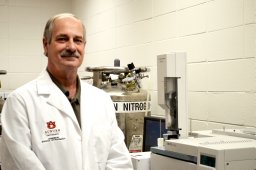 Jack Deruiter合作论文数Harrison School of Pharmacy, Auburn University45
 Shridhar V Andurkar合作论文数Chicago College of Pharmacy, Midwestern University4Paula Pitts-monk合作论文数2Laura Aalberg合作论文数2AK VALAER合作论文数2CL MCMILLIAN合作论文数2Erkki Sippola合作论文数2
 Kamal H. Bouhadir合作论文数Department of Chemistry, Auburn University2Timothy W. Davenport合作论文数1TN RILEY合作论文数1Pamela L. Holston合作论文数1D. E. Walters合作论文数1




