A series of coordination polymers containing Cu(II) and [Au(CN)(2)](-) units has been prepared. Most of their structures incorporate attractive gold-gold interactions, thus illustrating that such "aurophilic" interactions can be powerful tools for increasing structural dimensionality in supramolecular systems. [Cu(tren)Au(CN)(2)][Au(CN)(2)] (1, tren = tris(2-ethylamino)amine) forms a cation/anion pair, which is weakly linked by hydrogen bonds but not by aurophilic interactions. [Cu(en)(2)Au(CN)(2)][Au(CN)(2)] (2-Au, en = ethylenediamine) is a 2-D system composed of a chain of [Au(CN)(2)](-) anions and another chain of [(en)(2)Cu-NCAuCN](+) cations; short Au-Au bonds of 3.1405(2) A connect the anions. This bond is shorter than that observed in the analogous silver(I) structure, 2-Ag. The average M-C bond lengths of 1.984(8) A in 2-Au are significantly shorter than those found in 2-Ag, suggesting that Au(I) is smaller than Ag(I). Cu(dien)[Au(CN)(2)](2) (3, dien = diethylenetriamine) forms a 1-D chain of tetranuclear [Au(CN)(2)](-) units that are bound to [Cu(dien)] centers. Aurophilic interactions of ca. 3.35 A hold the tetramer together. Cu(tmeda)[Au(CN)(2)](2) (4, tmeda = N,N,N',N'-tetramethylethylenediamine) forms a 3-D network by virtue of aurophilic interactions of 3.3450(10) and 3.5378(8) A. Altering the Cu:Au stoichiometry yields Cu(tmeda)[Au(CN)(2)](1.5)(ClO(4))(0.5) (5), which has an unusual 2-D rhombohedral layer structure (space group R32). Complex 5 is composed of three mutually interpenetrating Cu[Au(CN)(2)](1.5) networks which are interconnected by aurophilic interactions of 3.4018(7) and 3.5949(8) A. Weak antiferromagnetic coupling is observed in 2 and 5.
The major aqueous equilibrium complexation reactions of vanadate in the presence of N,N-dimethylhydroxylamine (DMHA) and with dithiothreitol (DTT), β-mercaptoethanol, glycine, or cysteine in solution have been studied using 51V NMR spectroscopy. Previously unreported DMHA complexes of 2:1 and 2:3 V:DMHA stoichiometry were observed and characterized. Concentration studies showed that, for the three sulphur-containing ligands, the major product of sulphur coordination has a 1:2:1 stoichiometry of vanadate to dimethylhydroxylamine to heteroligand. These products do not carry a charge in neutral to moderately basic solution. A second product type of 1:1:1, V to DMHA to heteroligand, stoichiometry is also formed. These products carry a single negative charge. A reductive reaction between vanadate and excess DTT to form a V(IV) complex was also observed and a solid product was isolated. This product could also be obtained by direct reaction of vanadyl sulphate with DTT. It was characterized by X-ray diffraction studies. Crystal structure of [{VO(SCH2CHOHCHOCH2S)}2] [AsPh4]2: monoclinic, space group P21/n, Z = 2, a = 10.1607(18) Å, b = 17.8255(42) Å, c = 15.1520(33) Å, β = 104. 000(15)°, V = 2662.8 Å3, RF = 0.038 for 2327 data (Io [Formula: see text] 2.5σ(Io)) and 325 variables.Key words: vanadate, vanadyl, dithiothreitol, mercaptoethanol, cysteine, glycine, equilibrium constants, crystal structure, X-ray, vanadium NMR.
ADVERTISEMENT RETURN TO ISSUEPREVCommunicationNEXTA New Structural Motif for the Design of Potent Glucosidase InhibitorsKelly S. E. Tanaka, Geoffrey C. Winters, Raymond J. Batchelor, Frederick W. B. Einstein, and Andrew J. BennetView Author Information Department of Chemistry, Simon Fraser University 8888 University Drive, Burnaby British Columbia V5A 1S6, Canada Cite this: J. Am. Chem. Soc. 2001, 123, 5, 998–999Publication Date (Web):January 16, 2001Publication History Received31 October 2000Published online16 January 2001Published inissue 1 February 2001https://pubs.acs.org/doi/10.1021/ja005746bhttps://doi.org/10.1021/ja005746brapid-communicationACS PublicationsCopyright © 2001 American Chemical SocietyRequest reuse permissionsArticle Views665Altmetric-Citations32LEARN ABOUT THESE METRICSArticle Views are the COUNTER-compliant sum of full text article downloads since November 2008 (both PDF and HTML) across all institutions and individuals. These metrics are regularly updated to reflect usage leading up to the last few days.Citations are the number of other articles citing this article, calculated by Crossref and updated daily. Find more information about Crossref citation counts.The Altmetric Attention Score is a quantitative measure of the attention that a research article has received online. Clicking on the donut icon will load a page at altmetric.com with additional details about the score and the social media presence for the given article. Find more information on the Altmetric Attention Score and how the score is calculated. Share Add toView InAdd Full Text with ReferenceAdd Description ExportRISCitationCitation and abstractCitation and referencesMore Options Share onFacebookTwitterWechatLinked InRedditEmail Other access optionsGet e-AlertscloseSupporting Info (1)»Supporting Information Supporting Information SUBJECTS:Fungi,Inhibition,Inhibitors,Molecular structure,Peptides and proteins Get e-Alerts
Crystalline 2-benzyloxypyridine-1-oxide rearranges slowly at room temperature to crystalline 1-benzyloxy-2-pyridone. No intermediates are detected when the process is followed by solid-state 13C NMR. The crystal structure of the pyridine-1-oxide strongly suggests that a topochemically controlled intramolecular process, in which the benzyl group migrates with retention of configuration, is not feasible. On the other hand, although somewhat disfavoured by initial solid-state O···C···O angles significantly less than the ideal 180°, intermolecular topochemically controlled processes can be envisaged that lead, with multiple inversions of configuration, either to net retention of configuration or to net inversion of configuration in the benzyl group. In contrast to the 5080% inversion observed in solution, in the solid state only inversion is observed experimentally when chirally labelled α-deuteriobenzyloxypyridine-1-oxide is allowed to rearrange.Key words: X-ray crystallography, solid-state 13C NMR, benzyl-α-D-alcohol, 2-benzyloxypyridine-1-oxide, 1-benzyloxy-2-pyridone.
51V NMR and IR spectroscopic studies of the complexes formed between vanadate and the alpha-hydroxylic acid ligands, (S)-2-hydroxypropanoic acid (L-(+)-lactic acid), 2-hydroxy-2-methylpropanoic acid, and 2-ethyl-2-hydroxybutanoic acid were carried out for aqueous 1 M ionic strength (NaCl) solutions. Three major products in V to L stoichiometries of 1:1, 2:2, and 3:2 were identified from vanadate and ligand concentration studies, while a pH variation study allowed charge states to be determined. At pH 7.06, the formation constants for the predominant reactions were (26 +/- 1) M (-1), (V + L <= => VL); (6.8 +/- 0.4) x 10(3) M(-1), (2VL <= => V(2)L(2)); and (3.5 +/- 0.3) x 10(3) M(-1), (V(2)L(2) + V <= => V(3)L(2)). Dissolution studies of various crystalline products were carried out for aqueous, nonaqueous, and mixed solvent systems. These studies combined with information available from X-ray structural studies provided a basis for the assignment of solution state structures. Pentacoordinate vanadium in a trigonal-bipyramidal geometry was proposed for the both the 1:1 and 2:2 complexes when in aqueous solution. Observed changes in (51)V chemical shift patterns were consistent with a cis fusion in octahedral coordination for the central vanadium of the 3:2 complex, while the remaining vanadiums retained a pentacoordinate geometry.
The crystal structure of Cu(16Se4)(SO 3 CF 3 ) 2 (1) shows a centrosymmetric complex having tetragonally distorted octahedral coordination about Cu with trans-axial triflate ligands; CuO 2.464(5) Å. The stereochemistry of the coronand is c,t,c; CuSe 2.4592(9), 2.4553(9) Å. 1: T = 190 K; fw = 845.83; space group P2 1 /n; Z = 2; a = 8.220(2), b = 10.965(4), c = 14.657(5) Å; V = 1273.4 Å 3 ; R f = 0.037 for 1708 data (I o [Formula: see text] 2.5sigma(I o )) and 152 variables. When recrystallized from MeNO 2 Et 2 O 1 undergoes an electron-transfer reaction to give Cu(I) as well as the intermediate radical cation [16Se4] ·+ and the stable dication [16Se4] 2+ . The crystal structure of a mixed MeCNCH 2 Cl 2 solvate of [(16Se4)][SO 3 CF 3 ] 2 (2) revealed the [16Se4] 2+ cation which displays two transannular SeSe bonds of 2.5916(15) and 2.6689(15) Å, linking three of the Se atoms in an approximately linear relationship. The central Se atom of this grouping also has a close contact to the fourth Se atom of the molecule of 3.3941(20) Å. 2·solv: T = 195 K; fw = 828; space group P1 - ; Z = 2; a = 9.015(2), b = 12.850(3), c = 13.835(3) Å; α = 63.98(2), β = 74.71(2), γ = 73.59(2)°; V = 1363.3 Å 3 ; R f = 0.042 for 2098 data (I 0 [Formula: see text] 2.5σ(I 0 )) and 254 variables. A solid-state 77 Se NMR spectrum of 2 shows 4 lines, with isotropic shifts ranging from 173 to 737 ppm. The line widths are all different, and we obtain a tentative assignment by attributing this to differences in dipolar coupling to 19 F. Significant differences in chemical shift anisotropy are observed for the various selenium atoms. UV-visible absorption spectroscopy has been used to characterize 1 and its reduction products. 1 absorbs at 560, 464, and 310 nm. Reaction of 1 with the free ligand 16Se4 leads to the disappearance of these peaks, and the growth of a new peak at 320 nm. Oxidation of 16Se4 by NOBF 4 produced a transient peak at 320 nm, and subsequently a peak at 256 nm. From the dependence of intensity on 16Se4 concentration, we infer that the former arises from a dimeric species; we assign the lines to the radical cations (16Se4) 2 +· and 16Se4 +· , respectively. Electrochemical studies have been carried out on 1 and on 16Se4. Cyclic voltammetry of 1 shows a two-step reduction to Cu(II)L +· (L = 16Se4) and subsequently to Cu(I)L + . Electrochemical oxidation of 16Se4 leads to 16Se4 +· and 16Se4 2+ . Spectroelectrochemical studies showed that oxidation to 16Se4 +· gives rise to a band at 256 nm, as seen in chemical oxidation, and at high concentrations a band at 322 nm is also seen, supporting the assignment of this species to the dimeric radical cation. The EPR spectrum of 1 in CH 3 NO 2 solution gave an isotropic g value of 2.053 with hyperfine constants A Cu iso = 75 G and A Se iso = 65 G. The low temperature EPR spectrum of 1, measured at -148°C in CH 3 NO 2 :toluene (1:1 v/v), gave values of g // = 2.085, A Cu // = 160 G; g [Formula: see text] = 2.049, A Cu [Formula: see text] = 46 G. An EPR spectrum of 1 in CH 3 NO 2 in the presence of added 16Se4 showed a decrease in intensity of the signals attributable to 1 and the emergence of new signals that are presumed to arise from a species with radical cation character. We have carried out kinetic studies on the reaction between 1 and 16Se4. It is found that the reaction is first order in each of these species, second order overall. The reaction stoichiometry is 2 Cu(16Se4) 2+ + 16Se4 –> 2 Cu(16Se4) + + 16Se4 2+ . These results can be explained by the simple mechanism Cu(II)L 2+ + L = L +· + Cu(I)L + , followed by Cu(II)L 2+ + L +· –> L 2+ + Cu(I)L + . The activation energy is found to be 35 kJ mol -1 .Key words: selenium coronands, Cu(II) complex, redox chemistry, mechanism, electron transfer.
The synthesis and characterization of new selenium coronands and of copper(I) and copper(II) complexes of selenium coronands are reported. Molecular structures in the solid state have been determined by X-ray crystallography. The molecular structures of 6,7,13,14-dibenzo-1,5,8,12-tetraselenacy (dibenzo-14Se4 (1)) and 1,5,9-triselenacyclododecane (12Se3 (2)) adopt conformations which maximize the number of possible gauche C-Se-C-C bond torsion angles. 1: T = 190 K; orthorhombic, space group Pca2(1); fw = 552.19; Z = 4; a = 9.645(3) Angstrom; b = 12.679(6) Angstrom; c 15.332(4) Angstrom; V = 1874.9 Angstrom(3); R-F = 0.027 for 1732 data (I-o greater than or equal to 2.5 sigma(I-o)) and 200 variables. 2: T = 190 K; orthorhombic, space group Pn2(1)a; fw = 363.12; Z = 4; a = 14.943(4) Angstrom, b = 5.638(2) Angstrom; c = 14.229(3) Angstrom, V = 1198.8 Angstrom(3); R-F = 4.026 for 862 data (I-o greater than or equal to 2.5 sigma(I-o)) and 111 variables. The molecular structures of 1,5-diselena-9,13-dithiacyclohexadecane (16Se2S2 (3)) and [Cu(16Se2S2)][SO3CF3](2) (4) correspond to those displayed by both of the analogous tetrathia and tetraselena macrocycles. Compound 3 adopts a [3535] quadrangular conformation. Compound 4, [Cu(16Se4(OH)2][SO3CF3](2) (5) (where 16Se4(OH)(2) = cis-1,5,9,13-tetraselenacyclohexadecane-3,11-diol), and [Cu(8Se2(OH))(2)][SO3CF3](2) (6) (where 8Se2(OH) = 1.5-diselenacyclooctan-3-ol) have typical tetragonally distorted octahedral coordination environments of Cu(II). Compounds 4 and 5 both display a c,t,c configuration of the coronand. Compound 5 has only one hydroxyl group coordinated in an axial position, which requires that the corresponding Se-Cu-Se-C-C-C ring be locked into a boat rather than a chair conformation.The hydroxyl groups in 6 occupy the axial coordination positions. 3: T = 200 K; monoclinic, space group C2/c; fw = 390.36; Z = 12; a = 24.202(9) Angstrom; b = 18.005(7) Angstrom; c 16.235(5) Angstrom; beta 138.23(3)degrees; V = 4713 Angstrom(3); R-F = 0.052 for 1881 data (I-o greater than or equal to 2.5 sigma(I-o)) and 172 variables. 4: T = 297 K: monoclinic, space group P2(1)/n; fw = 752.03; Z = 2; a = 8.882(2) Angstrom; b = 10.874(2) A; c = 13.360(2) Angstrom; beta = 97.95(2)degrees; V = 1277.9 Angstrom(3); R-F = 0.028 for 1610 data (I-o greater than or equal to 2.5 sigma(I-o)) and 176 variables. 5: T = 190 K; monoclinic, space group P2(1)/n; fw = 877.84; Z = 4; a = 8.412(5) Angstrom; b = 20.924(5) Angstrom; c = 15.021(5) Angstrom; beta = 100.82(4)degrees; V = 2597 Angstrom(3); R-F = 0.059 for 2152 data (I-o greater than or equal to 2.5 sigma(I-o)) and 185 variables. 6: T = 195 K; monoclinic, space group P2(1)/c; fw = 877.84; Z = 2; a = 6.675(2) Angstrom; b = 10.945(2) Angstrom; c = 17.496(2) Angstrom, beta = 96.76(2)degrees; V = 1307.3 Angstrom(3); R-F = 0.023 for 1816 data (I-o greater than or equal to 2.5 sigma(I-o)) and 159 variables. [Cu(16Se2S2)][SO3CF3] (7) and [Cu(16Se4(OH))][SO3CF3] (8) (where 16Se4(OH) = 1,5,9,13-tetraselenacyclohexadecan-3-ol) are both terrahedral Cu(I) coronand complexes with typical t,t,t configurations.7. T = 205 K; triclinic, space group P (1) over bar; fw = 602.97; Z = 2; a = 10.512(3) Angstrom; b = 10.674(2) Angstrom; c = 10.682(3) Angstrom; alpha = 101.47(2)degrees; beta = 116.82(2)degrees; gamma = 93.59(2)degrees; V = 1032.3 Angstrom(3); R-F = 0.029 for 2237 data (I-o greater than or equal to 2.5 sigma(I-o)) and 264 variables. 8: T = 297 K; monoclinic, space group P2(1)/n; fw = 712.77; Z = 4; a = 13.695(2) Angstrom; b = 11.202(2) Angstrom; c = 14.163(3) Angstrom; beta = 92.35(2)degrees; V = 2170.9 Angstrom(3); R-F = 0.035 for 2086 data (I-o greater than or equal to 2.5 sigma(I-o)) and 189 variables. Compounds 5, 6, and 8 all display hydrogen bonding between hydroxyl groups and the SO3CF3- ions. Isotropic C-13 and Se-77 chemical shifts have been obtained in the solid state for 2,3,1,5,9,13-tetraselenacyclohexadecane-3, 11-diol (16Se4(OH)(2) (9)), 1,5,9,13-etraselenacyclohexadecan-3-ol (16Se4(OH) (10)), and the dicationic complex 1,5,-(diseleniacyclooctane trifluoromethanesulfonate (8Se2(SO3CF3)(2) (11)). In addition, the Se-77 chemical shift anisotropies have been determined for 10 and 11. The dicationic compound 11 resonates at lower field, reflective of a contribution from the transannular Se-Se bond. The redox behavior of 1-8 has been examined by means of cyclic voltammetry. Redox behavior of the copper complexes 4, 5, and 6 indicates the presence of two different conformational isomers of the Cu(I) complexes that are oxidized at different potentials, analogous to Rorabacher's copper(II/I) complexes that follow a dual-pathway square-scheme mechanism. The quasi-reversible cyclic voltammograms observed for the Cu(II) complexes of selenium coronands reflect the configurational changes between Cu(II) complexes (octahedral or tetragonal configurations) and Cu(T) complexes (tetrahedral configurations) and indicate that the configurational changes are slower than the electron transfers to the electrode.
The neutral ruthenium complexes Cp'Ru(PR3)(2)Cl [Cp' = Cp, PR3 = PPh3, PMe3, or 1/2 dppe; Cp' = Cp*, PR3 = PMe3] react with [p-MeOC6H4N2][BF4] in acetone to give new cyclopentadienyl ruthenium aryldiazenido dicationic complexes [Cp'Ru(PR3)(2)(N2C6H4OMe)]-[BF4](2) [Cp' = Cp, PR3 = PPh3 (1), PMe3 (2), or 1/2 dppe (3); Cp' = Cp*, PR3 = PMe3 (4)] in good yields. The dicationic complexes 1-3 may also be conveniently isolated in better yield by treatment of the acetonitrile ruthenium complexes [CpRu(PR3)(2)(NCMe)][BF4] with the arenediazonium salt. When the reaction of Cp'Ru(PPh3)(2)Cl (Cp' = Cp or Cp*) with [p-MeOC6H4N2][BF4] is carried out in toluene, the product is instead the cyclopentadienyl ruthenium aryldiazenido monocationic complex [Cp'RuCl(PPh3)(N2C6H4OMe)][BF4] [Cp' = Cp (5) or Cp* (6)]. Further, if the reaction of Cp*Ru(PPh3)(2)Cl with diazonium salt is carried out in acetone, the binuclear complex [Cp*RuCl(N2C6H4OMe)](2)[Cl](2) (7) can be isolated in low yield in addition to 6. All new complexes 1-7 were fully characterized by NMR, FT-IR, and mass spectroscopies. The structure of [CpRu(PPh3)(2)(N2C6H4OMe)][BF4](2). 0.93CHCl(3) (1 . 0.93CHCl(3)) was determined by single-crystal ii-ray diffraction. The structure exhibits a near-linear Ru-N-N-C geometry for the coordinated aryldiazenido group, with the NNC angle having a value of 159 degrees, compared to the "sp(2)" value of approximately 120 degrees commonly exhibited by other "singly bent" aryldiazenido complexes. On the basis of NMR spectroscopic data, 1 reacts with NaBH4 at low temperature to give an arylhydrazido(2-) complex [CpRu(PPh3)(2)-{NN(H)C6H4OMe}][BF4], which readily converts to the corresponding aryldiazene complex [CpRu(PPh3)(2)(NH=NC6H4OMe)][BF4] by a hydrogen shift; at room temperature, the only product is the hydride complex CpRuH(PPh3)(2).
Reaction of β-mercaptoethanol with vanadate under slightly alkaline conditions provided a crystalline complex that was characterized by X-ray diffraction and FTIR spectroscopy. The complex was dimeric in structure with a central [VO] 2 core and a pentacoordinate, crudely trigonal bipyramidal arrangement about each vanadium atom with a sulphur occupying a pseudo-axial position. A single 51 V NMR signal was observed for this complex when dissolved in water, chloroform or acetonitrile. A large influence of acetonitrile on the vanadium chemical shift suggested the possibility of reaction with acetonitrile. FTIR showed the presence of two complexes in acetonitrile solution but only one in chloroform or water. Mixed solvent studies were carried out in an effort to further characterize the solution complexes. Crystal structure of [{VO 2 (OC 2 H 4 S)} 2 ][NEt 4 ] 2 : monoclinic, space group P2 1 /n,. a = 8.3451(17), b = 16.954(4), c = 10. 2064(25) Å; β = 101. 271(18)°; V = 1416.2 Å 3 ; Z = 2; R F = 0.048 for 1355 data (I o 2..5σ (I o ) and 147 variables.Key words: mercaptoethanol, vanadate, vanadium NMR, X-ray diffraction, FTIR, thiolate.
Base-promoted hydrolysis kinetics for N-(4-nitrobenzoyl)pyrrole (1) have been measured as a function of buffer concentration at several pH values at 25°C. In addition carbonyl-18O exchange kinetics have been determined at a single pH value (9.48) as a function of 1,4-diazobicyclo[2.2.2]octane (DABCO) concentration. At zero buffer concentration the measured ratio of 18O exchange to hydrolysis (kex/khyd) is approximately 0.04, and this value increases and finally levels off at about 0.23 as the DABCO concentration is increased. These observations are consistent with the buffer acting as a general-base to catalyze both the attack of water to generate an anionic tetrahedral intermediate (To-) and the breakdown of To- to give hydrolysis products.Key words: amide, hydrolysis, catalysis, general-base, tetrahedral intermediate.
The synthesis, x-ray crystal structure and solid -state nmr spectroscopy of 4,4-dimethyl 1,2-ditellurolane are reported.
Bis(hydroxamido)hydroxooxovanadate has been found to undergo favourable condensation reactions with simple peptides such as glycylglycine, glycylglycylglycine, or glycyltyrosine to afford, in each case, three products in the approximate ratio 1:3.5:0.2. The three products had the same ligand stoichiometry and, in the case of glycylglycine, an overall formation constant of 3.3 × 10³ M−1 for the addition of GlyGly to bis(hydroxamido)vanadate. The 51V chemical shift range of the products (close to −850 ppm) overlaps that of the starting complexes and the products may well have a coordination geometry similar to the parent complexes. The chemical shifts observed for these materials are in the range of chemical shifts observed for peroxovanadium complexes. A crystalline monomeric complex with a single glycylglycinato ligand was obtained and its crystal structure determined. The complex is zwitterionic and has a pentagonal bipyramidal coordination at vanadium with the glycine-NH2 functionality coordinated in the plane of the two hydroxyalamine ligands and the amido carbonyl oxygen in the apical position. Some comparisons with peroxovanadium complexes are drawn. Crystal structure of V(O)(ONH2)2(GlyGly)•H2O: monoclinic, space group Cc; Z = 4; a = 9.1340(9) Å; b = 16.3355(15) Å; c = 7.1149(6) Å; β(°) = 103.020(7); V = 1034.31 Å3; T = 295 K; RF = 0.21 for 2513 data (I0 ≥ 2.5σ(I0)) and 197 variables. Keywords: vanadate, hydroxylamine, N-methylhydroxylamine, oxobis(hydroxamido)glycylglycinatovanadium(V), peptide complex, glycylglycine, 51V NMR, crystal structure.
The title compound, octacarbonyl-1 kappa(4)C,2 kappa(4)C-dihydrido-1 kappa H,2 kappa H-bis(phenyl-3 kappa C)germaniumdiosmium(2 Ge-Os), [Os-2(H)(2)(CO)(8){Ge(C6H5)(2)}], is the first cluster containing a single Os-E-Os (E = Ge, Sn or Pb) chain to be structurally characterized. The molecule possesses approximate C-2 symmetry. The Os-Ge-Os metal chain is bent and the Os-Ge bonds [2.599 (2) and 2.614 (2) Angstrom] are the longest yet known.
The compound [Os(CO)4(SnPh2)]6 (1) has been isolated as one product from the reaction of Na2[Os(CO)4] and Ph2SnCl2 in THF. The X-ray structure of 1 reveals it possesses an approximately planar 12-membered ring of alternating tin and osmium atoms. Carbon-13 NMR spectroscopy indicates there is free rotation about the Os−Sn bonds in 1 in solution so as to render all the carbonyl ligands equivalent.
Complexes of formula (η6-C6H6-xRx)Fe(CO)(SiCl3)2 have been prepared from the reaction of Fe(CO)4(SiCl3)2 and the appropriate arene at 210 °C. The characterization of the complexes included the crystal structures of the 1,4-C6H4Pri2 and C6Me6 derivatives. As ascertained by variable-temperature 1H NMR spectroscopy, the (η6-1,4-C6H4R2)Fe(CO)(SiCl3)2 (R = Me, Et, Pri) compounds exhibit restricted rotation of the arene ring about the iron atom. Line-shape analyses of the NMR spectra reveal the barriers to the rotation in the three compounds are approximately the same (ΔG⧧298 = 9.6−10.8 kcal mol-1). This finding is rationalized in terms of gearing of the R and SiCl3 groups with the rotation. The 1,3,5-C6H3Me3 and C6Me6 derivatives do not show restricted rotation of the arene ring by 1H NMR spectroscopy to −120 °C. It is concluded from these observations that both ground-state and transition-state effects are important in determining the barrier to rotation of the arene ring in organometallic molecules.
This paper reports the characterization of the fac-Os(CO)3(PME3)Cl2 (fac-2) product that is formed when (Me3P)(OC)4OsW(CO)5 (1; a complex with a dative OsW bond) is irradiated (λ > 400 nm) in the presence of CCl4. In an attempt to independently synthesize fac-2), Os3(CO)9(PMe3)3 was allowed to react with Cl2. The product, however, was mer-cis-Os(CO)3(PMe3)Cl2 (mer-cis-2). The mer-cis isomer is converted to the fac isomer (fac-2) by stirring under nitrogen in THF for nine days. The stereochemistry of each compound was confirmed by infrared and NMR spectroscopy and by X-ray crystallography. The [Os(CO)2(PMe3)(Cl)(μ-Cl)]2 compound (3) was also formed as a minor product in the conversion of mer-cis-Os(CO)3(PMe3)Cl2 to fac-Os(CO)3(PMe3)Cl2. Irradiation (λ > 400 nm) of Os(CO)4(PMe3) in benzene in the presence of CCl4 gave a product tentatively identified as fac-Os(CO)3(PMe3)(CCl3)Cl (4), which results from the oxidative-addition of CCl4 to OS(CO)3(PMe3).
The molecular structure of the chloro-bridged tetraosmium cluster, dodecacarbonyl-1 kappa(3)C, 2 kappa(3)C, 3 kappa(3)C, 4 kappa(3)C-mu-chloro-3:4 kappa(2)Cl-tris-mu-hydrido-1:2 kappa(2)H; 1:3 kappa(2)H; 2:4 kappa(2)H-tetraosmium(5 Os-Os), [Os-4(mu-Cl)(mu-H)(3)(CO)(12)], consists of a 'butterfly' arrangement of Os atoms, just as in the iodo analogue. The chloro bridge in the tetraosmium cluster is symmetric, whereas in the pentaosmium cluster, tetradecacarbonyl-1 kappa(3)C, 2 kappa(2)C, 3 kappa(3)C, 4 kappa(3)C, 5 kappa(3)-mu-chloro-2:5 kappa(2)Cl-tris-mu-hydrido-1:2 kappa(2)H; 2:3 kappa(2)H; 2:4 kappa(2)H-pentaosmium(8 Os-Os), [Os-5(mu-Cl)(mu-H)(3)(CO)(14)], it is distinctly asymmetric. This asymmetry is attributed to the trans influence of a carbonyl ligand, which lengthens the trans-Os-Cl bond.
51V nuclear magnetic resonance spectroscopy has been utilized in the investigation of the reactions of vanadate with N,N-dimethylhydroxylamine in aqueous medium. The major components of the reaction products were mono- and bisliganded mononuclear vanadate compounds with 51V chemical shifts near −630 and −740 ppm, respectively. Variation of the concentration of the reactants enabled the determination of stoichiometry and formation constants of the products. The two major signals near −740 ppm were assigned to two stereoisomers of a bisligand product. The proton stoichiometrics and pKa values of the major products were determined from pH variation studies. A crystalline product of the type [V(O)(ONMe2)2]2O was isolated from the reaction of vanadate with dimethylhydroxylamine and its structure determined from X-ray diffraction studies. The compound possesses a dimeric oxo-bridge structure with a six-coordinate vanadium core. The arrangement about each vanadium may be described as approximately tetrahedral considering the center of the N—O bond in each dimethylhydroxamide ligand as one vertex. Hydrolysis of the crystalline solid in D2O provided two isomers that corresponded to the two bisligand products. A variable temperature 1H NMR study in D2O and 50% D2O/(CD3)2CO mixture revealed the existence of reasonably fast chemical exchange between the two predominant isomers. The nature of coordination of these and related compounds is discussed. Crystal structure of [V(O)(ONMe2)2]2O: orthorhombic, space group P22121;Z = 2;a = 7.0955(9) Å; b = 10.2313(12) Å; c = 11.5942(11) Å; V = 841.69 Å3; T = 213 K; RF = 0.021 for 1141 data (I0 ≥ 2.5σ(I0) ) and 137 variables. Keywords: bis(N,N-dimethylhydroxamido)hydroxooxovanadate, vanadate, dimethylhydroxylamine, vanadium NMR, aqueous equilibria, peroxovanadate.
The title compound, hexadecacarbonyl-1 kappa(3)C, 2 kappa(3)C,-3 kappa(3) C, 4 kappa(4) C, 5 kappa(3) C-di-mu-hydrido-1:2 kappa(2)H; 1:3 kappa(2)H-pentaosmium(8 Os-Os), has been crystallized in a different crystal form from that reported previously [Guy & Sheldrick (1978). Acta Cryst. B34, 1725-1727]. The form reported here has crystallographic mirror symmetry and the packing arrangement in the crystal exhibits a different relative orientation of the molecules from the earlier structure.
The synthesis of bis(carbonyl)mercury(II) undecafluorodiantimonate(V), [Hg(CO)(2)][Sb(2)F(11)](2), and that of the corresponding mercury(I) salt [Hg(2)(CO)(2)][Sb(2)F(11)](2) are accomplished by the solvolyses of Hg(SO(3)F)(2) or of Hg(2)F(2), treated with fluorosulfuric acid, HSO(3)F, in liquid antimony(V) fluoride at 80 or 60 degrees C, respectively, in an atmosphere of CO (500-800 mbar). The resulting white solids are the first examples of metal carbonyl derivatives formed by a post-transition element. Both salts are characterized by FT-IR, FT-Raman, and (13)C-MAS-NMR spectroscopy. For [Hg(CO)(2)][Sb(2)F(11)], unprecedentedly high CO stretching frequencies (nu(av) = 2279.5 cm(-)(1)) and stretching force constant (f(r) = 21.0 +/- 0.1) x 10(2) Nm(-)(1)) are obtained. Equally unprecedented is the (1)J((13)C-(199)Hg) value of 5219 +/- 5 Hz observed in the (13)C MAS-NMR spectrum of the (13)C labeled isotopomers at delta = 168.8 +/- 0.1 ppm. The corresponding values (nu(av) = 2247 cm(-)(1), f(r) = (20.4 +/- 0.1) x 10(2) Nm(-)(1), (1)J((13)C-(199)Hg) = 3350 +/- 50 Hz and (2)J((13)C-(199)Hg) 850 +/- 50 Hz) are found for [Hg(2)(CO)(2)][Sb(2)F(11)](2), which has lower thermal stability (decomposition point in a sealed tube is 140 degrees C vs 160 degrees C for the Hg(II) compound) and a decomposition pressure of 8 Torr at 20 degrees C. The mercury(I) salt is sensitive toward oxidation to [Hg(CO)(2)][Sb(2)F(11)](2) during synthesis. Both linear cations (point group D(infinity)(h)()) are excellent examples of nonclassical (sigma-only) metal-CO bonding. Crystal data for [Hg(CO)(2)][Sb(2)F(11)](2): monoclinic, space group P2(1)/n; Z = 2; a = 7.607(2) Å; b = 14.001(3) Å; c = 9.730(2) Å; beta = 111.05(2) degrees; V = 967.1 Å(3); T = 195 K; R(F) = 0.035 for 1983 data (I(o) >/= 2.5sigma(I(o))) and 143 variables. The Hg atom lies on a crystallographic inversion center. The Hg-C-O angle is 177.7(7) degrees. The length of the mercury-carbon bond is 2.083(10) Å and of the C-O bond 1.104(12) Å respectively. The structure is stabilized in the solid state by a number of significant secondary interionic Hg- - -F and C- - -F contacts.
 Raymond J. Batchelor合作论文数57
 Roland Pomeroy合作论文数37Derek Sutton合作论文数29Anthony C Willis合作论文数27
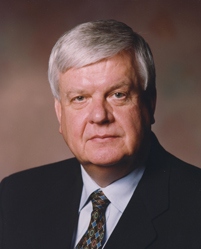 Peter Legzdins合作论文数Department of Chemistry, UBC Faculty of Science26
 Richard H. Jones合作论文数Inorganic Chemistry at Keele University20R. E. Cobbledick合作论文数17Terry Jones合作论文数16
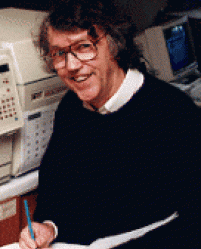 William R. Cullen合作论文数Chemistry Department, University of British Columbia/European Virtual Institute for Speciation Analysis14Ian D. Gay合作论文数11
 B. Mario Pinto合作论文数Department of Chemistry,Simon Fraser University9Vj Johnston合作论文数8
 Howard Alper合作论文数Department of Chemistry, University of Ottawa8
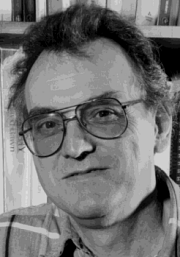 Alan S. Tracey合作论文数Department of Chemistry, NMR Services8C. H. W. Jones合作论文数8P RUSHMAN合作论文数7Jd Debad合作论文数6Xq Yan合作论文数6
 Weng Kee Leong合作论文数Division of Chemistry and Biological Chemistry, School of Physical and Mathematical Sciences, College of Science, Nanyang Technological University6
 Alan R Davis合作论文数6
 David Dolphin合作论文数Department of Chemistry, Faculty of Science, The University of British Columbia;Quadra Logic Technologies5Kenneth G. Tyers合作论文数5Lillian R. Martin合作论文数5RD SHARMA合作论文数5P. L. Vogel合作论文数4C. F. BARRIENTOS-PENNA合作论文数4Ak Ma合作论文数4Hb Davis合作论文数4
 W. Stephen McNeil合作论文数Department of Chemistry, Irving K. Barber Faculty of Science, The University of British Columbia4
 Andrew J. Bennet合作论文数Department of Chemistry, Simon Fraser University4
 David B Johnston合作论文数US Department of Agriculture, Eastern Regional Research Center4Sarah J. Angus-Dunne合作论文数4A RIESEN合作论文数4
 Weibin Wang (王渭滨)合作论文数4JL Male合作论文数3Frederick W. Hartstock合作论文数3St Chacon合作论文数3
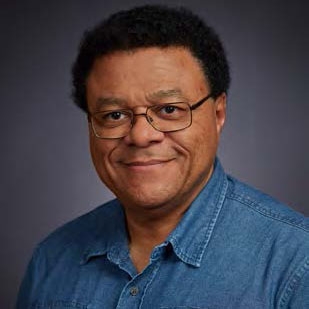 George B. Richter-Addo合作论文数Department of Chemistry and Biochemistry, University of Oklahoma3Anthony Willis合作论文数Research School of Chemistry, Australian National University Canberra3
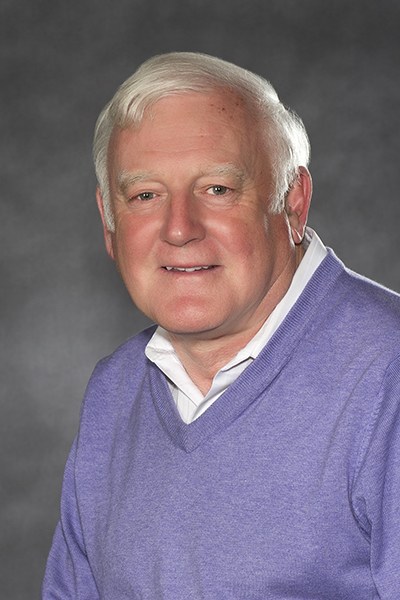 Nicholas P. Farrell合作论文数College of Humanities and Sciences, Virginia Commonwealth University3
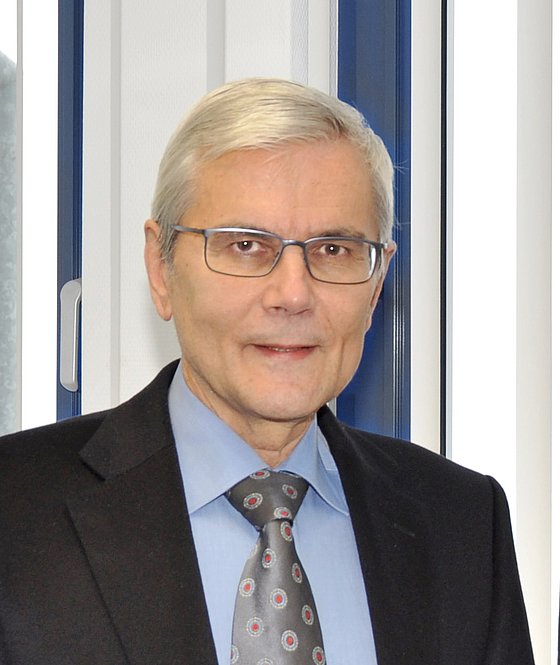 Helge Willner合作论文数Fakultät für Mathematik und Naturwissenschaften, Bergische Universität Wuppertal3F. Aubke合作论文数3Xiaoheng Zhang合作论文数3Jun-Ming Zhuang合作论文数3John E. Veltheer合作论文数3Jean Francois Petrignani合作论文数3
 Xuemin Zhou (周学敏)合作论文数School of Pharmacy,Nanjing Medical University3M WILLIAMS合作论文数3




