Crop classification in satellite images is an important pre-processing step in remote crop monitoring. Leveraging recent progress in signed graph frequency analysis, we build a signed graph spectral clustering algorithm with supervised feature learning for binary crop classification. During training, we learn a low-dimensional feature vector fi for each image pixel i, computed via a shallow CNN from observed spectral bands, to optimize a new contrastive learning objective: minimizing feature distances di,j between same-label pixel pairs (i,j) while maximizing distances di,l between different-label pixel pairs (i,l). During inference, we compute learned fi for input image pixels i, then map non-negative feature distances di,j between pixel pairs (i,j) to signed edge weights wi,j ∈ [−1,1] via a shifted logistic function. The edge weights {wi,j} specify a signed graph ${{\mathcal{G}}^s}$ that encodes pairwise (dis)similarities; we compute the first eigenvector v1 of a hybrid between signed graph Laplacian ℒs and combinatorial graph Laplacian ℒ in linear time and observe its signs for binary classification. Experiments show that our algorithm achieves competitive crop classification as representative deep learning models, while employing drastically fewer parameters.
Unlike conventional "black-box" transformers with classical self-attention mechanism, we build a lightweight and interpretable transformer-like neural net by unrolling a mixed-graph-based optimization algorithm to forecast traffic with spatial and temporal dimensions. We construct two graphs: an undirected graph 𝒢^u capturing spatial correlations across geography, and a directed graph 𝒢^d capturing sequential relationships over time. We predict future samples of signal 𝐱, assuming it is "smooth" with respect to both 𝒢^u and 𝒢^d, where we design new ℓ_2 and ℓ_1-norm variational terms to quantify and promote signal smoothness (low-frequency reconstruction) on a directed graph. We design an iterative algorithm based on alternating direction method of multipliers (ADMM), and unroll it into a feed-forward network for data-driven parameter learning. We insert graph learning modules for 𝒢^u and 𝒢^d that play the role of self-attention. Experiments show that our unrolled networks achieve competitive traffic forecast performance as state-of-the-art prediction schemes, while reducing parameter counts drastically. Our code is available in https://github.com/SingularityUndefined/Unrolling-GSP-STForecast .
Components of a typical EEG signal exhibit anti-correlations that are best modeled by signed graph edges. However, frequencies of a general signed graph are not well understood, complicating the design of a low-pass (LP) filter for denoising. Leveraging recent progress in spectral theory for balanced signed graphs, we first learn a balanced signed graph ${{\mathcal{G}}^B}$ directly from observed EEG data, where graph balance is enforced via a clever interpretation of the Cartwright-Harary Theorem (CHT). Frequencies of ${{\mathcal{G}}^B}$ are then mapped to those of a corresponding positive graph ${{\mathcal{G}}^ + }$ via a linear transform. This allows an ideal LP filter to be efficiently implemented via Lanczos approximation, where the cutoff frequency is learned. Pairing the unrolled LP graph filter with a graph learning module (acting as a self-attention mechanism) during unrolling results in a lightweight transformer-like neural net. Experiments show superior denoising performance for our balanced signed graph filter over positive and unbalanced signed graph implementations, and comparable to popular deep learning denoisers while reducing parameters drastically.
Generic deep learning (DL) networks for image restoration like denoising and interpolation lack mathematical interpretability, require voluminous training data to tune large parameter sets, and are fragile in the face of covariate shift. To address these shortcomings, we build interpretable networks by unrolling variants of a graph-based optimization algorithm of different complexities. Specifically, for a general linear image formation model, we first formulate a convex quadratic programming (QP) problem with a new $\ell _{2}$ -norm graph smoothness prior called gradient graph Laplacian regularizer (GGLR) that promotes piecewise planar (PWP) signal reconstruction. To solve the posed unconstrained QP problem, instead of computing a linear system solution straightforwardly, we introduce a variable number of auxiliary variables and correspondingly design a family of ADMM algorithms. We then unroll them into variable-complexity feedforward networks, amenable to parameter tuning via back-propagation. More complex unrolled networks require more labeled data to train more parameters, but have better overall performance. The unrolled networks have periodic insertions of a graph learning module, akin to a self-attention mechanism in a transformer architecture, to learn pairwise similarity structure inherent in data. Experimental results show that our unrolled networks perform competitively to generic DL networks in image restoration quality while using only a fraction of parameters, and demonstrate improved robustness to covariate shift.
A crucial assumption in graph signal processing (GSP) is the existence of an underlying graph that captures the pairwise similarities between nodes, allowing filters to be designed based on this graph for tasks such as denoising. For spatial-temporal data in which node-to-node similarities evolve over time, a static spatial graph is insufficient. In this paper, to represent slowly time-varying pairwise relationships, we model the graph changes in two consecutive adjacency matrices P = W^(2) - W^(1) across time as a low-rank matrix.
We build an interpretable and lightweight transformer-like neural net for image denoising from a graph signal processing (GSP) perspective. First, via an autoencoder setup, we transform an image (patch) from the input signal space to a norm-preserving latent space learned directly from data. Then, we denoise the signal’s latent representation via a split-Bregman (SB) algorithm minimizing a combination of Graph Laplacian Regularizers (GLR) and Graph Total Variations (GTV) of different orders and spatial resolutions—one that parametrizes a general Gaussian and Laplacian mixture model. We unroll iterations of our linear-time SB algorithm into a transformer-like network for data-driven parameter tuning. Experiments show that our image denoiser provides interpretability while achieving competitive performance as state-of-the-art (SOTA) methods, at a reduced parameter count.
In power-grid operations, the network topology is not made available to the public due to privacy and national security considerations. In this paper, we infer the underlying grid topology using locational marginal prices (LMPs) made available to the public by system operators in electricity markets, as well as observable power and voltage measurements across a subset of power nodes. Specifically, we first derive the voltage correlation matrix L from the LMP matrix that are related to one another deterministically by the optimal power flow (OPF) problem. Treating L as a graph Laplacian matrix, graph-based interpolation using observed voltage measurements at a subset of nodes is conducted to infer the complete voltage profile of the entire grid. Equipped with the power and voltage states across all the nodes in the grid, the grid topology is inferred by constructing a convex optimization problem that is then iteratively solved using alternating directions of multipliers (ADMM). Voltage interpolation is subsequently enhanced based on estimated grid topology in a feedback loop. Experimental results demonstrate that the inferencing of grid topology in practical systems (i.e. IEEE 118 bus benchmark system) is more accurate compared to competing inference schemes.
We study the problem of lossy attribute compression, given encoded 3D point cloud geometry available at the decoder, in a multi-resolution B-spline projection framework. A target continuous 3D attribute function is first projected onto a sequence of nested subspaces ${\mathcal {F}}^{(p)}_{l_{0}} \subseteq \cdots \subseteq {\mathcal {F}} ^{(p)}_{L}$ , where ${\mathcal {F}}^{(p)}_{l}$ is a family of functions spanned by a B-spline basis function of order $p$ at a chosen scale and its integer shifts. The projected low-pass coefficients $F_{l}^{*}$ are computed via variable-complexity unrolling of a rate-distortion (RD) optimization algorithm into a feed-forward network, where the rate term is the sparsity-promoting $\ell _{1}$ -norm. Thus, the projection operation is end-to-end differentiable. For a chosen coarse-to-fine predictor, the coefficients are then adjusted to account for the prediction from a lower-resolution to a higher-resolution, which is also optimized in a data-driven manner.
We aim to learn a sparse and connected graph from sparse data, where the number of observations K can be substantially smaller than the signal dimension N for signals x in R^N, and the underlying distribution is unknown. In this severely ill-posed setting, we incorporate Fiedler number (the second eigenvalue of the graph Laplacian matrix that quantifies connectedness) as a robust regularization term in the sparse graph learning objective. We first develop a greedy algorithm that iteratively selects one edge globally for weakening/removal to reduce the objective, leveraging eigenvalue perturbation theorems that bound the adverse effect of an edge change to the Fiedler number. Next, we design a parallel variant, based on the Cheeger's inequality, that recursively partitions an input graph into two sub-graphs using an approximate Cheeger cut to distributedly find an optimal edge. Simulation experiments show that Fiedler number maximization robustifies sparse graph estimates, outperforming previous sparse graph learning algorithms.
Samples of brain signals collected by EEG sensors have inherent anti-correlations that are well modeled by negative edges in a finite graph. To differentiate epilepsy patients from healthy subjects using collected EEG signals, we build lightweight and interpretable transformer-like neural nets by unrolling a spectral denoising algorithm for signals on a balanced signed graph -- graph with no cycles of odd number of negative edges. A balanced signed graph has well-defined frequencies that map to a corresponding positive graph via similarity transform of the graph Laplacian matrices. We implement an ideal low-pass filter efficiently on the mapped positive graph via Lanczos approximation, where the optimal cutoff frequency is learned from data. Given that two balanced signed graph denoisers learn posterior probabilities of two different signal classes during training, we evaluate their reconstruction errors for binary classification of EEG signals. Experiments show that our method achieves classification performance comparable to representative deep learning schemes, while employing dramatically fewer parameters.
A basic premise in graph signal processing (GSP) is that a graph encoding pairwise (anti-)correlations of the targeted signal as edge weights is exploited for graph filtering. However, existing fast graph sampling schemes are designed and tested only for positive graphs describing positive correlations. In this paper, we show that for datasets with strong inherent anti-correlations, a suitable graph contains both positive and negative edge weights. In response, we propose a linear-time signed graph sampling method centered on the concept of balanced signed graphs. Specifically, given an empirical covariance data matrix $\bar{\bf{C}}$, we first learn a sparse inverse matrix (graph Laplacian) $\mathcal{L}$ corresponding to a signed graph $\mathcal{G}$. We define the eigenvectors of Laplacian $\mathcal{L}_B$ for a balanced signed graph $\mathcal{G}_B$ -- approximating $\mathcal{G}$ via edge weight augmentation -- as graph frequency components. Next, we choose samples to minimize the low-pass filter reconstruction error in two steps. We first align all Gershgorin disc left-ends of Laplacian $\mathcal{L}_B$ at smallest eigenvalue $\lambda_{\min}(\mathcal{L}_B)$ via similarity transform $\mathcal{L}_p = \S \mathcal{L}_B \S^{-1}$, leveraging a recent linear algebra theorem called Gershgorin disc perfect alignment (GDPA). We then perform sampling on $\mathcal{L}_p$ using a previous fast Gershgorin disc alignment sampling (GDAS) scheme. Experimental results show that our signed graph sampling method outperformed existing fast sampling schemes noticeably on various datasets.
We build an interpretable and lightweight transformer-like neural net by unrolling an iterative algorithm that minimizes multiple realizations of the quadratic graph Laplacian regularizer (GLR), subject to an interpolation constraint. The pivotal insight is that a normalized signal-dependent graph learning module amounts to a variation of the self-attention mechanism in conventional transformers. Unlike “blackbox” transformers that require learning of large key, query and value matrices to compute transformed dot products as affinities and output embeddings, we employ shallow CNNs to learn low-dimensional features per pixel to establish pairwise Mahalanobis distances and construct sparse similarity graphs. At each layer, given a learned graph, the target interpolated signal is simply a low-pass filtered output derived from the minimization of GLRs, resulting in a steep reduction in parameter count. Image interpolation experiments demonstrate competitive restoration performance and notable parameter reduction compared to mainstream transformers.
Depth images captured by Time-of-Flight (ToF) sensors are subject to severe noise. Recent approaches based on deep neural networks achieve good depth denoising performance in synthetic data, but the application to real-world data is limited, due to the complexity of actual depth noise characteristics and the difficulty in acquiring ground truth. In this paper, we propose a novel ToF depth denoising network based on unrolled graph Laplacian regularization to “robustify” the network against both noise complexity and dataset deficiency. Unlike previous schemes that are ignorant of underlying ToF imaging mechanism, we formulate a fidelity term in the optimization problem to adapt to the depth probabilistic distribution with spatially-varying noise variance. Then, we add quadratic graph Laplacian regularization as the smoothness prior, leading to a maximum a posteriori problem that is optimized efficiently by solving a linear system of equations. We unroll the solution into iterative filters so that parameters used in the optimization and graph construction are amendable to data-driven tuning. Because the resulting network is built using domain knowledge of ToF imaging principle and graph prior, it is robust against overfitting to synthetic training data. Experimental results demonstrate that the proposal outperforms existing schemes in ToF depth denoising on synthetic FLAT dataset and generalizes well to real Kinectv2 dataset.
Conventional deep neural nets (DNNs) initialize network parameters at random and then optimize each one via stochastic gradient descent (SGD), resulting in substantial risk of poor-performing local minima. Focusing on image interpolation and leveraging a recent theorem that maps a (pseudo-)linear interpolator Θ to a directed graph filter that is a solution to a corresponding MAP problem with a graph shift variation (GSV) prior, we first initialize a directed graph adjacency matrix A given a known interpolator Θ, establishing a baseline performance. Then, towards further gain, we learn perturbation matrices P and P(2) from data to augment A, whose restoration effects are implemented progressively via Douglas-Rachford (DR) iterations, which we unroll into a lightweight and interpretable neural net. Experiments on different image interpolation scenarios demonstrate state-of-the-art performance, while drastically reducing network parameters and inference complexity.
Signed graphs are equipped with both positive and negative edge weights, encoding pairwise correlations as well as anti-correlations in data. A balanced signed graph has no cycles of odd number of negative edges. Laplacian of a balanced signed graph has eigenvectors that map simply to ones in a similarity-transformed positive graph Laplacian, thus enabling reuse of well-studied spectral filters designed for positive graphs. We propose a fast method to learn a balanced signed graph Laplacian directly from data. Specifically, for each node i, to determine its polarity ssi. {-1, 1} and edge weights {wi,j} Nj =1, we extend a sparse inverse covariance formulation based on linear programming (LP) called CLIME, by adding linear constraints to enforce "consistent" signs of edge weights {wi,j} Nj =1 with the polarities of connected nodes-i.e., positive/negative edges connect nodes of same/opposing polarities. For each LP, we adopt projections on convex set (POCS) to determine a suitable CLIME parameter. > 0 that guarantees LP feasibility. We solve the resulting LP via an off-the-shelf LP solver. Experiments on synthetic and real-world datasets show that our balanced graph learning method outperforms competing methods and enables the use of spectral filters and graph neural networks designed for positive graphs on balanced signed graphs.
Conventional model-based image denoising optimizations employ convex regularization terms, such as total variation (TV) that convexifies the ℓ_0-norm to promote sparse signal representation. Instead, we propose a new non-convex total variation term in a graph setting (NC-GTV), such that when combined with an ℓ_2-norm fidelity term for denoising, leads to a convex objective with no extraneous local minima. We define NC-GTV using a new graph variant of the Huber function, interpretable as a Moreau envelope. The crux is the selection of a parameter a characterizing the graph Huber function that ensures overall objective convexity; we efficiently compute a via an adaptation of Gershgorin Circle Theorem (GCT). To minimize the convex objective, we design a linear-time algorithm based on Alternating Direction Method of Multipliers (ADMM) and unroll it into a lightweight feed-forward network for data-driven parameter learning. Experiments show that our method outperforms unrolled GTV and other representative image denoising schemes, while employing far fewer network parameters.
Recently, the Signal Processing Society Education Board launched an initiative to host roundtables discussing the impact of machine learning and artificial intelligence advancements in signal processing education. The first of these events took place in October 2023. The panelists were Profs. Alan Bovik (The University of Texas at Austin), Edward J. Delp (Purdue University), Aggelos K. Katsaggelos (Northwestern University), Anna Scaglione (Cornell University and Cornell Tech.), Sharon Gannot (Bar-Ilan University), and Andreas Spanias (Arizona State University). The panel was moderated by Profs. Marios Pattichis (University of New Mexico) and Andres Kwasinski (Rochester Institute of Technology). The second panel, which was organized during ICASSP 2024, had as panelists Profs. Gene Cheung (York University), Danilo Mandic (Imperial College London), Martin Haardt (Ilmenau University of Technology), and Jos & eacute; M. F. Moura (Carnegie Mellon University). This panel was moderated by Prof. Andres Kwasinski. This article summarizes the roundtable discussions, distills key lessons, and offers additional insights. A key consensus among the panels was that we are at a pivotal moment when we are witnessing the emergence of a new discipline that combines the model-based approach from traditional signal processing with the data-driven approach from ML and Data Science. The emergence of this new discipline calls for new pedagogical methods and brings new tools that will reshape how we do research.
We study 3D point cloud attribute compression via a volumetric approach: assuming point cloud geometry is known at both encoder and decoder, parameters $\theta$ of a continuous attribute function $f: \mathbb{R}^3 \mapsto \mathbb{R}$ are quantized to $\hat{\theta}$ and encoded, so that discrete samples $f_{\hat{\theta}}(\mathbf{x}_i)$ can be recovered at known 3D points $\mathbf{x}_i \in \mathbb{R}^3$ at the decoder. Specifically, we consider a nested sequences of function subspaces $\mathcal{F}^{(p)}_{l_0} \subseteq \cdots \subseteq \mathcal{F}^{(p)}_L$, where $\mathcal{F}_l^{(p)}$ is a family of functions spanned by B-spline basis functions of order $p$, $f_l^*$ is the projection of $f$ on $\mathcal{F}_l^{(p)}$ represented as low-pass coefficients $F_l^*$, and $g_l^*$ is the residual function in an orthogonal subspace $\mathcal{G}_l^{(p)}$ (where $\mathcal{G}_l^{(p)} \oplus \mathcal{F}_l^{(p)} = \mathcal{F}_{l+1}^{(p)}$) represented as high-pass coefficients $G_l^*$. In this paper, to improve coding performance over \cite{do2023volumetric}, we study predicting $f_{l+1}^*$ at level $l+1$ given $f_l^*$ at level $l$ and encoding of $G_l^*$ for the $p=1$ case (RAHT($1$)). For the prediction, we formalize RAHT(1) linear prediction in MPEG-PCC in a theoretical framework, and propose a new nonlinear predictor using a polynomial of bilateral filter. We derive equations to efficiently compute the critically sampled high-pass coefficients $G_l^*$ amenable to encoding. We optimize parameters in our resulting feed-forward network on a large training set of point clouds by minimizing a rate-distortion Lagrangian. Experimental results show that our improved framework outperforms the MPEG G-PCC predictor by $11\%$--$12\%$ in bit rate.
It is a popular hypothesis in neuroscience that ganglion cells in the retina are activated by selectively detecting visual features in an observed scene. While ganglion cell firings can be predicted via data-trained deep neural nets, the networks remain indecipherable, thus providing little understanding of the cells' underlying operations. To extract knowledge from the cell firings, in this paper we learn an interpretable graph-based classifier from data to predict the firings of ganglion cells in response to visual stimuli. Specifically, we learn a positive semi-definite (PSD) metric matrix ${\mathbf {M}}\succeq 0$ that defines Mahalanobis distances between graph nodes (visual events) endowed with pre-computed feature vectors; the computed inter-node distances lead to edge weights and a combinatorial graph that is amenable to binary classification. Mathematically, we define the objective of metric matrix ${\mathbf {M}}$ optimization using a graph adaptation of large margin nearest neighbor (LMNN), which is rewritten as a semi-definite programming (SDP) problem. We solve it efficiently via a fast approximation called Gershgorin disc perfect alignment (GDPA) linearization. The learned metric matrix ${\mathbf {M}}$ provides interpretability: important features are identified along ${\mathbf {M}}$’s diagonal, and their mutual relationships are inferred from off-diagonal terms. Our fast metric learning framework can be applied to other biological systems with pre-chosen features that require interpretation.
Before the execution of many standard graph signal processing (GSP) modules, such as compression and restoration, learning of a graph that encodes pairwise (dis)similarities in data is an important precursor. In data-starved scenarios, to reduce parameterization, previous graph learning algorithms make assumptions in the nodal domain on i) graph connectivity (e.g., edge sparsity), and/or ii) edge weights (e.g., positive edges only). In this paper, given an empirical covariance matrix (C) over bar estimated from sparse data, we consider instead a spectral-domain assumption on the graph Laplacian matrix L: the first K eigenvectors (called"core" eigenvectors){u(k)}of L are pre-selected-e.g., based on domain-specific knowledge-and only the remaining eigen vectors are learned and parameterized. We first prove that, inside a Hilbert space of real symmetric matrices, the subspace H+u of positive semi-definite (PSD) matrices sharing a common set of core K eigenvectors {u(k)} is a convex cone. Inspired by the Gram-Schmidt procedure, we then construct an efficient operator to project a given positive definite (PD) matrix on to H-u(+). Finally, we design a hybrid graphical lasso/projection algorithm to compute a locally optimal inverse Laplacian L-1 is an element of H-u(+) given (C) over bar. We apply our graph learning algorithm in two practical settings: parliamentary voting interpolation and predictive transform coding in image compression. Experiments show that our algorithm outperformed existing graph learning schemes in data-starved scenarios for both synthetic data and these two settings
 Antonio Ortega合作论文数Ming Hsieh Department of Electrical and Computer Engineering, Viterbi School of Engineering, University of Southern California;Signal and Image Processing Institute, Ming Hsieh Department of Electrical Engineering, Viterbi School of Engineering, University of Southern California;InQBarna19
 Wei Hu (胡玮)合作论文数School of Intelligence Science Technology, Peking University;Wangxuan Institute of Computer Technology, Peking University11
 Wai-tian Tan合作论文数Google10
 Chia-Wen Lin (林嘉文)合作论文数Department of Electrical Engineering, National Tsing Hua University9
 Pascal Frossard合作论文数Signal Processing Laboratory, Ecole Polytechnique Fédérale de Lausanne;School of Engineering, Ecole Polytechnique Fédérale de Lausanne9
 Cheng Yang (杨成)合作论文数School of Information and Communication Engineering, Communication University of China8
 Saghar Bagheri合作论文数7
 Chinthaka Dinesh合作论文数Univ Peradeniya, Dept Elect & Elect Engn, Fac Engn, Peradeniya, Sri Lanka7
 Jin Zeng (曾进)合作论文数School of Software Engineering, Tongji University7
 Yusheng Ji (計宇生)合作论文数Information Systems Architecture Science Research Division, National Institute of Informatics;Graduate University for Advanced Studies7
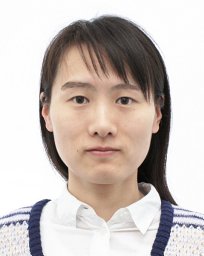 Fen Wang合作论文数Central Washington University7
 Ivan V. Bajić合作论文数School of Engineering Science, Simon Fraser University7
 Tam Do合作论文数6
 Xue Zhang合作论文数6
 Patrick Le Callet合作论文数Department of Electrical Engineering, Engineer School, Ecole polytechnique de l’université de Nantes;Department of Computer Science, Engineer School, Ecole polytechnique de l’université de Nantes;Département Électronique et Technologies Numériques, Nantes Université6
 Dinei Florencio合作论文数Microsoft Rersearch6Fei Chen (陈飞)合作论文数College of Software, Fuzhou University6Benedicte Motz合作论文数Ecole Polytech Fed Lausanne, Lausanne, Switzerland5Weng-Tai Su合作论文数5
 Chen-Nee Chuah合作论文数Department of Electrical and Computer Engineering, College of Engineering, University of California, Davis5
 Philip A. Chou合作论文数Google5
 Jiahao Pang (龐家昊)合作论文数Video Lab, InterDigital, Inc5
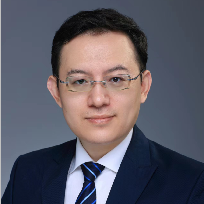 Xianming Liu (刘贤明)合作论文数School of Computer Science and Technology, Faculty of Computer, Harbin Institute of Technology5waitan tan合作论文数4
 Yuichi Tanaka (田中雄一)合作论文数Graduate School of Engineering, The University of Osaka4
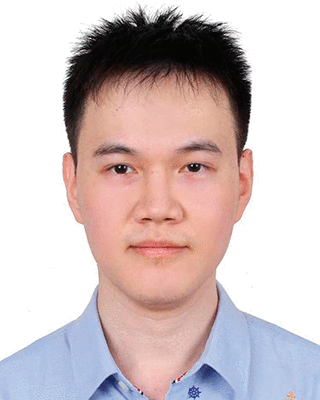 Minxiang Ye合作论文数4
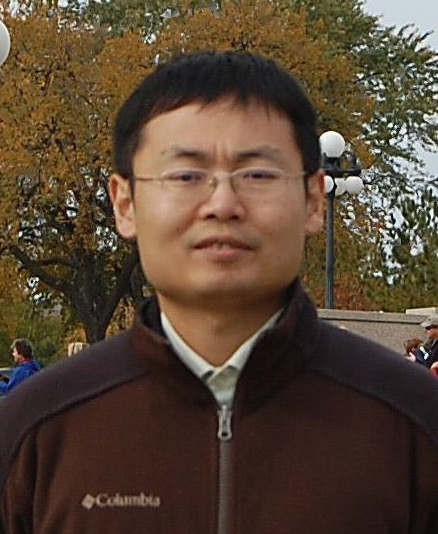 Yongchao Wang (王勇超)合作论文数School of Communication Engineering, Xidian University4
 Amin Zheng合作论文数4
 Oscar C. Au (區子廉)合作论文数Strategic Development and Alliance, Origin Wireless Inc.4
 Camilo C. Dorea合作论文数Technical University of Catalonia4
 Edson M. Hung合作论文数Universidade de Brasilia4
 Bruno Macchiavello合作论文数Institute of Exact Sciences, University of Brasília4V. M. Stankovic合作论文数University of Strathclyde;Department of Electronic and Electrical Engineering4Hong Zhao (赵虹)合作论文数4Tim Eadie合作论文数3
 Jack Z. G. Tan合作论文数Kandao Technol, Shenzhen, Peoples R China3刘志合作论文数日本静冈大学3
 Akira Kubota合作论文数Multimedia Signal Processing Lab, Chuo University3
 Yunlong Feng合作论文数Department of Mathematics and Statistics, College of Arts and Sciences, State University of New York at Albany3
 Xin Liu (刘鑫)合作论文数School of Information and Communication Engineering, Dalian University of Technology3
 Yu Mao合作论文数3
 Hadi Hadizadeh合作论文数Apera AI3
 Taihao Li合作论文数3
 Jacob Chakareski合作论文数College of Computing, New Jersey Institute of Technology3Haruki Yokota合作论文数2Parham Eftekhar合作论文数2Seyed Alireza Hosseini合作论文数2
 Wei Cai (蔡玮)合作论文数School of Engineering & Technology, University of Washington2
 Yuejiang Li合作论文数2




