The activity concentration of 3H in water samples collected from places unaffected by nuclear activities or for human consumption can be very low. In these cases, determination procedures must achieve a Minimum Detectable Activity (MDA) low enough to ensure that 3H is accurately determined. In this paper, we present a method that uses a new Liquid Scintillation Spectrometer (LSC in what follows): the Quantulus GCT 6220. Furthermore, a new liquid scintillation cocktail, the ProSafe LT+, has been tested for 3H measurement, showing to be a good option for the determination of low levels of this radionuclide. The MDAs achieved are low enough to enable the measurement of very low levels of 3H in recent environmental water. The results obtained using a Quantulus GCT 6220 and Prosafe LT + are compared to those obtained with a Quantulus 1220 and Prosafe HC + as liquid scintillation cocktail.
An experimental study on the counting efficiency, background, and Lower Limit of Detection (LLD) of a liquid scintillation spectrometer was carried out for establishing a measurement technique suitable for low level activity measurements of 55Fe and 63Ni in environmental samples. The spectrometer's response, using two scintillators (PerkinElmer Optiphase Hisafe 3 and Meridian Prosafe HC+) and glass and plastic vials, was studied. Colour and chemical quenching effects were also investigated for both scintillators and vials. Finally, a spectrum integration window selection method able to reduce the LLD through a Figure of Merit (FOM) optimization, was tested. Efficiency and LLD curves were obtained for both scintillators and types of vials with this technique.
ISSN: 2410-9649 Ayach et al / Chemistry International 7(2) (2021) 123-138 iscientic.org. 124 www.bosaljournals/chemint/ editorci@bosaljournals.com INTRODUCTION The final storage of radioactive wastes from industry and radioactive installations (hospitals, research centers etc.) is a big interest nowadays. The use of black shales, collected in the vicinity of Tarfaya and Timahdit, in Morocco, for trapping chemical elements, including radioactive isotopes, has been studied by our research group since 2002 (Khouya, 2002 ; El Harti, 2014 ; Oumam et al., 2003 ). Moreover, other publications presented the behavior of uranium and thorium in black shales: uranium would be associated to humic acids whereas thorium is partially distributed in silicate minerals and pyrite (Galindo et al., 2006; Galindo et al., 2007). In this work, a possible use of the mentioned geological materials to the design of matrices, for the containment and stabilization of radioactive wastes, is discussed (Ayach et al., 2017; El Aouidi et al., 2017; Ait Malek et al., 2017). The characterization of the mineralogical structure and chemical composition of these materials, and the determination of the chemical elements distribution within them, is firstly determined. Then, the concentration of trace elements in this material and its relation to major elements and mineralogical structure is presented to localize the organic and inorganic trapping sites of these elements. These results can be used to design natural matrices for the stabilization and sorption of radioactive wastes. In fact stable elements can reflect the behavior of their radioisotopes, rare earths on which was focused in the present work, has known to be analogue of minor actinide (Am, Cm etc.) (Krauskopf, 1986 ), which are highly radioactive (Harwood et al., 2011). Different analysis techniques were applied to the black shale samples. Indeed, X-ray fluorescence (XRF) was applied to determine concentration of trace elements and major elements. Rare earths elements (REE) concentrations were measured using inductively coupled plasma atomic emission spectroscopy (ICP-AES). The particle size distribution of the samples and their mineralogical structures were determined by laser diffraction and X-ray diffraction (XRD), respectively. Additionally, this work would be a contribution to the knowledge and applications of the trace elements geochemistry in sedimentary rocks. The main application, in our case, would be to design methods for separating these elements and for developing natural origin materials for sorption of stable and radioactive elements. MATERIAL AND METHODS Samples collection The analyzed samples were collected from Lamsied (Laâyoune) area, which is located in Tarfaya-Boujdour basin (El Batal, 2014). This basin corresponds to the section of the Moroccan Atlantic margin. It is limited in the West by Central Atlantic Ocean and in the East by Zemmour fault, which separate it from anti-Atlas massif, Tindouf basin, Reguibat and Mauritanides massif (Fig. 1). This area is located just 18 km southeast of Laâyoune, on the road leading to Smara, and halfway between Laâyoune and Boujdour (El Batal, 2014). Nature and lithology of samples Fig. 1: Geological map of the Tarafaya-Boujdour basin (Gebhardt and Zorn, 2008). ISSN: 2410-9649 Ayach et al / Chemistry International 7(2) (2021) 123-138 iscientic.org. 125 www.bosaljournals/chemint/ editorci@bosaljournals.com The black shales from Lamsied outcrop (Table 1) are arrayed in organic matter-rich marl layers, and clay limestone interlayers, the whole is surmounted by successive strata of chalky clay. Physical and chemical characterization Granulometry The particle sizes distributions were determined in every sample using wet Laser Diffraction equipment (Malvern Mastersizer 2000), with a dispersion unit Hydro 2000G (Mejjad et al., 2016). This equipment and its associated protocol allow obtaining the particle size from 0.02 to 2000 μm. The analysis procedure was by introducing 1g of sample in the dispersion unit containing deionized water, used as dispersant. Measurements were done after 10 seconds of ultrasound application, to disperse any agglomerates. This analysis was carried out in the National Center for Energy Sciences and Nuclear Techniques (CNESTENMorocco). Analysis by x ray diffraction (XRD) Fig. 2a: Diffractogram of S6 (1) sample, where C: Calcite Fig. 2b: Diffractogram of S6 (3) sample, where C: Calcite, H: Halite, Q: Quartz ISSN: 2410-9649 Ayach et al / Chemistry International 7(2) (2021) 123-138 iscientic.org. 126 www.bosaljournals/chemint/ editorci@bosaljournals.com CaO SiO2 Al2O3 Na2O MgO Fe2O3 K2O P2O5 TiO2 1E-6 1E-5 1E-4 1E-3 0,01 0,1 1 10 100
Cosmogenic radionuclides in the one-million-year half-life range, like 10Be, find application fields in several Sciences. They are powerful tools in Geology and Geochronology, as they are very important tracers on the Earth, being utilized as chronometer. Meteoric 10Be (T1/2 = 1.39 × 10⁶ y) associated to aerosols can be used as a tracer of atmospheric processes and specifically as indicators of the cosmogenic interactions in lower Stratosphere, upper Troposphere, the air exchange between both and deposition processes on the Earth surface. The applications of 10Be are even more relevant when combined with other radionuclides such as 26Al. In order to provide new data about concentration 10Be in this type of samples, the first atmospheric air filters in Spain have been analysed. Values around 104 at/m3 (atoms per cubic meter of air) for 10Be have been obtained. Due to the location and the features of the sampling site (urban area, at sea level and mid latitude), a new radiochemical procedure was designed and developed in our laboratory for the Accelerator Mass Spectrometry (AMS) measurement of 10Be in this kind of samples. The samples were measured in SARA, the 1 MV AMS system at Centro Nacional de Aceleradores (CNA).
The mining activities performed in the Iberian Pyrite Belt (south of Spain) have generated since long-time acid mining drainage (AMD) inputs to the Odiel River and its tributaries. These inputs are continuing nowadays, with origin mostly in the abandoned mines that cover the area, provoking a steady-state situation where the river waters present very low pH and very high concentrations of different heavy metals. In this work, the behavior of several natural radionuclides (210Po, Th- and U-isotopes) in water and sediment samples collected in the Odiel River and its tributaries have been analyzed and their levels determined looking for assessing the radiological environmental impact of the AMD.
In this work, a comparative study of two popular radiochemical procedures for 90Sr determination in biological and sediment samples via Cerenkov counting was performed. Comparative tests were carried out with a Liquid Scintillation Counter (LSC) and several key factors related to green analytical chemistry were considered. Chemical yields, time of analysis, cost per sample, hazardous reagents used (H-factor), wastes generated (E-factor) and energy consumed (Q-factor) were calculated. The separation methods are based on two contrasted extraction mechanisms: chromatographic extraction (using Sr resin, a crown-ether diluted in octanol) and liquid–liquid solvent extraction (using HDEHP, an organophosphorus compound), where the chromatographic extraction method was optimized. The developed analytical procedure based on HDEHP was cheaper and faster than the analytical procedure based on Sr resin, according to the green chemistry. On the other hand, the Sr resin method provided a minimum detectable activity (MDA) of 1.1 Bq kg−1, lower than 1.5 Bq kg−1 corresponding to HDEHP method, due to the higher capacity of sample that can be loaded into the resin. The accuracy and reproducibility of both methods was confirmed in the analysis of certified reference materials provided by the International Atomic Energy Agency (IAEA).
A radiological evaluation associated to the future mining of grey monazite nodules enriched in light rare-earths, from a modest superficial deposit located in the centre of Spain, has been performed at pre-operational level, and the main results are shown in this paper. Although the monazite nodules in the deposit are clearly enriched in radionuclides from the uranium and thorium series with activity concentrations higher than 1 Bq/g, the size of these nodules (in the 0.5 mm-2 mm grain size interval), its refractory behaviour that prevents the leaching or dissemination of natural radionuclides to waters or other ecosystem compartments and consequently the impact in the food chain, and its presence quite diluted in the deposit at concentrations of 2.5-3 kg/m3, conducted to conclude that pre-operationally the area to be mined for the extraction of the monazite is generating a negligible radiological impact in the public and the nearby environment. Additionally, the extraction of the raw material and the restoration of the area after mining (i.e. the mining activities which will be done in-situ, in the mining area) will be exempted of any radiological regulation attending to the European Union legislation being expected that will not generate a radiological impact.
Incandescent gas mantles are used for illumination by nocturnal food stalls, camping and other activities. In some countries, thorium-containing gas mantles are available without any indication of the possible radioactive content, resulting in a potential increase of exposure to consumers. In this work, the radioactive content of gas mantles of several brands from Mexico and Spain is studied. Scanning electron microscopy, gamma-ray and alpha-particle spectrometry were used for morphological and radio metrical characterization of gas mantles. The results indicate that some of the analyzed gas mantles contain Th and their descendants, with values ranging from detection limits up to 683, 345 and 277 Bq/g for Th, Ra and Th, respectively. The levels of activity concentration of radio nuclides in thorium-containing gas mantles exceed the limits set by International Basic Safety Standards, but still, gas mantles with radioactive content are available in some countries to consumers without any radiological control.
This paper is the second chapter of a piece entitled “Low-level determination of Th-isotopes by alpha spectrometry”. This Part 2 presents the results of the analysis of the first and last steps for Th-isotopes determination by alpha-particle spectrometry: the sample pre-treatment, total dissolution following different methods and lixiviation, and the test sample preparation methods, electrodeposition and microprecipitation, together with a brief analysis of the financial costs of the analyzed methods.
After the Fukushima accident, large amounts of radionuclides were discharged to the atmosphere. Some of them travelled long distances and were detected in places as far from Japan as Spain a few days after the accident. One of these radionuclides was 131I. Its isotope 129I (T1/2 = 15.7 × 10⁶ years) was also expected to follow the same pathway. In this work, we present the results for the 129I concentration in the same atmospheric samples from Seville (Spain) where 131I activity was measured in 2011 by Baeza et al. (2012). 129I concentrations in aerosol and gaseous samples showed concentrations in the order of 104 and 105 atoms/m3, typically higher in the gaseous form with respect to the aerosol form. Also 129I in rainwater was measured, showing concentrations in the order of 108 atoms/L. The results show a very good agreement with the 131I profile, showing that, if background from other sources is not relevant, it is possible to estimate the impact of similar events years after them thanks to the sensitivity of techniques like Accelerator Mass Spectrometry.
Trabajo presentado a la 4th International Conference on Environmental Radioactivity: Radionuclides as Tracers of Environmental Processes, celebrada en Vilnius (Lithuania) del 29 de mayo al 2 de junio de 2017.
ISSN: 2410-9649 Ayach et al / Chemistry International 3(4) (2017) 442-451 iscientic.org. 443 www.bosaljournals/chemint/ editorci@bosaljournals.com There are some published works on the adsorption of metals, organic and inorganic substances by natural material (Bendjama, 1982; Benguella and Benaissa, 2002; Khouya et al., 2006; Sbaa et al., 2001; Seghairi, 1998; Steger, 1973). Following these works, our research has been addressed to determine the physicochemical properties of bituminous schists, which contain some amounts of organic matter. These schists are calcareous clay rocks located in the outcrop of Lamsied (Laâyoune), near Tarfaya-Boujdour. In our case, we have considered the elimination of Methylene Blue (MB). Stable and radioactive metals will be considered in a next step of our investigation. The main objective of this work is to observe the retention of methylene blue by a representative sample of Fig. 1: Simplified geological map of the study area (Gebhardt and Zorn, 2008). Fig. 2: Spectrum of XRD of sample S6 (1) where the presence of calcite is well observed. (a) (b) Fig. 3: (a) variation of final concentration, Ce, of MB. (b) Adsorption ratio R (%) of MB versus adsorbent mass, using an initial concentration, C0, equal to 50.8 mg/l and a contact time of 240 min. 0 5 10 15 20 0 0.05 0.1 0.15 0.2 C e m g/ L) Adsorbent mass (g) 70 75 80 85 0 0.05 0.1 0.15 0.2 R (% )
Trabajo presentado a la II International Conference on Radioecological Concentration Processes (50 years later), celebrada en Sevilla (Espana) del 6 al 9 de noviembre de 2016.
Trabajo presentado a la II International Conference on Radioecological Concentration Processes (50 years later), celebrada en Sevilla (Espana) del 6 al 9 de noviembre de 2016.
Salamanca is the centre of a large industrial complex associated with the production and refining of oil-derived products in the state of Guanajuato, Mexico. The city also hosts a large chemical industry, and in past years a major fertilizer industry. All of them followed NORM (naturally occurring radioactive materials) industrial activities, where either raw materials or residues enriched in natural radionuclides are handled or generated, which can have an environmental radiological impact on their environmental compartments (e.g. soils and aquatic systems). In this study, activity concentrations of radionuclides from the 238U and 232Th natural series present in superficial urban soils surrounding an industrial complex in Salamanca, México, have been determined to analyse the possible environmental radiological impact of some of the industrial activities. The alpha-particle and gamma-ray spectrometry is used for the radiometric characterization. The results revealed the presence of 10-42, 11-51 and 178-811Bq/kg of 238U, 232Th and 40K, respectively, without any clear anthropogenic increment in relation to the values normally found in unaffected soils. Thus, the radioactive impact of the industrial activities on the surrounding soils can be evaluated as very low, representing no radiological risk for the health of the population.
Trabajo presentado a la II International Conference on Radioecological Concentration Processes (50 years later), celebrada en Sevilla (Espana) del 6 al 9 de noviembre de 2016.
Produced water from two Ghanaian offshore production oilfields has been characterized using alpha spectrometry after radiochemical separation, non-destructive gamma spectrometry and ICP-MS and other complimentary analytical tools. The measured concentrations of main NORM components were in the range of 6.2-22.3 Bq.L-1, 6.4-35.5 Bq.L-1, and 0.7-7.0 Bq.L-4 (f)or Ra-226, Ra-228 and Ra-224 respectively. A good correlation between several physico-chemical parameters and radium isotopes was observed in each production oilfield. The radium concentrations obtained in this study for produced water from the two oilfields of Ghana are of radiological importance and hence there may be the need to put in place measures for future contamination concerns due to their bioavailability in the media and bioaccumulation characteristics. The results will assist in critical decision making for future set up of appropriate national guidelines for the management of NORM waste from the emerging oil and gas industry in Ghana. (C) 2015 Elsevier Ltd. All rights reserved.
Trabajo presentado a la II International Conference on Radioecological Concentration Processes (50 years later), celebrada en Sevilla (Espana) del 6 al 9 de noviembre de 2016.
The activity concentrations of (210)Po have been determined in a total of 24 representative diet samples from Seville (south of Spain), inferring from the obtained values the annual intakes of (210)Po by ingestion of the affected population and the corresponding committed effective doses. The annual intakes of (210)Po and, consequently, the corresponding doses of this radionuclide show a high variability in correspondence with the variability in the composition of the analysed samples over time, and their magnitude is comparable with the estimated ones in other regions/countries of the world with similar diet habits (countries where the marine products have a considerable weight in the diets). Committed effective doses by ingestion higher than 0.1 mSv y(-1) have been estimated exclusively for (210)Po, reflecting the importance of this radionuclide and this route of incorporation in the magnitude of the total doses received by the affected population from natural sources.
 Rafael Garcia-Tenorio合作论文数39
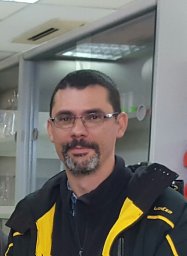 Ignacio Vioque合作论文数E.T.S.A, Universidad de Sevilla24
 M. García-León合作论文数Facultad de Física, Universidad de Sevilla22
 R. García Tenorio合作论文数17
 Juan Mantero合作论文数17F. Vaca合作论文数12
 Santiago Hurtado合作论文数12
 J.M. Abril合作论文数11
 maria villaalfageme合作论文数Departamento de Física Aplicada II, Universidad de Sevilla9inmaculada diazfrances合作论文数7
 Mauro Villa合作论文数Department of Physics and Astronomy "Augusto Righi", University of Bologna7M.C. Jiménez Ramos合作论文数6a absi合作论文数6R. El Mrabet合作论文数6
 Fernando Mosqueda合作论文数6
 Farid El-Daoushy合作论文数Institute of Physics6H. P. Moreno合作论文数5jose antonio galvan合作论文数5Raúl Periáñez合作论文数5I Díaz-Francés合作论文数3M Sosa合作论文数3
 Antonio Delgado合作论文数3A. Bouih合作论文数2M Villa合作论文数2J Galván合作论文数2Cruz Daniel Mandujano García合作论文数2
 Jorge Rivera-Silva合作论文数2Hector Moreno合作论文数2
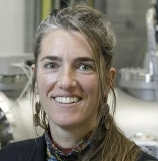 Núria Casacuberta Arola合作论文数Institute of Biogeochemistry and Pollutant Dynamics, Department of Environmental Systems Science, Eidgenössische Technische Hochschule Zürich2
 Pere Masqué合作论文数School of Science, Edith Cowan University;Oceans Institute, The University of Western Australia;School of Physics, The University of Western Australia2
 Haydn Barros合作论文数Departamento Fisica Aplicada, University of Sevilla2
 Luis Andreu合作论文数EUITA, Universidad de Sevilla2A. Martínez-Aguirre合作论文数2Saadia Fakhi合作论文数2
 Jose Maria Lopez-Gutierrez合作论文数Escuela Universitaria Politécnica, Universidad de Sevilla2
 Jordi Garcia-Orellana合作论文数Universitat Autònoma de Barcelona2D. O. Kpeglo合作论文数2Joan-Albert Sanchez-Cabeza合作论文数1M. C. Jimenez-Ramos合作论文数1Jean Reyx合作论文数1Z. Faiz合作论文数1J.M. Bruach合作论文数1j i peruchena合作论文数1
 Ines Valles合作论文数1J. Gasa合作论文数1Ph. de Parseval合作论文数1louis raimbault合作论文数1maxime dargent合作论文数1A Rodríguez合作论文数1




