“Can you please take a look at this rash with me?” “Do you have a minute to eyeball a skin lesion?” These are two requests I often get from geriatrics fellows when I’m precepting in their primary care clinic. Sometimes they may be seeking conformation that a painful eruption of fluid-filled blisters distributed on the skin over a single unilateral dermatome is the rash from herpes zoster. Other times the lesion or rash is more mysterious, and it may require the opinion of a clinician with dermatologic expertise. Either way, the two questions serve as a stark reminder of the prevalence of skin diseases among older adults and the potential impacts on their health. Anyone who has practiced in a primary care setting can attest to how common skin complaints and findings are among this population. In a Swedish study of adults aged 70 to 93 years, a whole-body skin examination performed by dermatologists found that 75% of these adults had at least one skin condition that required treatment or follow-up.1Sinikumpu S.P. Jokelainen J. Haarala A.K. et al.The high prevalence of skin diseases in adults aged 70 and older.J Am Geriatr Soc. 2020; 68: 2565-2571Crossref PubMed Scopus (24) Google Scholar More than one in three of these subjects had three or more skin diseases simultaneously. While I don’t find anything particularly surprising about the results of this study, a few questions come to mind. What skin conditions can I reassure my patient about, and which ones should I worry about? When is it okay to use surveillance, and when should I refer them to a dermatologist? Do I need to treat a basal cell cancer on the nose of a frail nursing home resident? That brings me to this excellent issue of Clinics in Geriatric Medicine where our guest editor, Dr. Nicole Burkemper, and her team of experts help us answer many questions about the evaluation and treatment of skin diseases in older adults. This issue covers a broad range of topics, including the aging skin and wound healing, common skin cancers and inflammatory skin diseases, and venous stasis disease and leg ulcers. After reading it, I know that the next time I’m asked to look at a rash or a skin lesion, I’ll do so with new knowledge and confidence.
BACKGROUND/OBJECTIVES:To optimize health and well-being for all older people, we must collectively develop leaders to pioneer models of care, educate the healthcare workforce, advance research, and engage the community.METHODS:The Emerging Leaders in Aging (ELIA) program was created to train a multiprofessional cadre of leaders focused on the health and well-being of older people. ELIA uses the social change curricular framework and addresses knowledge of self, community, and engagement with change. Program impact measured included scholar satisfaction, confidence related to curricular domains before and after the program, project progress, and scholar productivity.RESULTS:Four cohorts of 65 scholars in seven health professions from 24 states were selected for the year-long 55-hour program. Overall satisfaction from members of the first three cohorts who have completed the program (n = 46) was 4.86 (scale = 1-5), and scholar confidence increased from 5.8 to 8.0 (scale = 1-9) (p < .001). These scholars reported 85 presentations, 63 publications, and 21 awards subsequent to training. All scholars described the importance of a program focused on early and mid-career leaders in health and aging.DISCUSSION:The ELIA program leverages longitudinal, distance mentor communities, and project-based learning strategies. It has improved confidence and skills in emerging leaders who commit their efforts toward the care of older persons. Programs like ELIA are critical to preparing a healthcare workforce to optimize care for all as our health needs and expectations change with age. J Am Geriatr Soc 67:437-442, 2019.
Comprehensive geriatric assessment (CGA) as a consultative service for older adults with complex medical and psychosocial challenges has existed for decades. However, studies have often showed inconsistent acceptance and implementation of geriatric recommendations by primary care providers (PCPs) raising doubts about the overall benefits of CGA in this setting. Press and colleagues investigated the patient- and provider-related factors that affect recommendation implementation, and like previous studies, they too found similarly low rates of implementation. In this commentary, we acknowledge the perennial challenges that exist to improving the acceptance of CGA in primary care practice, and we suggest an alternative target: medical sub-specialty practice. By highlighting three medical sub-specialty fields (oncology, nephrology, and cardiology), which have demonstrated that CGA can be incorporated into their respective clinical practices, we argue that CGA may prove to have greater impact in these settings than in primary care. We also propose initial research steps that could further delineate the trends, outcomes, and next steps for such consultations.
Internal medicine (IM) residents must demonstrate achievement of milestones in interprofessional (IP) and teamwork skills. Much of IM residency is spent in the hospital where daily IP collaboration is essential to patient care and safety. At the University of California, San Francisco (UCSF), chances for interprofessional education are often restricted to short, standardized IP meetings and sporadic informal interactions. This limits the opportunity for residents to develop and demonstrate IP and teamwork skills.UCSF clinician educators partnered with IP staff at the San Francisco Veterans Affairs Medical Center (SFVAMC) to design the inpatient Interprofessional Patient Aligned Care Team (iPACT) to provide work-based interprofessional education for IM residents. iPACT changed the traditional IM inpatient team model in 2 significant ways. There is a designated space for IP team members to work and learn together, and iPACT relies on nonphysician team members to establish and maintain a safe learning environment. An existing workroom on an inpatient wing was repurposed as the iPACT workroom with personal carrels and computers for iPACT members. Weekday morning huddles allow teams to formally discuss patient care. Team members are expected to work in the team room throughout the day. A large white board in the team room allows for clear written communications to all team members in a central place.A social worker, pharmacist, and nurse case coordinator previously assigned to the team became the core members of iPACT, and were empowered and designated to set and maintain a safe team learning environment. The core team underwent extensive team building with an expert facilitator prior to iPACT's launch. Core members orient rotating team members to iPACT, invite other team members' knowledge and expertise, and volunteer their own knowledge and expertise. Core members deliberately debrief good and bad unintended outcomes on iPACT with individuals and the whole team in a nonthreatening, supportive way that is intended to assist the team in providing better patient care.A grant funded the initial development of the iPACT model and core team. iPACT implementation did not require additional staff hires and did not disrupt the team's call schedule or participation in other program activities such as morning report or noon conference.iPACT became the team model for 1 inpatient IM team in July 2014 at the SFVAMC and expanded to an additional inpatient team in March 2016. The original iPACT continues today with its initial core members. To date, 69 interns and 43 residents have rotated through the iPACT model, with 5 trainees participating in iPACT both as interns and residents. Our evaluation of iPACT focused on resident learners' acceptance of iPACT and its IP educational impact.An initial program evaluation survey to all 34 interns and residents from the first year had a 68% response rate (n = 23). A total of 70% of respondents (n = 16) preferred iPACT over non-iPACT inpatient IM teams at the SFVAMC. A total of 30% of respondents (n = 7) declined to answer which team model they preferred; however, 91% of respondents (n = 21) strongly agreed or agreed iPACT should be the inpatient team model for all IM teams at the SFVAMC. Written feedback indicated the iPACT workroom and colocation cultivated in-depth learning of IP team members' roles and expertise and better communication and collaboration with IP team members for patient care and safety.iPACT observations showed iPACT members from all professions consistently seeking each other's expertise on systems, patient care, and knowledge throughout the day. In 1-on-1 interviews with residents and faculty, interviewees unanimously highlighted the importance of the iPACT workroom in eliminating IP communication barriers and credited the core team with fostering the unique learning and working environment of iPACT.
This article describes the curricular milestones for geriatric fellows and the process used to develop them. The curricular milestones were developed to determine what every graduating geriatric fellow should be able to demonstrate to ensure that they will be able to practice effectively and safely in all care settings and with different older adult populations. Three major domains were identified: Caring for the Elderly Patient, Systems-Based Care for Elder Patients, and Geriatric Syndromes. Six hundred thirty-five geriatricians each reviewed and commented on one domain. These geriatricians represented important stakeholder groups: geriatric fellowship program directors; Association of Directors of Geriatric Academic Programs (ADGAP) members, who are primarily geriatric program and fellowship directors; the American Geriatrics Society (AGS) and ADGAP Education Committee; the AGS Teacher's Section; Geriatric Academic Career Award awardees; and through the American Board of Internal Medicine and the American Board of Family Medicine, board-certified geriatricians who spend more than 50% of their time in clinical practice. The AGS and ADGAP boards approved the final set of 76 Geriatric Curricular Milestones, which were posted on the Portal of Geriatric Online Education in December 2012. These curricular milestones are intended to assist geriatric fellowship directors as they develop curricula and assessments to inform program director reporting to the Accreditation Council for Graduate Medical Education in the Next Accreditation System, which begins in July 2014.
Geriatrics as a field has been fortunate to have the support of several philanthropic organizations to advance geriatrics education and training in the past two decades. Awardees of such grants were presented with unparalleled opportunities to develop new and innovative educational initiatives affecting learners at multiple levels and in multiple disciplines and specialties. The lessons learned from the Donald W. Reynolds Foundation initiatives about effect and sustainability are invaluable to the ongoing strategic development of geriatrics nationally. This article highlights successful educational initiatives developed at four institutions with past and current Donald W. Reynolds Foundation funding. Following an ice hockey playbook, this article identifies 10 strategies and initiatives to "stay in the geriatrics game" by training hospitalists and subspecialty providers. The authors' collective experience suggests that geriatrics educational initiatives can not only influence provider education, but also improve the care of older adults in multiple settings.
Entrustable professional activities (EPAs) describe the core work that constitutes a discipline's specific expertise and provide the framework for faculty to perform meaningful assessment of geriatric fellows. This article describes the collaborative process of developing the end-of-training American Geriatrics Society (AGS) and Association of Directors of Geriatric Academic Programs (ADGAP) EPAs for Geriatric Medicine (AGS/ADGAP EPAs). The geriatrics EPAs describes a geriatrician's fundamental expertise and how geriatricians differ from general internists and family practitioners who care for older adults.
 Bruce Leff合作论文数Health Policy and Management, Bloomberg School of Public Health, Johns Hopkins University4
 Bree Johnston合作论文数4
 Robin T Higashi合作论文数Harold C. Simmons Comprehensive Cancer Center3Michael A. Steinman合作论文数3
 Bridget O'Brien合作论文数Ctr Fac Educators, Univ Calif San Francisco2Leipzig Rosanne M合作论文数2Tillack Allison合作论文数2Sharon A. Levine合作论文数2Susan M. Parks合作论文数2Helen M. Fernandez合作论文数2Anna Chang合作论文数2Amy M. Knight合作论文数2
 Karen Sauvigne合作论文数2K. Eubank合作论文数1Joan Abrams合作论文数1Kathryn Eubank合作论文数1Neil Zhang合作论文数1Allison A Tillack合作论文数1Peter Hollmann合作论文数1Karen Gold合作论文数1Afschin Gandjour合作论文数1Catherine F. Pias合作论文数1SJ Kravet合作论文数1Laura K Byerly合作论文数1Patricia Thomas合作论文数1Melissa Shive合作论文数1M. Yukawa合作论文数1adam moylan合作论文数1Daphne Lo合作论文数1Timothy G Berger合作论文数1M Yukawa合作论文数1
 Rachel K. Miller合作论文数Division of Geriatrics, Department of Medicine, Perelman School of Medicine, University of Pennsylvania1
 Therese A. Stukel合作论文数Institute of Health Policy, Management and Evaluation, University of Toronto;The Dartmouth Institute for Health Policy & Clinical Practice;Institute for Clinical Evaluative Sciences1Medina-Walpole Annette合作论文数1Kravet Steven J合作论文数1Kiyatkin Dmitry合作论文数1
 William J. Hall合作论文数Department of Medicine, Highland Hospital (SMD);Medical Center, Department of Medicine, University of Rochester1
 Eva M Aagaard合作论文数1
 Ann M. O'Hare合作论文数Kidney Research Institute, University of Washington1
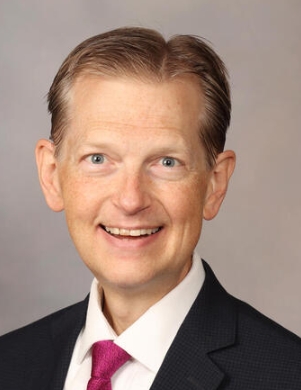 David A. Cook合作论文数Department of General Internal Medicine, College of Medicine, Mayo Clinic1Brandt Lynsey E合作论文数1Nan Zhang合作论文数1
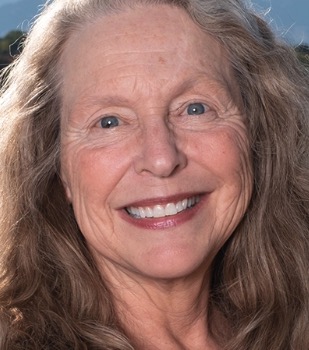 Lisa Bero合作论文数Division of General Internal Medicine, School of Medicine, University of Colorado Anschutz;Charles Perkins Centre and School of Pharmacy, Faculty of Medicine and Health, The University of Sydney;Center for Bioethics and Humanities, University of Colorado Anschutz Medical Center1
 Christine Seel Ritchie合作论文数Division of Geriatrics, Department of Medicine, University of California San Francisco;Department of Medicine, Massachusetts General Hospital1Granville Lisa合作论文数1Thomas Patricia合作论文数1Mazotti Lindsay A合作论文数Department of Medicine, University of California1Chao Serena H合作论文数1




