Aim: Thrombocytopenia during treatment with interferon is a side effect which appears in up to 5% of patients.Moreover thrombocytopenia is directly correlated with reduced liver function, so that this side effect is seen more often in patients with liver cirrhosis.This analysis investigated risk factors predicting thrombocytopenia < 50,000 /μl pretreatment.Patients and methods: From 03/2003 until 08/2010, 9244 patients with platelets ≥ 90,000 at baseline were assessed in an observational cohort under real life conditions.For these patients descriptive, univariate and multivariate analyses (logistic regression model (LR), with 95% confidence intervals for the odds ratio (OR)) were performed to determine factors associated with thrombocytopenia < 50,000 /μl under therapy.Results: Overall 335/9244 patients (3.6%) suffered from thrombocytopenia.SVR in these patients was significantly lower (35.5% vs 51.7%, p<.001).In univariate analysis variables associated with thrombocytopenia were: age, duration of infection, sonographic, clinical or histological diagnosis of cirrhosis, AST, GGT, cholesterol, alkaline phosphatase, bilirubin and prothrombine time (PT).In multivariate analysis 1 including all significant parameters of univariate analysis incl.pts with biopsy results (n=757), PT was the strongest independent significant predictive factor [p<.001, OR=0.954 (CI95 0.929-0.979)]controlled for the effect of AST [p=0.031,OR= 1.006 (CI95 1.001-1.011)].In multivariate analysis 2 not restricted to patients with available liver histology (n=3019), PT again [p<.001,OR=0.972 (CI95 0.960-0.984)],cholesterol [p<.001,OR= 0.990 (CI95 0.985-0.995)]suspicion of cirrhosis in sonography [p<.001,OR=1.581 (CII95 1.277-1.957]and GGT [p=0.006,OR=1.002 (CI95 1.000-1.003)]were significant predictors.Mean baseline values in patients with/without thrombocytopenia were: PT 90.6% vs: 98.2; cholesterol 164.0 vs 178.4 mg/dl AST 89.6 vs 69.7 U/l and GGT 121.8 vs 80.8 U/l.Whereas in patients without thrombocytopenia mean AST and GOT values decreased continuously during treatment, in patients with thrombocytopenia both parameters in average increased during week 4 and 12 before they decreased rapidly.Conclusion: The best baseline risk factors associated with thrombocytopenia are lower PT and cholesterol, higher AST and GGT values, even in non-cirrhotic patients.
Aims: Late treatment failure in chronic hepatitis C (CHC), defined as relapse during follow-up after an end-of-treatment response, occurs in up to 30% of patients treated with a standard combination therapy of pegylated IFN-alfa and ribavirin (Caliceti P, Dig Liver Dis 2004; 36, Suppl. 3: 334–339). Thus far, only hcv-genotype, age, dose of ribavirin and duration of infection have been proposed as predictors of relapse. We sought to identify other potential predictors of relapse in genotype-1 patients who received weight-based PegIFN-alfa-2b and ribavirin within a large ongoing German multicentre observational study.
Abstract Reaction of CH3(t-C4H9)P(S)Cl with NaOH in dioxane yields meso-[CH3(t-C4H9)P(S)]2O. Results of NMR studies and an X-ray structure analysis are reported.
Kaposi sarcoma is a mesenchymal tumor involving blood and lymphatic vessels. It is the most common malignancy in HIV-infected patients and is classified as one of the AIDS-defining diseases. First described as early as 1872, it is only in recent years that deeper insights into the pathogenesis of Kaposi sarcoma have been gained; Kaposi sarcoma represents an extraordinary example of viral oncogenesis and growth control by the immune system.
As in totally 1% of the worldwide population is afflicted by hepatitis C virus with most of the 200 Mio carriers not diagnosed or treated, the clinical management of chronic hepatitis C remains an urgent demand for global health. The 12th European Congress of Clinical Microbiology and Infectious Diseases (12th ECCMID) held in Milan, Italy, from 21 to 24 April 2002, focussed on viral hepatitis in a keynote lecture as well as a session on evidence based treatment of chronic infection and various poster presentations.
Though AIDS-related morbidity and mortality are generally decreasing as a result of highly active antiretroviral therapy (HAART) and prevention of opportunistic infections, dual infection with HCV and HIV leads to an acceleration in the natural course of chronic hepatitis C (cHC) and worsening of associated liver disease and complications. Mortality from co-morbid HCV infection within this population is increasing and has become a major challenge in the management of HIV-related complications. As treatment strategies to fight cHC have been essentially ameliorated within the recent two years in using pegylated interferon-alfa2b (Peg-IFN-alfa2b) combined with ribavirin, t here is hope that the successful therapeutic outcomes in HCV-mono-infected individuals may be partly translated into benefits for the difficult-to-treat patients with HCV-HIV co-infection. A number of issues arise when beginning HCV treatment during HAART, as for instance possible interactions with antiretroviral therapies, increased risk of special side effects, and a compromise in adherence due to the addition of new medication in patients already taking several drugs. On the other hand there is also the chance that Peg-IFN-alfa2b fights HIV as well as HCV. First data of pre-load therapy with Peg-IFN-alfa2b in treatment-na ve HIV-positive individuals before the initiation of HAART have also been presented during the 8th European Conference on Clinical Aspects and Treatment of HIV Infection (8th ECCATH), October 2001 in Athens.
edited by P. Buckel, Birkhäuser, 2001.
In the course of HIV infection, the role of interferon-α (IFN-α) seems to be rather paradoxical: “It is possible to view alpha-IFN as either a therapeutical agent or as a major contributor to the pathology associated with AIDS.” (S. Krown, 1992).
Bis-L-menthylthiophosphorylchloride crystallizes trigonally in space group P31. Diastereotopic 1-menthyl groups arrange in an all-trans-chain C5[sbnd]C4[sbnd]C3[sbnd]P[sbnd]C3′[sbnd]C4′ [sbnd]C5′. 1H- and 13C-NMR-studies in 1D-and 2D-techniques reveal the stereospecific data for pro-R- and pro-S-menthyl groups. Bis-L-menthylthiophosphorylchlorid, M2P(S)Cl, kristallisiert trigonal in der Raumgruppe P31. Diastereotope 1-Menthylgruppen bilden mit dem pseudoprochiralen Phosphor eine All-Trans-Kette C5[sbnd]C4[sbnd]C3[sbnd]P[sbnd]C3′[sbnd]C4′ [sbnd]C5′. 1H- und 13C-NMR in 1D- und 2D-Techniken ermitteln die stereospezifischen Parameter für die pro-R- und pro-S-Menthylgruppen.
Abstract Menthyl-substituted phosphorus compounds L-M en(R )P(X )Cl(R = Cl, L-M en, D -Men ; X = :, S) are synthesized. ID and 2 D NMR studies on nuclei 1H , 13C and 31P were used to characterize singular, diastereotopic and enantiotopic menthylgroups.
R(P)-tert.-butyl-1-menthylthiophosphorylchloride crystallizes orthorhombic in space group P2121. Similar to (1-Men)2P(S)Cl3 the alkyl groups arrange in all-trans-chain C5‒C4‒C3‒P‒C11‒C12. The molecular structure of 1-Men(t-C4H9)P(S)Cl is optimized by MNDO-calculations. 1H- and 13C-NMR studies reveal stereospecific NMR-data. R(P)-tert.-Butyl-1-menthylthiophosphorylchlorid, 1-Men(t-C4H9)P(S)Cl, kristallisiert orthorhombisch in der Raumgruppe P212121. Die Alkylreste bilden mit dem chiralen Phosphor eine all-trans-Kette C5‒C4‒C3‒P‒C11‒C12. Wir vergleichen die Struktur von 1-Men(t-C4H9)P(S)Cl mit der von (1-Men)2P(S)Cl, in dem eine analoge all-trans-Konformation vorliegt.3 Mittels MNDO-Rechnungen wird die molekulare Geometrie von 1-Men(t-C4H9)P(S)Cl optimiert, 1H und 13C-Kernresonanzexperimente liefern stereospezifische NMR-Parameter.
Chemischer InformationsdienstVolume 16, Issue 47 Organoelement Compounds ChemInform Abstract: Menthylsubstituierte Phosphorverbindungen. 2. Mitt. L-Men(R)P(X)Cl (R: Cl, L-Men, D-Men X: :,S). Charakterisierung singulärer, diastereotoper und enantiotoper Menthylgruppen durch 1H-, 13C- und 31P-NMR-Techniken. G. + HAEGELE, G. + HAEGELESearch for more papers by this authorW. + KUECKELHAUS, W. + KUECKELHAUSSearch for more papers by this authorJ. SEEGA, J. SEEGASearch for more papers by this authorG. TOSSING, G. TOSSINGSearch for more papers by this authorH. KESSLER, H. KESSLERSearch for more papers by this authorR. SCHUCK, R. SCHUCKSearch for more papers by this author G. + HAEGELE, G. + HAEGELESearch for more papers by this authorW. + KUECKELHAUS, W. + KUECKELHAUSSearch for more papers by this authorJ. SEEGA, J. SEEGASearch for more papers by this authorG. TOSSING, G. TOSSINGSearch for more papers by this authorH. KESSLER, H. KESSLERSearch for more papers by this authorR. SCHUCK, R. SCHUCKSearch for more papers by this author First published: November 26, 1985 https://doi.org/10.1002/chin.198547226Read the full textAboutPDF ToolsRequest permissionExport citationAdd to favoritesTrack citation ShareShare Give accessShare full text accessShare full-text accessPlease review our Terms and Conditions of Use and check box below to share full-text version of article.I have read and accept the Wiley Online Library Terms and Conditions of UseShareable LinkUse the link below to share a full-text version of this article with your friends and colleagues. Learn more.Copy URL Share a linkShare onFacebookTwitterLinkedInRedditWechat No abstract is available for this article. Volume16, Issue47November 26, 1985 RelatedInformation
 Gerhard Haegele合作论文数11
 Wolfgang Kückelhaus合作论文数10Jürgen Seega合作论文数6Bernd Möller合作论文数4Ulrike Meyer合作论文数4
 Roland Boese合作论文数Universität Duisburg Essen4
 Nektarios Dikopoulos合作论文数4Dietrich Hueppe合作论文数4Manfred Bilzer合作论文数4Gerlinde Teuber合作论文数4Thomas Witthoeft合作论文数4Elmar Zehnter合作论文数4S. Kaiser合作论文数3Jochen Brack合作论文数3
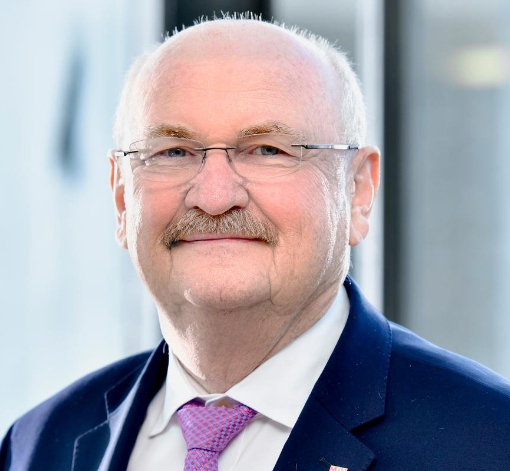 Michael Manns合作论文数Medizinischen Hochschule Hannover3Dietrich Mootz合作论文数3Hans-Georg Wussow合作论文数3Horst Schneiders合作论文数2
 Ulrich Hengge合作论文数2
 Stefan Fruehauf合作论文数2
 Horst Kessler合作论文数Department of Organic Chemistry and Biochemistry, School of Natural Sciences, Technical University of Munich;Institute for Advanced Study, Technical University of Munich2
 Vivian Kouri合作论文数Department of Dermatology, University of Düsseldorf2Tarek Dahhan合作论文数2Regina Schuck合作论文数2W. KUECKELHAUS合作论文数1martin feigel合作论文数1Torek Dahhan合作论文数1r mendel合作论文数1Stefan Mauss合作论文数1Axel Hinke合作论文数1G. HAEGELE合作论文数1




