Early Development: Cell Surface Molecules and Substrates Glial Development and Neuronal Guidance The Neural Crest and Development of the Periphery Formation of Neurites and Synapses Map Formation in the Retinotectal System Gene Expression, Primary Processes and Behaviour.
The cell adhesion molecule (CAM) is involved in adhesion among embryonic retinal and brain cells and has been detected in a variety of neural tissues. This paper describes the use of spinal ganglion cultures and specific anti-CAM antibodies to determine the distribution of CAM on plasma membranes of nerve processes, and to assess the results of perturbation of its function during the growth of neurites from gapglia. The results indicate that CAM is distributed over the entire surface of nerve processes, and that specific anti-CAM Fab' fragments alter the morphology of neurite outgrowth. In particular, it was observed that anti-CAM inhibits formation of nerve bundles, so that the ganglion becomes surrounded by a tangled net of fine processes. Growth cone functions, such as neurite elongation, motility, and attachment to the substratum, did not appear to be affected by the antibody. These studies suggest that one of the major functions of CAM is to mediate side-to-side adhesion between neurites to form fascicles, and raise the possibility that this molecule serves a key role in embryogenesis of nerve tissues.
Mammalian spermatozoa have been dissected by a variety of chemical techniques to yield free heads, tails with attached midpieces, and tails without mitochondria. By brief exposure to trypsin, mouse and rat spermatozoa were cleaved at the junction of the head and the tail, while human, guinea pig and rabbit spermatozoa were cleaved by trypsin only after prior incubation with a sulphhydryl reducing agent. Treatment with acid or base cleaved spermatozoa of all species examined. In contrast, exposure of spermatozoa to 1% sarkosyl NL-97 resulted in the quantitative cleavage of mouse cells without noticeable effect on the spermatozoa of the other species. Mitochondria were removed from the midpiece of intact sperm and isolated tails by gentle shaking after treatment with reducing agents. Homogeneous populations of spermatozoan subcellular components were obtained by density gradient centrifugation. Ultrastructural analysis showed that cleavage of mouse spermatozoa by trypsin occurs at a specific location in the neck of the cell without trypsin occurs at a specific location in the neck of the cell without observable damage to other cell structures. The basal plate remained attached to the head structures. In contrast cleavage of spermatozoa by sarkosyl or acid left the basal plate attached to the spermatozoan midpiece. Sarkosyl also removed the plasma membrane and extracted mitochondrial components. Treatment with acid or base also resulted in vesiculation of the plasma membrane and dissolution of the acrosome. Molecular probes have also been used to facilitate mapping of the cell surface. Each mouse spermatozoon has about 10-7 receptors for the lectin concanavalin A. Binding of fluorescein-labelled concanavalin A indicated that the majority of the receptors is in the acrosomal region; this polar distribution was confirmed by measurement of the number of sites on purified heads and tails. In addition, the low molecular weight probe ANS bound to the plasma membrane of spermatozoa from all species examined, with immediate immobilization of the cells. Ethidium bromide bound to the spermatozoan head without affecting motility.
ADVERTISEMENT RETURN TO ISSUEPREVArticleNEXTCovalent structure of a human γG-immunoglobulin. X. Intrachain disulfide bondsW. Einar Gall and Gerald M. EdelmanCite this: Biochemistry 1970, 9, 16, 3188–3196Publication Date (Print):August 4, 1970Publication History Published online1 May 2002Published inissue 4 August 1970https://doi.org/10.1021/bi00818a011RIGHTS & PERMISSIONSArticle Views102Altmetric-Citations27LEARN ABOUT THESE METRICSArticle Views are the COUNTER-compliant sum of full text article downloads since November 2008 (both PDF and HTML) across all institutions and individuals. These metrics are regularly updated to reflect usage leading up to the last few days.Citations are the number of other articles citing this article, calculated by Crossref and updated daily. Find more information about Crossref citation counts.The Altmetric Attention Score is a quantitative measure of the attention that a research article has received online. Clicking on the donut icon will load a page at altmetric.com with additional details about the score and the social media presence for the given article. Find more information on the Altmetric Attention Score and how the score is calculated. Share Add toView InAdd Full Text with ReferenceAdd Description ExportRISCitationCitation and abstractCitation and referencesMore Options Share onFacebookTwitterWechatLinked InReddit PDF (1 MB) Get e-Alerts Get e-Alerts
ADVERTISEMENT RETURN TO ISSUEPREVArticleNEXTThe covalent structure of a human γG-immunoglobulin. IV. The interchain disulfide bondsW. Einar. Gall, Bruce A. Cunningham, Myron J. Waxdal, William H. Konigsberg, and Gerald M. EdelmanCite this: Biochemistry 1968, 7, 5, 1973–1982Publication Date (Print):May 1, 1968Publication History Published online1 May 2002Published inissue 1 May 1968https://pubs.acs.org/doi/10.1021/bi00845a048https://doi.org/10.1021/bi00845a048research-articleACS PublicationsRequest reuse permissionsArticle Views116Altmetric-Citations36LEARN ABOUT THESE METRICSArticle Views are the COUNTER-compliant sum of full text article downloads since November 2008 (both PDF and HTML) across all institutions and individuals. These metrics are regularly updated to reflect usage leading up to the last few days.Citations are the number of other articles citing this article, calculated by Crossref and updated daily. Find more information about Crossref citation counts.The Altmetric Attention Score is a quantitative measure of the attention that a research article has received online. Clicking on the donut icon will load a page at altmetric.com with additional details about the score and the social media presence for the given article. Find more information on the Altmetric Attention Score and how the score is calculated. Share Add toView InAdd Full Text with ReferenceAdd Description ExportRISCitationCitation and abstractCitation and referencesMore Options Share onFacebookTwitterWechatLinked InRedditEmail Other access optionsGet e-Alertsclose Get e-Alerts
869 ments in a patient recovering from optic ataxia. (1975). Posterior parietal association cortex of the monkey: Command functions for operations within extraper-sonal space. (1984). Looking and seeing: The visual functions of the parietal lobe.movement–related neurons of the posterior parietal cortex of the monkey: Their role in visual guidance of hand movements. The goal of research on visual word recognition is to understand the kinds of capacities that underlie the rapid and almost effortless comprehension of words in READING, how these capacities are acquired, and the impairments that occur developmentally and following brain injury (DYSLEXIA). Visual word recognition has also provided a domain in which to explore broader theoretical issues concerning knowledge representation, learning, perception, and memory; for example, it played a significant role in the development of both modular (MODULARITY OF MIND) and connectionist (COGNITIVE MODELING, CONNECTION-IST) approaches to cognition. Studies of EYE MOVEMENTS in reading indicate that most words are fixated once for durations ranging from 50 to 250 ms. Short function words are sometimes skipped and longer words may be fixated more than once. Word recognition speeds vary depending on reading skill, the type of text, and how carefully it is being read; large increases in reading speed can only be achieved with significant loss of comprehension , as in skimming. The main bottleneck is perceptual: the perceptual span is approximately four letters to the left of fixation and fifteen to the right when reading from left-to-right (it is asymmetrical to the left in reading languages such as Hebrew). Letter identities can be determined only over a smaller range, approximately five to six letters; further from fixation only letter shape and length are perceived (Pollatsek and Rayner 1990). A long-standing issue for reading researchers and educators is whether words are recognized on a visual basis or by first computing a phonological representation (see PHONOLOGY). Using visual information might seem to be more efficient because it involves a direct mapping from spelling to meaning; using phonology (translating from orthography to phonology to meaning) involves an extra step. However, a compelling body of research suggests that skilled readers compute phonological information as part of the recognition process (e.g., Van Orden 1987). Studies of learning to read have also highlighted the important role of phonological information (Wagner and Torgesen 1987). The quality of prereading children's knowledge of the structure of spoken language is a good predictor of later reading skill; …
 G M Edelman合作论文数4H Engeser合作论文数2M J Waxdal合作论文数2B A Cunningham合作论文数2Urs Rutishauser合作论文数2
 Michael Greenberg合作论文数Hock E. Tan and K. Lisa Yang Center for Autism Research, Harvard Medical School;Department of Neurobiology, Blavatnik Institute, Harvard Medical School;Boston Children's Hospital2Clarke F. Millette合作论文数2
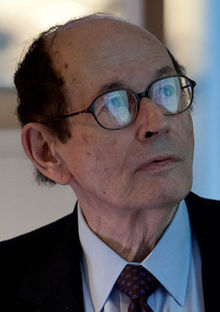 Gerald M. Edelman合作论文数The Scripps Research Institute2Patricia F. Maness合作论文数2F. Mortara合作论文数1M A Steinmetz合作论文数1H Sakata合作论文数1O. Haager合作论文数1M. Herbst合作论文数1O. Kratky合作论文数1P D Gottlieb合作论文数1P. J. Benson合作论文数1
 William Konigsberg合作论文数Biochemistry, Quantitative Biology, Biophysics, and Structural Biology, Biological & Biomedical Sciences, Yale University1Terazzi Emanuela合作论文数1
 David Perrett合作论文数School of Psychology and Neuroscience, University of St Andrews;Institute of Behavioural and Neural Sciences, University of St Andrews;Centre for Social Learning & Cognitive Evolution, University of St Andrews1
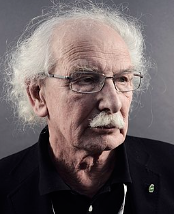 Giacomo Rizzolatti合作论文数University of Parma1A. David Milner合作论文数1Vernon B Mountcastle合作论文数1Brad C. Motter合作论文数Department of Neuroscience and Physiology, State University of New York Upstate Medical University/Syracuse VA Medical Center1Gerd Puchwein合作论文数1
 Michael A. Arbib合作论文数Thomas Lord Department of Computer Science, Viterbi School of Engineering, University of Southern California1Lawrence H. Snyder合作论文数1
 Aaron Batista合作论文数Department of Bioengineering, University of Pittsburgh;Center for Neuroscience, University of Pittsburgh1M. W. Oram合作论文数1
 Timothy Ray Jordan合作论文数University of Nottingham1Ingrid Pilz合作论文数1
 Jari K. Hietanen合作论文数Faculty of Social Sciences, Tampereen Yliopisto1D. Bettucci合作论文数1G. Miller Jonakait合作论文数1




