Chemical peels are widely used to treat various skin diseases and photoaging. Their rational, effective, and safe use has become an important issue in clinical practice. To standardize the clinical use of chemical peels, a group of experts developed this consensus based on the latest research and discussions. This consensus provides specific guidance to clinicians on chemical peels with respect to their classification, peeling agents, mechanisms, indications, contraindications, peeling techniques, and complications.
Acne scars are caused by inflammatory reactions, infections, and improper handling of acne lesions. Such scars have a high incidence and are difficult to treat. There are many methods currently used to treat acne scars, including medications, photoelectric technology, surgery, filling, chemical peeling, traditional Chinese medicine, biotherapy, and microneedle therapy, and many new methods are constantly emerging. However, there are still many issues, such as the lack of high-quality clinical studies, non-uniform treatment methods, and unsatisfactory therapeutic effects. The selection of appropriate methods for the comprehensive treatment of different types of acne scars at different stages in clinical practice remains challenging and is a research topic of great interest. From the perspective of evidence-based medicine, this consensus aims to provide a reference for the treatment of acne scars in clinical practice.
Objective:We aimed to evaluate the efficacy and safety of the 1,565 nm non-ablative fractional laser (NAFL) in combination with isotretinoin and pricking blood therapy (PBT) for treatment of AV. Methods:A retrospective analysis of 60 patients with moderate-to-severe AV was performed. Four groups (n = 15) were evaluated: 1,565nm NAFL alone, oral isotretinoin alone, double therapy (NAFL + isotretinoin) and triple therapy (NAFL + isotretinoin + PBT). Results:The triple therapy showed the highest improvement rate of inflammatory papules and boxcar atrophic scars. The patients receiving oral isotretinoin alone, double or triple therapy showed a significant decrease in volume of boxcar atrophic scars. The NAFL alone, double or triple therapy significantly decreased index of hemoglobin. Furthermore, the triple therapy significantly decreased indexes of hemoglobin and red areas as compared to the other three treatments. All four treatments significantly decreased indexes of pore sizes and wrinkles. Conclusion:This study showed that the triple therapy is effective for treatment of AV, which is worthy of further evaluation and investigation.
Botulinum toxin (BTX) is produced by a gram-positive anaerobic bacterium called Clostridium botulinum. BTX is among the deadliest natural substances known to humans with an estimated lethal dose of 1 ng/kg.1,2 There are 7 types of this neurotoxin- BTX-A, -B, -C1, -C2, -D, -E and -F. Human botulism is caused mainly by types A, B, E, and rarely F.3 BTX can cleave the presynaptic protein snap-25, inhibit acetylcholine release, and block the neuromuscular junction.4,5 BTX was first used in humans to treat strabismus in 1973, and later its applications were extended to many other conditions such as neurogenic detrusor overactivity, chronic migraine, muscle spasticity, axillary hyperhidrosis, and blepharospasm.
Background: Acral vitiligo often responses poorly to treatments. Objective: To observe whether pretreatment with ablative fractional CO2 laser aiding penetration of compound betamethasone solution plus NB-UVB could improve the response of refractory acral vitiligo. Methods: Subjects with symmetrical and stable acral vitiligo were enrolled in this study. The symmetrical lesions were randomly allocated to experimental and control sides in a subject. The experimental side underwent five sessions, one month apart, of ablative fractional CO2 laser followed by once of a topical painting of compound betamethasone solution, the control side applied topical betamethasone cream once a day; both sides underwent NB-UVB three times per week. The assessment was performed one month following each of the 1st, 2nd, 3rd, and 5th treatment sessions. Results: Two hundred eighty-nine subjects entered the clinical trial and 126 subjects completed the study. The experiment side showed better improvement in repigmentation. Overall response rate (repigmentation percentage ≥10%) of experiment sides was 51.6%, in contrast, that of control side was 35.8%. There were no severe adverse events in all subjects during the trial. Conclusions: A triple method of ablative fractional CO2 laser, topical compound betamethasone solution plus NB-UVB provided an alternative choice for acral vitiligo with remarkable safety profile. Cinical trial registration: This clinical trial has been registered at Chinese Clinical Trial Registry (Registration number: ChiCTR-TRC-12002593).
 Rongya Yang合作论文数2Lin Tong (佟琳)合作论文数2
 Li Zhang合作论文数1Cuicui Zhang合作论文数1Chinese Society of Dermatology合作论文数1
 Yuanhong Li (李远宏)合作论文数The First Hospital of China Medical University1Xiang Wen合作论文数1Yin Yang合作论文数1Min Yao合作论文数1Jin Chen合作论文数1Gang Wang合作论文数1Wei Lai合作论文数1Xiaoxi Tian合作论文数1Linhan Qian合作论文数1Tan HUANG (黄潭)合作论文数1Xiaodong Chen合作论文数1Hongyi Wang合作论文数1Cheng Zhou合作论文数1Houmin Li合作论文数1Tian Yan (田燕)合作论文数1LeiHong Xiang (项蕾红)合作论文数1CaiXia Tu (涂彩霞)合作论文数1ShuXian Yan (严淑贤)合作论文数1Heng Gu (顾恒)合作论文数1GuoQiang Fu (付国强)合作论文数1QianFeng He (何乾峰)合作论文数1
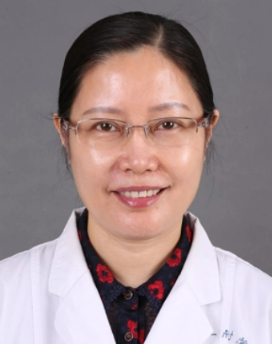 Weihui Zeng (曾维惠)合作论文数The Second Affiliated Hospital, Xi'an Jiaotong University1
 Chunying Li (李春英)合作论文数Xijing Hospital, Air Force Medical University1
 Rui Yin (尹锐)合作论文数陆军军医大学第一附属医院1
 Lihong Li (李立宏)合作论文数Tangdu Hospital, Air Force Medical University1Xiao Bi-Huan合作论文数1Yan Wu合作论文数1Xian Jiang合作论文数1Zhong Lu合作论文数1
 Jianzhong Zhang (张建中)合作论文数Peking University People's Hospital1
 Li He (何黎)合作论文数First Affiliated Hospital of Kunming Medical University1Qi Luan (栾琪)合作论文数1Yanting Wang (王延婷)合作论文数1
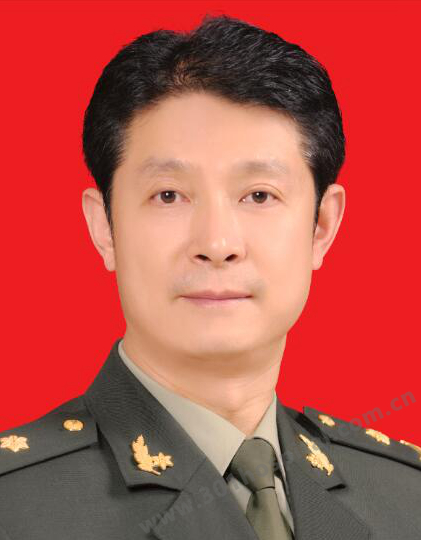 ChengXin Li (李承新)合作论文数Chinese PLA General Hospital1
 Baoxi Wang (王宝玺)合作论文数Plastic Surgery Hospital, Chinese Academy of Medical Sciences1Zeng Fan-Qin (曾凡钦)合作论文数1
 Yan Sun (孙艳)合作论文数1
 Sen Yang (杨森)合作论文数The First Affiliated Hospital of Anhui Medical University;The Fourth Affiliated Hospital of Soochow University1
 Ling Liu (刘玲)合作论文数1
 Xinghua Gao (高兴华)合作论文数Institute of Health Sciences, China Medical University;The First Hospital of China Medical University1Zhifei Liu (刘志飞)合作论文数1Kun Chen合作论文数1
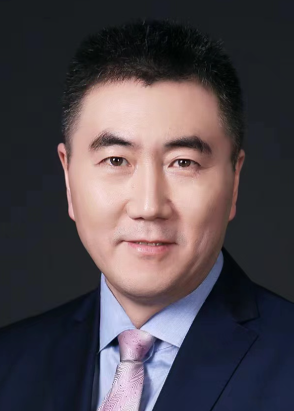 Qiang Ju (鞠强)合作论文数Renji Hospital, School of Medicine, Shanghai Jiao Tong University1




