The process through which humans perceive and learn visual representations in dynamic environments is highly complex. From a structural perspective, the human eye decouples the functions of cone and rod cells: cones are primarily responsible for color perception, while rods are specialized in detecting motion, particularly variations in light intensity. These two distinct modalities of visual information are integrated and processed within the visual cortex, thereby enhancing the robustness of the human visual system. Inspired by this biological mechanism, modern hardware systems have evolved to include not only color-sensitive RGB cameras but also motion-sensitive Dynamic Visual Systems, such as spike cameras. Building upon these advancements, this study seeks to emulate the human visual system by integrating decomposed multi-modal visual inputs with modern latent-space generative frameworks. We named it SpikeGen. We evaluate its performance across various spike-RGB tasks, including conditional image and video deblurring, dense frame reconstruction from spike streams, and high-speed scene novel-view synthesis. Supported by extensive experiments, we demonstrate that leveraging the latent space manipulation capabilities of generative models enables an effective synergistic enhancement of different visual modalities, addressing spatial sparsity in spike inputs and temporal sparsity in RGB inputs.
Vision-Language-Action (VLA) models enable robotic systems to perform embodied tasks but face deployment challenges due to the high computational demands of the dense Large Language Models (LLMs), with existing early-exit-based sparsification methods often overlooking the critical semantic role of final layers in downstream tasks. Aligning with the recent breakthrough of the Shallow Brain Hypothesis (SBH) in neuroscience and the mixture of experts in model sparsification, we conceptualize each LLM layer as an expert and propose a Mixture-of-LayEr Vision Language Action model (MoLe-VLA or simply MoLe) architecture for dynamic LLM layer activation. Specifically, we introduce a Spatial-Temporal Aware Router (STAR) for MoLe to selectively activate only parts of the layers based on the robot’s current state, mimicking the brain's distinct signal pathways specialized for cognition and causal reasoning. Additionally, to compensate for the cognition ability of LLM lost during the layer-skipping, we devise a Cognitive self-Knowledge Distillation (CogKD) to enhance the understanding of task demands and generate task-relevant action sequences by leveraging cognition features. Extensive experiments in RLBench simulations and real-world environments demonstrate the superiority of MoLe-VLA in both efficiency and performance, improving the mean success rate by 9.7% across ten simulation tasks while accelerating inference by 36.8% over OpenVLA.
Learning to control high-speed objects in dynamic environments represents a fundamental challenge in robotics. Table tennis serves as an ideal testbed for advancing robotic capabilities in dynamic environments. This task presents two fundamental challenges: it requires a high-precision vision system capable of accurately predicting ball trajectories under complex dynamics, and it necessitates intelligent control strategies to ensure precise ball striking to target regions. High-speed object manipulation typically demands advanced visual perception hardware capable of capturing rapid motion with exceptional temporal resolution. Drawing inspiration from Kahneman's dual-system theory, where fast intuitive processing complements slower deliberate reasoning, there exists an opportunity to develop more robust perception architectures that can handle high-speed dynamics while maintaining accuracy. To this end, we present \textit{\textbf{SpikePingpong}}, a novel system that integrates spike-based vision with imitation learning for high-precision robotic table tennis. We develop a cognitive-inspired Fast-Slow system architecture where System 1 provides rapid ball detection and preliminary trajectory prediction with millisecond-level responses, while System 2 employs spike-oriented neural calibration for precise hittable position corrections. For strategic ball striking, we introduce Imitation-based Motion Planning And Control Technology, which learns optimal robotic arm striking policies through demonstration-based learning. Experimental results demonstrate that \textit{\textbf{SpikePingpong}} achieves a remarkable 92\% success rate for 30 cm accuracy zones and 70\% in the more challenging 20 cm precision targeting. This work demonstrates the potential of cognitive-inspired architectures for advancing robotic capabilities in time-critical manipulation tasks.
Building robots that can perceive, reason, and act in dynamic, unstructured environments remains a central challenge. Recent embodied systems often follow a dual-system paradigm, where System 2 performs high-level reasoning and System 1 handles low-level control. We refer to System 2 as the embodied brain, the cognitive core for decision-making in manipulation. Although evaluating this embodied brain is crucial, existing benchmarks mainly measure execution success or cover only limited aspects of high-level cognition and task realism. We introduce RoboBench, a benchmark for evaluating multimodal large language models (MLLMs) as embodied brains. RoboBench covers five dimensions: Instruction Comprehension, Perception Reasoning, Generalized Planning, Affordance Prediction, and Failure Analysis. It spans 14 capabilities, 25 tasks, and 6,092 QA pairs. To improve realism, it draws from large-scale real robotic data and in-house collection across diverse embodiments, attribute-rich objects, multi-view scenes, and memory-driven navigation. For planning, RoboBench introduces an MLLM-as-world-simulator framework that assesses whether predicted plans can achieve critical object-state changes under physical and visual constraints, enabling more faithful evaluation of long-horizon reasoning than symbolic matching. Experiments on 18 state-of-the-art MLLMs reveal persistent limitations in implicit instruction understanding, spatiotemporal reasoning, cross-scenario planning, fine-grained affordance understanding, and failure diagnosis. We further analyze how embodied cognitive abilities relate to downstream robotic control. RoboBench offers a comprehensive scaffold for quantifying high-level cognition and guiding next-generation MLLMs toward more robust robotic intelligence.
Continual Test-Time Adaptation (CTTA), which aims to adapt the pre-trained model to ever-evolving target domains, emerges as an important task for vision models. As current vision models appear to be heavily biased towards texture, continuously adapting the model from one domain distribution to another can result in serious catastrophic forgetting. Drawing inspiration from the the encoding characteristics of neuron activation in neural networks, we propose the Mixture-of-Activation-Sparsity-Experts (MoASE) for the CTTA task. Given the distinct reaction of neurons with low and high activation to domain-specific and agnostic features, MoASE decomposes the neural activation into high-activation and low-activation components in each expert with a Spatial Differentiable Dropout (SDD). Based on the decomposition, we devise a Domain-Aware Router (DAR) that utilizes domain information to adaptively weight experts that process the post-SDD sparse activations, and the Activation Sparsity Gate (ASG) that adaptively assigns feature selection thresholds of the SDD for different experts for more precise feature decomposition. Finally, we introduce a Homeostatic-Proximal (HP) loss to maintain update consistency between the teacher and student experts to prevent error accumulation. Extensive experiments substantiate that MoASE achieves state-of-the-art performance in both classification and segmentation tasks.
The rapid pace of innovation in biological microscopy has produced increasingly large images, putting pressure on data storage and impeding efficient data sharing, management and visualization. This trend necessitates new, efficient compression solutions, as traditional coder-decoder methods often struggle with the diversity of bioimages, leading to suboptimal results. Here we show an adaptive compression workflow based on implicit neural representation that addresses these challenges. Our approach enables application-specific compression, supports images of varying dimensionality and allows arbitrary pixel-wise decompression. On a wide range of real-world microscopy images, we demonstrate that our workflow achieves high, controllable compression ratios while preserving the critical details necessary for downstream scientific analysis.
One of the most critical factors in achieving sharp Novel View Synthesis (NVS) using neural field methods like Neural Radiance Fields (NeRF) and 3D Gaussian Splatting (3DGS) is the quality of the training images. However, Conventional RGB cameras are susceptible to motion blur. In contrast, neuromorphic cameras like event and spike cameras inherently capture more comprehensive temporal information, which can provide a sharp representation of the scene as additional training data. Recent methods have explored the integration of event cameras to improve the quality of NVS. The event-RGB approaches have some limitations, such as high training costs and the inability to work effectively in the background. Instead, our study introduces a new method that uses the spike camera to overcome these limitations. By considering texture reconstruction from spike streams as ground truth, we design the Texture from Spike (TfS) loss. Since the spike camera relies on temporal integration instead of temporal differentiation used by event cameras, our proposed TfS loss maintains manageable training costs. It handles foreground objects with backgrounds simultaneously. We also provide a real-world dataset captured with our spike-RGB camera system to facilitate future research endeavors. We conduct extensive experiments using synthetic and real-world datasets to demonstrate that our design can enhance novel view synthesis across NeRF and 3DGS. The code and dataset will be made available for public access.
Advancing towards generalist agents necessitates the concurrent processing of multiple tasks using a unified model, thereby underscoring the growing significance of simultaneous model training on multiple downstream tasks. A common issue in multi-task learning is the occurrence of gradient conflict, which leads to potential competition among different tasks during joint training. This competition often results in improvements in one task at the expense of deterioration in another. Although several optimization methods have been developed to address this issue by manipulating task gradients for better task balancing, they cannot decrease the incidence of gradient conflict. In this paper, we systematically investigate the occurrence of gradient conflict across different methods and propose a strategy to reduce such conflicts through sparse training (ST), wherein only a portion of the model's parameters are updated during training while keeping the rest unchanged. Our extensive experiments demonstrate that ST effectively mitigates conflicting gradients and leads to superior performance. Furthermore, ST can be easily integrated with gradient manipulation techniques, thus enhancing their effectiveness.
Multimodal large language models have been recognized as a historical milestone in the field of artificial intelligence and have demonstrated revolutionary potentials not only in commercial applications, but also for many scientific fields. Here we give a brief overview of multimodal large language models through the lens of bioimage analysis and discuss how we could build these models as a community to facilitate biology research.
Learned optimizers are pivotal in meta-learning and recent advancements in scalable learned optimizers have showcased superior performance over traditional, hand-designed counterparts in diverse tasks. However, their adoption is impeded by certain limitations, such as difficulties in handling out-of-distribution tasks, uncontrollable behaviors, and inferior performance in fine-tuning tasks. To address the issue of generalization in these optimizers, we propose a Hybrid-Update-Based (HUB) optimization strategy, inspired by the latest advancements in prompt tuning and result selection techniques in large language and vision models. Compared to previous methodologies (Pr'emont-Schwarz et al., 2022; Heaton et al., 2020), our approach enables a more sophisticated integration between hand-designed and learned optimizers and significantly reduces the computational overhead of hybridization. Our approach broadens the applicability of learned optimizers to tasks beyond their initial training distribution, and it has been validated through a series of diverse tasks, demonstrating significant advantages and unique robustness against out-of-distribution tasks compared to meticulously hyperparameter-tuned competitors. In this paper we also delve into a theoretical analysis of the hybrid strategy's impact on the behaviors and inherent traits of learned optimizers, offering deeper insights into their functionalities and interactions.
Diffusion models have demonstrated excellent capabilities in text-to-image generation. Their semantic understanding (i.e., prompt following) ability has also been greatly improved with large language models (e.g., T5, Llama). However, existing models cannot perfectly handle long and complex text prompts, especially when the text prompts contain various objects with numerous attributes and interrelated spatial relationships. While many regional prompting methods have been proposed for UNet-based models (SD1.5, SDXL), but there are still no implementations based on the recent Diffusion Transformer (DiT) architecture, such as SD3 and FLUX.1.In this report, we propose and implement regional prompting for FLUX.1 based on attention manipulation, which enables DiT with fined-grained compositional text-to-image generation capability in a training-free manner. Code is available at https://github.com/antonioo-c/Regional-Prompting-FLUX.
Learned optimizers are a crucial component of meta-learning. Recent advancements in scalable learned optimizers have demonstrated their superior performance over hand-designed optimizers in various tasks. However, certain characteristics of these models, such as an unstable learning curve, limited ability to handle unseen tasks and network architectures, difficult-to-control behaviours, and poor performance in fine-tuning tasks impede their widespread adoption. To tackle the issue of generalization in scalable learned optimizers, we propose a hybrid-update-based (HUB) optimization strategy inspired by recent advancements in hard prompt tuning and result selection techniques used in large language and vision models. This approach can be easily applied to any task that involves hand-designed or learned optimizer. By incorporating hand-designed optimizers as the second component in our hybrid approach, we are able to retain the benefits of learned optimizers while stabilizing the training process and, more importantly, improving testing performance. We validate our design through a total of 17 tasks, consisting of thirteen training from scratch and four fine-tuning settings. These tasks vary in model sizes, architectures, or dataset sizes, and the competing optimizers are hyperparameter-tuned. We outperform all competitors in 94% of the tasks with better testing performance. Furthermore, we conduct a theoretical analysis to examine the potential impact of our hybrid strategy on the behaviours and inherited traits of learned optimizers.
 Shanghang Zhang (仉尚航)合作论文数Institute for Visual Technology, School of Computer Science, Peking University;Institute for Artificial Intelligence, Peking University11
 Tiejun Huang (黄铁军)合作论文数Institute for Artificial Intelligence, Peking University;School of Computer Science, Peking University;Beijing Academy of Artificial Intelligence;National Engineering Laboratory for Video Technology, Peking University8
 Rongyu Zhang合作论文数School of Electric Science and Engineering, Nanjing University;School of Computing, The Hong Kong Polytechnic University5
 Jiaming Liu (刘家铭)合作论文数National Key Laboratory for Multimedia Information Processing, School of Computer Science, Peking University3
 Yulin Luo合作论文数Peking University2
 Li Du (杜力)合作论文数School of Electronic Science and Engineering, Nanjing University;School of Integrated Circuits, Nanjing University2
 Jianxu Chen合作论文数Das Institut, Leibniz-Institut für Analytische Wissenschaften – ISAS – e.V.;Microscopy Machine Vision Lab, Biospectroscopy Research Department, Leibniz-Institut für Analytische Wissenschaften – ISAS – e.V.2
 Yuan Du (杜源)合作论文数School of Electronic Science and Engineering, Nanjing University2
 Ming Lu (陆鸣)合作论文数Intel Lab2
 Jie Fu (付杰)合作论文数Shanghai AI Laboratory2
 Liang Heng合作论文数1Cheng Chi合作论文数1Chengkai Hou合作论文数1Qingpo Wuwu合作论文数1Ran Xu合作论文数1Shaokang Wang合作论文数1Aosong Cheng合作论文数1
 Anthony Chen (陈安同)合作论文数School of Computer Science, Peking University;Little Red Book1Ruichuan An合作论文数1
 Zhi Zhang合作论文数Institute for Logic, Language and Computation, University of Amsterdam1
 Yuan Zhang (张袁)合作论文数Center on Frontiers of Computing Studies, Peking University1Qizhe Zhang合作论文数1Cheng-Ching Tseng合作论文数1
 Hao Wang (王昊)合作论文数School of Computer Science, Peking University1
 Bowen Zhang合作论文数Deptartment of Computer Science, National University of Singapore1
 Xiaowei Chi合作论文数1Ali Ata Tuz合作论文数Fac Med Student, Istanbul Univ Cerrahpasa1Shiji Zhou (周仕佶)合作论文数1
 Lixuan Chen合作论文数School of Electronic and Computer Engineering, Peking University, Shenzhen, China1
 Zhongyuan Wang (王仲远)合作论文数Kuaishou Technology;Beijing Academy of Artificial Intelligence1
 Boxin Shi (施柏鑫)合作论文数Institute for Artificial Intelligence, Peking University1
 Pengwei Wang (王鹏伟)合作论文数东华大学计算机软件与理论系1
 Huanrui Yang (杨幻睿)合作论文数Department of Electrical and Computer Engineering, College of Engineering, University of Arizona1
 Ziyu Wang合作论文数Music X Lab, New York University Shanghai;Computer Science Department, New York University Shanghai;Machine Learning Dapartment, MBZUAI1
 Wenzhao Zheng (郑文钊)合作论文数Department of EECS, University of California, Berkeley1
 Ekaterina Shutova合作论文数Amsterdam Natural Language Understanding Lab, Institute for Logic, Language and Computation, Faculty of Science, University of Amsterdam1
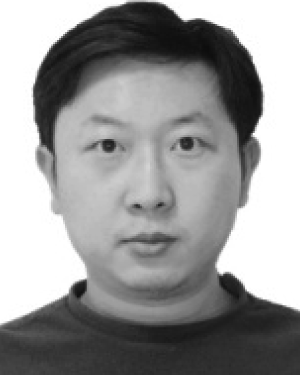 Guang Liu合作论文数Center for Intelligence of Science and Technology, Beijing University of Posts and Telecommunications1
 Haofan Wang (王浩帆)合作论文数Lovart AI;InstantX Team1
 Renrui Zhang合作论文数Multimedia Laboratory, The Chinese University of Hong Kong1
 Matthias Gunzer合作论文数Department “Biospectroscopy”, Leibniz Institute for Analytical Sciences;Institute of Experimental Immunology and Imaging, University Hospital Essen;Imaging Center Essen, University Hospital Essen1
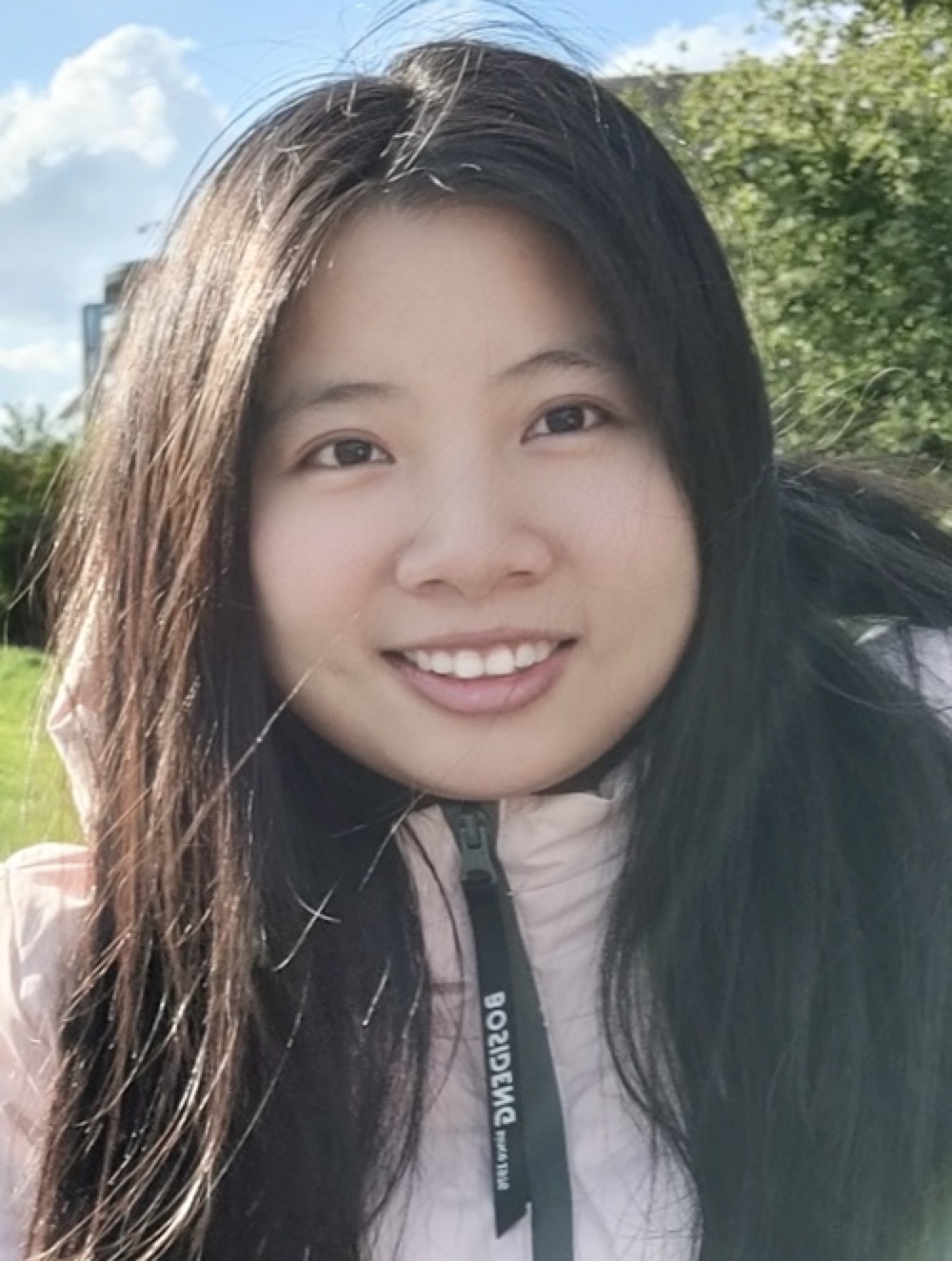 Jiayi Shen (沈佳怡)合作论文数MultiX Lab, University of Amsterdam1
 Zhengping Che (车正平)合作论文数Beijing Innovation Center of Humanoid Robotics1
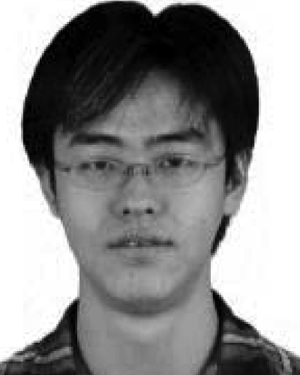 Zhenyu Wang (王振宇)合作论文数1




