An entry from the Cambridge Structural Database, the world’s repository for small molecule crystal structures. The entry contains experimental data from a crystal diffraction study. The deposited dataset for this entry is freely available from the CCDC and typically includes 3D coordinates, cell parameters, space group, experimental conditions and quality measures.
The dinitroxide bis(TEMPO) bisketal (bTbk) was shown to crystallize into open frameworks whose structures were determined by single-crystal X-ray diffraction. We show that bTbk can be used as a supramolecular building block for the hosting of a plethora of guests inside the 1D channels of its paramagnetic framework, including other radicals such as TEMPO or 2-azaadamantane-N-oxyl. C60 and C70 were also found to be easily included in this open framework during its crystallization. This resulted in well-defined, nanostructured assemblies of composite radical crystals (bTbk/toluene/C60 or C70) or (bTbk/toluene/TEMPO) by a very simple dissolution/crystallization process with tunable guest content. Selective C60 extraction was also demonstrated directly from fullerene soot.
Starting from its measured structure, the electronic structures and optical absorptions of CdSe single source precursor, cadmium bis(diselenophosphinate) (CSP), have been studied by means of density functional theory calculations. In contrast to covalent bonding in ligand-free cadmium selenide, the Cd–Se bonds in CSP are featured by the coordination of the 4p electrons of Se atoms, resulting in low net charge on Cd and blue shifted electron transitions. The ligands not only stabilize the CdSe core but also affect the HOMO–LUMO transition. Computations were extended to the corresponding ZnSe and CdS complexes and came to similar conclusions.
A combination of solid state NMR, first principles calculations and single crystal XRD was applied to relate solid state 33S NMR parameters obtained from a series of anhydrous sulfates of the elements of groups I–III. Operating at high magnetic field of 21.14 T provides a dramatic improvement in the quality of spectra due to significantly enhanced sensitivity and a reduction of second order quadrupolar effects. Experimental 33S NMR spectra for most studied sulfates are dominated by quadrupolar interactions with the quadrupolar parameters unique for each compound. Magnetic shielding constants and quadrupolar parameters for sulfur were calculated using plane wave pseudo-potential density functional theory as implemented in the CASTEP computational package. The calculated NMR parameters are in very good agreement with the experimental results and help in assignment of the stationary spectra. The results demonstrate that such a combined computational – experimental solid state NMR approach can aid in an assessment and improved interpretation of the crystallographic data.
The Paternò-Büchi (PB) reaction between an excited carbonyl compound and an alkene has been widely studied, but so far little is known about the excited-state dynamics of the reaction. In this investigation, we used a compound in which a formyl and a vinyl group are attached to a [2.2]paracyclophane in order to obtain a model system in pre-reactive conformation for the PB reaction. We studied the excited-state dynamics of the isolated molecule in a molecular beam using femtosecond time-resolved photoelectron spectroscopy and ab initio calculations. The results show that inter-system crossing within two picoseconds competes efficiently with the reaction in the singlet manifold. Thus, the PB reaction in this model system takes place in the triplet state on a time scale of nanoseconds. This result stresses the importance of triplet states in the excited-state pathway of the PB reaction involving aromatic carbonyl compounds, even in situations in which the reacting moieties are in immediate vicinity.
AbstractOver the past 15 years, significant advances in X‐ray diffraction instrumentation have completely transformed how chemists make use of this technique. This is particularly evident in the field of supramolecular chemistry, where characterizing the structural motifs of molecular crystals is crucial to the understanding of the weak intermolecular forces that are responsible for crystal stability. This chapter describes the advances that are typical of instrumentation available in most chemistry departments as well as the advances in data treatment, structure solution, and refinement that have become possible.
The synthesis, structures and magnetic properties of a new trinuclear spin crossover complex, [FeII3(npt)6(EtOH)4(H2O)2](ptol)6·4EtOH (1), and of its CoII (2 and 3) and NiII (4) analogues, are reported here. The complexes were synthesized by reacting a 1,2,4-triazole-based ligand, 4-(4′-nitrophenyl)-1,2,4-triazole (npt), with the p-tolylsulfonate (ptol) metal salts in methanol or ethanol. Structural analyses revealed that all complexes are iomorphous and consist of a linear trinuclear core where metal centres are bridged by triazole groups. For 1, dc susceptibility measurements exhibit gradual spin transition with T1/2 = 148 K which corresponds to HS → LS crossover for the triazole bridged central FeII ion. This spin transition was confirmed by Single-Crystal X-Ray Diffraction data of 1 at 100 K and 181 K, where the low temperature measurement revealed a decrease in volume for the central FeII ion, which is in agreement with a HS → LS transition.
The first study of pseudo-bimolecular cycloaddition reaction dynamics in the gas phase is presented. We used femtosecond time-resolved photoelectron spectroscopy (TRPES) to study the [2+2] photocycloaddition in the model system pseudo-gem-divinyl[2.2]paracyclophane. From X-ray crystal diffraction measurements we found that the ground-state molecule can exist in two conformers; a reactive one in which the vinyl groups are immediately situated for [2+2] cycloaddition and a nonreactive conformer in which they point in opposite directions. From the measured S(1) lifetimes we assigned a clear relation between the conformation and the excited-state reactivity; the reactive conformer has a lifetime of 13 ps, populating the ground state through a conical intersection leading to [2+2] cycloaddition, whereas the nonreactive conformer has a lifetime of 400 ps. Ab initio calculations were performed to locate the relevant conical intersection (CI) and calculate an excited-state [2+2] cycloaddition reaction path. The interpretation of the results is supported by experimental results on the similar but nonreactive pseudo-para-divinyl[2.2]paracyclophane, which has a lifetime of more than 500 ps in the S(1) state.
A family of five dinuclear lanthanide complexes has been synthesized with general formula [Ln(III)(2)(valdien)(2)(NO(3))(2)] where (H(2)valdien = N1,N3-bis(3-methoxysalicylidene)diethylenetriamine) and Ln(III) = Eu(III)1, Gd(III)2, Tb(III)3, Dy(III)4, and Ho(III)5. The magnetic investigations reveal that 4 exhibits single-molecule magnet (SMM) behavior with an anisotropic barrier U(eff) = 76 K. The step-like features in the hysteresis loops observed for 4 reveal an antiferromagnetic exchange coupling between the two dysprosium ions. Ab initio calculations confirm the weak antiferromagnetic interaction with an exchange constant J(Dy-Dy) = -0.21 cm(-1). The observed steps in the hysteresis loops correspond to a weakly coupled system similar to exchange-biased SMMs. The Dy(2) complex is an ideal candidate for the elucidation of slow relaxation of the magnetization mechanism seen in lanthanide systems.
Structurally unique {Cu12} and {Fe8} cluster complexes were synthesized using 2,2,6,6-tetrakis (hydroxymethyl)cyclohexanol (thcH5) ligand. The polyalcohol thcH5 ligand consists of a six membered ring in a chair confirmation and five pendant alcohol arms providing pentadentate-anchoring points for coordination chemistry. A wide range of reaction conditions was explored with transition metal ions in order to isolate large cluster complexes. Obtained {Cu12} and {Fe8} complexes exhibit unprecedented core topologies where thcH5 encapsulate and bridge between metal centers and mediate magnetic interactions via the superexchange pathways. Both complexes exhibit dominant intramolecular antiferromagnetic interactions leading to singlet spin ground state.
The title system allows the straightforward formation of three-dimensional crystals of self-assembled pseudorotaxanes formed by the nonionic surfactant Igepal CO-520 and beta-cyclodextrin (beta-CD) in aqueous solution. The work involves a combination of X-ray powder diffraction, high resolution electron transmission microscopy, and (13)C CP/MAS NMR studies of the solid crystal, supported by single crystal structural analysis. The results indicate a lamellar self-assembly of pseudorotaxanes with preferential orientation and disorder in the structure. For the single crystal, the unit cell was found to be triclinic (P1) and contains a beta-CD dimer. The surfactant molecules are located in the channel formed by these dimers along the c axis of the crystal network. The individual pseudorotaxane structure is formed by a dimer of beta-CDs threaded by the oxyethylene hydrophilic segment of Igepal CO-520, and a beta-CD dimer that binds the hydrophobic region of the surfactant. Thus, as in a CD polyrotaxane structure, this system results in an ordered self-assembly of pseudorotaxanes through the formation of a network of hydrogen bonds between head-to-head beta-CD dimers. Moreover, the analysis of the (1)H NMR spectra in solutions of pseudorotaxanes formed by beta-CD and Igepals with different lengths of the hydrophilic tails indicates equal stoichiometry patterns of both oxyethyelene and hydrophobic regions for the different supramolecules. Whereas the common hydrophobic moiety threads two macrocycles, the ratio between complexed oxyehtlyene segments and beta-CD is 2.5 for the hydrophilic tails. All these results show that nonionic surfactants can be used as alternative and effective linear threads to polymers and copolymers in the synthesis of supramolecular polyrotaxane solid crystals with CDs.
An entry from the Cambridge Structural Database, the world’s repository for small molecule crystal structures. The entry contains experimental data from a crystal diffraction study. The deposited dataset for this entry is freely available from the CCDC and typically includes 3D coordinates, cell parameters, space group, experimental conditions and quality measures.
beta-Cyclodextrin has been shown to form inclusion compounds with a wide variety of suitably sized guest molecules. In the present study a pseudo-spherical van der Waals guest molecule, adamantane, has been shown to template surprisingly complex packing motifs when incorporated into beta-cyclodextrin host frameworks.
This work reports significantly improved spectral resolution of (13)C CP MAS NMR spectra of chlorinated, brominated and iodinated solid organic compounds when such spectra are recorded at ultrahigh magnetic field strengths. The cause of this is the residual dipolar coupling between carbon atoms and quadrupolar halogen nuclides (chlorine-35/37, bromine-79/81 or iodine-127), an effect inversely proportional to the magnetic field strength which declines in importance markedly at 21.1 T as compared to lower fields. In favorable cases, the fine structure observed can be used for spectral assignment, e.g. for Cl-substituted aromatics where the substituted carbon as well as the ortho-carbons show distinct doublets. The experimental results presented are supported by theoretical modeling and calculations. The improved spectral resolution in the studied systems and similar halogenated materials will be of particular interest and importance for polymorph identification, drug discovery and quality control in the pharmaceutical industry.
Polycyclic compounds bearing isoindolo[2,1-a]quinoline system were easily prepared stereo- and regioselectively, and in one-pot, in a tandem fashion containing Povarov’s multicomponent and condensation reactions. Involving a stepwise route for the aza Diels–Alder reaction within the synthesis was suggested.
An entry from the Cambridge Structural Database, the world’s repository for small molecule crystal structures. The entry contains experimental data from a crystal diffraction study. The deposited dataset for this entry is freely available from the CCDC and typically includes 3D coordinates, cell parameters, space group, experimental conditions and quality measures.
The organic host molecule, tris(5-acetyl-3-thienyl)methane (TATM) is known to form a variety of van der Waals inclusion compounds. Surprisingly, this host framework has been shown to be stable despite near-complete guest loss. In the present study we examine the degree to which guests can be removed from the host cavities without framework collapse, as well as the ability of the depleted host framework to re-adsorb guest molecules, including adsorption of a two-component mixture of guests, all in a host system that has no channels for transport. The response of the host framework to changes in guest content is reported as well.
We have followed the loading of xenon into the low density form of a van der Waals solid host, p-tert-butylcalix[4]arene (tBC), with solid-state NMR and X-ray diffraction (XRD), techniques sensitive to local and long-range order, respectively. Even though there was little change in the unit cell parameters, C-13 and Xe-129 solid-state NMR spectra indicate that significant structural changes occur in local order even at low levels of loading. In particular, 129Xe double quantum experiments, which probe distance-dependent Xe-129-Xe-129 dipolar interactions, reveal that the closest Xe-Xe distances increase with Xe loading into the tBC host, suggesting that the tBC undergoes structural rearrangements as it absorbs Xe. Indeed, in light of the solid-state NMR results, a re-examination of partially loaded single crystals by XRD showed that up to a loading level (Xe/tBC ratio) of 0.25, the structure was closely related to that of the empty form with the typical calixarene bilayer structure; however, at higher loading (0.5), the structure is substantially different with a constricted zigzag channel for Xe. In the latter structure, alternate bilayers are distinct because of different molecular orientations and much enhanced thermal parameters. What is remarkable is that the changes described take place with the different structural motifs apparently coexisting in the same single crystal. These different structures have almost identical unit cell parameters; however, the structures are quite different, and the phase transitions are more easily followed with NMR spectroscopy than with diffraction. The fact that ordered domains are always present suggests that cooperative dynamics play an important role, with the experimental results giving snapshots of the loading process at different stages.
A modular, reagent-based approach to obtain different indoline alkaloid-inspired, tetracyclic architectures is developed. With the use of TBSOTf as a Lewis acid, we report here a tandem Michael-based approach that led to the synthesis of a diastereomeric mixture of tetracyclic derivatives with two additional six-membered rings. By simply changing the Lewis acid to TMSOTf, we were able to obtain a different tetracyclic compound having additional functionalized 5- and 7-membered rings with complete stereocontrol.
 John Ripmeester合作论文数Materials Structure and Function Group, National Research Council Canada88
 Martin C. Richardson合作论文数Laser & Plasma Laboratory, University of Central Florida;Department of Physics, College of Sciences, University of Central Florida43
 David Villeneuve合作论文数Department of Physics, University of Ottawa;National Research Council of Canada;Université du Québec35
 Christopher I. Ratcliffe合作论文数Steacie Institute for Molecular Sciences, National Research Council of Canada30N. H. Burnett合作论文数29
 Arthur Carty合作论文数Department of Chemistry, University of Waterloo;Waterloo Institute for Nanotechnology, University of Waterloo28HA Baldis合作论文数25KA Udachin合作论文数21Eric B. Brouwer合作论文数21
 Jean-Claude Kieffer合作论文数Institut National de la Recherche Scientifique - Énergie, Matériaux et Télécommunications, Matériaux et Télécommunications20
 Dmitriy V. Soldatov合作论文数Department of Chemistry, University of Guelph17Konstantin A. Udachin合作论文数17b lafontaine合作论文数16
 Henri Pepin合作论文数INRS-EMT16
 James (Jim) Dunn合作论文数Lawrence Livermore National Laboratory15Konstantin a Udachin合作论文数15
 Robert Fedosejevs合作论文数Department of Electrical and Computer Engineering, University of Alberta12m nantel合作论文数10
 Paul J. Low合作论文数Department of Chemistry, University of Adelaide10
 Weibin Wang (王渭滨)合作论文数10Gkh Shimizu合作论文数9
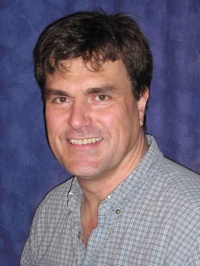 Robin S. Marjoribanks合作论文数Department of Physics, Faculty of Arts and Science, University of Toronto9Mohamed Chaker合作论文数8Igor Moudrakovski合作论文数Max Planck Institute for Solid State Research8Pa Jaanimagi合作论文数7MDJ BURGESS合作论文数7M. D. Rosen合作论文数6
 Graeme Hogarth合作论文数London Centre for Nanotechnology, Faculty of Mathematical & Physical Sciences, University College London6
 Suning Wang合作论文数Department of Chemistry, Queen's University6B. P. Stoicheff合作论文数6Peter Blenkiron合作论文数6
 Dennis Lee Matthews合作论文数Department of Neurological Surgery, UC Davis Medical Center;LifeLight Resources LLC5
 Darren Brouwer合作论文数Department of Chemistry, Redeemer University/Department of Chemistry and Chemical Biology, Faculty of Science, McMaster University5
 Chandrashekhar Joshi合作论文数Electrical and Computer Engineering Department, School of Engineering, University of California5Hector Baldis合作论文数5
 John F Corrigan合作论文数Guelph-Waterloo Centre for Graduate Work in Chemistry Waterloo Campus, University of Waterloo5
 Bernie Kraatz合作论文数Department of Chemistry, Faculty of Arts and Science, University of Toronto5Paul S. Sidhu合作论文数5
 Yun Chi (季昀)合作论文数Department of Materials Science and Engineering, College of Engineering, City University of Hong Kong;Department of Chemistry, College of Science, City University of Hong Kong5
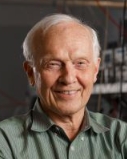 Paul Corkum合作论文数Department of Physics, Faculty of Science, University of Ottawa;Joint Laboratory for Attosecond Science, University of Ottawa5Nj Taylor合作论文数4
 Robert J. Crutchley合作论文数Department of Chemistry, Carleton University4M. Burgess合作论文数4P. Burtyn合作论文数4S. D. Baton合作论文数4
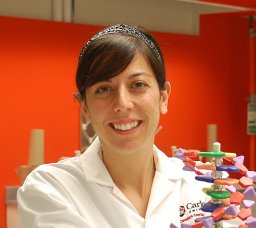 Maria C. Derosa合作论文数Ottawa-Carleton Chemistry Institute, Carleton University4Ivan V. Tomov合作论文数Institute of Physical Chemistry, Bulgarian Academy of Sciences4
 Prabhat Arya合作论文数National Research Council of Canada, Steacie Institute for Molecular Sciences4Steven R. Breeze合作论文数4




