Extensive collecting of bulk samples at six sites in the Piscataway and Paspotansa members of the Aquia Formation (Palaeocene, approximately 61.0-56.0 Ma based on the upper P3b-P5 and NP5-NP9) in Maryland, U.S.A. resulted in the recovery of 9647 teleostean otoliths, primarily sagittae (99.13%). The assemblage consisted of 20 different teleostean families that represent 23 unequivocal species, four identified to genus, and six assigned to the family level (total of 33 taxa). This makes the Aquia Formation the most diverse and abundant Palaeocene otolith-based assemblage known presently in North America. The otolith assemblage contains two new genera and seven new species. Of special note are Primitivusscomber triangulum and 'Scomberomorus' sp. that represent the oldest otolith-based scombrids (family Scombridae) known in the palaeontological record. Percentage similarity measurement indicates that the two Aquia Formation members were extremely alike and represented fish assemblages and palaeoenvironments that were quite similar to one another. The otolith assemblage reveals a palaeoenvironment of mainly normal salinity, marine waters with depths most likely less than 100 m (inner to middle shelf), tropical climate (some indications of possible subtropical climate), soft sea bottoms, and a short surface residence time for the otoliths.urn:lsid:zoobank.org:pub:73342A4B-4CC3-47A8-85D2-0EDC88DD41F5
A recently discovered site in southern Mississippi considered early Arikareean based on identified mammals represents the first of this age from the Gulf Coastal Plain outside of Florida. The Jones Branch Local Fauna was recovered from deltaic/estuarine deposits low in the Catahoula Formation resting unconformably on marl/clay beds of the subjacent, upper Rupelian (lower Oligocene), marine Paynes Hammock Formation. In addition to well-preserved plant material plus reptiles, amphibians, and fishes, the mammals are represented primarily by species previously known almost exclusively from the Great Plains, the northern Rocky Mountains (Montana), and/or John Day region, Oregon, with only a few apparently endemic to the Gulf Coastal Plain. Genera representative of the former include the proscalopid Mesoscalops, the sciurid Hesperopetes, the aplodontiid Downsimus, the putative early castoroid Eutypomys, the castorid Microtheriomys, the eomyids Apeomys and Leptodontomys, the florentiamyid Kirkomys, the mustelids Corumictis and Promartes, the tapir Protapirus, the leptochoerid Leptochoerus, the anthracothere Elomeryx, and the hornless ruminants Hypertragulus and ?Leptomeryx. Mesoscalops, Downsimus, and Apeomys are represented by new species. Additionally, a new genus and species of lagomorph is described, Oligolagus welleri, as is a new genus and new species of eomyid, Paraktioeomys palmeri. Known from both regions is the marsupial Herpetotherium, an apatemyid provisionally referred to Sinclairella, and the borophagine Phlaocyon. Gulf Coastal Plain endemics include the protoceratid Prosynthetoceras orthrionanus and apparently Oligolagus n. gen. and Paraktioeomys n. gen. The geographically broadly distributed horse Miohippus, rhinoceros Diceratherium, and giant entelodont Daeodon are also present. Marine mammals are represented by the dugong Crenatosiren olseni and the odontocete Agorophius pygmaeus. Additionally noted are two taxa from stratigraphically lower formations that are not part of the Jones Branch LF. These include a large species of the entelodont Archaeotherium and the anthracothere Elomeryx armatus, both of which were previously unknown along the Gulf Coastal Plain. The long recognized biotic disparity between the Midcontinent and Gulf Coastal Plain by the early Miocene was not yet strongly apparent during the early to middle Oligocene.UUID: http://zoobank.org/c1b57f31-4ed1-42fb-bf31-c803e2e61cfd
 Jun A. Ebersole合作论文数McWane Sci Ctr265
 David J. Cicimurri合作论文数Geology Museum265Charles N. Ciampaglio合作论文数255Stephen Jacquemin合作论文数16
 Werner Schwarzhans合作论文数8
 George Phillips合作论文数3Lorin King合作论文数2Sandy Ebersole合作论文数2SQ BREARD合作论文数2Bruce Welton合作论文数2Zixuan Rao合作论文数2Jessica A. Lueders-Dumont合作论文数Dept Geosci, Princeton Univ2
 Daniel M. Sigman合作论文数Department of Geosciences, Princeton University2
 Alfredo Martínez-García合作论文数Geological Institute, ETH Zürich2Mervin Kontrovitz合作论文数2
 Gerald H. Haug合作论文数Department of Climate Geochemistry, Max Planck Institute for Chemistry;Department of Earth Sciences, ETH Zurich2James E. Starnes合作论文数1Dana Cope合作论文数1James Westgate合作论文数1James Knight合作论文数1Sergey Oleynik合作论文数1Lauren J. Fuelling合作论文数1
 Yeongjun Ryu合作论文数Dept Geosci, Princeton Univ1
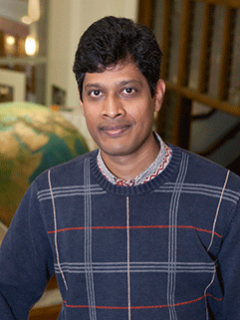 Satish C. Myneni合作论文数The Department of Civil and Environmental Engineering, School of Engineering and Applied Science, Princeton University1
 Richard C. Hulbert合作论文数Florida Museum of Natural History, University of Florida1
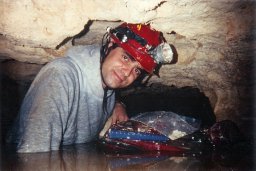 Roger W. Portell合作论文数Florida Museum of Natural History;University of Florida;Florida Museum of Natural History, University of Florida1Gary T. Takeuchi合作论文数1
 Ronald Fricke合作论文数1Harry L. Fierstine合作论文数1
 Dennis Parmley合作论文数1
 Giorgio Carnevale合作论文数Dipartimento di Scienze della Terra, Museo di Storia;Universitadi Pisa;Dipartimento di Scienze della Terra and Museo di Storia, Universitadi Pisa1




