The rise of social media platforms like Twitter has transformed communication, fostering community engagement and knowledge sharing across diverse groups. However, it has also provided a stage for toxic content, including hate speech, which can manifest in harmful ways within specific contexts, such as discussions surrounding football. Hate speech in this domain often targets individuals or groups based on attributes such as race, ethnicity, or nationality, and is exacerbated by the emotionally charged nature of sports discourse. While binary classification models have traditionally been employed to detect hate speech, they struggle to address nuanced and context-specific forms of abuse, including microaggressions and intersectional hate speech. Multi-class classification enables a more detailed understanding by distinguishing between various types of hate speech, but these models face challenges such as lexico-semantic variability and rapidly evolving norms within the football community. In this paper, we propose an ensemble technique leveraging BERT-based transformers to improve hate speech detection in football-related discussions on Twitter. Our method integrates manually-annotated datasets and multiple classifiers within ensemble frameworks to enhance accuracy and robustness. The results demonstrate that our approach significantly improves the identification of diverse forms of hate speech in the football context, contributing to more effective content moderation and fostering safer online communities.
Online abuse, especially in the context of sport and leisure, is a growing and required area of study. Athletes, journalists and officials have been notably subject to various forms of abuse on major social media platforms, and this, in turn, has prompted responses from scholars, media organisations and sports authorities. One stakeholder who's experience of online abuse has gone largely unexamined, however, is fans. In existing research, fans have generally been conceived of as perpetrators of abuse. The potential for them to be victims of abuse or, indeed, active participants in the struggle against it, has been overlooked, leaving the risk that fans may be regarded by authorities as a problem to be managed. To address this dearth, we have conducted a survey of over 2000 football (soccer) fans, gathering insights on their opinions and experience of online abuse in the sport they follow. Our findings reveal not only the impact, specifically on well-being, and regularity of online abuse suffered by fans, but also point towards what triggers abuse against them and how some of them end up perpetrating abuse. In doing so, this paper asserts the significance of leisure as a social milieu for understanding online abuse.
The increased professionalization of women's football means that women players are now competing in front of sold-out capacity crowds with millions of viewers watching. This enhanced popularity has increased online traffic relating to women's football. Some of these discussions are abusive, and potentially harmful. Nonetheless, while a growing body of research has investigated online harms in football, most of the attention has centred on men's football. This article importantly focuses on women's football. We examine qualitative findings with 30 current and former professional women's players to understand how online sexism, misogyny and wider harms, are experienced and dealt with. Our findings demonstrate that players are vulnerable to online harms and often try to dismiss it as an occupational hazard. We suggest that stakeholders should devote more time and resources to better protect players against such harms. The article concludes by offering some recommendations for reform and suggestions for future research.
Homophobic speech is a form of hate speech. Social media enables hate speech to spread rapidly and widely through the internet, and unlike offline hate speech, can persist indefinitely, thereby prolonging its impact. Due to the adverse impact of hate speech, policymakers have called for greater action from online platforms to moderate and remove hate speech, including homophobic content. While homophobic hate speech is prevalent in online soccer discourses, there are few studies on this empirical context in general and specifically on the use of Large Language Models (LLMs) for detecting such speech. This study addresses this gap by proposing a homophobic speech text classification pipeline. We introduce H-DICT, a new general dictionary for identifying potential homophobic content in documents, and leverage this dictionary to curate and manually label an annotated dataset of homophobic and non-homophobic samples from the UEFA European Football Championships (the Euros) discourse on Twitter. We fine-tune and evaluate five large language models (LLMs) based on the BERT architecture BERT, DistilBERT, RoBERTa, BERT Hate, and RoBERTa Offensive - and use Integrated Gradients, an explainable AI technique to explain each model's predictions. RoBERTa Offensive, an LLM fine-tuned specifically for detecting offensive language, presented the best performance when compared to the other LLMs.
PurposeAutomated social media messaging tactics can undermine trust in health institutions and public health advice. As such, we examine automated software programs (ASPs) and social bots in the Twitter anti-vaccine discourse before and after the release of COVID-19 vaccines.Design/methodology/approachWe compare two Twitter datasets comprising user accounts and associated English-language tweets featuring the keywords "#antivaxx" or "anti-vaxx." The first dataset, from 2018 (pre-COVID vaccine), includes 3,154 user accounts and 6,380 tweets. The second comprises 327,067 accounts and 545,268 tweets published during the 12 months following December 1, 2020 (post-COVID vaccine). Using Information Laundering Theory (ILT), the datasets were examined manually and through user analytics and machine learning to identify activity, visibility, verification status, vaccine position, and ASP or bot technology use.FindingsThe post-COVID vaccine dataset showed an increase in highly probable bot accounts (31.09%) and anti-vaccine accounts. However, both datasets were dominated by pro-vaccine accounts; most highly active (59%) and highly visible (50%) accounts classified as probable bots were pro-vaccine.Originality/valueThis research is the first to compare bot behaviors in the "#antivaxx" discourse before and after the release of COVID-19 vaccines. The prevalence of mostly benevolent probable bot accounts suggests a potential overstatement of the threat posed by anti-vaccine accounts using ASPs or bot technologies. By highlighting bots as intermediaries that disseminate both pro- and anti-vaccine content, we extend ILT by identifying a benevolent variant and offering insights into bots as "pathways" to generating mainstream information.
The victory of the Spanish national women's football team at the 2023 FIFA World Cup was marred by the mass-mediated non-consensual kiss on midfielder, Jennifer Hermoso, by Luis Rubiales, then President of the Royal Spanish Football National Federation. The kiss sparked general outrage worldwide and led to the prosecution of Rubiales for sexual assault and coercion. Drawing on the concepts of "moral shock" and "social drama," this article explores how this widely disseminated episode of "subjective violence" resulted in a shock capable of mobilising and politicising different agents. It does so through qualitative analysis of official statements and vernacular online discussions. The article makes the case that the unfolding of this social drama enabled more subtle (objective) violence, long endured by female athletes, to be brought into public discourse debate. In so doing, it boosted demands for social change. But such demands were also contested, in that the structured social drama resulted in an online "reactionary moral shock" characterised by anti-feminist and misogynistic discourses. Significantly, our analysis of these discourses reveals a shift in male victimisation narratives and strategies to disempower women and maintain sexual inequality. These include the denial of gender-based violence and the banalisation of sexual abuse.
The term sportswashing has been discussed and analysed within academic circles, as well as the mainstream media. However, the majority of existing research has focused on one-off event-based sportswashing strategies (such as autocratic states hosting major international sports events) rather than longer term investment-based strategies (such as state actors purchasing sports clubs and teams). Furthermore, little has been written about the impact of this latter strategy on the existing fanbase of the purchased team and on their relationship with sportswashing and the discourses surrounding it. This paper addresses this lacuna through analysis of a popular Manchester City online fan forum, which illustrates the manner in which this community of dedicated City fans have legitimated the actions of the club's ownership regime, the Abu Dhabi United Group – a private equity group operated by Abu Dhabi royalty and UAE politicians. The discursive strategies of the City fans are discussed, in addition to the wider significance of these strategies on the issue of sportswashing and its coverage by the media.
In the dynamic space of Twitter, now called X, interpersonal racism surfaces when individuals from dominant racial groups engage in behaviours that diminish and harm individuals from other racial groups. It can be manifested in various forms, including pejorative name-calling, racial slurs, stereotyping, and microaggressions. The consequences of racist speech on social media are profound, perpetuating social division, reinforcing systemic inequalities, and undermining community cohesion. In the specific context of football discourse, instances of racism and hate crimes are well-documented. Regrettably, this issue has seamlessly migrated to the football discourse on social media platforms, especially Twitter. The debate on Internet freedom and social media moderation intensifies, balancing the right to freedom of expression against the imperative to protect individuals and groups from harm. In this paper, we address the challenge of detecting racism on Twitter in the context of football by using Large Language Models (LLMs). We fine-tuned different BERT-based model architectures to classify racist content in the Twitter discourse surrounding the UEFA European Football Championships. The study aims to contribute insights into the nuanced language of hate speech in soccer discussions on Twitter while underscoring the necessity for context-sensitive model training and evaluation. Additionally, Explainable Artificial Intelligence (XAI) techniques, specifically the Integrated Gradient method, are used to enhance transparency and interpretability in the decision-making processes of the LLMs, offering a comprehensive approach to mitigating racism and offensive language in online sports discourses.
Exploring online criticisms of the "take the knee" protest during "Euro 2020", this article examines how alt- and far-right conspiracies were both constructed and communicated via the social media platform, Twitter. By providing a novel exploration of alt-right conspiracies during an international football tournament, a qualitative thematic analysis of 1,388 original tweets relating to Euro 2020 was undertaken. The findings reveal how, in criticisms levelled at both "wokeism" and the Black Lives Matter movement, anti-white criticisms of the "take the knee" protest were embroiled in alt-right conspiracies that exposed an assumed Cultural Marxist, "woke agenda" in the tournament's organisation and mainstream media coverage. In conclusion, it is argued that conspiratorial discourses, associated with the alt-right, provided a framework through which the protest could be understood. This emphasises how the significance of conspiracy functions to promote the wider dissemination of alt-right ideology across popular cultural contexts, such as sport.
Drawing on theories of aversive racism and colour-blindness, which stress the invisibility of contemporary racism, this article analyses online discussions on taking the knee (TTK) during EURO2020 men's football tournament. While highly visible racist abuse directed at Black English players after losing the final to Italy (dominative racism) received most public attention and repudiation, based on 6,850 English language tweets published on Twitter/X, this article shows how subtle racism and colour-blindness were reinforced in discussions around TTK over the duration of the tournament (aversive racism). The article also shows how individuals online developed a variety of strategies (evidence, othering, critique, and activism) to challenge the main arguments against anti-racist activism in football (identified in four themes: BLM, Marxism, virtue signalling, and woke). The article makes an original contribution by examining the changing intensity of online conversations on TTK over the duration of the tournament. Our analysis identifies key moments in the tournament, political elites' rhetoric, and trends of success and failure as relevant factors that shaped vernacular conversations online. The discussion ultimately argues that investigating the temporal patterns of public discussions on (anti)racism provides valuable insights to understand the contemporary complexity of racism in football and society more broadly.
Is it possible to remain a sports fan when prominent sports teams and events are utilized to "sportswash" human rights abuses and other controversies? Indeed, while there is an abundance of analyses critiquing different instances of sportswashing, the exploration of the role of sportswashing and its connection to the "sports fan" presents an essential and necessary area of investigation and theoretical inquiry. To unpick this dilemma, this article proposes the concept of "fetishistic disavowal" to help theorize the impact of sportswashing, as well as its relation to the sports fan and critical sports academic. This argues that, as spectators and fans of sport-and, moreover, as critical academics-we often acknowledge and accept that sport is used to perpetuate and even maintain a variety of social, economic, and political inequalities. Yet, while we are aware of such knowledge, we nonetheless remain fully capable of disavowing this very knowledge as an accepted part of sport. Given this, it is argued that the fetishization of sport can provide a suitable conduit for the fetishistic disavowal that sportswashing requires, with the concept offering a unique way of approaching sport's inherent contradictions, while also theorizing how subjects relate to these contradictions as part of their involvement in and with sport. Where sportswashing directly implicates the fan in its implementation-relying upon a level of fetishistic disavowal between the fan and their club and proffering a disavowed acknowledgement of the effects of sportswashing and its interpellation through sport-this article outlines how applications of fetishistic disavowal provide a unique theoretical lens through which analyses of sport, and its ethical significance, can be critiqued.
Although racism in football stadiums has generally decreased over the last two decades, social media has provided a platform for individual fans and the far Right to racially abuse players, clubs and fans in relative safety. In 2022, The Alan Turing Institute released a report which tracked abuse on Twitter towards Premier League players across the 2021/22 season. Their machine learning tool found that there were 59,871 abusive tweets directed at Premier League footballers, with 68 per cent of players receiving abuse at least once. So, what is English football doing to challenge this and protect its players? This chapter begins by showcasing the findings from Kearns et al’s (2022) scoping review of sport, social media and hate, completed as part of a research project entitled Tackling Online Hate in Football. The review found that a total of 41 peer-reviewed articles were published in this field since 2005, with football receiving the most attention. The scoping review found that Twitter was the platform most examined, and racism was the most researched issue. Building on this, the chapter first contextualizes the existing research, including a focus on football-related online racism and a theorization of factors underpinning online racism. This provides a suitable backdrop for the next part of the chapter, where we critically analyse several campaigns and strategies used by key stakeholders to curb online racism and wider forms of discrimination in football. In our final summary, we put forward some ideas and countermeasures to challenge online racism in football.
The rise of online hate speech in sports is a growing concern, with fans, players and officials subject to racist, sexist and homophobic abuse (in addition to many other prejudices) via social media platforms. While hate speech and discrimination have always been problems in sports, the growth of social media has seen them exacerbated exponentially. As a consequence, policy makers, sport governing bodies and grassroots anti-hate organisations are largely left playing catch-up with the rapidly shifting realm of online hate. Scholars have attempted to fill this vacuum with research into this topic, but such is the evolving nature of the issue that research has been diverse and fragmentary. We offer a scoping review into the scholarship of online hate in sport in order to encourage and facilitate further research into this urgent issue. Our review will achieve this through offering a comprehensive cataloguing of previously employed methodologies, case studies and conclusions. In doing so, it will not only equip future researchers with a concise overview of existing research in the field, but also illuminate areas and approaches in need of further examination.
England's 'shock' exit from the Euro 2016 Football Championship and the UK electorate's decision to (Br)exit from the EU occurred almost simultaneously, providing an interesting lens through which to examine unfolding tensions in the UK and its component identities - all the more so given the presence of two of the three other component countries of the UK, Wales and Northern Ireland, at the Championship. Our analysis of 34,324 original tweets featuring both the hashtag #Euro2016 and #Brexit shows a clear tendency to conflate British and English identities in the context of Brexit, a conflation coloured by largely negative characteristics. We pay particular attention to how recurring themes concerning leadership, accountability and immigration are articulated in the context of both sporting and political events. In addition, we examine the significance of the structural logic of social media in these discussions of the sport-nation nexus, with reference to vortextuality and mediatization.
Research question This paper aims to investigate the ways in which value is disrupted in contemporary football fandom, in a context of increasing commercialisation and marketisation. Focusing on football fans’ perceptions of value across platforms, this research explores how negative experiences are compensated to recover value.Research methods The study adopts a multi-method triangulation approach, using an online discussion forum and in-depth interviews. The sampling frame consists of football fans (Stage 1 n = 20, Stage 2 n = 20) and participants engaging in fandom activities across a variety of platforms and spheres.Results and findings Perceptions of value among football fans and how it may be disrupted relates to a number of factors, for example, when actors are considered to be ‘locked out’ of physical platforms within joint value co-creation spheres (e.g. stadiums). Fans show that they can compensate to deal with disruptions and recover value for themselves as well as other fan actors on different platforms. Importantly, this study develops an understanding of why fans are not always consistent in their actor role/s.Implications From a sport management perspective, understanding football fandom using this lens is important, as it explains not only how customer-to-customer value co-creation can be facilitated, but also how value recovery can be individually and collectively compensated. Ways in which the level of participation in the football market can be managed are proposed, as well as suggestions for how key factors known to compensate experiences can be differentially communicated across a diversified target audience.
As the recording music industry entered the digital era, significant turmoil emerged due to piracy and illegal downloading, and royalty payments to artists via streaming platforms. To date, the previous research examining the industry shift focused on consumer-based decisions such as whether to download music illegally, and, more recently, experiences with streaming services. Using sensemaking as our lens, we examine changes and challenges through in-depth interviews with music industry practitioners. The participants have been directly impacted by the digital shift in general and by specific issues such as piracy and poor compensation from streaming platforms. We develop a typology of industry members based on their development of sensemaking capabilities as they navigate the ever-changing industry and the resulting influence on market practices.
This session introduces the swarm methodology and discusses its viability as a qualitative approach to research involving large, ephemeral events. It will also encourage interdisciplinary relationship-building and the elaboration of applications of the swarm methodology by integrating ideas from diverse fields including marketing, international business, organizational behavior, strategy, and social issues. This collaborative caucus session will invite attendees to identify potential swarm targets and research programs, ideally resulting in the conceptualization and seeding of at least one new swarm project (Steps 1 and 2 of the swarm research process; see Kilker, 2009; Exploring a new methodology: Background, planning and lessons from the 2007 tradeshow ‘swarm’ project).
 Theodore Gerard Lynn合作论文数17
 Colm Kearns合作论文数14
 Jack Black合作论文数13
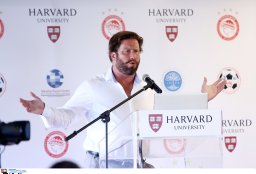 Mark Doidge合作论文数Univ Brighton12Katie Liston合作论文数12Daniel Kilvington合作论文数10
 Thomas Fletcher合作论文数Sch Events Tourism & Hospitality Management, Leeds Beckett Univ10Pierangelo Rosati合作论文数9
 Julie Tinson合作论文数Southampton Business School, UK8
 Todd Green合作论文数Goodman Sch Business, Brock Univ6
 Guto Leoni Santos合作论文数Univ Fed Pernambuco, Recife, PE, Brazil3
 Antonia Egli合作论文数Business Sch, Dublin City Univ2
 Grace Fox合作论文数Irish Inst Digital Business, Dublin City Univ2
 Patricia Takako Endo合作论文数Federal University of Pernambuco2
 Paddy Dolan合作论文数2Norah Campbell合作论文数2John Mooney合作论文数1
 Cole Short合作论文数Strateg Management Area, Pepperdine Univ1
 Christine Ascencio合作论文数Management Dept, Univ Wisconsin1
 Damien Dupré合作论文数Queens Univ Belfast, Sch Psychol, Belfast, Antrim, North Ireland1
 David Kenny合作论文数Digital Federal Credit Union1
 Sarah Browne合作论文数1
 Jaclyn Margolis合作论文数Graziadio Business School, Pepperdine University1
 Dimitrios Kolyperas合作论文数Stirling Management Sch, Univ Stirling1
 Thomas H. Fletcher合作论文数Chemical Engineering, College of Engineering, Brigham Young University1
 Ross Gordon合作论文数Institute for Social Marketing;Open University;University of Stirling;Open University, University of Stirling1
 Fred Niederman合作论文数Decision Sciences/MIS1
 Cristina B. Gibson合作论文数Department of Management, Pepperdine University1




