Many faculty members demonstrate unwavering resistance to adopting research-based instructional strategies.This phenomenon commonly fits with motivated reasoning, whereby a person feels threatened by persuasion to change, leading to overtly defensive and sometimes disruptive behaviors and refusal.Changing away from established practices may challenge one's self-identity and values as an effective teacher and triggers arguments intended to invalidate research-based alternatives.Faculty who are motivated to reject consensus best practices may impede the implementation of these practices across entire departments or institutions.Motivated reasoning and its underlying cognitive processes are explained by self-determination theory, which leads to predictions of faculty behaviors and suggesting more effective persuasion approaches by educational developers.Change conversations need to preserve the basic psychological needs of autonomy, competence, and relatedness (especially within affinity groups) in order to succeed.Importantly, persuasive argumentation with data or authoritative viewpoints, which succeeds with many faculty who electively attend educational-development programs, will predictably have limited success with faculty who respond with motivated reasoning.
The National Teaching & Learning ForumVolume 29, Issue 2 p. 4-7 Students What Really Matters: What Learners Do and Why Gary A. Smith, Corresponding Author Gary A. Smith gsmith@salud.unm.edu University of New Mexico Contact: Gary A. Smith University of New Mexico Email: gsmith@salud.unm.eduSearch for more papers by this author Gary A. Smith, Corresponding Author Gary A. Smith gsmith@salud.unm.edu University of New Mexico Contact: Gary A. Smith University of New Mexico Email: gsmith@salud.unm.eduSearch for more papers by this author First published: 09 February 2020 https://doi.org/10.1002/ntlf.30227Read the full textAboutPDF ToolsRequest permissionExport citationAdd to favoritesTrack citation ShareShare Give accessShare full text accessShare full-text accessPlease review our Terms and Conditions of Use and check box below to share full-text version of article.I have read and accept the Wiley Online Library Terms and Conditions of UseShareable LinkUse the link below to share a full-text version of this article with your friends and colleagues. Learn more.Copy URL Share a linkShare onFacebookTwitterLinkedInRedditWechat Volume29, Issue2February 2020Pages 4-7 RelatedInformation
OBJECTIVE: To determine whether medical students valued interpretation of fetal ultrasound images with required preparation as an adjunct to observing alone at an ultrasound clinic. STUDY DESIGN: The prospective study involved third-year medical students during their introductory clerkship. Students reviewed a short article and presentation prior to a small-group session to interpret authentic fetal ultrasounds with a faculty member. Students observed image acquisition in an ultrasound clinic either before or after the session. Learner evaluation occurred immediately and using a mandatory, anonymous survey at the clerkship end (1=strongly disagree, 5 = strongly disagree). RESULTS: A total of 114 consecutive students attended both the small-group session and observational clinic. Neither students nor faculty members perceived time requirements for presession preparation as restrictive. Students rated the interpretation session to be valuable (score: 4.4 +/- 0.3, mean +/- standard deviation) and improved their self-perceived knowledge as compared to attendance at the clinic alone (score: 4.6 +/- 0.2). Nearly all preferred the interpretation session occur before the clinic (score: 4.5 +/- 0.3). CONCLUSION: Preparation for and attendance in a small-group session where students learned foundations of interpreting authentic fetal ultrasound images improved their self-perceived knowledge as compared to only observing at ultrasound clinics.
The scope of change required by academic medical centers (AMCs) to maintain their viability and achieve their tripartite mission in the future is large; such reform is affected by numerous global, national, and local forces. Most AMCs focus their transformational efforts on organizational infrastructure (e.g., undertaking payment reform, developing new organizational structures, investing in information technology) and educational programs (with subsequent changes in undergraduate and graduate medical education curricula). Although useful, these efforts have failed to produce the kind of change required for AMCs to succeed in the future.The authors of this Invited Commentary describe a key element missing from most of these reform efforts-the preparation of faculty for new models of health care and educational practice. To address this issue, they call for the effective, system-aligned presence of continuing professional development (CPD) programs. CPD combines continuing medical education, with its focus on content knowledge, and faculty development, with its focus on evidence-based learning methodologies, across the institution to produce a more robust, system-and outcomes-oriented program to facilitate both individual and organizational learning. If sufficiently supported, CPD programs can provide a platform for the human changes necessary to ensure the smooth transition of AMCs to new models of education, clinical research, and ultimately patient care.
Objective: To determine the value of interactive learning after a low-tech flip of a traditional lecture during an obstetrics and gynecology clerkship. Design: All third-year medical students completed a flipped learning experience between May 2014 and April 2016. Central to the change was replacement of a mid-clerkship lecture ("late term and prolonged gestation") with interactive learning at seven stations by student pairs (one each on separate obstetrics and gynecology services). Before class, students electronically received a handout that described learning objectives, subject background, and interactive stations. The stations featured manipulative models, instruments, data, and images involving prenatal care, fetal growth and testing, and labor and delivery decision-making. Results: The flipped model was easily executed with proper preparation. The 178 consecutive students completed the two mandated surveys. The median score given by students about the same instructor's effectiveness increased from 4.0 (previous two years) to 4.4 (on a 5-point scale). Compared with traditional lectures by other clerkship faculty, the flipped classroom was judged by students to be easier for understanding and more interactive. Students perceived being more responsible for learning with better recall and application to practice. Conclusions: A low-tech approach to the flipped classroom was easily executed with favorable responses from students about interactive learning.
The Channeled Scabland of east-central Washington comprises a complex of anastomosing fluvial channels that were eroded by Pleistocene megaflooding into the basalt bedrock and overlying sediments of the Columbia Plateau and Columbia Basin regions of eastern Washington State, U.S.A. The cataclysmic flooding produced huge coulees (dry river courses), cataracts, streamlined loess hills, rock basins, butte-and-basin scabland, potholes, inner channels, broad gravel deposits, and immense gravel bars. Giant current ripples (fluvial dunes) developed in the coarse gravel bedload. In the 1920s, J Harlen Bretz established the cataclysmic flooding origin for the Channeled Scabland, and Joseph Thomas Pardee subsequently demonstrated that the megaflooding derived 1 Baker, V.R., Bjornstad, B.N., Gaylord, D.R., Smith, G.A., Meyer, S.E., Alho, P., Breckenridge, R.M., Sweeney, M.R., and Zreda, M., 2016, Pleistocene megaflood landscapes of the Channeled Scabland, in Lewis, R.S., and Schmidt, K.L., eds., Exploring the Geology of the Inland Northwest: Geological Society of America Field Guide 41, p. 1–73, doi:10.1130/2016.0041(01). © 2016 The Geological Society of America. All rights reserved. For permission to copy, contact editing@geosociety.org. *baker@email.arizona.edu
Two Oligocene conglomeratic units, one primarily nonvolcaniclastic and the other volcaniclastic, are preserved on the west side of the Jemez Mountains beneath the 14 Ma to 40 ka lavas and tuffs of the Jemez Mountains volcanic field. Thickness changes in these conglomeratic units across major normal fault zones, particularly in the southwestern Jemez Mountains, suggest that the western margin of the Rio Grande rift was active in this area (luring Oligocene time. Furthermore, soft-sediment deformation and stratal thickening in the overlying Abiquiu Formation adjacent to the western boundary faults are indicative of syndepositional normal-fault activity during late Oligocene-early Miocene time. The primarily nonvolcaniclastic Oligocene conglomerate, which was derived from erosion of Proterozoic basement-cored Laramide highlands, is exposed in the northwestern Jemez Mountains, southern Tusas Mountains, and northern Sierra Nacimiento. This conglomerate, formerly called, in part, the lower member of the Abiquiu Formation, is herein assigned to the Ritito Conglomerate in the Jemez Mountains and Sierra Nacimiento. The clast content of the Ritito Conglomerate varies systematically from northeast to southwest, ranging from Proterozoic basement clasts with a few Cenozoic volcanic pebbles, to purely Proterozoic clasts, to a mix of Proterozoic basement and Paleozoic limestone clasts. Paleocurrent directions indicate flow mainly to the south. A stratigraphically equivalent volcaniclastic conglomerate is present along the Jemez fault zone in the southwestern Jemez Mountains. Here, thickness variations, paleocurrent indicators, and grain-size trends suggest north-directed flow, opposite that of the Ritito Conglomerate, implying the existence of a previously unrecognized Oligocene volcanic center buried beneath the northern Albuquerque Basin. We propose the name Gilman Conglomerate for this deposit. The distinct clast composition and restricted geographic nature of each conglomerate suggests the presence of two separate fluvial systems, one flowing south and the other flowing north, separated by a west-striking topographic barrier in the vicinity of Fenton Hill and the East Fork Jemez River in the western Jemez Mountains during Oligocene time. In contrast, the Upper Oligocene Lower Miocene Abiquiu Formation overtopped this barrier and was deposited as far south as the southern Jemez Mountains. The Abiquiu Formation, which is derived mainly from the Latir volcanic field, commonly contains clasts of dacite lava and Amalia Tuff in the northern and southeastern Jemez Mountains, but conglomerates are rare in the southwestern Jemez Mountains.
We investigated a Plio-Pleistocene alluvial succession in the Albuquerque Basin of the Rio Grande rift in New Mexico using geomorphic, stratigraphic, sedimentologic, geochronologic, and magnetostratigraphic data. New Ar-40/Ar-39 age determinations and magnetic-polarity stratigraphy refine the ages of the synrift Santa Fe Group. The Pliocene Ceja Formation lies on the distal hanging-wall ramp across much of the Albuquerque Basin. The Ceja onlapped and buried a widespread, Upper Miocene erosional paleosurface by 3.0 Ma. Sediment accumulation rates in the Ceja Formation decreased after 3.0 Ma and the Ceja formed broad sheets of amalgamated channel deposits that prograded into the basin after ca. 2.6 Ma. Ceja deposition ceased shortly after 1.8 Ala, forming the Llano de Albuquerque surface. Deposition of the Sierra Ladrones Formation by the ancestral Rio Grande was focused near the eastern master fault system before piedmont deposits (Sierra Ladrones Formation) began prograding away from the border faults between 1.8 and 1.6 Ma. Widespread basin filling ceased when the Rio Grande began cutting its valley, shortly after 0.78 Ma. Although the Albuquerque Basin is tectonically active, the development of through-going drainage of the ancestral Rio Grande, burial of Miocene unconformities, and coarsening of upper Santa Fe Group synrift basin fill were likely driven by climatic changes. Valley incision was approximately coeval with increased northern-hemisphere climatic cyclicity and magnitude and was also likely related to climatic changes. Asynchronous progradation of coarse-grained, margin-sourced detritus may be a consequence of basin shape, where the basinward tilting of the hanging wall promoted extensive sediment bypass of coarse-grained, margin-sourced sediment across the basin.
This chapter contains sections titled: Introduction General Geology Analytical Methods Results and Discussion Conclusions
The stratigraphic architecture of intracontinental rift basins is defined by a dynamic relationship between depositional processes associated with the basin floor and flanking tributary streams. The resulting depositional belts are sensitive to a variety of factors, including basin geometry, subsidence rate, and sediment discharge. The Experimental EarthScape run in 2006 (XES06) examined the development of fluvial morphology and alluvial architecture as a function of subsidence and sediment flux in an experimental basin based on the form of a simple half graben. Sediments from tributary drainages were introduced into the axial stream through toe cutting and realignment of transverse drainage courses to parallel the prevailing axial-flow direction. Transverse sediment contributions to the axial stream were almost equally apportioned over a wide range of sediment discharges tested in the experiments. Sediment tracers showed a larger contribution of footwall-derived sediment into the axial belt, probably due to more frequent and aggressive toe cutting by axial streams. Changes in the axial transverse deposit boundary to external forcing (by subsidence and sediment discharge), and relatively rapid intrastage stabilization of the depositional belts, resembles the large-scale self-organization observed in moving boundaries that define the morphology of fluviodeltaic systems. Basin sedimentation was matched to subsidence in order to maintain a constant base level, which made the location and width of the axial belt sensitive to the relative sediment fluxes from the transverse systems, rather than the axis of maximum subsidence. The asymmetrical subsidence pattern and the transverse-fan morphology influenced the preservation of sedimentary sequences. Stage-bounding stratigraphic lacunae were well preserved in the hanging-wall succession, providing a reliable record of basin development.
The distinction between depositional belts associated with the basin axis and flanking piedmont streams is a fundamental attribute of the stratigraphic architecture of intracontinental rift basins. Spatiotemporal distributions of these lithofacies associations are sensitive to a combination of factors, including basin geometry, subsidence rate, and sediment discharge; however, most studies have focused on one or two controls and one depositional component (axial or tributary) of the basin-fill succession. A new perspective on how these depositional belts develop under simple but precisely controlled boundary conditions of steady subsidence, sediment flux, and water discharge is achieved through the creation of an experimental stratigraphic succession. The Experimental EarthScape run in 2006 (XES06) focused on the geomorphic evolution of sedimentary successions within an asymmetrically subsiding basin, analogous to a simple half graben, containing four interacting supply points of sediment and water. Under the imposed conditions, the experimental system self-organized into an axial stream flanked by transverse fans. Imposition of various combinations of longitudinal and lateral sediment flux showed that the locations and widths of the axial and transverse systems were strongly controlled by relative sediment fluxes (“flux steering”), and less influenced by the location of the subsidence maximum and subsidence rate. The axial drainage was dominated by transversely sourced sediment through toe cutting of the transverse fans, except during the highest axial-sediment discharges. Footwall fans persisted even under conditions of very large axial-sediment discharge, aided by topographic inheritance of the steeper transverse depositional slopes.
We present a geometric, sediment mass-balance model for the interaction of axial and transverse alluvial systems in a subsiding basin. By comparing the model result with a flume experiment that employed a simplified half-graben tectonic geometry with axial and transverse sediment sources, we quantify rates of axial-transverse erosional sediment mixing. In the experiment, the lateral migration rate of the axial-transverse boundaries due to the sediment mixing scales with sediment supplies delivered by transverse drainages, but not with water (or sediment) discharge from the axial channel or with tectonic tilting rate. Using an empirical lateral erosion rate, the model shows how sediment supply partitioning among the axial, hanging-wall, and footwall drainages controls the width and the location of the axial-channel belt. Comparing the modeling results with field cases demonstrates that transverse sediment fluxes could slow the axial-channel migration or even reverse the movement against the tectonic forcing.
The Española basin is central to studies of the Rio Grande rift because it is home to the type Santa Fe Group-superb badland exposures of rift-basin fill rich in vertebrate faunas and dateable ash beds.New 1:24,000-scale geological maps (mostly NMBGMR supported by USGS-STATEMAP), aeromagnetic data (USGS), and subsurface stratigraphic studies of the Pajarito Plateau (LANL) have enhanced geologic understanding over the last decade.Stratigraphic studies and lithofacies mapping by Dan Koning build upon earlier interpretations by Ray Ingersoll to show that three primary sediment sources filled the basin: erosion of granitic basement and Paleozoic rocks of the Santa Fe Range on the east, recycling of volcaniclastic debris along with quartzite-rich basement detritus derived from the north, and recycling of volcaniclastic debris along with Paleozoic-sedimentary detritus that entered the basin from northeast.This latter sediment pathway may relate to an ancestral Rio Embudo with headwaters far to the east of the modern river, as suggested by upper Miocene basalt flows that probably entered the basin from the Ocate volcanic field.The Santa Fe River also had a larger watershed in the past that included the modern upper Pecos valley.This larger drainage produced coarsegrained, hydrologically important channel deposits rich in Paleozoic sedimentary detritus and quartzite that covered a broad area of the southern basin during the Miocene.Beheading of the earlier Santa Fe River basin may have resulted from rise of the Santa Fe Range as a ruptured hanging-wall hinge zone uplift that paradoxically defines higher elevations than the footwall region along the western side of the Española basin.Research in two areas implies that basin subsidence was underway by Oligocene to early Miocene.Near Santa Fe, volcaniclastic strata of the Bishop's Lodge Mbr. of the Tesuque Fm. correlate to the Espinaso Fm. and include 30 Ma tephra.These deposits overlie ~400 m of conglomerate derived from Paleozoic and Precambrian rocks and deposited on basement formerly denuded during Laramide uplift.These relationships indicate Oligocene foundering of the earlier uplift.Within the Abiquiu embayment in the NW part of the basin, pre-25 Ma strata of the lowermost Santa Fe Gp. thin westward across a staircase of east-facing faults to the rift margin.
The Experimental EarthScape (XES) Run 06-1 was designed to study surface processes and the stratigraphy resulting from the interaction of multiple sediment sources (i.e., two transverse drainage systems and an axial channel) filling an actively subsiding asymmetric basin. This experiment investigated changes in stream morphodynamics by combining effects of different basin subsidence rates and variable proportions of sediment discharges from multiple sources. The experiment ran from May through September 2006. Imaging of sediment slices recently concluded in May 2007, so analysis is ongoing and results are preliminary. Stratigraphic slices clearly show that experimental-stage boundaries are well defined in the stratigraphy, reflecting the strong control exerted by relative sediment supply rates from the various feedpoints on preserved facies boundaries.
 Sean D. Connell合作论文数Bureau of Mines9
 Frank J. Pazzaglia合作论文数Department of Earth and Environmental Sciences;Lehigh University;U. S. Geological Survey;Department of Earth and Environmental Sciences, Lehigh University6
 Chris Paola合作论文数Department of Earth and Environmental Sciences, N.H. Winchell School of Earth & Environmental Sciences, College of Science and Engineering, University of Minnesota5
 Wonsuck Kim合作论文数National Center for Earth-surface Dynamics;University of Minnesota;St . Anthony Falls Laboratory;Department of Geology and Geophysics;University of Minnesota, University of Minnesota5
 Thure E Cerling合作论文数School Of Biological Sciences, University of Utah;Department of Geology and Geophysics, University of Utah;Department of Biology, University of Utah4
 Yang Wang合作论文数Department of Earth, Ocean & Atmospheric Science, College of Arts and Sciences, Florida State University4
 John Geissman合作论文数Department of Earth and Planetary Sciences, University of New Mexico4
 Paul W. Bauer合作论文数3
 Stephen S. Morse合作论文数Mailman School of Public Health, Columbia University3
 Joel L. Pederson合作论文数Department of Geology;Utah State University;Department of Geology, Utah State University3
 Karl E. Karlstrom合作论文数Department of Earth and Planetary Sciences, University of New Mexico3Alexis Lavine合作论文数3William F Rayburn合作论文数3L GARRETT合作论文数2Bruce N. Bjornstad合作论文数2john w estep合作论文数2caroline myer合作论文数2Audriana Stark合作论文数2R CASH合作论文数2L MATA合作论文数2
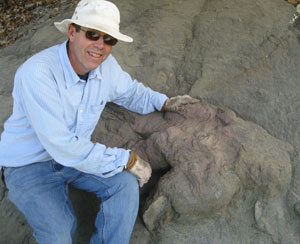 Spencer G. Lucas合作论文数New Mexico Museum of Natural History and Science2
 Richard Levins合作论文数Department of Population and International Health, Harvard School of Public Health2Dane R. Spearing合作论文数2William C. Mcintosh合作论文数2Richard V. Fisher合作论文数2Fraser Goff合作论文数2C PUCCIA合作论文数1Edward W. Smith合作论文数1James M. Barker合作论文数1Barry S. Kues合作论文数1patrick a longmire合作论文数1M Garenne合作论文数1Edward M. Taylor合作论文数1ian w moxon合作论文数1roy m breckenridge合作论文数1g s austin合作论文数1J. Michael Timmons合作论文数1Kl Rogers合作论文数1yun mou合作论文数1jonathan m white合作论文数1MICHAEL N. GAUD合作论文数1neil s summer合作论文数1
 Cristina Possas合作论文数Bio-Manguinhos, Oswaldo Cruz Foundation1A Spielman合作论文数1michael w caldwell合作论文数1Giday Woldegabriel合作论文数Los Alamos National Laboratory1
 Kyger Lohmann合作论文数Department of Earth and Environmental Sciences, College of Literature, Science, and the Arts, University of Michigan-Ann Arbor1




