Self-supervised learning for time-series representation aims to reduce reliance on labeled data while maintaining strong downstream performance, yet many existing approaches incur high computational costs or rely on assumptions that do not hold across diverse temporal dynamics. In this work, we introduce Divide and Contrast (Di-COT), an unsupervised framework that avoids data augmentation and multiple encoder passes by contrasting informative substructures within a window rather than individual timesteps. Di-COT stochastically partitions each window into a small number of overlapping sub-blocks per iteration, enabling efficient and meaningful contrast while mitigating false positives during temporal transitions. To further improve scalability, we adopt a contrastive objective whose computation depends on the batch size and the number of sub-blocks, making loss computation independent of sequence length. Extensive experiments on six large-scale real-world datasets, as well as the UCR and UEA benchmarks, demonstrate that Di-COT learns transferable representations while achieving state-of-the-art performance with substantially reduced training time.
Supervised learning demands large quantities of labeled data, a bottleneck that is expensive and reliant on domain-specific expertise. Self-supervised learning, particularly contrastive learning, has emerged as a compelling alternative, enabling rich representation learning directly from unlabeled data. Yet its success hinges critically on the design of positive and negative sample pairs. Existing approaches for time series rely on hand-crafted augmentations and masking heuristics that embed strong domain assumptions, often limiting generalization across diverse temporal patterns and potentially introducing spurious correlations. In this work, we challenge this paradigm by demonstrating that explicitly encoding temporal shift invariance through a simple, deterministic view construction is sufficient to learn strong representations for time series classification. By exploiting temporal structure, our method, Shift Invariant Feature Training (ShiFT), achieves state-of-the-art performance on six diverse real-world time series benchmark datasets, as well as the UCR and UEA archives, while reducing training time. Beyond empirical performance, we present a systematic analysis of contrastive learning dynamics in time series settings, examining the effects of batch size and the number of negatives on downstream performance. Our findings provide practical insights for designing efficient contrastive learning frameworks for time series representation learning. The source code is publicly available at https://github.com/sfi-norwai/ShiFT.
We revisit previous contrastive learning frameworks to investigate the effect of introducing an adaptive margin into the contrastive loss function for time series representation learning. Specifically, we explore whether an adaptive margin (eMargin), adjusted based on a predefined similarity threshold, can improve the separation between adjacent but dissimilar time steps and subsequently lead to better performance in downstream tasks. Our study evaluates the impact of this modification on clustering performance and classification in three benchmark datasets. Our findings, however, indicate that achieving high scores on unsupervised clustering metrics does not necessarily imply that the learned embeddings are meaningful or effective in downstream tasks. To be specific, eMargin added to InfoNCE consistently outperforms state-of-the-art baselines in unsupervised clustering metrics, but struggles to achieve competitive results in downstream classification with linear probing. The source code is publicly available at https://github.com/sfi-norwai/eMargin.
Representation learning for time series using contrastive learning has emerged as a critical technique for improving the performance of downstream tasks. To advance this effective approach, we introduce CaTT (Contrast All The Time), a new approach to unsupervised contrastive learning for time series, which takes advantage of dynamics between temporally similar moments more efficiently and effectively than existing methods. CaTT departs from conventional time-series contrastive approaches that rely on data augmentations or selected views. Instead, it uses the full temporal dimension by contrasting all time steps in parallel. This is made possible by a scalable NT-pair formulation, which extends the classic N-pair loss across both batch and temporal dimensions, making the learning process end-to-end and more efficient. CaTT learns directly from the natural structure of temporal data, using repeated or adjacent time steps as implicit supervision, without the need for pair selection heuristics. We demonstrate that this approach produces superior embeddings which allow better performance in downstream tasks. Additionally, training is faster than other contrastive learning approaches, making it suitable for large-scale and real-world time series applications. The source code is publicly available at https://github.com/sfi-norwai/CaTT.
Constructing an accurate representation model of phenomena with fewer measurements is a fundamental challenge in the Internet of Things. Leveraging sparse sensing policies to select the most informative measurements is a prominent technique for addressing resource constraints. However, designing such sensing policies requires significant domain knowledge and involves manually fine-tuned heuristics that are task-specific and often non-adaptive. In this work, we propose reducing manual-engineering efforts in designing sensing policies by using an automated approach based on deep reinforcement learning. Guided by an uncertainty-aware prediction model, the sensors learn sensing behaviors autonomously by optimizing an application goal formulated in the reward function based on the measured peaks-over-threshold. We apply the proposed approach in two use cases of monitoring air quality and indoor noise and show the adaptability and transferability of the learned policies. Compared to conventional periodic sensing methods, our results achieve, on average, an increased detection in periods of interest by 78.5% and 357.3% while reducing energy expenditure by 14.3% and 7.6% for air quality and noise monitoring, respectively. Additionally, the resulting representation models are more credible, as measured by various metrics of probabilistic modeling.
Representation learning for time series using contrastive learning has emerged as a critical technique for improving the performance of downstream tasks. To advance this effective approach, we introduce CaTT (\textit{Contrast All The Time}), a new approach to unsupervised contrastive learning for time series, which takes advantage of dynamics between temporally similar moments more efficiently and effectively than existing methods. CaTT departs from conventional time-series contrastive approaches that rely on data augmentations or selected views. Instead, it uses the full temporal dimension by contrasting all time steps in parallel. This is made possible by a scalable NT-pair formulation, which extends the classic N-pair loss across both batch and temporal dimensions, making the learning process end-to-end and more efficient. CaTT learns directly from the natural structure of temporal data, using repeated or adjacent time steps as implicit supervision, without the need for pair selection heuristics. We demonstrate that this approach produces superior embeddings which allow better performance in downstream tasks. Additionally, training is faster than other contrastive learning approaches, making it suitable for large-scale and real-world time series applications. The source code is publicly available at \href{https://github.com/sfi-norwai/CaTT}{https://github.com/sfi-norwai/CaTT}.
In 2021, the United States Department of Defense (DoD) airworthiness community joined together to form the National Airworthiness Council Artificial Intelligence Working Group (NACAIWG). In June 2021, the NACAIWG held their first summit and examined the use case of an uncrewed aircraft (UA), operating under the guidance of a United States Navy (USN) permanent flight clearance (PFC), performing automated air-to-air refueling (A3R), a mission standardized by the North Atlantic Treaty Organization (NATO) 3 months post the 2021 summit,1 as the probed receiver of a drogue configured aircraft.2 In June of 2022, a second summit was held to examine potential artifacts collected from academia to support a technical assessment, leveraging defined standards, criteria, and methods of compliance within specific relevant technical domains, by airworthiness authorities for a learning enabled component (LEC) of a learning enabled system (LES) to perform the object detection portion of the A3R task covered in the 2021 summit. This communication article summarizes the findings of the 2022 summit. During the 2021 summit, a baseline overview of literature pertaining to the field of computer vision (CV) was provided. For the 2022 summit, a sample of literature published since the 2021 summit was provided to introduce participants to updated work in the field of test and evaluation (T&E), CV, algorithmic assurance, and frameworks to provide assurance of algorithms. All papers were collected from the Purdue University Library3 and Dissertations and Theses Database4 and cited in references.5-14 Building off the standards survey conducted for the 2021 summit, a follow-on survey of standards for all modes of transportation (e.g., rail, sea, road, etc.) was conducted in support of the 2022 summit to determine if any notable improvements or advancements had occurred. While evolutionary gradual improvements have occurred within the field, a standard that governs ML applications that could be considered final currently does not exist at the time of submission of this paper. Key documents developed over the past few years not covered at the 2021 Summit were the Safety Assurance Objectives for Autonomous Systems Version 3.015 and SAE AS-6983.16 The greatest potential addition to the airworthiness certification community for the certification of LES since the 2021 Summit was the draft document AS-6983 from SAE G-34.16 AS-6983 is targeted at filling the void, identified in AFE-87 and AIR-6988, in the existing civilian aviation standards for the certification of traditional systems, but not a LES. Many of the members of the G-34 are from European Aviation Safety Agency (EASA), and thus contributed to the construction of the EASA Roadmap and EASA Level 1 guidance.17 Universally, the 2022 survey found that key areas associated with flight safety critical applications remain unaddressed to include the areas of ML tool qualification, ML hardware concerns for graphic processing units (GPU) and Tensor Processing Units (TPU), ML object-oriented software language concerns, ML reuse concerns, and reinforcement learning. The overall certification of the human/air system combination is divided into two parts: certifying the human and certifying the air system. The naval airworthiness process to certify a system is a technical assessment process, leveraging defined standards, criteria, and methods of compliance within specific relevant technical domains. An airworthiness assessment identifies areas of technical compliance and potentially, non-compliance. Areas of non-compliance are examined to identify and characterize resultant hazards, possible mitigations, or even areas potentially requiring re-design. Resultant residual risks are adjudicated through an appropriate risk acceptance process. Once the risk has been identified and mitigated to an acceptable level, the Airworthiness and Cybersafe Office (ACO) certifies the air system to be operated by a human operator, either in (HITL) or on the loop (HOTL), within a defined clearance envelope. The 2022 summit's goal was to reach a consensus on the required artifacts and a test plan for acquiring those artifacts that would provide assurance for a LES to perform a task traditionally reserved a human operator. As current certification processes assume that a fielded system would be operated by a human, the distinction in the use case that the LES would not be monitored by a human presented a difficult problem in terms of certification. Before a LES installed on a platform can be certified to operate without a HITL/HOTL, standards and methods of compliance need to be proposed, evaluated, and approved. A Neural Network is a function f ( d , θ ) $f( {d,\theta } )$ which maps an input data point d (such as an image) from dataset Ɗ to a vector in ℜn using calculations involving parameters θ. This output vector can be interpreted in a variety of ways; for example, in object detection, where the users wish to use the deep neural network (DNN) to find an object in an image, this vector may be four-dimensional, with the elements representing the row column, height, and width of a box intended to bound the searched-for object. The task of "learning" in the context of DNNs is the calculation of θ such that the outputs of the DNN are as accurate as possible on the given dataset; briefly (and roughly) speaking, we can hope that if the values of θ cause the DNN to be accurate on our given examples, we can have justified confidence in the DNN's accuracy for new examples, as well. To allow for learning the user of the DNN creates a loss function L ( $\mathcal{L}($ Ɗ, θ) which is small when f is close to being correct on Ɗ, and large otherwise. For example, in object detection, the distances between the row, column, height, and widths predicted by f and those drawn by people can be summed, resulting in a small value when the human and DNN agree. Starting with random values of θ, this prediction can be iteratively improved through an algorithm such as Stochastic Gradient Descent, which allows for θ to gradually become more and more appropriate for the dataset. For this to be effective, the function f must be very complex, Ɗ must be very large, and the amount of computational resources available to perform learning must be significant. However, these negatives have a powerful tradeoff; it is not necessary for a person to describe the object search for. Computer vision (CV) has historically been a very difficult problem, in large part because humans are bad at this step; our recognition of objects is intuitive, not algorithmic. DNNs allow us to instead merely indicate correct and incorrect output from the network, and mathematics to take care of the rest. The test plan presented at the summit was designed around identifying metrics and tools used in academia to provide a level of assurance of a neural network trained to classify, localize, and detect objects within the field of view of the camera. The objects of interest for this test program will be the KC-130 drogue, the coupler unit within the drogue, a 3-D printed probe tip, and the appearance of contact between the probe tip and the drogue. To appropriately scope the test program, limitations were set to ensure that the program could be completed in FY23 (Table 1) and only the lab portion of a test program was deemed within scope. In flight test, the domain you would plan to test for would be defined by the mission set the capability was designed to be used for. To standardize the design of the operational domain, the National Highway Traffic Safety Administration (NHTSA) presented their framework for designing testable cases and scenarios for automated driving systems.21 The six top level categories were adapted to the A3R mission after collecting inputs from multiple carrier qualified aircrew familiar with the air-to-air refueling mission set during carrier operations (Figure 1). This classification framework will serve as the design document for not only the test matrix, but also the collection matrix and each component of the classification framework would include many sublevels. Once the model has been trained by roboflow, the T&E portion will consist of algorithmic assurance, and "developmental" T&E metrics. To provide airworthiness additional assurance of the algorithm, academic research in the field of machine learning algorithm assurance was leveraged and proven verifiers were selected to be integrated into the test program.22-27 To collect "developmental" test point to evaluate with the computer vision model, metrics were selected from academic research published since 2015, collected from the Purdue University Library.3 A table of the selected metrics are provided in Table 2 with references provided for individual metrics below the table. Not documented on the performance metrics were the different types of misses that could occur when identifying objects, but additional information could be collected on each miss and those six types of errors were documented.34 While descoped to a 1-year effort, this test program will still provide critical gap analysis, education opportunities, and risk reduction to follow on efforts integrating in additional systems while preparing for surrogate flight test. In conclusion, the second NACAIWG summit was held in June of 2022 and the overall goal of the summit was to come to a consensus on a test plan to support collecting artifacts to support a risk assessment for naval airworthiness authorities of a LES. The paper provided a review of the summit findings and discussion of the path forward for this research program. The authors would like to thank the following people for their contributions towards the success of not only these proceedings and the summit, but their contributions in furthering the ability for the United States Navy towards achieving a certification framework for machine learning enabled systems. Mr. Marshall "Steve" Hynes Mr. Robert O. Jacob Dr. Anthony "Tony" Page Mr. Jon Rice Ms. Kristin Swift This work was supported in part by ONR grant N00014-22-S-B001. The authors do not have any conflict of interests. Jonathon Parry is Native of Indiana, Jonathon Parry attended Purdue University in West Lafayette, Indiana from 2007 to 2011 where he earned a Bachelor of Science in Applied Mathematics. From 2018 to 2020, he earned a Masters in Applied Data Science from Syracuse University in Syracuse, New York. He is currently pursuing a Doctor of Technology degree from Purdue Polytechnic Institute in West Lafayette. His current research interests include test and evaluation of learning enabled systems. In 2008, he joined the United States Navy where he continues to serve. During his time in the Navy, he completed pilot training from 2011 to 2015, where he graduated "Commodore's list with distinction" at both primary and advanced flight school. From 2015 to 2017, he completed training in the EA-18G and served in Carrier Air Wing 11 in support of Operation Inherent Resolve. In 2017, he was selected for the United States Naval Test Pilot School (USNTPS) and graduated in 2018 prior to serving as the Aeromechanical Project Officer for the Next Generation Jammer Mid Band at Development Test Squadron Two Three. He currently serves as the Advanced Development Deputy Program Manager at Airborne Electronic Attack Program Office. Jonathon is a member of the Society of Experimental Test Pilots, SAE G-34 committee, ASTM F38 committee, International Test and Evaluation Association, and numerous other autonomy based academic organizations. Donald Costello received the B.S. degree in systems engineering from the United States Naval Academy, Annapolis, MD, USA in 2000, the M.A.S. in aeronautical science from Embry-Riddle Aeronautical University, Daytona Beach, FL, USA in 2005, the M.S. in aeronautical engineering from the Air Force Institute of Technology, Dayton, OH, USA in 2009, the M.S. in systems engineering from the Naval Post Graduate School, Monterey, CA, USA in 2011, and the Ph.D. in mechanical engineering from the University of Maryland, College Park, MD, USA in 2020. He is a Permanent Military Professor in the Weapons, Robotics, and Control Engineering department at the United States Naval Academy, Annapolis, MD, USA. His work focuses on the certification and development of unmanned autonomous systems for practical use. Jason Rupert received Bachelors of Science in Physics and Mathematics from the University of Alabama in Huntsville (UAH), 1998, and then Masters of Science in Mechanical/Aerospace Engineering from UAH in 2001. Then in 2001, Mr. Rupert began his career by performing Unmanned Aviation Systems (UAS) flight test support at Fort Huachuca. That initial exposure was not enough so he carried on by providing UAS six degree of freedom (6-DOF) development and analysis, as well as supporting exploratory research and development test and evaluation (RDT&E) efforts. In 2006 he was lucky enough to support an RDT&E effort that was examined the effectiveness of intelligent agents being applied to existing UAS. He had a small career detour in 2007 that allowed him to run 6-DOFs and perform statistical analysis on volumes of Hellfire missile stockpile reliability data to determine hit and kill effectiveness, but quickly return to UAS in 2011. His return to UAS was in an assurance role, where he served as a software airworthiness functional for a decade on Army UAS. A year ago Mr. Rupert began his work on AI/ML certification, specifically assessing the possibility of certifying AI/ML for use on manned and unmanned flight safety critical applications for. In that role he has collaborated with colleagues from all branches of the US Military and various communities of practice, for example, SAE G-34 and Safety. Gavin Taylor is an Associate Professor in the USNA Computer Science Department. His area of expertise is AI and Machine Learning. He has a PHD in Computer Science from Duke University. He was the 2022 winner of USNA's Civilian Faculty Teaching Excellence Award. Dr. Taylor is co-director of USNA's Center for High Performance Computing Education and Research, and is chairing the development of USNA's new Data Science major. Data not publicly available due to legal considerations.
Data augmentation helps neural networks generalize better by enlarging the training set, but it remains an open question how to effectively augment graph data to enhance the performance of GNNs (Graph Neural Networks). While most existing graph regularizers focus on manipulating graph topological structures by adding/removing edges, we offer a method to augment node features for better performance. We propose FLAG (Free Large-scale Adversarial Augmentation on Graphs), which iteratively augments node features with gradient-based adversarial perturbations during training. By making the model invariant to small fluctuations in input data, our method helps models generalize to out-of-distribution samples and boosts model performance at test time. FLAG is a general-purpose approach for graph data, which universally works in node classification, link prediction, and graph classification tasks. FLAG is also highly flexible and scalable, and is deployable with arbitrary GNN backbones and large-scale datasets. We demon-strate the efficacy and stability of our method through ex-tensive experiments and ablation studies. We also provide intuitive observations for a deeper understanding of our method. We open source our implementation at https://github.com/devnkong/FLAG.
Data poisoning for reinforcement learning has historically focused on general performance degradation, and targeted attacks have been successful via perturbations that involve control of the victim's policy and rewards. We introduce an insidious poisoning attack for reinforcement learning which causes agent misbehavior only at specific target states - all while minimally modifying a small fraction of training observations without assuming any control over policy or reward. We accomplish this by adapting a recent technique, gradient alignment, to reinforcement learning. We test our method and demonstrate success in two Atari games of varying difficulty.
Facial recognition systems are increasingly deployed by private corporations, government agencies, and contractors for consumer services and mass surveillance programs alike.These systems are typically built by scraping social media profiles for user images.Adversarial perturbations have been proposed for bypassing facial recognition systems.However, existing methods fail on full-scale systems and commercial APIs.We develop our own adversarial filter that accounts for the entire image processing pipeline and is demonstrably effective against industrial-grade pipelines that include face detection and large scale databases.Additionally, we release an easy-to-use webtool that significantly degrades the accuracy of Amazon Rekognition and the Microsoft Azure Face Recognition API, reducing the accuracy of each to below 1%.
Data Poisoning attacks modify training data to maliciously control a model trained on such data. In this work, we focus on targeted poisoning attacks which cause a reclassification of an unmodified test image and as such breach model integrity. We consider a particularly malicious poisoning attack that is both "from scratch" and "clean label", meaning we analyze an attack that successfully works against new, randomly initialized models, and is nearly imperceptible to humans, all while perturbing only a small fraction of the training data. Previous poisoning attacks against deep neural networks in this setting have been limited in scope and success, working only in simplified settings or being prohibitively expensive for large datasets. The central mechanism of the new attack is matching the gradient direction of malicious examples. We analyze why this works, supplement with practical considerations. and show its threat to real-world practitioners, finding that it is the first poisoning method to cause targeted misclassification in modern deep networks trained from scratch on a full-sized, poisoned ImageNet dataset. Finally we demonstrate the limitations of existing defensive strategies against such an attack, concluding that data poisoning is a credible threat, even for large-scale deep learning systems.
Data-driven forecasts of air quality have recently achieved more accurate short-term predictions. However, despite their success, most of the current data-driven solutions lack proper quantifications of model uncertainty that communicate how much to trust the forecasts. Recently, several practical tools to estimate uncertainty have been developed in probabilistic deep learning. However, there have not been empirical applications and extensive comparisons of these tools in the domain of air quality forecasts. Therefore, this work applies state-of-the-art techniques of uncertainty quantification in a real-world setting of air quality forecasts. Through extensive experiments, we describe training probabilistic models and evaluate their predictive uncertainties based on empirical performance, reliability of confidence estimate, and practical applicability. We also propose improving these models using “free” adversarial training and exploiting temporal and spatial correlation inherent in air quality data. Our experiments demonstrate that the proposed models perform better than previous works in quantifying uncertainty in data-driven air quality forecasts. Overall, Bayesian neural networks provide a more reliable uncertainty estimate but can be challenging to implement and scale. Other scalable methods, such as deep ensemble, Monte Carlo (MC) dropout, and stochastic weight averaging-Gaussian (SWAG), can perform well if applied correctly but with different tradeoffs and slight variations in performance metrics. Finally, our results show the practical impact of uncertainty estimation and demonstrate that, indeed, probabilistic models are more suitable for making informed decisions.
Data augmentation helps neural networks generalize better, but it remains an open question how to effectively augment graph data to enhance the performance of GNNs (Graph Neural Networks). While most existing graph regularizers focus on augmenting graph topological structures by adding/removing edges, we offer a novel direction to augment in the input node feature space for better performance. We propose a simple but effective solution, FLAG (Free Large-scale Adversarial Augmentation on Graphs), which iteratively augments node features with gradient-based adversarial perturbations during training, and boosts performance at test time. Empirically, FLAG can be easily implemented with a dozen lines of code and is flexible enough to function with any GNN backbone, on a wide variety of large-scale datasets, and in both transductive and inductive settings. Without modifying a model's architecture or training setup, FLAG yields a consistent and salient performance boost across both node and graph classification tasks. Using FLAG, we reach state-of-the-art performance on the large-scale ogbg-molpcba, ogbg-ppa, and ogbg-code datasets.
Facial recognition systems are increasingly deployed by private corporations, government agencies, and contractors for consumer services and mass surveillance programs alike. These systems are typically built by scraping social media profiles for user images. Adversarial perturbations have been proposed for bypassing facial recognition systems. However, existing methods fail on full-scale systems and commercial APIs. We develop our own adversarial filter that accounts for the entire image processing pipeline and is demonstrably effective against industrial-grade pipelines that include face detection and large scale databases. Additionally, we release an easy-to-use webtool that significantly degrades the accuracy of Amazon Rekognition and the Microsoft Azure Face Recognition API, reducing the accuracy of each to below 1%.
Data poisoning-the process by which an attacker takes control of a model by making imperceptible changes to a subset of the training data-is an emerging threat in the context of neural networks. Existing attacks for data poisoning neural networks have relied on hand-crafted heuristics, because solving the poisoning problem directly via bilevel optimization is generally thought of as intractable for deep models. We propose MetaPoison, a first-order method that approximates the bilevel problem via meta-learning and crafts poisons that fool neural networks. MetaPoison is effective: it outperforms previous clean-label poisoning methods by a large margin. MetaPoison is robust: poisoned data made for one model transfer to a variety of victim models with unknown training settings and architectures. MetaPoison is general-purpose, it works not only in fine-tuning scenarios, but also for end-to-end training from scratch, which till now hasn't been feasible for clean-label attacks with deep nets. MetaPoison can achieve arbitrary adversary goals-like using poisons of one class to make a target image don the label of another arbitrarily chosen class. Finally, MetaPoison works in the real-world. We demonstrate for the first time successful data poisoning of models trained on the black-box Google Cloud AutoML API.
In order to make better use of deep reinforcement learning in the creation of sensing policies for resource-constrained IoT devices, we present and study a novel reward function based on the Fisher information value. This reward function enables IoT sensor devices to learn to spend available energy on measurements at otherwise unpredictable moments, while conserving energy at times when measurements would provide little new information. This is a highly general approach, which allows for a wide range of use cases without significant human design effort or hyperparameter tuning. We illustrate the approach in a scenario of workplace noise monitoring, where results show that the learned behavior outperforms a uniform sampling strategy and comes close to a near-optimal oracle solution.
We consider a new class of \emph{data poisoning} attacks on neural networks, in which the attacker takes control of a model by making small perturbations to a subset of its training data. We formulate the task of finding poisons as a bi-level optimization problem, which can be solved using methods borrowed from the meta-learning community. Unlike previous poisoning strategies, the meta-poisoning can poison networks that are trained from scratch using an initialization unknown to the attacker and transfer across hyperparameters. Further we show that our attacks are more versatile: they can cause misclassification of the target image into an arbitrarily chosen class. Our results show above 50% attack success rate when poisoning just 3-10% of the training dataset.
Adversarial training, in which a network is trained on adversarial examples, is one of the few defenses against adversarial attacks that withstands strong attacks. Unfortunately, the high cost of generating strong adversarial examples makes standard adversarial training impractical on large-scale problems like ImageNet. We present an algorithm that eliminates the overhead cost of generating adversarial examples by recycling the gradient information computed when updating model parameters. Our "free" adversarial training algorithm achieves comparable robustness to PGD adversarial training on the CIFAR-10 and CIFAR-100 datasets at negligible additional cost compared to natural training, and can be 7 to 30 times faster than other strong adversarial training methods. Using a single workstation with 4 P100 GPUs and 2 days of runtime, we can train a robust model for the large-scale ImageNet classification task that maintains 40% accuracy against PGD attacks.
Reinforcement learning (RL) is capable of managing wireless, energy-harvesting IoT nodes by solving the problem of autonomous management in non-stationary, resource-constrained settings. We show that the state-of-the-art policy-gradient approaches to RL are appropriate for the IoT domain and that they outperform previous approaches. Due to the ability to model continuous observation and action spaces, as well as improved function approximation capability, the new approaches are able to solve harder problems, permitting reward functions that are better aligned with the actual application goals. We show such a reward function and use policy-gradient approaches to learn capable policies, leading to behavior more appropriate for IoT nodes with less manual design effort, increasing the level of autonomy in IoT.
 Tom Goldstein合作论文数Department of Computer Science, University of Maryland17
 Kerstin Bach合作论文数Department of Computer and Information Science ,Faculty of Information Technology, Mathematics and Electrical Engineering10
 Abdulmajid Murad合作论文数Dept Informat Secur & Commun Technol, Norwegian Univ Sci & Technol5
 Ronny Huang合作论文数Google5
 Ronald Parr合作论文数Department of Computer Science, Duke University5
 Frank Alexander Kraemer合作论文数Department of Telematics, Norwegian University of Science and Technology5
 Zheng Xu (许正)合作论文数Google Research4
 Liam Fowl合作论文数Department of Mathematics, College of Computer, Mathematical, and Natural Sciences, University of Maryland4
 Chen Zhu (朱晨)合作论文数NVIDIA4
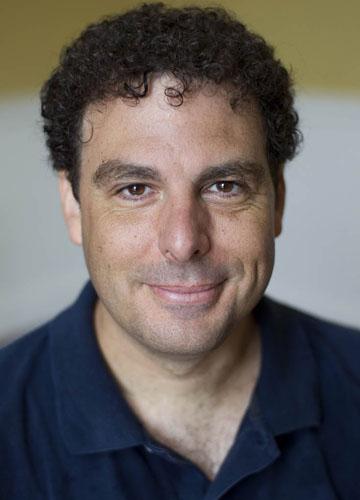 Michael L. Littman合作论文数Department of Computer Science, Brown University3
 Christopher Painter-Wakefield合作论文数3
 John P. Dickerson合作论文数Mozilla.ai;Arthur;Public Spend Forum3
 William Lawless合作论文数Paine College3
 Christoph Studer合作论文数Integrated Systems Laboratory, Department of Information Technology and Electrical Engineering, Eidgenössische Technische Hochschule Zürich3
 Jonas Geiping合作论文数Max-Planck for Intelligent Systems, Tübingen AI Center;ELLIS Institute Tübingen3Ron Parr合作论文数2
 Valeriia Cherepanova合作论文数University of Maryland, College Park2Harrison Foley合作论文数United States Naval Academy2Shiyuan Duan合作论文数University of Maryland (College Park)2
 Micah Goldblum合作论文数Columbia University2
 Bharat Singh合作论文数Stealth2
 Mucong Ding合作论文数Department of Computer Science, University of Maryland2Kawika Barabin合作论文数2
 Ali Shafahi合作论文数Apple2
 Zuxuan Wu (吴祖煊)合作论文数Fudan Vision and Learning Laboratory, School of Computer Science, Fudan University2
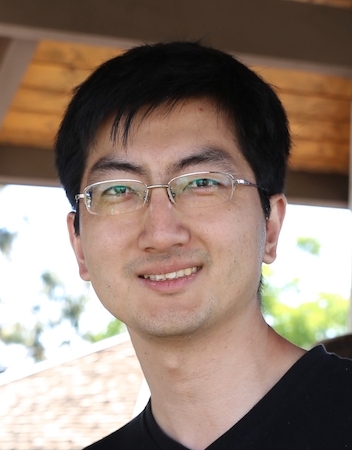 Hao Li (李浩)合作论文数Amazon Web Services AI Labs2
 Hengduo Li合作论文数University of Maryland2
 Kezhi Kong (孔柯智)合作论文数NVIDIA2
 Guohao Li (李国豪)合作论文数Camel-AI.org2
 Soham De合作论文数DeepMind2
 Ranjeev Mittu合作论文数U.S. Naval Research Laboratory2
 Bernard Ghanem合作论文数Computer, Electrical and Mathematical Sciences and Engineering Division, King Abdullah University of Science and Technology;Center of Excellence for Generative AI, King Abdullah University of Science and Technology;CAMEL-AI.org;Thya Technology2Connor Geer合作论文数1Jonathon K. Parry合作论文数1
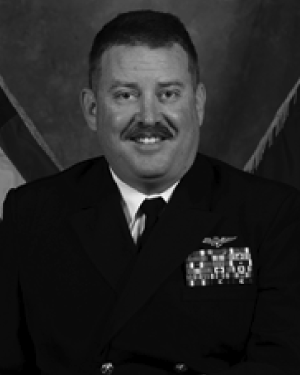 Donald Costello合作论文数1Ryan Burmeister合作论文数1Thomas Goldstein合作论文数1
 Ankit Patel合作论文数Department of Electrical and Computer Engineering, School of Engineering and Computing, Rice University;Department of Neuroscience, Baylor College of Medicine, Rice University1
 Michael Möller合作论文数Center for Sensorsystems, Department for Electrical Engineering and Computer Science, Faculty for Science and Technology, University of Siegen1
 Amin Ghiasi合作论文数Department of Computer Science, University of Maryland1
 Dan Bohus合作论文数Microsoft Research1
 Keiki Takadama合作论文数1
 Mário A. T. Figueiredo合作论文数Department of Electrical and Computer Engineering, Instituto Superior Tecnico, University of Lisbon;Instituto de Telecomunicações1
 Huan Liu (刘欢)合作论文数School of Computing and Augmented Intelligence, Ira A. Fulton Schools of Engineering, Arizona State University1
 Fei Fang合作论文数Department of Software and Societal Systems, School of Computer Science, Carnegie Mellon University1
 Xiaoming Yuan (袁曉明)合作论文数Department of Mathematics, Faculty of Science, The University of Hong Kong1Takashi Kido合作论文数1
 Wojciech Czaja合作论文数Department of Mathematics, University of Maryland1




