We introduce presheaf automata as a generalisation of different variants of higher-dimensional automata and other automata-like formalisms, including Petri nets and vector addition systems. We develop the foundations of a language theory for them based on notions of paths and track objects. We also define open maps for presheaf automata, extending the standard notions of simulation and bisimulation for transition systems. Apart from these conceptual contributions, we show that certain finite-type presheaf automata subsume all Petri nets, generalising a previous result by van Glabbeek, which applies to higher-dimensional automata and safe Petri nets. We also present a class of presheaf automata for which there is no Kleene theorem with respect to the notions of rational and regular languages introduced.
Binary multirelations form a model of alternating nondeterminism useful for analysing games, interactions of computing systems with their environments or abstract interpretations of probabilistic programs. We investigate this alternating structure with inner or demonic and outer or angelic choices in a relation-algebraic language extended with specific operations on multirelations that relate to the inner layer of alternation.
We introduce ω -catoids as generalisations of (strict) ω -categories and in particular the higher path categories generated by computads or polygraphs in higher-dimensional rewriting. We also introduce ω -quantales that generalise the ω -Kleene algebras recently proposed for algebraic coherence proofs in higher-dimensional rewriting. We then establish correspondences between ω -catoids and convolution ω -quantales. These are related to Jónsson-Tarski-style dualisms between relational structures and lattices with operators. We extend these correspondences to (ω,p) -catoids, catoids with a groupoid structure above some dimension, and convolution (ω,p) -quantales, using Dedekind quantales above some dimension to capture homotopic constructions and proofs in higher-dimensional rewriting. We also specialise them to finitely decomposable (ω, p) -catoids, an appropriate setting for defining (ω, p) -semirings and (ω, p) -Kleene algebras. These constructions support the systematic development and justification of ω -Kleene algebra and ω -quantale axioms, improving on the recent approach mentioned, where axioms for ω -Kleene algebras have been introduced in an ad hoc fashion.
Convolution algebras on maps from structures such as monoids, groups or categories into semirings, rings or fields abound in mathematics and the sciences. Of special interest in computing are convolution algebras based on variants of Kleene algebras, which are additively idempotent semirings equipped with a Kleene star. Yet an obstacle to the construction of convolution Kleene algebras on a wide class of structures has so far been the definition of a suitable star. We show that a generalisation of Möbius categories combined with a generalisation of a classical definition of a star for formal power series allow such a construction. We discuss several instances of this construction on generalised Möbius categories: convolution Kleene algebras with tests, modal convolution Kleene algebras, concurrent convolution Kleene algebras and higher convolution Kleene algebras (e.g. on strict higher categories and higher relational monoids). These are relevant to the verification of weighted and probabilistic sequential and concurrent programs, using quantitative Hoare logics or predicate transformer algebras, as well as for algebraic reasoning in higher-dimensional rewriting. We also adapt the convolution Kleene algebra construction to Conway semirings, which is widely studied in the context of weighted automata. Finally, we compare the convolution Kleene algebra construction with a previous construction of convolution quantales and present concrete example structures in preparation for future applications.
We study the confluence property of abstract rewriting systems internal to cubical categories. We introduce cubical contractions, a higher-dimensional generalisation of reductions to normal forms, and employ them to construct cubical polygraphic resolutions of convergent rewriting systems. Within this categorical framework, we establish cubical proofs of fundamental rewriting results – Newman's lemma, the Church-Rosser theorem, and Squier's coherence theorem – via the pasting of cubical coherence cells. We moreover derive, in purely categorical terms, the cube law known from the λ-calculus and Garside theory. As a consequence, we show that every convergent abstract rewriting system freely generates an acyclic cubical groupoid, in which higher-dimensional generators can be replaced by degenerate cells beyond dimension two.
With a view on applications in computing, in particular concurrency theory and higher-dimensional rewriting, we develop notions of n-fold monoid and comonoid objects in n-fold monoidal categories and bicategories. We present a series of examples for these structures from various domains, including a categorical model for a communication protocol and a lax n-fold relational monoid, which has previously been used implicitly for higher-dimensional rewriting and which specialises in a natural way to strict n-categories. A special set of examples is built around modules and algebras of the boolean semiring, which allows us to deal with semilattices, additively idempotent semirings and quantales using tools from classical algebra.
We formally introduce IsaVODEs (Isabelle verification with Ordinary Differential Equations), a framework for the verification of cyber-physical systems. We describe the semantic foundations of the framework's formalisation in the Isabelle/HOL proof assistant. A user-friendly language specification based on a robust state model makes our framework flexible and adaptable to various engineering workflows. New additions to the framework increase both its expressivity and proof automation. Specifically, formalisations related to forward diamond correctness specifications, certification of unique solutions to ordinary differential equations (ODEs) as flows, and invariant reasoning for systems of ODEs contribute to the framework's scalability and usability. Various examples and an evaluation validate the effectiveness of our framework.
We prove a Kleene theorem for higher-dimensional automata. It states that the languages they recognise are precisely the rational subsumption-closed sets of finite interval pomsets. The rational operations on these languages include a gluing composition, for which we equip pomsets with interfaces. For our proof, we introduce higher-dimensional automata with interfaces, which are modelled as presheaves over labelled precube categories, and develop tools and techniques inspired by algebraic topology, such as cylinders and (co)fibrations. Higher-dimensional automata form a general model of non-interleaving concurrency, which subsumes many other approaches. Interval orders are used as models for concurrent and distributed systems where events extend in time. Our tools and techniques may therefore yield templates for Kleene theorems in various models and applications.
Binary multirelations can model alternating nondeterminism, for instance, in games or nondeterministically evolving systems interacting with an environment. Such systems can show partial or total functional behaviour at both levels of alternation, so that nondeterministic behaviour may occur only at one level or both levels, or not at all. We study classes of inner and outer partial and total functional multirelations in a multirelational language based on relation algebra and power allegories. While it is known that general multirelations do not form a category, we show that the classes of deterministic multirelations mentioned form categories with respect to Peleg composition from concurrent dynamic logic, and sometimes quantaloids. Some of these are isomorphic to the category of binary relations. We also introduce determinisation maps that approximate multirelations either by binary relations or by deterministic multirelations. Such maps are useful for defining modal operators on multirelations.
We formalize the modal operators from the concurrent dynamic logics of Peleg, Nerode and Wijesekera in a multirelational algebraic language based on relation algebras and power allegories, using relational approximation operators on multirelations developed in a companion article. We relate Nerode and Wijesekera's box operator with a relational approximation operator for multirelations and two related operators that approximate multirelations by different kinds of deterministic multirelations. We provide an algebraic soundness proof of Goldblatt's axioms for concurrent dynamic logic and one for a multirelational Hoare logic based on Nerode and Wijesekera's box as applications.
We formally introduce IsaVODEs (Isabelle verification with Ordinary Differential Equations), an open, compositional and extensible framework for the verification of cyber-physical systems. We extend a previous semantic approach with methods and techniques that increase its expressivity, proof automation, and scalability to the level of state-of-the-art deductive verification tools. Our contributions include a user-friendly specification language, a flexible hybrid store model, including vectors and matrices, and separation-logic-style rules for local reasoning with hybrid stores using a novel form of differentiation called framed Fréchet derivatives. The formalisation of correctness specifications with forward predicate transformers, the certification of flows as unique solutions to systems of ordinary differential equations, and invariant reasoning for such systems also contribute to the scalability and usability of our framework. In combination, these features make our framework flexible and adaptable to several verification workflows. A suite of examples and hybrid systems verification benchmarks validate our framework relative to other state-of-the-art approaches.
We introduce a single-set axiomatisation of cubical ω -categories, including connections and inverses. We justify these axioms by establishing a series of equivalences between the category of single-set cubical ω -categories, and their variants with connections and inverses, and the corresponding cubical ω -categories. We also report on the formalisation of cubical ω -categories with the Isabelle/HOL proof assistant, which has been instrumental in developing the single-set axiomatisation.
This AFP entry provides mathematical components for modal quan-tales, involutive quantales and Dedekind quantales. Modal quantales are simple extensions of modal Kleene algebras useful for the verification of recursive programs. Involutive quantales appear in the study of C ∗ -algebras. Dedekind quantales are relatives of Tarski’s relation algebras, hence relevant to program verification and beyond that to higher rewriting. We also provide components for weaker variants such as Kleene algebras with converse and modal Kleene algebras with converse.
We show how modal quantales arise as convolution algebras Q^X of functions from catoids X, multisemigroups equipped with source and target maps, into modal quantales value or weight quantales Q. In the tradition of boolean algebras with operators we study modal correspondences between algebraic laws in X, Q and Q^X . The catoids introduced generalise Schweizer and Sklar’s function systems and single-set categories to structures isomorphic to algebras of ternary relations, as they are used for boolean algebras with operators and substructural logics. Our correspondence results support a generic construction of weighted modal quantales from catoids. This construction is illustrated by many examples. We also relate our results to reasoning with stochastic matrices or probabilistic predicate transformers.
Domain operations on semirings have been axiomatised in two different ways: by a map from an additively idempotent semiring into a boolean subalgebra of the semiring bounded by the additive and multiplicative unit of the semiring, or by an endofunction on a semiring that induces a distributive lattice bounded by the two units as its image. This note presents classes of semirings where these approaches coincide.
We show how concurrent quantales and concurrent Kleene algebras arise as convolution algebras $Q^X$ of functions from structures $X$ with two ternary relations that satisfy relational interchange laws into concurrent quantales or Kleene algebras $Q$. The elements of $Q$ can be understood as weights; the case $Q=\bool$ corresponds to a powerset lifting. We develop a correspondence theory between relational properties in $X$ and algebraic properties in $Q$ and $Q^X$ in the sense of modal and substructural logics, and boolean algebras with operators. As examples, we construct the concurrent quantales and Kleene algebras of $Q$-weighted words, digraphs, posets, isomorphism classes of finite digraphs and pomsets.
We introduce posets with interfaces (iposets) and generalise their standard serial composition to a new gluing composition. In the partial order semantics of concurrency, interfaces and gluing allow modelling events that extend in time and across components. Alternatively, taking a decompositional view, interfaces allow cutting through events, while serial composition may only cut through edges of a poset. We show that iposets under gluing composition form a category, which generalises the monoid of posets under serial composition up to isomorphism. They form a 2-category when a subsumption order and a lax tensor in the form of a non-commutative parallel composition are added, which generalises the interchange monoids used for modelling series-parallel posets. We also study the gluing-parallel hierarchy of iposets, which generalises the standard series-parallel one. The class of gluing-parallel iposets contains that of series-parallel posets and the class of interval orders, which are well studied in concurrency theory, too. We also show that it is strictly contained in the class of all iposets by identifying several forbidden substructures.
 Bernhard Moller合作论文数21
 Faron Moller合作论文数Theoretical Computer Science Group, Swansea University/BCTCS13
 Victor B. F. Gomes合作论文数12
 Peter Höfner合作论文数School of Computing, The Australian National University11Alasdair Armstrong合作论文数Department of Computer Science and Technology, University of Cambridge10
 Brijesh Dongol合作论文数Dept Comp Sci, Brunel Univ8
 Jules Desharnais合作论文数Departement d'informatique et de genie logiciel8Christian Johansen合作论文数7
 Uli Fahrenberg合作论文数EPITA Rennes;LRE7
 Hitoshi Furusawa合作论文数Department of Mathematics and Computer Science, Kagoshima University, Kagoshima, Japan7Tahiry M. Rabehaja合作论文数7
 Tjark Weber合作论文数Concurrency Research Group, Department of Information Technology, Uppsala University7
 Annabelle Mciver合作论文数School of Computing, Macquarie University7Krzysztof Ziemiański合作论文数7
 Jonathan Julian Huerta y Munive合作论文数6
 Ian Hayes合作论文数School of Electrical Engineering and Computer Science, University of Queensland;Faculty of Engineering, Architecture and Information Technology, University of Queensland6Cameron Calk合作论文数5Walter Guttmann合作论文数5
 Tony Hoare合作论文数Department of Computer Science, University of Oxford;Microsoft Research5
 Simon Foster合作论文数School of Biosciences, University of Sheffield4
 Ian Wehrman合作论文数University of Texas at Austin4
 Rudolf Berghammer合作论文数Computer-Aided Program Development Group, Department of Computer Science, Faculty of Engineering, Christian-Albrechts-Universität zu Kiel;Institute of Computer Science and Applied Mathematics, University Kiel4
 Philippe Malbos合作论文数Laboratoire Géométrie-Topologie-Algèbre, Université Montpellier II4James Cranch合作论文数3
 Mario Gleirscher合作论文数Technische Universitaet Muenchen3Michael R. Laurence合作论文数goldsmiths college, university of london3Christian Pardillo Laursen合作论文数2Damien Pous合作论文数ENS Lyon2Yasuo Kawahara合作论文数2Norihiro Tsumagari合作论文数Graduate School of Science and Engineering, Kagoshima University2
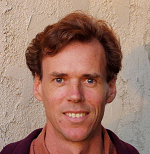 Peter Jipsen合作论文数Chapman University
Department of Mathematics and Computer Science2
Peter Jipsen合作论文数Chapman University
Department of Mathematics and Computer Science2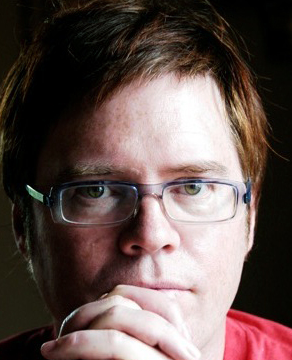 Peter O'Hearn合作论文数University College London;Lacework;Facebook UK Ltd2
 Ondrej Rypacek合作论文数2C. A. R. Hoare合作论文数1Akbar Hussain合作论文数1
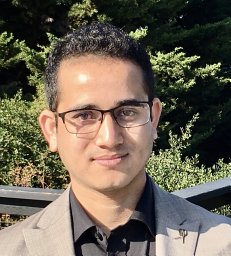 Ratan Bahadur Thapa合作论文数Dept Informat, Univ Oslo1
 Paul Brunet合作论文数Universite de Creteil1
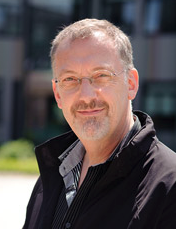 James Woodcock合作论文数Department of Computer Science, University of York1
 Huibiao Zhu (朱惠彪)合作论文数Software Engineering Institute, East China Normal University1Michael Ebert合作论文数1Stephan Van Staden合作论文数1Thorsten Ehm合作论文数1
 Charles Carroll Morgan合作论文数School of Computer Science & Engineering, Faculty of Engineering, The University of New South Wales1Callum Bannister合作论文数1Martin Eric Muller合作论文数1Larissa Meinicke合作论文数Department of Computer Science, Åbo Akademi1Universitat Augsburg合作论文数1




