Nongovernmental organizations (NGOs) in the United States and globally are at a historic juncture. The available data on trust and confidence in NGOs internationally suggests that NGOs suffer from trust and reputation deficits, implying that concerns about NGO effectiveness and accountability may not be adequately addressed through existing systems of oversight and regulation. Compounding this challenge, NGOs in many countries face a backlash in which governments restrict, reduce, or eliminate funding sources for NGOs and curtail freedoms with implicit and explicit threats. This paper argues that understanding the nature of this inflection point in the United States is enhanced by placing it in the larger context of the global NGO regulatory architecture. The past few decades have seen the proliferation across the globe of a wide variety of institutional arrangements for regulating NGOs, resulting in a complicated patchwork of governmental and nongovernmental regulatory regimes operating across many overlapping jurisdictions. We examine the nongovernmental regulation of NGOs as a response to information deficits that remain under-resolved by governmental regulation. We argue that NGOs require trust and reputational legitimacy to attract public support and funding. But NGOs face real challenges to greater transparency at the same time that government regulation struggles to provide adequate quality assurances for current information disclosures to the satisfaction of all relevant stakeholders. This gap creates a market for information that is often filled by nongovernmental regulation systems. In this article we explore the structure of these private, nongovernmental regulation regimes at the national and transnational levels to derive insights for increasing NGO trustworthiness and legitimacy by bolstering the NGO data ecosystem.
Many transnational non-governmental organizations (TNGOs) are reevaluating their organizational forms and norms as they pursue localization. Localization itself is a contested and multifaceted concept, however, complicating the design, implementation, and evaluation of localization efforts. In this context, we propose a two-dimensional analytical framework for understanding localization initiatives. Localization efforts can be understood within a continuum from managerialist to restorative practices and focus on organizational forms or more deeply embedded cultural norms. The case of HelpAge International illustrates this continuum of localization practices across all four types-managerial forms, managerial norms, restorative forms, and restorative norms-and reveals key tensions emerging between various stakeholders. We apply the framework to the HelpAge International case to demonstrate its utility as an analytical tool. We conclude with suggestions for future research.
Donors may be unwilling to acquire information about nonprofit performance because information is costly, potentially resulting in inefficient giving. Using an experiment, we evaluate the hypothesis that donors can be induced to give more efficiently when information costs are borne by another donor, holding total spending constant. We propose that information about nonprofit performance is a social good with significant positive externalities that donors may not equally value. In consequence, donors on average may tend to acquire too little information relative to the social optimum. We find that average donation impact can be increased by about 13% by shifting the information cost burden. We conclude with recommendations for policymakers, public agencies, information intermediaries, donor-advised funds, nonprofit practitioners, and researchers.
Transnational NGOs (TNGOs) often claim to speak and act on behalf of diverse communities, yet many are governed by boards that may not reflect the sector’s rhetorical commitments to inclusive governance. This apparent gap between rhetoric and practice has led to growing pressure for leading TNGOs to engage in governance reforms. This exploratory article evaluates the composition of the boards of 25 leading TNGOs in the United States with a combined 395 board members to assess the extent to which this rhetoric is associated with board composition. A latent class analysis of board member data measuring demographic, competency, and cognitive background indicators identifies a distinction between “inclusive” and “traditional” board types. We find that the inclusive board type is associated with rhetorical commitments to diversity, equity, and inclusion, whereas the traditional board type is not. We conclude with recommendations for research to inform TNGO governance reforms.
This article explores how three types of logic of action - consequences, appropriateness, and power dynamics - configurate to shape the trajectory of an illustrative NPM-style reform in China, reflecting how the NPM paradigm has evolved through layering, displacement, and hybridization. Using a longitudinal case study in Guangzhou, we trace sanitation service delivery modalities from in-house delivery to contracting-out, to standardized contracting-out, to contracting-in, and finally, to public-private partnerships with state-owned enterprise. Our findings underscore the salience of the logic of power dynamics in an authoritarian context, suggesting NPM as a transitionary paradigm bridging traditional public administration and hybrid paradigms in China.
The existence of federal oversight of charitable organizations in the United States implies a degree of uniformity to US charity regulation. However, charity regulation is far from uniform across the country. States differ significantly in their adoption or non-adoption of various state-level regulatory requirements, creating not one but many different regulatory environments for charities. The complexity and diversity of these regulations has made it difficult for sector stakeholders, such as researchers, regulators, practitioners, information intermediaries, and donors, to understand the nature and significance of state-level charity regulation from a comparative perspective. To address this problem, this article employs latent class analysis to identify three distinct models of state-level charity regulation: broad regulation, limited regulation, and asset oversight. Subsequent analysis identifies relationships between a state's economic, social, and political characteristics and its model of charity regulation, suggesting new avenues of research for understanding regulatory model emergence. Many additional practical applications of the typology are also discussed.
The theory of the nonprofit institutional form introduced by Henry Hansmann more than 40 years ago proposed that informational problems, specifically information asymmetry, explains the essential defining feature of the nonprofit organization – the so-called nondistribution constraint. While the conventional argument holds that an asymmetry of information arises due to intrinsic, hard-to-measure attributes of nonprofit outputs, this chapter argues instead that informational problems arise because private purchasers fail to sufficiently value the positive externalities of information. In short, information is a social good, rather than a private good, and neither purchasers (donors) nor producers (nonprofits) have sufficiently strong incentives to systematically incur the costs and risks associated with generating information. The undervaluing of information by private parties results in a symmetry of ignorance that may lead to "benefit failure" in the form of foregone social impact. This type of failure is induced by transaction, allocative, and production inefficiencies resulting from the symmetry of ignorance.
A combination of computer-aided qualitative data analysis (CAQDAS) and latent class analysis (LCA) can substantially augment the qualitative analysis of textual data sources used in third-sector studies. This article explains how to employ both techniques iteratively to capture often implicit ideas and meaning-making by third-sector leaders, donors, and other stakeholders. CAQDAS facilitates the coding, organization, and quantification of qualitative data, effectively creating parallel qualitative and quantitative data structures. LCA facilities the discovery of latent concepts, document classification, and the identification of exemplary qualitative evidence to aid interpretation. For third-sector research, CAQDAS and LCA are particularly promising because diverse stakeholders usually do not share homogenous views about core issues such as organizational effectiveness, collaboration, impact measurement, or philanthropic approaches, for example. The procedure explained here provides a rigorous method for discovering and understanding diversity in perspectives and is especially useful in medium-n research settings common to third-sector scholarship.
The bulk of charity regulation in the United States occurs at the state level, yet state-level charity regulation remains relatively under-researched within nonprofit scholarship, particularly from a comparative perspective. The complexity and variation in statutory regulation, coupled with the large volume of legal research required to study state-level charity regulation systematically, has impeded scholarly progress toward a better understanding of the US charitable sector. We address this problem by deriving a state-level charity regulatory breadth index (RBI) that will enable nonprofit researchers to contextualize state-level charity research within a broader framework and to incorporate state-level regulation into analyses across states. Policymakers can also benefit from the ability to benchmark their regulatory regimes against their peers.
The bulk of charity regulation in the United States occurs at the state level, yet state-level charity regulation remains relatively under-researched within nonprofit scholarship, particularly from a comparative perspective. The complexity and variation in statutory regulation, coupled with the large volume of legal research required to study state-level charity regulation systematically, has impeded scholarly progress toward a better understanding of the US charitable sector. We address this problem by deriving a state-level charity regulatory breadth index (RBI) that will enable nonprofit researchers to contextualize state-level charity research within a broader framework and to incorporate state-level regulation into analyses across states. Policymakers can also benefit from the ability to benchmark their regulatory regimes against their peers.
The theory of the nonprofit institutional form developed by Henry Hansmann emphasizes the importance of organizational trustworthiness in a sector defined by hard-to-measure outputs. This body of theory effectually rationalizes a normative approach to nonprofit financial management focused on maintaining organizational trustworthiness through fiscal probity signaling. Such signals include measurable indicators of overhead minimization, fiscal leanness, revenue diversification, and debt avoidance, among others. Appropriate signaling behavior may increase organizational trustworthiness as intended, but the effects on mission impact are not well understood. Thus, this article assesses how adherence to common fiscal probity norms affects mission impact, using total spending as a proxy. Based on a panel of donative public charities spanning 1982 to 2019, analysis suggests that norm-adhering nonprofits sacrifice about half of their mission impact over a 10-year period compared with norm-busting nonprofits. This forgone mission impact is the hidden cost of trustworthiness.
A growing chorus of critics have called upon transnational nongovernmental organizations (TNGOs) from the Global North to “decolonize” their practices, to “shift the power” to the Global South, and to put an end to “white saviorism” by initiating a variety of significant organizational changes. Despite these repeated calls, the TNGO sector still struggles to reform. Explanations for TNGOs’ ongoing struggles from within the field of international relations have generally centered on TNGOs themselves and the ironies and paradoxes of organizational growth and financial success. This article introduces a different argument that TNGOs’ struggles to adapt in response to their critics are the result of TNGOs’ “nonprofitness.” By virtue of being nonprofit, TNGOs are embedded in an architecture consisting of forms and norms that inherently limit the extent to which they are able to change. Using the construct of the architecture, this article provides a novel account for the challenges that TNGOs confront as they attempt to close the gap between the rhetoric and reality of inclusive and transformational socioeconomic, political, or environmental change.
For several decades, the aid effectiveness movement has called for more robust, informed and independent impact evaluation of aid activities, but the prevalence and adoption of these practices remain unclear. This article seeks to understand the current state of impact evaluation practice in the development field by examining standard-setting documents intended to guide the behavior of entities involved in development assistance. We explore these standards as representations of institutional logics that encode current norms, practices, and expectations for these actors and examine the extent to which impact evaluation norms and practices are enshrined within these standard-setting documents. To do so, we examine guidance from a diverse set of 42 standards to better understand how evaluation is conceptualized and what standards are being articulated. We find both convergence and divergence in the institutional logics employed and in how evaluation norms and practices are incorporated into standards. We see convergence in the adoption of a normative, process-oriented logic that appears across many entities in the widely articulated commitment to practices such as information sharing, participation, and listening. We find more divergence in the adoption of a results-oriented logic that implies a commitment to impact evaluation. These distinct logics give rise to two discrete discourses: an "evaluation generalist" discourse that conceptualizes evaluation in broad terms and an "impact centric" discourse that articulates a more comprehensive set of principles emphasizing causal attribution. We suggest that structural characteristics and positionality in the aid system may help explain the adoption of different institutional logics and associated evaluation practices. (c) 2021 The Authors. Published by Elsevier Ltd. This is an open access article under the CC BY-NC-ND license (http://creativecommons.org/licenses/by-nc-nd/4.0/).
This study investigates a discourse about billionaire philanthropy established in letters submitted by 187 of 209 signatories of the Giving Pledge. The philanthropy of the wealthy is gaining increasing public attention and is subject to growing criticism, which demands additional study of how the wealthy collectively explain their generosity. The mixed-method analysis finds a strong emphasis on education and health causes and identifies two distinct and coherent rationales for being generous. The majority of letters express a social–normative rationale, consisting of two prevailing explanations: an expressed gratitude and desire to “give back” (1) and references to family upbringing as a socializing force (2). A minority of letters articulate a personal–consequentialist rationale, highlighting three separate explanations: a large inheritance may harm offspring (1), giving as personal gratification (2), and an acknowledgment of excess wealth with no better use (3). An expressed desire to have impact and make a difference appears in both rationales. The overall dominance of a social–normative rationale projects a discourse emphasizing benevolence as well as a narrative in which billionaires are an exceptionally productive and grateful subset of society. While previous studies have primarily focused on identifying individual psychological motives, this study shows how the Giving Pledge letters reflect a philanthropic discourse among the wealthy going back to Andrew Carnegie’s Gospel of Wealth .
Instrumental philanthropy has gained attention and popularity in recent decades as an approach to maximizing the impact of giving. This article evaluates the suitability of the nonprofit institutional form, specifically the US public charity, as a vehicle for instrumental philanthropy. The analysis identifies an incongruity between the informational requirements of instrumental philanthropy and the form and theory of the nonprofit. An alternative theory of licensure is proposed to illustrate the difficulty of the information problem. Analysis suggests that the viability of instrumental philanthropy hinges upon information costs. Several public policy options are considered as means of better supporting instrumental philanthropy, presuming that allocative efficiency in the production of public benefits is a desirable public policy objective.
Abstract Chapter 11 argues that mergers and acquisitions (M&As) can be an important strategic tool for acquiring capabilities needed to improve organizational effectiveness, relevance, and competitiveness. However, typically M&As within the sector are rare and often reactive in nature. They usually involve the joining together of a smaller, financially stressed organization with a larger, healthier TNGO looking to expand. Much less common are more proactive M&A efforts where both partners come together from positions of strength. M&As appear to be underutilized as a strategic tool to increase scale and impact due to a variety of normative and institutional barriers. These include legal structures that disincentivize or prevent takeovers, cultures of uniqueness among TNGOs and their supporters, and the lack of M&A matchmakers and resources for competently exploring and executing the M&A process.
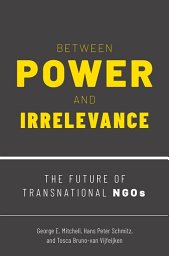
Geopolitical shifts, increasing demands for accountability, and growing competition have been driving the need for change within the transnational nongovernmental organization (TNGO) sector. Additionally, TNGOs have been embracing more transformative strategies aimed at the root causes, not just the symptoms, of societal problems. As the world has changed and TNGOs’ ambitions have expanded, the roles of TNGOs have begun to shift and their work has become more complex. To remain effective, legitimate, and relevant in the future necessitates organizational changes and investments in new capabilities. However, many organizations have been slow to adapt. As a result, for many TNGOs’ the rhetoric of sustainable impact and transformative change has far outpaced the reality of their limited abilities to deliver on their promises. This book frankly explores why this gap between rhetoric and reality exists and what TNGOs can do individually and collectively to close it. In short, TNGOs need to change the fundamental conditions under which they themselves operate by bringing their own “forms and norms” into better alignment with their contemporary ambitions and strategies. This book offers accessible future-oriented analyses and lessons-learned to assist readers in formulating and implementing organizational changes to adapt TNGOs for the future. The book draws upon a variety of disciplines and perspectives, including hundreds of interviews with TNGO leaders, firsthand involvement in major organizational change processes in leading TNGOs, and numerous workshops, training institutes, consultancies, and research projects.
 Hans Peter Schmitz合作论文数Syracuse University19
 Jesse D. Lecy合作论文数Andrew Young School of Policy Studies, Georgia State University5
 H Moyse合作论文数3P Mole合作论文数3W. C. Kunzmann合作论文数3
 Paloma Raggo合作论文数3H. Griffin合作论文数3
 Thad Calabrese合作论文数Robert F. Wagner Graduate School of Public Service, New York University3
 Tosca Bruno-van Vijfeijken合作论文数Moynihan Institute of Global Affairs;Syracuse University;Moynihan Institute of Global Affairs, Syracuse University3
 Christiane Page合作论文数3R. E. Tucker合作论文数3
 Margaret (Peg) G. Hermann 合作论文数Department of Political Science, Maxwell School, Syracuse University3Geoffrey Chambers合作论文数2E Geib合作论文数2G. F. Rackett合作论文数2Emery Huse合作论文数2Sudang Kaentrakoon合作论文数2RM DEGREGORIO合作论文数2Carla Handley合作论文数Arizona State Univ, Inst Human Origins, Tempe, AZ USA2Sarah S. Stroup合作论文数Middlebury Coll2
 Berlan David合作论文数Campbell Public Affairs Institute, Syracuse University2Lorena Vinuela合作论文数2
 Nathan Dietz合作论文数Corporation for National and Community Service2
 Mary Kay Gugerty合作论文数Daniel J. Evans School of Public Policy & Governance, University of Washington2Fidelma Cahill合作论文数1Christine Handley合作论文数1Edward Press合作论文数1Carl Dreher合作论文数1Suzanne E. Harris合作论文数1L Davee合作论文数1Mary Shelly合作论文数1Glenn E. Matthews合作论文数1Morton S. Hilbert合作论文数1alexander d langmuir合作论文数1A. L. Knutson合作论文数1M. I. Murphy合作论文数1E. J. Kilcawley合作论文数1R. L. Huenemann合作论文数1D. H. Byers合作论文数1F. D. Yoder合作论文数1T. A. Olson合作论文数1Elena M. McCollim合作论文数1James H. Steele合作论文数1allan studio合作论文数1Cindy Lott合作论文数1Peter Nerothin合作论文数1
 Francisco J. Santamarina合作论文数Evans Sch Publ Policy & Governance, Univ Washington1Jacqueline Frayne合作论文数1
 Steven A Sumner合作论文数Natl Ctr Injury Prevent & Control, CDCP1




