Scaling network depth has been a central driver behind the success of modern foundation models, yet recent investigations suggest that deep layers are often underutilized. This paper revisits the default mechanism for deepening neural networks, namely residual connections, from an optimization perspective. Rigorous analysis proves that the layout of residual connections can fundamentally shape convergence behavior, and even induces an exponential gap in convergence rates. Prompted by this insight, we introduce adaptive neural connection reassignment (ANCRe), a principled and lightweight framework that parameterizes and learns residual connectivities from the data. ANCRe adaptively reassigns residual connections with negligible computational and memory overhead (<1%), while enabling more effective utilization of network depth. Extensive numerical tests across pre-training of large language models, diffusion models, and deep ResNets demonstrate consistently accelerated convergence, boosted performance, and enhanced depth efficiency over conventional residual connections.
3D reconstruction is a fundamental task in robotics that gained attention due to its major impact in a wide variety of practical settings, including agriculture, underwater, and urban environments. This task can be carried out via view planning (VP), which aims to optimally place a certain number of cameras in positions that maximize the visual information, improving the resulting 3D reconstruction. Nonetheless, in most real-world settings, existing environmental noise can significantly affect the performance of 3D reconstruction. To that end, this work advocates a novel geometric-based reconstruction quality function for VP, that accounts for the existing noise of the environment, without requiring its closed-form expression. With no analytic expression of the objective function, this work puts forth an adaptive Bayesian optimization algorithm for accurate 3D reconstruction in the presence of noise. Numerical tests on noisy agricultural environments showcase the merits of the proposed approach for 3D reconstruction with even a small number of available cameras.
As large language models (LLMs) continue to scale in size, the computational overhead has become a major bottleneck for task-specific fine-tuning. While low-rank adaptation (LoRA) effectively curtails this cost by confining the weight updates to a low-dimensional subspace, such a restriction can hinder effectiveness and slow convergence. This contribution deals with these limitations by accumulating progressively a high-rank weight update from consecutive low-rank increments. Specifically, the per update optimal low-rank matrix is identified to minimize the loss function and closely approximate full fine-tuning. To endow efficient and seamless optimization without restarting, this optimal choice is formed by appropriately scaling the columns of the original low-rank matrix. Rigorous performance guarantees reveal that the optimal scaling can be found analytically. Extensive numerical tests with popular LLMs scaling up to 12 billion parameters demonstrate a consistent performance gain and fast convergence relative to state-of-the-art LoRA variants on diverse tasks including natural language understanding, commonsense reasoning, and mathematical problem solving.
Quantum state tomography estimates an unknown density operator from measurement data. Dense reconstruction however, can be impractical for many-qubit systems because the Hilbert-space dimension grows exponentially. This contribution develops a rank-adaptive matrix-free approach to low-rank quantum state tomography based on rank-one atomic coordinates. The density operator is represented as a convex combination of pure-state atoms, which preserves positivity and unit trace while avoiding dense density, measurement, and gradient matrices. The resultant algorithm combines atom updates, simplex-constrained coefficient reweighting, and periodic spectral refactorization using only predicted probability vectors, atom vectors, and descriptor-level measurement actions. These computations decompose across measurement outcomes, and admit a master–worker implementation with the measurements partitioned across workers. A rank penalty adapts the representation size during optimization. Provable feasibility, prediction consistency, monotone descent of the penalized objective, and an exact spectral proximal characterization of the refactorization step are established. Simulations with Pauli measurements show favorable accuracy–runtime–memory tradeoffs relative to competing alternatives.
Powerful artificial intelligence (AI) tools that have emerged in recent years—including large language models (LLMs), automated coding assistants, and advanced image and speech generation technologies—are the result of monumental human achievements. These breakthroughs reflect mastery across multiple technical disciplines and the resolution of significant technological challenges. However, some of the most profound challenges may still lie ahead. These challenges are not purely technical but pertain to the fair and responsible use of AI in ways that genuinely improve the global human condition. This article explores one promising application aligned with that vision: the use of AI tools to facilitate and enhance education, with a specific focus on signal processing (SP). It presents two interrelated perspectives: identifying and addressing technical limitations and applying AI tools in practice to improve educational experiences. Primers are provided on several core technical issues that arise when using AI in educational settings, including how to ensure fairness and inclusivity, handle hallucinated outputs, and achieve the efficient use of resources. These and other considerations—such as transparency, explainability, and trustworthiness—are illustrated through the development of an immersive, structured, and reliable “smart textbook.” The article serves as a resource for researchers and educators seeking to advance AI’s role in engineering education.
Meta-learning offers a principled framework leveraging *task-invariant* priors from related tasks, with which *task-specific* models can be fine-tuned on downstream tasks, even with limited data records. Gradient-based meta-learning (GBML) relies on gradient descent (GD) to adapt the prior to a new task. Albeit effective, these methods incur high computational overhead that scales linearly with the number of GD steps. To enhance efficiency and scalability, existing methods approximate the gradient of prior parameters (meta-gradient) via truncated backpropagation, yet suffer large approximation errors. Targeting accurate approximation, this work puts forth binomial GBML (BinomGBML), which relies on a truncated binomial expansion for meta-gradient estimation. This novel expansion endows more information in the meta-gradient estimation via efficient parallel computation. As a running paradigm applied to model-agnostic meta-learning (MAML), the resultant BinomMAML provably enjoys error bounds that not only improve upon existing approaches, but also decay super-exponentially under mild conditions. Numerical tests corroborate the theoretical analysis and showcase boosted performance with slightly increased computational overhead.
Scalable estimation of quantum states with readout errors is a central challenge in large multiqubit systems. Existing overlapping-tomography methods improve scalability by working with local subsystems, but they usually assume known or separately calibrated measurements. At the same time, readout-estimation methods model measurement errors without enforcing consistency among overlapping regional states. In this context, the present paper introduces a unified framework for joint regional quantum state tomography with readout errors. A multiqubit system is partitioned in overlapping regions, each region is assigned to a local density operator and a local confusion matrix, and neighboring regions are coupled through reduced-state consistency on shared subsystems. This leads to a structured bilinear optimization problem. To solve it, a distributed alternating method is developed in which the state-update step is handled by the alternating direction method of multipliers (ADMM), while the confusion-matrix updates are carried out locally in parallel. Analytical guarantees are also established, including a sufficient condition for local identifiability, local quadratic growth of the population misfit, and convergence of the inner state-update procedure. Simulations on Ring, Ladder, Torus, and Hub graph geometries show that joint estimation improves state recovery over fixed-readout reconstruction, recovers a substantial portion of oracle performance, and reveals a clear tradeoff between state estimation performance, communication, and computation.
Uncertainty quantification (UQ) over graphs arises in a number of safety-critical applications in network science. The Gaussian process (GP), as a classical Bayesian framework for UQ, has been developed to handle graph-structured data by devising topology-aware kernel functions. However, such GP-based approaches are limited not only by the prohibitive computational complexity, but also the strict modeling assumptions that might yield poor coverage, especially with labels arriving on the fly. To effect scalability, we devise a novel graph-aware parametric GP model by leveraging the random feature (RF)-based kernel approximation, which is amenable to efficient recursive Bayesian model updates. To further allow for adaptivity, an ensemble of graph-aware RF-based scalable GPs have been leveraged, with per-GP weight adapted to data arriving incrementally. To ensure valid coverage with robustness to model mis-specification, we wed the GP-based set predictors with the online conformal prediction framework, which post-processes the prediction sets using adaptive thresholds. Experimental results the proposed method yields improved coverage and efficient prediction sets over existing baselines by adaptively ensembling the GP models and setting the key threshold parameters in CP.
One of the primary catalysts fueling advances in artificial intelligence (AI) and machine learning (ML) is the availability of massive, curated datasets. A commonly used technique to curate such massive datasets is crowdsourcing, where data are dispatched to multiple annotators. The annotatorproduced labels are then fused to serve downstream learning and inference tasks. This annotation process often creates noisy labels due to various reasons, such as the limited expertise, or unreliability of annotators, among others. Therefore, a core objective in crowdsourcing is to develop methods that effectively mitigate the negative impact of such label noise on learning tasks. This feature article introduces advances in learning from noisy crowdsourced labels. The focus is on key crowdsourcing models and their methodological treatments, from classical statistical models to recent deep learningbased approaches, emphasizing analytical insights and algorithmic developments. In particular, this article reviews the connections between signal processing (SP) theory and methods, such as identifiability of tensor and nonnegative matrix factorization, and novel, principled solutions of longstanding challenges in crowdsourcing—showing how SP perspectives drive the advancements of this field. Furthermore, this article touches upon emerging topics that are critical for developing cutting-edge AI/ML systems, such as crowdsourcing in reinforcement learning with human feedback (RLHF) and direct preference optimization (DPO) that are key techniques for fine-tuning large language models (LLMs).
Topology identification and inference of processes evolving over graphs arise in timely applications involving brain, transportation, financial, power, as well as social and information networks. This chapter provides an overview of graph topology identification and statistical inference methods for multidimensional relational data. Approaches for undirected links connecting graph nodes are outlined, going all the way from correlation metrics to covariance selection, and revealing ties with smooth signal priors. To account for directional (possibly causal) relations among nodal variables and address the limitations of linear time-invariant models in handling dynamic as well as nonlinear dependencies, a principled framework is surveyed to capture these complexities through judiciously selected kernels from a prescribed dictionary. Generalizations are also described via structural equations and vector autoregressions that can exploit attributes such as low rank, sparsity, acyclicity, and smoothness to model dynamic processes over possibly time-evolving topologies. It is argued that this approach supports both batch and online learning algorithms with convergence rate guarantees, is amenable to tensor (that is, multi-way array) formulations as well as decompositions that are well-suited for multidimensional network data, and can seamlessly leverage high-order statistical information.
Targeting solutions over `flat' regions of the loss landscape, sharpness-aware minimization (SAM) has emerged as a powerful tool to improve generalizability of deep neural network based learning. While several SAM variants have been developed to this end, a unifying approach that also guides principled algorithm design has been elusive. This contribution leverages preconditioning (pre) to unify SAM variants and provide not only unifying convergence analysis, but also valuable insights. Building upon preSAM, a novel algorithm termed infoSAM is introduced to address the so-called adversarial model degradation issue in SAM by adjusting gradients depending on noise estimates. Extensive numerical tests demonstrate the superiority of infoSAM across various benchmarks.
Low-Rank Adaptation (LoRA) lowers the computational and memory overhead of fine-tuning large models by updating a low-dimensional subspace of the pre-trained weight matrix. Albeit efficient, LoRA exhibits suboptimal convergence and noticeable performance degradation, due to inconsistent and imbalanced weight updates induced by its nonunique low-rank factorizations. To overcome these limitations, this article identifies the optimal low-rank factorization per step that minimizes an upper bound on the loss. The resultant refactored low-rank adaptation (RefLoRA) method promotes a flatter loss landscape, along with consistent and balanced weight updates, thus speeding up stable convergence. Extensive experiments evaluate RefLoRA on natural language understanding, and commonsense reasoning tasks with popular large language models including DeBERTaV3, LLaMA-7B, LLaMA2-7B and LLaMA3-8B. The numerical tests corroborate that RefLoRA converges faster, outperforms various benchmarks, and enjoys negligible computational overhead compared to state-of-the-art LoRA variants.
Powerful artificial intelligence (AI) tools that have emerged in recent years – including large language models, automated coding assistants, and advanced image and speech generation technologies – are the result of monumental human achievements. These breakthroughs reflect mastery across multiple technical disciplines and the resolution of significant technological challenges. However, some of the most profound challenges may still lie ahead. These challenges are not purely technical but pertain to the fair and responsible use of AI in ways that genuinely improve the global human condition. This article explores one promising application aligned with that vision: the use of AI tools to facilitate and enhance education, with a specific focus on signal processing (SP). It presents two interrelated perspectives: identifying and addressing technical limitations, and applying AI tools in practice to improve educational experiences. Primers are provided on several core technical issues that arise when using AI in educational settings, including how to ensure fairness and inclusivity, handle hallucinated outputs, and achieve efficient use of resources. These and other considerations – such as transparency, explainability, and trustworthiness – are illustrated through the development of an immersive, structured, and reliable "smart textbook." The article serves as a resource for researchers and educators seeking to advance AI's role in engineering education.
Learning a large-scale model using a limited number of training data is a challenge emerging in several applications. In this context, meta-learning identifies common latent structure across related tasks, and offers fast adaptation to new tasks. A major hurdle in meta-learning is the choice of the prior. The present contribution advocates a task-invariant Gaussian process (GP) prior using non-stationary random spectral features. It is established that selecting the mean and kernel of this common GP prior captures a priori information per task that can be conveniently incorporated and benefit the meta-learning process. To broaden the range of learnable kernels, the novel approach parameterizes them by treating the non-stationary spectral samples as meta-parameters, that are learned from the data. The learned GP prior exhibits competitive performance with respect to more complex priors learned by state-of-the-art methods on several few-shot learning benchmark datasets.
The Gaussian process (GP) is a Bayesian non-parametric paradigm that is widely adopted for uncertainty quantification (UQ) in a number of safety-critical applications, including robotics, healthcare, as well as surveillance. The consistency of the resulting uncertainty values however, hinges on the premise that the learning function conforms to the properties specified by the GP model, such as smoothness, periodicity and more, which may not be satisfied in practice, especially with data arriving on the fly. To combat against such model mis-specification, we propose to wed the GP with the prevailing conformal prediction (CP), a distribution-free post-processing framework that produces prediction sets with a provably valid coverage under the sole assumption of data exchangeability. However, this assumption is usually violated in the online setting, where a prediction set is sought before revealing the true label. To ensure long-term coverage guarantee, we will adpatively set the key threshold parameter based on the feedback whether the true label falls inside the prediction set. Numerical results demonstrate the merits of the online GP-CP approach relative to existing alternatives in the long-term coverage performance.
Uncertainty quantification (UQ) is of paramount importance for safety-critical applications in dynamic, data-streaming environments. The Gaussian process (GP), as a classical Bayesian framework for UQ, provides a principled approach to modeling complex functions through kernel definitions. However, standard GP-based approaches are limited not only by the prohibitive cubic computational complexity, but also by strict modeling assumptions, thus often yielding poor coverage, especially when the data distribution shifts on the fly. To effect scalability, we devise a computationally efficient parametric GP model by leveraging the Random Feature (RF)-based kernel approximation, which is amenable to constant-time recursive Bayesian updates. To further allow for adaptivity against non-stationarity, an ensemble (E) of RF-based GPs with diverse spectral properties is leveraged, with per-model weights dynamically adapted to data arriving incrementally. To ensure valid coverage with robustness to model mis-specification, we integrate the EGP predictor with the Online Conformal Prediction (OCP) framework, which post-processes the prediction sets using adaptive thresholds based on the negative predictive log-likelihood. Experimental results on real-world financial datasets demonstrate that the proposed EGP-OCP method yields superior coverage stability and efficient prediction sets over existing baselines by adaptively fusing multiple kernels and adjusting the key threshold parameters in CP.
Utilizing task-invariant knowledge acquired from related tasks as prior information, meta-learning offers a principled approach to learning a new task with limited data records. Sample-efficient adaptation of this prior information is a major challenge facing meta-learning, and plays an important role because it facilitates training the sought task-specific model with just a few optimization steps. Past works deal with this challenge through preconditioning that speeds up convergence of the per-task training. Though effective in representing locally quadratic loss curvatures, simple linear preconditioning can be hardly potent with complex loss geometries. Instead of relying on a quadratic distance metric, the present contribution copes with complex loss metrics by learning a versatile distance-generating function, which induces a nonlinear mirror map to effectively capture and optimize a wide range of loss geometries. With suitable parameterization, this generating function is effected by an expressive neural network that is provably a valid distance. Analytical results establish convergence of not only the proposed method, but also all meta-learning approaches based on preconditioning. To attain gradient norm less than $ε$, the convergence rate of $\mathcal{O}(ε^{-2})$ is on par with standard gradient-based meta-learning methods. Numerical tests on few-shot learning datasets demonstrate the superior empirical performance of the novel algorithm, as well as its rapid per-task convergence, which markedly reduces the number of adaptation steps, hence also accommodating large-scale meta-learning models.
Sharpness-aware minimization (SAM) has well-documented merits in enhancing generalization of deep neural network models. Accounting for sharpness in the loss function geometry, where neighborhoods of `flat minima' heighten generalization ability, SAM seeks `flat valleys' by minimizing the maximum loss provoked by an adversarial perturbation within the neighborhood. Although critical to account for sharpness of the loss function, in practice SAM suffers from `over-friendly adversaries,' which can curtail the outmost level of generalization. To avoid such `friendliness,' the present contribution fosters stabilization of adversaries through variance suppression (VASSO). VASSO offers a general approach to provably stabilize adversaries. In particular, when integrating VASSO with SAM, improved generalizability is numerically validated on extensive vision and language tasks. Once applied on top of a computationally efficient SAM variant, VASSO offers a desirable generalization-computation tradeoff.
Resonant beam communication (RBC) is a new information transfer paradigm that leverages an open-air resonant optical cavity to establish a safe and secure simultaneous wireless information and power transfer link. This distinct design presents unique signal processing and communications challenges because of the long channel memory and high degree of system nonlinearity. These characteristics create dynamics that often render conventional channel estimation and equalization techniques inadequate, posing a significant challenge to fast and reliable data transmission. To address these challenges, this paper proposes a principled framework based on sparse autoregressive (AR) Volterra filtering to model the RBC channel. An AR Volterra filter of appropriate memory and polynomial order is fit to channel data using a sparsity-promoting regularizer (i.e., LASSO), which substantially reduces the pilot symbol length required to accurately estimate the nonlinear channel. Then, drawing inspiration from maximum-a-posteriori (MAP) sequence detection, a novel Viterbi-based algorithm is introduced that integrates the Volterra channel estimate, leveraging the channel memory. Numerical tests demonstrate that the AR filter successfully captures channel dynamics that are unavailable to classical linear and Volterra models. This results in a significantly improved bit error rate, especially in high inter-symbol-interference (ISI) regimes, thereby enabling faster bit rates over the RBC channel.
Active vision (AV) has been in the spotlight of robotics research due to its emergence in numerous applications including agricultural tasks such as precision crop monitoring and autonomous harvesting to list a few. A major AV problem that gained popularity is the 3D reconstruction of targeted environments using 2D images from diverse viewpoints. While collecting and processing a large number of arbitrarily captured 2D images can be arduous in many practical scenarios, a more efficient solution involves optimizing the placement of available cameras in 3D space to capture fewer, yet more informative, images that provide sufficient visual information for effective reconstruction of the environment of interest. This process termed as view planning (VP), can be markedly challenged (i) by noise emerging in the location of the cameras and/or in the extracted images, and (ii) by the need to generalize well in other unknown similar agricultural environments without need for re-optimizing or re-training. To cope with these challenges, the present work presents a novel VP framework that considers a reconstruction quality-based optimization formulation that relies on the notion of `structure-from-motion' to reconstruct the 3D structure of the sought environment from the selected 2D images. With no analytic expression of the optimization function and with costly function evaluations, a Bayesian optimization approach is proposed to efficiently carry out the VP process using only a few function evaluations, while accounting for different noise cases. Numerical tests on both simulated and real agricultural settings signify the benefits of the advocated VP approach in efficiently estimating the optimal camera placement to accurately reconstruct 3D environments of interest, and generalize well on similar unknown environments.
 Shengli Zhou合作论文数Pratt & Whitney Institute for Advanced Systems Engineering, University of Connecticut;Department of Electrical & Computer Engineering, University of Connecticut66
 Gang Wang (王钢)合作论文数School of Automation, Beijing Institute of Technology57
 Xiaoli Ma合作论文数School of Electrical and Computer Engineering, College of Engineering, Georgia Institute of Technology;Ratrix Technologies, LLC55
 Xin Wang (王昕)合作论文数Department of Communication Science and Engineering, School of Information Science and Technology, Fudan University54
 Antonio G. Marques合作论文数Department of Signal Theory and Communications, Universidad Rey Juan Carlos49
 Alejandro Ribeiro合作论文数Department of Electrical and Systems Engineering, School of Engineering and Applied Science, University of Pennsylvania48
 Gonzalo Mateos合作论文数Department of Electrical and Computer Engineering, University of Minnesota46
 Tianyi Chen合作论文数Department of Electrical, Computer, and Systems Engineering, School of Engineering, Rensselaer Polytechnic Institute44
 Vassilis Kekatos合作论文数Virginia Tech41
 Anna Scaglione合作论文数Signal, Information, Networks and Energy Laboratory, Department of Electrical and Computer Engineering, Cornell University38
 Emiliano Dall'Anese合作论文数Department of Electrical and Computer Engineering, College of Engineering, Boston University;Division of Systems Engineering, College of Engineering, Boston University;Center for Information and Systems Engineering, Boston University;Institute for Global Sustainability, Boston University38
 Yanning Shen合作论文数Department of Computer Science, University of California, Irvine;Department of Electrical Engineering and Computer Science, Samueli School of Engineering, University of California, Irvine37
 Sergio Barbarossa合作论文数Dipartimento di Ingegneria dell'Informazione, Elettronica e Telecomunicazioni, Sapienza Università di Roma36
 G.J.T. Leus合作论文数Department of Microelectronics, Faculty of Electrical Engineering, Mathematics and Computer Science, Delft University of Technology32
 Alireza Sadeghi合作论文数Sch. of Electr. & Comput. Eng., Univ. of Tehran;c;Sch. of Electr. & Comput. Eng., Univ. of Tehran30
 SeungJun Kim合作论文数Human-Computer Interaction Institute, School of Computer Science, Carnegie Mellon University29
 Panagiotis A. Traganitis合作论文数29
 Bingcong Li合作论文数29
 Hao Zhu合作论文数28
 Dimitris Berberidis合作论文数Department of Electrical and Computer Engineering, University of Minnesota26
 Michail Tsatsanis合作论文数ViaSat Inc.26
 Alfonso Cano合作论文数26
 Zhengdao Wang (王正道)合作论文数Department of Electronic Engineering and Information Science, School of Information Science and Technology, University of Science and Technology of China;Department of Cyber Security Engineering, College of Engineering and Computing, George Mason University25
 Brian Baingana合作论文数25
 Vassilis N Ioannidis合作论文数Amazon Web Services24
 Yu Zhang合作论文数Department of Electrical and Computer Engineering, Jack Baskin School of Engineering, University of California, Santa Cruz24
 Liuqing Yang (杨柳青)合作论文数Department of Civil and Environmental Engineering, School of Engineering, The Hong Kong University of Science and Technology;Department of Electronic & Computer Engineering, School of Engineering, The Hong Kong University of Science and Technology24
 Nikolaos Gatsis合作论文数23
 Ioannis D. Schizas合作论文数Department of Electrical Engineering, University of Texas23
 Qingwen Liu (刘庆文)合作论文数College of Electronics and Information Engineering, Tongji University;Shanghai Research Institute for Intelligent Autonomous Systems, Tongji University23
 Xiaodong Cai合作论文数Depratment of Electrical and Computer Engineering, Univeristy of Miami22
 Nicholas D. Sidiropoulos合作论文数Department of Electrical & Computer Engineering, School of Engineering & Applied Science, University of Virginia22
 Juan Andrés Bazerque合作论文数Department of Electrical and Computer Engineering, University of Minnesota22
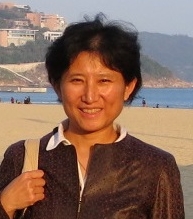 G. Tong Zhou合作论文数School of Electrical and Computer Engineering, College of Engineering, Georgia Institute of Technology;Georgia Tech Shenzhen Institute. Tianjin University21
 Ananthram Swami合作论文数DEVCOM Army Research Laboratory20
 Morteza Mardani合作论文数NVIDIA Corporation20
 Zhi (Gerry) Tian合作论文数Department of Electrical and Computer Engineering, Volgenau School of Engineering, College of Engineering and Computing, George Mason University18
 Lu Qin合作论文数Australian Artificial Intelligence Institute, Faculty of Engineering and Information Technology, University of Technology Sydney18
 Konstantinos D. Polyzos合作论文数University of Patras17
 Fatemeh Sheikholeslami合作论文数Department of Electrical and Computer Engineering and Digital Technology Center, University of Minnesota Minneapolis17
 Liang Zhang合作论文数17
 Cihan Tepedelenlioglu合作论文数School of Electrical, Computer and Energy Engineering, Arizona State University16
 Y. Yu合作论文数15
 Konstantinos Slavakis合作论文数Dept Elect Engn, SUNY Buffalo15
 Daniele Angelosante合作论文数Departament de Tecnologia;Universitat Pompeu Fabra;Departament de Tecnologia, Universitat Pompeu Fabra15
 Shahrokh Farahmand合作论文数Dept .;Univ . of Minnesota;Dept ., Univ . of Minnesota15
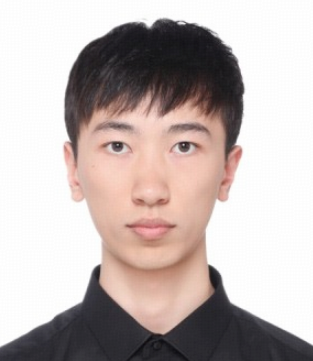 Yilang Zhang合作论文数Morgan Stanley14Sanyogita Shamsunder合作论文数14
 Daniel M. Romero合作论文数School of Information, University of Michigan;College of Engineering, University of Michigan;College of Literature, Science, and the Arts, University of Michigan14




