Uncertainty and sensitivity analysis are becoming an integral part of mathematical modelling of earth and environmental systems. Uncertainty analysis aims at quantifying uncertainty in model outputs, which helps to avoid spurious precision and increase the trustworthiness of model-informed decisions. Sensitivity analysis aims at identifying the key sources of output uncertainty, which helps to set priorities for uncertainty reduction and model improvement. In this presentation, we draw on a range of recent studies and projects to discuss the status of uncertainty and sensitivity analysis, focusing in particular on ‘global’ approaches, whereby uncertainties and sensitivities are quantified across the entire space of plausible variability of model inputs. We highlight some of the challenges and untapped potential of these methodologies, including: (1) innovative ways to use global sensitivity analysis to test the ‘internal consistency’ of models and therefore support their diagnostic evaluation; (2) challenges and opportunities to promote the uptake of these methodologies to increasingly complex models, chains of models, and models used in industry; (3) the limits of uncertainty and sensitivity analysis when dealing with epistemic, poorly bounded or unquantifiable sources of uncertainties.
Decision Trees (DT) describe a type of machine learning method that has been widely used in the geosciences to automatically extract patterns from complex and high dimensional data. However, like any data-based method, the application of DT is hindered by data limitations, such as significant biases, leading to potentially physically unrealistic results. We develop interactive DT (iDT) that put humans in the loop to integrate the power of experts' scientific knowledge with the power of the algorithms to automatically learn patterns from large datasets. We created an open-source Python toolbox that implements the iDT framework. Users can interactively create new composite variables, change the variable and threshold to split, prune and group variables based on their physical meaning. We demonstrate with three case studies how iDT overcomes problems with current DT thus achieving higher interpretability and robustness of the result.
Floods are among the costliest and deadliest natural hazards. Flood risk assessments are required to better manage risk associated with floods. Nowadays, numerous flood risk models are available at various scales, from catchment to regional or even global scale. These models estimate risk (usually expressed in terms of the probability of flood loss) as the product of the hazard, exposure and vulnerability. Flood risk models are affected by numerous uncertainties that propagate through the model and contribute to the final uncertainty in risk estimates. Knowing which uncertainty sources mostly control risk estimates is essential to guide efforts for model improvement, as well as to help risk managers make better decisions. Past efforts to quantify and attribute the output uncertainty of risk models have reached conflicting conclusions. This may be because these studies used different risk models and different uncertainty and sensitivity analysis approaches; or, that they were conducted at relatively small (catchment and/or city) scale, in places with different climatic, hydrological, and socio-economic characteristics. In this project, we investigate dominant uncertainties of a flood risk model across a much larger scale, namely the entire Rhine River basin, and explore whether dominant uncertainties at specific places can be linked to their physical or socio-economic characteristics. In particular, we analyse two model outputs: the Average Annual Losses (AAL) and Loss Exceedance Curves (LECs). For each output, we first identify the dominant input uncertainties (among uncertainty in the flood depth estimates, vulnerability curves and exposure dataset) in each spatial unit of the modelled domain; and second, we link those dominant input uncertainties to the characteristics of the spatial units. We find that uncertainties in the vulnerability component dominate the AAL. The dominant uncertainties for the LECs change with the return period of loss, with vulnerability becoming increasingly important with increasing return period. Topography (flat versus steep terrains), degree of urbanization and economic value of the buildings are key characteristics for determining how dominant uncertainties change spatially within our study domain.
Floods are extreme natural hazards often with disastrous impacts on the economy and society. Flood risk assessments are required to better manage risk associated with floods. Nowadays, numerous flood risk models are available at various scales, from catchment to regional or even global scale. They involve a complex modelling chain that estimates risk as the product of probability of occurrence of an event (hazard) with its footprint (exposure) and the consequences over society and economy (vulnerability). Each component of this chain contains uncertainties, that propagate and contribute to the uncertainty in the model outputs. Much effort has been made to quantify such output uncertainty and attribute it to the various uncertainty sources in the modelling chain. However, the key drivers of uncertainty in flood risk estimates are still unclear because previous studies have reached conflicting conclusions. Two things could possibly explain these ambiguous outcomes. First, these studies were implemented with different models and with different data, as well as different assumptions for the uncertainty and sensitivity analysis. Second, the studies were conducted at catchment and/or city scale with limited variability of physical and socio-economic characteristics within a study region, but with potentially large differences across study regions. In this project, we study the question of uncertainty quantification and attribution at much larger scale, namely the heterogeneous region of the Rhine River basin. In this way, we can identify spatial patterns of dominant input uncertainties and link them to characteristics, e.g. physical, socio-economic, in the different sub-basins. To this end, we use an industry flood risk model (catastrophe model) provided by JBA Risk Management which is capable of simulating flood risk across such a large region. Our ultimate goal is to provide evidence of how the importance of uncertainties varies across places with different climatic, hydrologic and socio-economic characteristics.
Floods are extreme hydro-meteorological hazards that pose significant risks to the economy and society. Reducing the risk associated with floods and better adapting to them is a daunting task because flood risk dynamics are influenced by different factors. Flood risk is usually defined as the product of three components: hazard, exposure and vulnerability. Global Flood Risk Models (GFRM) represent the underlying physical hazard, the exposure of people, properties or other assets to the hazard, and the losses that may occur following a flood event. Consequently, they are used by governmental agencies, risk reduction organisations, global investors and the (re)insurance industry to help manage the societal and financial risks associated with floods. GFRMs are subject to many sources of uncertainty, including uncertainty in processes representation, model parameters and input data; however, the relative importance of these different sources is poorly understood. Currently, no evidence exists on which uncertain input factor mostly control the final uncertainty in predicted losses in different places and circumstances. In this project, we use JBA’s (a leading flood risk modelling company) Global Flood Model and Open Exposure Data (OED) to develop an appropriate methodological approach to analyse the sensitivity of loss predictions in a structured way. This is particularly challenging as input uncertainties exhibit complex spatially distributed and spatially-structured (correlated) patterns. We apply the methodology to the Rhine river basin, covering regions with different physical and socio-economic characteristics. We pursue the following objectives; (1) Identify and quantify the various sources of uncertainty e.g. associated to rainfall data, extraction of flood events sets, defence database, vulnerability curves, exposure portfolios (2) Analyse their relative importance on flood losses predictions across places along the river (3) Understand which of them are most important at each place. We aim to produce scientifically robust evidence about the importance of different sources of uncertainty across places with different climate, hydrology and socio-economic characteristics and try to address questions related to exposure and vulnerability dynamics, flood losses modelling and adaptation strategies. Such evidence base will help prioritise efforts for uncertainty reduction of the case study model, as well as other flood risk models used by (re)insurers and government agencies, ultimately contributing to more informed decisions for flood risk mitigation.
Science has a diversity problem, and engineering sciences are no exceptions. While equality and diversity issues are gaining attention and progress is being made, tackling discrimination and creating an inclusive environment remains an open challenge. Women, people belonging to minority groups and people with disabilities are under-represented in higher academic ranks, which may discourage early-career researchers of these groups to pursue a career in engineering sciences. Conscious and unconscious bias, insecurity in how to intervene in inappropriate situations, amongst other things, compromise both the potential of research groups and the well-being of individuals. We will present the outcome of a one-day workshop that will be held in Bristol on the 2nd of April 2020: Equality in Engineering. This is the "spin-off" of an event we organised last year for water scientists at the national level (UK), which attracted a lot of interest and where we were asked to organise an event specifically for PhD students in Engineering. Therefore, the workshop aims at educating and engaging Engineering PhD students on equality issues. PhD students had the opportunity to express their interests on specific topics on an online survey. Thus, we will invite speakers at different career stages to talk about problems related to 1) Work-life balance (e.g. parenting & maintaining a career in academia), 2) The importance of role models and lack of leaders from minority groups and 3) unconscious biases and micro-inequalities. The discussions will be followed by a practical training session on race/ethnicity, equality and privilege. Finally, a group discussions session will be held aiming at identifying major issues related to equality in engineering, which still restrain an inclusive academic environment and ideas on how to overcome these issues. Moreover, during this session participants will have the opportunity to exchange ideas and reflect upon the things highlighted during the previous sessions. We aspire that the outcomes of this discussion can serve as a call or guideline for future actions, both at the local scale and at the institutional level (e.g. larger research organisations such as the EGU). We also hope to initiate or follow-up on discussions during the EGU General Assembly as we regard overcoming equality-related issues in our society as an ongoing process.
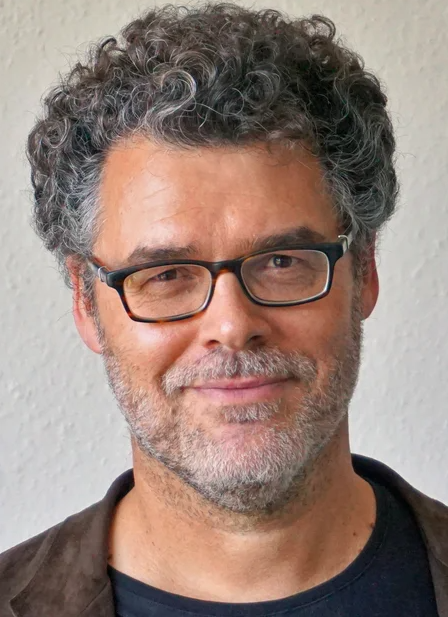 Thorsten Wagener合作论文数Institute of Environmental Science and Geography, University of Potsdam6
 Francesca Pianosi合作论文数–Politecnico di Milano6Stephen Hutchings合作论文数3Kirsty Styles合作论文数3
 Rob Lamb合作论文数3Saskia Salwey合作论文数1Doris E. Wendt合作论文数1
 Lina Stein合作论文数Institute of Environmental Science and Geography, University of Potsdam1
 Valentina Noacco合作论文数Cabot Inst, Univ Bristol1Hannah Bloomfield合作论文数1Sebastian J. Gnann合作论文数Inst Environm Sci & Geog, Univ Potsdam1
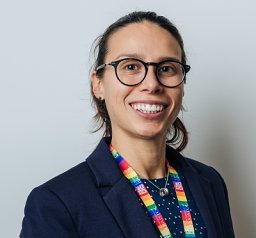 Maria Pregnolato合作论文数Dept Civil Engn, Univ Bristol1Gemma Coxon合作论文数Univ Bristol, Sch Geog Sci, Bristol, Avon, England1
 Robert Reinecke合作论文数1




