The invention of the "Boundary Layer" by Ludwig Prandtl goes back to his
This paper describes the implementation of a novel technique called Background Oriented Schlieren that can produce quantitative visualization of density in a flow. This technique uses only a digital still camera, a structured background, and inverse tomographic algorithms which can extract two-dimensional slices from a three-dimensional flow. This has been applied to obtain the density field for an axisymmetric supersonic flow over a cone-cylinder model. Comparisons with cone tables show excellent agreement.
Density gradients are recorded by interferometric or by schlieren techniques. Both methods require complicated optical set-ups and provide limited field sizes. A new type of computerised schlieren system has very few optical elements and no field limitation. Background Oriented Schlieren (BOS) uses distorted images of reference objects, caused by density gradients (schlieren) in light scattering flows or waves, to get information about these waves. Comparison of a distorted with an undistorted image of a deliberately structured background provides the density gradients.
A novel measurement technique based on the refractive index variation in a compressible flow field is presented. This concept is referred to as“Background Oriented Schlieren” (BOS) method in the following. The differences between BOS and other optical techniques which it can best be compared with, will be discussed. Already the first results illustrate an encouraging prospect for the future applicability of this technique. The BOS method offers the capability of qualitative and quantitative investigations of unsteady density fields in high speed flows, combustion, and full-scale flight tests. The underlying principle is briefly described and an extension to a three-dimensional quantitative technique by using multiple cameras is outlined. The experimental studies which have been carried out to investigate a supersonic jet, a turbulent flame, and the blade tip vortices of a BK117 helicopter in hover flight will be presented.
Density fields of the blade tip vortices from a helicopter in hover flight were visualized by a technique which does not require any installation on the helicopter or close to it. The results illustrate an encouraging prospect for the applicability of the technique. It offers the capability of at least qualitative investigations of unsteady density fields even in full-scale flight tests. The underlying principle is briefly described in this article and an extension to a three-dimensional quantitative technique by using multiple cameras is outlined.
Nachdem Ludwig Prandtl in den ersten beiden Jahrzehnten des 20. Jahrhunderts in Deutschland als der führende Strömungsmechaniker und Aerodynamiker bekannt geworden war, haben sich zahlreiche Erfinder ratsuchend, aber auch um Bestätigung ihrer teilweise skurilen Erfindungen bittend, an ihn gewandt. Uns liegt eine Sammlung des Schriftverkehrs mit den Erfindern vom Jahre 1926 bis zum Jahre 1955 vor.
In this paper we present the application of a novel schlieren technique for two different helicopter tests. The optical method is referred to as Background Oriented Schlieren (BOS) in the following. Additionally the differences between BOS and an extension of it, the reference-free stereoscopic arrangement (BOSS in the following), will be discussed. Experimental studies have been carried out to investigate details of the vortex generation next to the blade tips of two different helicopters, an Eurocopter BK117 and an Sikorsky UH60. The background oriented techniques seem to well complete other optical techniques like shadowgraphy or focussing schlieren methods and yield additional quantitative information. Furthermore, they allow - in contrast to laser based techniques - to study the Reynolds-number depending vortex development in full-scale flight tests more easily.
This paper describes an experimental investigation of drag reduction of a sphere at supercritical Reynolds numbers up to Re = 4.5×10⁶ using passive ventilation. This ventilation was created by a channel connecting the stagnation region with the wake region. Passive ventilation is a very effective method of decreasing drag of smooth spheres in the named Reynolds numbers range. A drag reduction of about 40%-60% can be achieved with a cross-section area of the venting channel of about 2% of the sphere. Pressure distributions on the sphere show clear changes of base pressure and point of separation. In addition, the flow on the vented sphere showed smaller oscillations at supercritical Reynolds numbers than those on the basic sphere. The reduction in oscillation amplitude came basically from a stabilization of the wake.
Der Vortrag beschreibt eine experimentelle Untersuchung zur Widerstandsverminderung von stumpfen Koerpern bei unterkritischen und uberkritischen Reynoldszahlen. Die passive Ventilation ist eine sehr wirksame Methode zur Senkung des Widerstandes von glatten Kugeln im ueberkritischen Reynoldszahlenbereich. Bei einer Querschnittsflaeche der Ventilationsroehre von ca. 2% der Projektionsflaeche der Kugel lassen sich Widerstandsverminderungen bis ca. 40% erreichen. Druckverteilungen an der Kugel zeigen deutliche Anderungen des Basisdruckes und des Abloesungspunktes. Daruber hinaus zeigt die Umstromung einer ventilierten Kugel im Vergleich zu der einer Vollkugel geringere Schwankungen bei ueberkritischen Reynoldszahlen. Dies ist bedingt durch die stabileren Nachlaufverhaeltnisse.
Optical flow measurement is the most important non-intrusive technique in fluid mechanics. A second advantage of some new optical measurement techniques is the high resolution in space and time. As a third advantage, flow visualisation also has a special importance in fluid mechanics. The unsteady three-dimensional flow fields need a visual display of experimental as well as theoretical results. Optical visualisation techniques often lead to completely new insights in flow phenomena especially in experiments. Some discoveries which have been made this way are mentioned here.
A free piston driven Ludwieg tube is introduced that enables the simulation of flows of high Reynolds and Mach numbers at high stagnation temperatures. The test time is longer than in other hypersonic facilities operating under similar test conditions as, for example, in shock tunnels. The test gas is unsteadily compressed and heated thus reducing the thermal loads to the walls. It is shown that the free piston driven shock tunnel HEG of the DLR at Gottingen can also be run in a free piston driven blowdown tunnel mode.
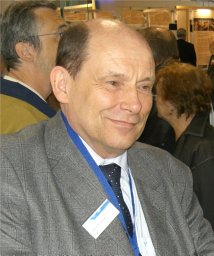 Boleslaw Stasicki合作论文数Institut für Strömungsmechanik, c/o DLR12
 G. Grabitz合作论文数12Wj Hiller合作论文数9A. P. Szumowski合作论文数8
 Markus Raffel合作论文数Institut für Aerodynamik und Strömungstechnik, Deutsches Zentrum für Luft- und Raumfahrt8k ehrenfried合作论文数6W. C. Selerowicz合作论文数6m rein合作论文数4h m lent合作论文数4b bretthauer合作论文数4Jurgen Kompenhans合作论文数4hugues richard合作论文数3G. K. Suryanarayana合作论文数3F.-R. Grosche合作论文数3s loose合作论文数2ming lu合作论文数2
 Humberto Chaves合作论文数Institute of Mechanics and Fluid Dynamics, TU Bergakademie Freiberg2Butefisch, K.A.合作论文数2W. M. Jungowski合作论文数2Henning Pauer合作论文数2M. Jaeschke合作论文数1A. Lorenzen合作论文数1B.S. Pani合作论文数1A. M. Kharitonov合作论文数1Gh Schnerr合作论文数1Cf Delale合作论文数1w j hiller合作论文数1techn e h jurgen zierep prof dr ing合作论文数1M. Rein合作论文数1H. Richard合作论文数1Wiedemann, A.合作论文数1H. Lang合作论文数1H.-H. Bartels-Lehnhoff合作论文数1
 V. Sivadas合作论文数1
 Philip A. Thompson合作论文数Rensselaer Polytechnic Institute1Th. Hottner合作论文数1H. Speckmann合作论文数1
 Michel Assenheimer合作论文数CI Systems (Israel), Ltd. Industrial Park P.O. Box 147 10551 Migdal Ha'Emek, Israel1
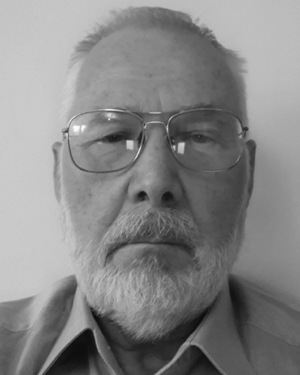 Janusz Piechna合作论文数Institute of Aeronautics and Applied Mechanics, Warsaw University of Technology1Chee Tung合作论文数1Can F Delale合作论文数Department of Mathematics 41470, TÜBİTAK Marmara Research Center1P. H. Baumann合作论文数1A. Klöpper合作论文数1F. Obermeier合作论文数1Lakshmi Venkatakrishnan合作论文数1K. F. Löhr合作论文数1Mikhail S. Ivanov合作论文数Institute of Theoretical and Applied Mechanics Siberian Division, Russian Academy of Sciences1A. V. Kashkovsky合作论文数1
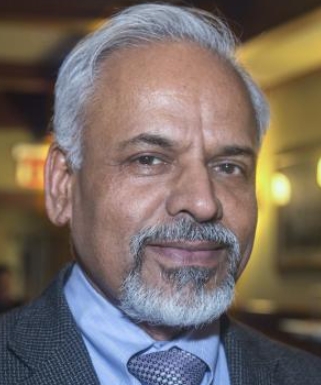 Katepalli Sreenivasan合作论文数Tandon School of Engineering, New York University;Department of Physics, Faculty of Arts and Science, New York University;Courant Institute of Mathematical Sciences, New York University1




