In recent years, cone-adapted shearlets have been established as a powerful tool for the detection of directional information in images. It has also turned out that an interpretation of cone-adapted shearlets in the realm of coorbit space theory exists. Then, cone-adapted shearlets are defined by requiring a certain sparsity pattern of the frame expansion coefficients. In this note, we discuss some structural properties of these spaces.
In [3], Antoine and Vandergheynst propose a group-theoretic approach to continuous wavelet frames on the sphere. The frame is constructed from a single so-called admissible function by applying the unitary operators associated to a representation of the Lorentz group, which is square-integrable modulo the nilpotent factor of the Iwasawa decomposition. We prove necessary and sufficient conditions for functions on the sphere, which ensure that the corresponding system is a frame. We strengthen a similar result in [3] by providing a complete and detailed proof.
Zusammenfassung—Wind energy is one of the central pillars of the energy transition in Germany. As wind turbines might dramatically influence atmospheric backscatter of weather radars, the important question arises: is it possible to reduce or to completely circumvent the negative impact of wind turbines to weather radar measurements. Within this paper we propose a two step proceeding:1)Raw data identification step: on raw data level we construct classifiers that are able to discriminate between ‘clean’ and ‘contaminated’ radar echoes. This allows an identification of spatial cells that are affected by wind turbines. These identified cells will be completely removed and recovered in a second step.2)Momemt data recovery step: on the level of higher moment data the removed spatial cells will be recovered by formulating an incomplete data context and solve an associated inverse problem that yields a ‘gap-infilling’ routine that recovers the removed spatial moment data on the basis of informations from its temporal and spatial neighborhood.We provide numerical examples and evaluations on the recovery quality vs. gap size.
The overall goal consists in understanding and overcoming the influence of weather radar returns that stem from wind energy turbines. We tackle this problem on two different levels. First, we model and simulate radar raw data. The goal is to understand the echo characteristics from wind turbine returns and to use this knowledge to construct classifiers that are able to discriminate between “clean” and “contaminated” radar echoes. If possible, raw data-based “decontamination”- routines will be applied. The second approach relies on the analysis of higher moment data. In this approach we are faced with incomplete spatial-temporal data, namely with data gaps that are caused by strong wind turbine backscatter. The goal is to develop and to apply so-called “gap-infilling” routines that deliver physically feasible higher moment recoveries for the missing parts of the data. Mathematically the first approach relies on sophisticated Fourier analysis and classification/learning theory. The second approach involves techniques from inverse problems, sparse recovery principles, partial differential equation based infilling and optical flow.
The increasing demand for renewable energy encourages the installation of wind turbine sites for power generation across Europe, thus supporting the important energy transition, but also having a negative impact on weather radar measurements near wind turbine sites. In recent years, the fast construction, expansion and repowering of wind parks have been a major source of concern for the weather radar community and meteorological services. Among others because wind turbines are extremely tall, reflective, and moving objects, which make them a source of interference that is hard to distinguish from meteorological echoes and therefore difficult to filter and even more difficult to correct. Polarimetric C-Band Doppler weather radar measurements enable us to analyse and understand the impact of wind turbine interference on meteorological weather radar echoes and to build up knowledge.The main idea is to analyse the raw IQ-data in order to quantify the behaviour of wind turbine interference with meteorological scattering. As a first step in this direction, this paper will focus on the derivation and analysis of radar moments such as Reflectivity (Z), Differential Reflectivity (ZDR), Differential Phase (PHIDP), and Mean Doppler Velocity (V). We will consider two cases: (i) events with precipitation, and (ii) events without precipitation, in order to understand and model the impact of wind turbine interference.For this purpose, weather radar measurements from Deutscher Wetterdienst (DWD), recorded under the aegis of the RIWER project (Removing the Influence of Wind Park Echoes in Weather Radar Measurements), are presented, analysed and discussed in detail.
This paper ist concerned with recent progress in the context of coorbit space theory. Based on a square integrable group representation, the coorbit theory provides new families of associated smoothness spaces, where the smoothness of a function is measured by the decay of the associated voice transform. Moreover, by discretizing the representation, atomic decompositions and Banach frames can be constructed. Usually, the whole machinery works well if the associated reproducing kernel is integrable with respect to a weighted Haar measure on the group. In recent studies, it has turned out that to some extent coorbit spaces can still be established if this condition is violated. In this paper, we clarify in which sense atomic decompositions and Banach frames for these generalized coorbit spaces can be obtained.
We study traces of certain subspaces of shearlet coorbit spaces on smooth domains in Rd with d=2,3. Our results are based on embedding theorems into Besov spaces which enable us to establish embedding relations of traces on the boundary of these domains.
We set up a new general coorbit space theory for reproducing representations of a locally compact second countable group G that are not necessarily irreducible nor integrable. Our basic assumption is that the kernel associated with the voice transform belongs to a Fréchet space 𝒯 of functions on G , which generalizes the classical choice 𝒯=L_w^1(G) . Our basic example is 𝒯=⋂ _p∈ (1,+∞ ) L^p(G) , or a weighted versions of it. By means of this choice it is possible to treat, for instance, Paley-Wiener spaces and coorbit spaces related to Shannon wavelets and Schrödingerlets .
This paper deals with the analysis of the sampling setup for Doppler profilers aiming at the determination of vertical profiles of the wind. An explicit solution for the retrieval of mean wind vectors under the assumption of local homogeneity is presented for the case of a symmetric velocity-azimuth display sampling, and a stability analysis is performed. Furthermore, the explicit solution allows a detailed investigation of the propagation of radial wind measurement errors on the retrieved wind vector.
Recently, shearlet groups have received much attention in connection with shearlet transforms applied for orientation sensitive image analysis and restoration. The square integrable representations of the shearlet groups provide not only the basis for the shearlet transforms but also for a very natural definition of scales of smoothness spaces, called shearlet coorbit spaces. The aim of this paper is twofold: first we discover isomorphisms between shearlet groups and other well-knowngroups, namely extended Heisenberg groups and subgroups of the symplectic group. Interestingly, the connected shearlet group with positive dilations has an isomorphic copy in the symplectic group, while this is not true for the full shearlet group with all nonzero dilations. Indeed we prove the general result that there exist, up to adjoint action of the symplectic group, only one embedding of the extended Heisenberg algebra into the Lie algebra of the symplectic group. Having understood the various group isomorphisms it is natural to ask for the relations between coorbit spaces of isomorphic groups with equivalent representations. These connections are examined in the second part of the paper. We describe how isomorphic groups with equivalent representations lead to isomorphic coorbit spaces. In particular we apply this result to square integrable representations of the connected shearlet groups and metaplectic representations of subgroups of the symplectic group. This implies the definition of metaplectic coorbit spaces. Besides the usual full and connected shearlet groups we also deal with Toeplitz shearlet groups.
In this chapter, we will provide a comprehensive overview of shearlet coorbit theory. We will present an almost self-contained introduction into coorbit theory which is the basis for all our investigations. We also discuss the group theoretical background of the continuous shearlet transform, and we explain how the shearlet transform can be combined with coorbit theory. By proceeding this way we can establish new smoothness spaces, the shearlet coorbit spaces. The structure of these spaces will be discussed in detail. In particular, we derive density, embedding, and trace results for the shearlet coorbit spaces.
The purpose of this paper is to report on recent approaches to reconstruction problems based on analog, or in other words, infinite-dimensional, image and signal models. We describe three main contributions to this problem. First, linear reconstructions from sampled measurements via so-called generalized sampling (GS). Second, the extension of generalized sampling to inverse and ill-posed problems. And third, the combination of generalized sampling with sparse recovery techniques. This final contribution leads to a theory and set of methods for infinite-dimensional compressed sensing, or as we shall also refer to it, compressed sensing over the continuum.
This papers examines structural properties of the recently developed shearlet coorbit spaces in higher dimensions. We prove embedding theorems for subspaces of shearlet coorbit spaces resembling shearlets on the cone in three dimensions into Besov spaces. The results are based on general atomic decompositions of Besov spaces. Furthermore, we establish trace results for these subspaces with respect to the coordinate planes. It turns out that in many cases these traces are contained in lower dimensional shearlet coorbit spaces.
Generalized sampling is a new framework for sampling and reconstruction in infinite-dimensional Hilbert spaces. Given measurements (inner products) of an element with respect to one basis, it allows one to reconstruct in another, arbitrary basis, in a way that is both convergent and numerically stable. However, generalized sampling is thus far only valid for sampling and reconstruction in systems that comprise bases. Thus, in the first part of this paper we extend this framework from bases to frames, and provide fundamental sampling theorems for this more general case. The second part of the paper is concerned with extending the idea of generalized sampling to the solution of inverse and ill-posed problems. In particular, we introduce two generalized sampling frameworks for such problems, based on regularized and non-regularized approaches. We furnish evidence of the usefulness of the proposed theories by providing a number of numerical experiments.
In this paper we are concerned with the continuous shearlet transform in arbitrary space dimensions where the shear operation is of Toeplitz type. In particular, we focus on the construction of associated shearlet coorbit spaces and on atomic decompositions and Banach frames for these spaces.
We introduce a robust multi-object tracking for abstract multi-dimensional feature vectors. The Condensation and the Wavelet Approximated Reduced Vector Machine (W-RVM) approach are joined to spend only as much as necessary effort for easy to discriminate regions (Condensation) and measurement locations (W-RVM) of the feature space, but most for regions and locations with high statistical likelihood to contain the object of interest. The new 3D Cascaded Condensation Tracking (CCT) yields more than 10 times faster tracking than state-of-art detection methods. We demonstrate HCI applications by high resolution face tracking within a large camera scene with an active dual camera system.
This chapter is devoted to the generalization of the continuous shearlet transform to higher dimensions as well as to the construction of associated smoothness spaces and to the analysis of their structural properties, respectively. To construct canonical scales of smoothness spaces, so-called shearlet coorbit spaces, and associated atomic decompositions and Banach frames we prove that the general coorbit space theory of Feichtinger and Grochenig is applicable for the proposed shearlet setting. For the two-dimensional case we show that for large classes of weights, variants of Sobolev embeddings exist. Furthermore, we prove that for natural subclasses of shearlet coorbit spaces which in a certain sense correspond to "cone-adapted shearlets" there exist embeddings into homogeneous Besov spaces. Moreover, the traces of the same subclasses onto the coordinate axis can again be identified with homogeneous Besov spaces. These results are based on the characterization of Besov spaces by atomic decompositions and rely on the fact that shearlets with compact support can serve as analyzing vectors for shearlet coorbit spaces. Finally, we demonstrate that the proposed multivariate shearlet transform can be used to characterize certain singularities.
 Stephan Dahlke合作论文数Institut für Geometrie und Praktische Mathematik, RWTH36Gabriele Steidl合作论文数Faculty of Mathematics and Computer Science16
 Ingrid Daubechies合作论文数Department of Mathematics, Trinity College of Arts & Sciences, Duke University;Department of Electrical and Computer Engineering, Pratt School of Engineering, Duke University10
 Ronny Ramlau合作论文数University of Bremen10Volker Lehmann合作论文数9
 Peter Maass合作论文数Faculty of Mathematics and Computer Science, University of Bremen9m zhariy合作论文数8
 Uwe Kahler合作论文数Fakultät für Mathematik, Technische Universität Chemnitz-Zwickau8
 Gitta Kutyniok合作论文数Department of Mathematics, Faculty of Mathematics Informatics and Statistics, Ludwig-Maximilians Universität München7
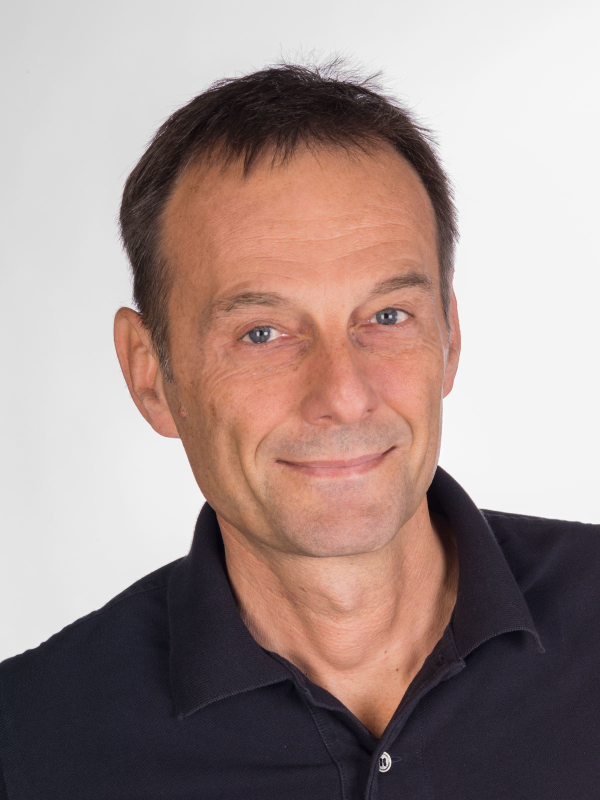 Thomas Vetter合作论文数Department of Mathematics and Computer Science, University of Basel7
 Matthias Ratsch合作论文数Computer Science Department, University of Basel7
 Maria Joana Soares合作论文数6Paula Cerejeiras合作论文数Universidade de Aveiro, Universidade de Aveiro6
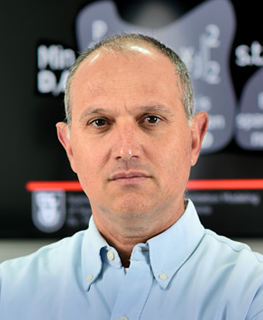 Michael Elad合作论文数Department of Computer Science, Technion5
 Dirk A. Lorenz合作论文数TU Braunschweig4
 Ernesto De Vito合作论文数Dipartimento di Matematica Pura ed Applicata ”G. Vitali” 41000 Modena Italy Italy4E. Herrholz合作论文数4
 Ben Adcock合作论文数Department of Mathematics, Faculty of Science, Simon Fraser University4Sami Romdhani合作论文数Computer Science Department4
 Uwe Koster合作论文数3Clemens Blumer合作论文数3
 Mathias Lindemann合作论文数Zentrum für Technomathematik, University of Bremen3
 Chen Sagiv合作论文数SagivTech Ltd.3
 Karlheinz Grochenig合作论文数Faculty of Mathematics, University of Vienna3
 Yonina Eldar合作论文数Signal Acquisition Modeling Processing and Learning Lab, Department of Computer Science and Applied Mathematics, Faculty of Mathematics and Computer Science, Weizmann Nstitute of Science3D Labate合作论文数2F. De Mari合作论文数2
 Bhavinkumar Patel合作论文数2Patrick Tracksdorf合作论文数2Sascha Meyne合作论文数2Tanja Sauter合作论文数2
 Aastha Vyas合作论文数2
 Emre Colak合作论文数Dept Microwave Engn, Tech Univ Chemnitz2
 Soren Hauser合作论文数Fachbereich Math, Tech Univ Kaiserslautern2
 Anders Hansen合作论文数University of Cambridge2
 Emmanuel Candès合作论文数Department of Statistics, Stanford University;Department of Mathematics, Stanford University2
 Dingxuan Zhou (周定軒)合作论文数School of Mathematics and Statistics, University of Sydney;Faculty of Science, University of Sydney2
 Milton Ferreira合作论文数Departamento de Matemática, Universidade de Aveiro2
 Dennis Trede合作论文数2
 Richard G. Baraniuk合作论文数Department of Electrical and Computer Engineering, George R. Brown School of Engineering, Rice University;SafeInsights;OpenStax2
 Luminita Aura Vese合作论文数Department of Mathematics, University of California, Los Angeles2L Justen合作论文数2
 Mariya Zhariy合作论文数2Edward N. Wilson合作论文数2
 Madhu Chandra合作论文数German Aerospace Agency;Microwaves and Radar Institute;Radar Concepts Department Oberpfaffenhofen;Radar Concepts Department Oberpfaffenhofen, Microwaves and Radar Institute2
 Kristian Bredies合作论文数2
 Nelson Jose Rodrigues Faustino合作论文数Departamento de Matemática, Campus Universitário de Santiago2
 Bogdan Roman合作论文数Department of Applied Mathematics and Theoretical Physics, University of Cambridge2Dirk Engelbart合作论文数2




