1Department of Human Genetics; 2Department of Molecular Cell Biology, Leiden University Medical Center, Leiden; 3Department of Immunology, Utrecht University Medical Center, Utrecht, The Netherlands; 4Dept. Biochemistry and Molecular Biology, University of Kansas Medical Center, Kansas City, USA; 5Sheffi eld Kidney Institute, Sheffi eld University, Sheffi eld, United Kingdom; 6Department of Pediatrics and Pediatric Research Institute, Saint Louis University, St. Louis, USA
Mutations of the genes encoding APC or ß-catenin in colon carcinoma induce the constitutive formation of nuclear ß-catenin/Tcf-4 complexes, resulting in activated transcription of Tcf target genes1,2. To study the physiological role of Tcf-4 (which is encoded by the Tcf7l2 gene), we disrupted Tcf7l2 by homologous recombination. Tcf7l2-/- mice die shortly after birth. A single histopathological abnormality was observed. An apparently normal transition of intestinal endoderm into epithelium occurred at approximately embryonic day (E) 14.5. However, no proliferative compartments were maintained in the prospective crypt regions between the villi. As a consequence, the neonatal epithelium was composed entirely of differentiated, non-dividing villus cells. We conclude that the genetic program controlled by Tcf-4 maintains the crypt stem cells of the small intestine. The constitutive activity of Tcf-4 in APC-deficient human epithelial cells may contribute to their malignant transformation by maintaining stem-cell characteristics.
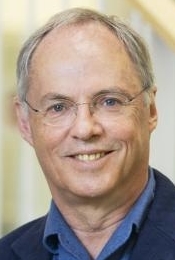 Hans Clevers合作论文数Utrecht University;Hubrecht Institute2
 Ngoc Hang Le合作论文数1
 Paola van der Bent合作论文数1
 Peter Peters合作论文数1Hans van Dam合作论文数Leiden Univ, Med Ctr, Dept Mol Cell Biol, NL-2300 RC Leiden, Netherlands1
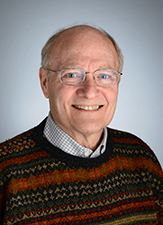 James P. Calvet合作论文数University of Kansas Medical Center1Petra Moerer合作论文数1Nick Barker合作论文数1
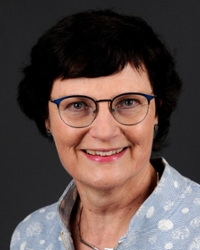 Dorien Peters合作论文数Department of Human Genetics, Leiden University Medical Center1Elly G. Van Donselaar合作论文数1
 Mahmoud Loghman-Adham合作论文数Department of Pediatrics;Pediatric Research Institute;Saint Louis University;Pediatric Research Institute, Saint Louis University1Vladimir Korinek合作论文数Institute of Molecular Genetics;Academy of Sciences of the Czech Republic1
 Martijn Breuning合作论文数Faculteit Geneeskunde, Leiden University1Albert C. M. Ong合作论文数1Marc Van De Wetering合作论文数Royal Netherlands Academy of Arts and Sciences1




